Count Your Steps, Stack Your Profits: The 3P System That Stops Businesses From Bleeding | Brad Draper
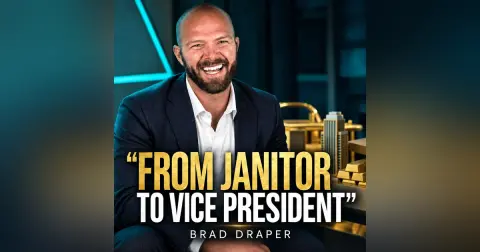
Send us Fan Mail Business Community https://www.skool.com/thebusinessnetwork Newsletter https://doing-business-with-a-servants-heart.kit.com/steveramona 📖 Quote: “You set the plan so you can pivot versus simply react.” — Brad Draper 📝Description: Most businesses aren’t failing because of a bad product. They’re losing money through operational holes nobody can see. Brad Draper went from laboratory janitor to VP of Operations and Quality. He now works as a fractional COO, and he s...

 Spotify
 Apple Podcasts
 YouTube
 iHeartRadio
 RSS Feed
 TuneIn
 Castbox
 Castro
 Goodpods
 Business Community https://www.skool.com/thebusinessnetwork
Newsletter https://doing-business-with-a-servants-heart.kit.com/steveramona
📖 Quote:
“You set the plan so you can pivot versus simply react.” — Brad Draper
📝Description:
Most businesses aren’t failing because of a bad product. They’re losing money through operational holes nobody can see. Brad Draper went from laboratory janitor to VP of Operations and Quality. He now works as a fractional COO, and he shows how small, repeatable improvements turn into big gains in profit and employee satisfaction.
In this episode, Brad and Steve cover:
- Why you set a plan so you can pivot, not just react, and how one surprise pivot led Brad to mentoring inmates in entrepreneurship
- Dollar ROI vs. impact ROI vs. true value ROI, and why the last two matter more
- What a fractional COO is and why it fits growing companies (and companies trimming their C-suite)
- The 3P System: policies, procedures, processes, plus the systems that support them
- How a company with 180 employees and $110M a year ran nine locations with zero documented procedures
- The step analysis that saved roughly 60% of one employee’s time, and the lab change that doubled a machine’s daily output
- Why efficient employees can earn more, stay longer, and feel like part of the vision
PS: Brad’s newest pivot happened between the day we booked this episode and the day we recorded it. He’s now working with a program that teaches entrepreneurship to inmates so they have a plan, a process, and a system when they get out. That’s serving before selling. Also, his wife’s “guess what my husband does” game is worth the listen on its own.
CTA: Subscribe to Doing Business with a Servant’s Heart so you don’t miss an episode. Find Brad on social media at Mr. Brad Draper (look for the guy in purple). Catch Together We Serve every Friday at 2 p.m. PT / 5 p.m. ET on Roku and Apple TV.
🎯 What You’ll Learn:
✅ Pivot, Don’t Quit
✅ Document From Day One
✅ Stack the Small Wins
⏱️Tim [00:02] The Power of the Pivot
[00:06] Janitor to Lab VP
[00:09] Fractional COO Explained
[00:11] Inside the 3P System
[00:16] Counting Steps for Profit
[00:22] Step Into the Void estamps:
🤝Connect with Brad Draper :
💥LinkedIn: www.linkedin.com/in/brad-draper-a34850103
💥IG: https://www.instagram.com/mrbraddraper/
🤝Connect with Steve Ramona:
💥Web: https://steveramona.com/
💥LinkedIn: https://www.linkedin.com/in/steveramona/
💥IG: https://www.instagram.com/bizopportunitynow/
💥Podcast: https://www.servinginbusinesspodcast.com/
💥YouTube: https://www.youtube.com/@doingbusinesswithaservantheart?sub_confirmation=1
🔖Tags:
#BusinessSuccess #ServantsHeart #Motivation
Free Business Community: https://www.skool.com/thebusinessnetwork
https://app.nucalm.com/purchase/free-trial?coupon_code=NUCALM15&ref=steve57
Subscribe to our Podcast Newsletter
https://doing-business-with-a-servants-heart.kit.com/628f9d5962
Join Me on Substack: https://podcasthost.substack.com/
Doing Business with a Servant's Heart Named Top 20 Small Business Marketing Podcast
https://podcast.feedspot.com/small_business_marketing_podcasts/
Welcome everyone to Doing Business with a Servant's Heart Podcast. I'm your host, Steve Ramona, and I'm thrilled to have you join us today. The podcast is dedicated to exploring the idea of doing business and living life with a purpose, serving others and yes, achieving success. We believe that when we approach our work and our lives with a servant's heart, we could truly make a difference. We created this show for you because we want everyone to be motivated, inspired, and educated to make an impact in your world. Whether you're an entrepreneur, a community leader, high-level business person, or simply someone that wants to bring purpose into your daily life, this podcast is here to support you with these incredible guests like I have today. And while you're listening to this incredible guest, I want you to think about how you're going to serve today and what impact you'll create. Today's episode is brought to you by our amazing sponsor, Pantheon Alliance. Picture yourself joining a league community of thriving business owners from a variety of industries all working together to create a powerful referral marketplace. It's an incredible opportunity to expand your network and elevate your business to new heights. And reach out to me and I'll get you more information. With that being said, you get impact, but then you get massive impact when you get a guest on. And what I love about entrepreneurs, the diversity, what they've done, what they've learned. And this gentleman's been in fitness. Now he's in corporate. He's got the best to me in both worlds. I want to welcome on the show today. Brad, hey, welcome.
SPEAKER_01Thank you so much, Dave. I appreciate you. Thank you for having me on your show.
SPEAKER_02It was interesting. You were talking about pivoting. I and I love that as an entrepreneur entrepreneur. You know, Amazon can't pivot. We sell this, this, you know, they may add things. Talk about pivoting and which the power of pivoting.
SPEAKER_01Yeah, pivoting is uh like you just said, powerful. It is amazing what you do when you take opportunity. I I teach some of my coaching clients this little analogy. You start here, right? You start here trying trying to go here, but halfway up the arm, a window opens and you go this way. And that's the way you were meant to go the whole time. But you couldn't see it from where you were in the perspective that you had. From that point, you are pivoting to your true purpose, your true passion, the thing that really lights you on fire. But everything to that point was just a stepping stone. So often I have a saying that says, You set the plan, you execute the plan, and you win. And I get asked a lot, how often do you change the plan? Always. The plan never stays the same. The fact is, you set the plan so you can pivot versus simply react. And it's in that pivoting that you truly find who you are, and then you find true purpose, passion, pleasure all the way through with the one moment where some people be like, Oh, you're just quitting. So I'm not quitting, I'm pivoting. And the pivot is really what causes powerful movement.
SPEAKER_02Yeah, I like that. Give us that real-time story. You to just happen to you and show people, hey, this is how what happens when you pivot.
SPEAKER_01Yeah, yeah. So my company is the three-piece system. We help companies with high-level operations. We do policies, procedures, processes, and systems. And as I was going through this, I kind of fell into a mentorship from a nonprofit. And I had a buddy that suggested to them. So they reached out to me and they said, Hey, you do high-level operations, which I've done for 14 years at a high-level space in laboratories. They said, We would love to have you come teach our 150 companies. It's an incubator space. So I showed up, didn't really know what I was getting into. And that has kind of evolved my company. I still help companies, but it's evolved into more of a mentorship program. And one thing I've always wanted to do is I've always wanted to help inmates. And as I've gone through this and going to these meetings and going to these different networking events for mentorship-based things, I have come across the company that teaches high-level entrepreneurship to inmates so they can have a plan and a process and a system for when they get out. It's astounding how I've kind of fallen into this situation that I could have easily just blown right past it and just said, Oh, that's the ROI is not there, right? But what really matters in in life, you have your dollar ROI, then you have your impact ROI, and you have your true value ROI. Those ladders are so much more valuable than just a dollar RUI ROI. And so I started pivoting into that and standing in that space. And to say the amount of fulfillment and just pure passion and pleasure that I have found in that space has been astounding. It's been really cool, which is funny. I was telling you that because that's new since I even we scheduled this podcast. Yeah, so things can happen quick, and most things that are truly impactful do happen quick.
SPEAKER_02Yeah, and passion's a big part of pivoting too. Don't just pivot like you said, because I can go from one million to 10 million. If you're not passionate about it, then it becomes work, right?
SPEAKER_01Yeah.
SPEAKER_02Yeah, that's cool. Part of your story is amazing to me. You worked in laboratories, which I look at you, you know, and we shouldn't judge and look at people and all your history. How'd you go from laboratories to fitness to, you know, working with companies?
SPEAKER_01That's a good question. Fitness has always been a part of my journey. I grew up with a morbidly obese father. So I always had a fear of being fat. And my brother's morbidly obese, my uncle's all morbidly obese. And I just did not want to go down that path. And when I was a 14-year-old kid, I've got a couple of spinal deformities. I stood up kind of like that, like a like an old grandpa. And I went to a doctor and he gave me the best advice I ever got ever. He says, You need to start working out with true intensity, work your back, work your core, and never quit. If you do, you'll need spinal fusion surgery by the time you're 25. And I've met people with my same condition that did have spinal fusion at 25. But I got into fitness, and it's always been deeply rooted. I've been a seven-day a week or in some kind of fitness, whether it be endurance sports or strength sports or whatever, since I was 14. So 21 years. And I went down this path and I always wanted to go into business with my dad. My dad's an entrepreneur, and he bought a laboratory in 2005. It was a failing business. And he's like, Oh, I can scale that. And I was like, Dad, I want to go to business with you. He said, Have you ever thought about being in the lab? I was like, No, I got a C in chemistry, and that was with getting tutored every day. No, why would I go in there? He said, Well, give it a shot. Tell me what you think. And so I went to the microbiology department. So this laboratory tests dietary supplements, something that I know a lot about because I've been in fitness for so long. This is the pre-workouts and the proteins and the multivitamins and all the things. They were doing the FDA testing. And I did the microbiology. I was like, not for me. Did chemistry. I said, this is pretty cool. I know why different things work. I can look at a label and say, oh, these things don't match. These things don't do well. Here's little ticks and little tricks to know if this is a good supplement or not. So I went full-time school, full-time work in chemistry and got my degree in chemistry. And it's really funny, like you said, when I was in the laboratory, I scaled from the janitor to the VP of operations and quality. And so often they'd look at me, which I'm not the smallest person in the world, walking, let's see, six feet at 220. And they're like, You don't look like, you don't look like a chemist. You don't, you don't look like a lab rat, like a nerd. So well, my wife, when we first got married, she would play the game of what do you think my husband does? Fitness, sports, nerd. And everybody said fitness and sports. She goes, he's first and foremost a nerd. He actually runs a laboratory.
SPEAKER_02That's a great game. I'm gonna borrow that.
SPEAKER_01Because so many people judge a book by its cover and never look deeper to see what is actually there. And yes, I am very much so into fitness. Yes, I'm very much so into athletics, but I'm first and foremost a nerd that just takes all the fitness athletics to the science base. So when I teach people in strength and fitness, I said, Well, okay, here's here's your force of energy, it's known as a vector. And here and I say all this the physics terms and all the different terms in chemistry and biochemistry, and it goes right over their head, but I think it's awesome.
SPEAKER_02So no, I think it's awesome too. Because I tell people if you look at any entrepreneur that's successful, Musk, Buffett, they've all done different things, you know. They might be on their path they are now, finances, technology, but they all do different things. I think it's a powerful tool because you've learned so much. Let's jump. Well, first I want to jump in fractional COO. We've talked about before the show. Explain fractional. I I love fractional. I think most companies should be doing that, especially if they can't afford it, but talk about that.
SPEAKER_01I I agree. Yeah, and like you said, if they can't afford it, so fractional is part-time, it's for hire, basically. You can say consulting, you can say for hire, but it's gonna be on an hourly basis, it's gonna be on a project basis, or it'll just be a little part-time thing here and there. It's for those companies that are not big enough for a C-suite, but need that high level of operational thinking. Or it's a company that does have a C-suite, they need to downsize a little bit. I actually came into a company and helped them because they had to downsize their C-suite because of the economy we're in, and they just could not afford the full C-suite that they had. So they brought in fractional team members. We came in, fractional CFOs is kind of a big thing right now. Fractional CEOs, you'll see them. Fractional COOs, not as much, CIOs, all these things. But we come in and help companies when they need it most. Most of my clients are people that are bleeding and have no idea why. They know there's something wrong with operations, but they don't know enough about operations to find the bleeding holes. So they just keep on putting band-aids on bullet wounds and hope that it works. Sometimes it does, most of the times it doesn't.
SPEAKER_02Band aids on bullet wounds. Audience, remember that because I wouldn't want my mechanic to work in my heart. No, that's what comes to my head when you're saying that. It's like, well, figure it out. Well, then COVID hits and you figure out nothing because you're bankrupt, you're closed. Yeah, and and that's sad. Uh, let's talk about the three P system. It's just a cool name, first of all. But what is the three P system?
SPEAKER_01The three P system is a little bit of a play on words. You've got your policies, your processes, your procedures, your three Ps, and then your system. And that's really what business operations surrounds is surrounded by. And I usually walk into companies and I ask the first question. I say, Kay, do you have procedures? And you'd be amazed how people go, Oh, yeah, definitely. Cool. Can you please print them for me so I can see them? I want to know where you're at. And it's just a what? I need you to print them so I can read them. Oh, it's we we don't have we can't print it, it's not documented. So it's oh we're gonna back up a little bit. There's a difference from a process and a procedure and a system and a policy. And I break down these individual pieces for them and help them understand how high level these really are. So you can have a process. This is what you do on the day-to-day. The procedure is the documentation of that process. The policy is also a procedure, but that covers your butt from your best asset, which is also your best liability, your employees. And then you finally have systems. Systems are the software supporting your procedures. So if you don't have procedures or documented what you do and how you do and why you do, you don't have anything. You're kind of just flying by the seat of your pants. So that's really where the play of the name, the three-piece system, came up because it is literally what I do.
SPEAKER_02You know, Brad, I knew it'd be cool, and it's really cool. And it's interesting, and I I I talked a lot, as I told you, a lot of very skillsful people. It sounds simple, but it's hard to take action. Is that one of my feelings?
SPEAKER_01Yeah, oh, yeah. Absolutely. It's the simplest of things, it really is. It's doing the things and documenting what you do. And everybody's like, that's so simple, just do it. And that is exactly what it is. You just document and do it, but the load becomes bigger and bigger and bigger and bigger as you grow. The best time to start writing procedures is day one. What are you doing by yourself as an entrepreneur or solopreneur? Write those things down, document them, and then as it grows, just keep adding. It's easy work. You got 10, 20, 50, 100. This company I came into had 180 employees doing 110 million a year. They had zero documented procedures. I'm like, guys, you need hundreds of these written in every facet on every KPI, anything that is Rev share, revenue generating. You need procedures on all of them. You have this location because you had nine locations. You have this location and this location doing the same thing completely different ways. One is profitable, one is bleeding like crazy. Why?
SPEAKER_02Well, I'm glad you because I was gonna have you share a story, but that's an image that I can see. I think people say, and if she were to use an entrepreneur, so a three-p system could be the solopreneur to that billion-dollar company, and then anybody in between. You need those three things process, procedure, system, and what's the third one I missed?
SPEAKER_01Policy, procedure, process systems. Yeah, policies. Go ahead. Go ahead.
SPEAKER_02I was gonna say P, that's the fourth P is people, but that's incorporated all three because people forget we have people asset. I talk about that all the time. I love that you said that. Your employees, your people, customers are your most important things.
SPEAKER_01So yeah, they're your your your employees are your greatest asset. Without your employees, you're nothing. They're also your greatest liability. So you better get some things in place to protect that. And no company is immune to this. I was talking recently, this company does $4 billion a year in revenue. And they had just three months hired an operations specialist to clean up all the procedures because they were messed up. And they were bleeding because of it.
SPEAKER_02Yeah, and it's interesting. I know people out there are thinking the same thing I am, is how'd they get the four billion?
SPEAKER_01Right, a great product.
SPEAKER_02Oh, that okay. So the the fifth P of is the product, it's just so good. People are buying it.
SPEAKER_01Yeah, you you just had really good salespeople and a really good product, and it flies off the shelves. But once you get so big, you don't realize because you're growing faster than you're bleeding. But then when somebody does an audit and say, Let's audit the books, and they say, Oh crap, we lost millions in X, Y, and Z for whatever reason, which could have been eliminated, or we could have saved millions just by becoming more efficient. And I'll give you an example of efficiency. This this is something that your audience can take that I like to ask people. I said, Have you ever done a step analysis? They say, What's that? Said it's exactly what it sounds like. You count your steps, and they said, Okay. So I was in a laboratory one time, this one is VP, and I watched this technician take about 10 steps across the room to deliver some petri dishes. The average human takes half a second to one second for every step they're doing, unless they're in a rush. Most employees aren't in a rush, let's be honest. And especially if they're carrying something, they might even be up to a second and a half. So she was taking 10 seconds to walk to one way and 10 seconds back. This is a 20-second round trip. She did this well over a hundred times a day. It was her full-time job, riding on these and delivering to that person. That was her job. So I said, What if we just put a table between you two and you don't step anywhere, you just rotate your body. Your 10 seconds turns into about two seconds, and the other person on the other side takes about two seconds, about four seconds. Well, that's about a 60% savings. Put that in man hours and put that up over across the day, a week, a month, a year. And that comes into substantial amounts of money just by counting somebody's steps. Like you said before, the simplest things.
SPEAKER_02You know, I heard you were brilliant. Now you're proving it. Again, it's it's funny, Brad. The simplest things are the most brilliant. Like a table. So let's I want to talk about it. I think this is brilliant. We're coming to the end, but so as a VP, that's what you did. You looked at ways you were doing systems and probably didn't know. I mean, maybe you did, but you were looking at systems and how to monetize it for the benefit, but also how to um what's the word I want to use? Uh make it better, what comes to me, make the system more uh efficient. Efficient, that's the word exactly I'm thinking of. How'd you learn that?
SPEAKER_01Uh probably just honestly watching things and just saying this could be better. The first time I ever experienced this was we had giant microwaves like you have at home, but it digests things and puts them into solutions so they can be tested on these high-tech equipment. And I was looking at this microwave and it took like 90 minutes to run. I was like, I can only get a couple of these in a day. And the whole process took like four hours. And on a workday, that's two times. So it wasn't very many samples. So about oh, how many samples are on a rack? 90 samples on a rack. So that's like 180 samples a day, not super high throughput. So they kept buying more microwaves because that was a bottleneck. And I walked over and I'm like, can I shave off a second? And then I'd shave off second, shave off a minute here, shave off a minute there, do some more tests, shaving off minutes. Well, I took that 90-minute run to a 60-minute run. And instead of doing two a day, we did four a day in the same microwave. We doubled the throughput, which doubled the income. And I started paying attention, like, oh, we're not trying to save like lots of time. We're trying to save, it's the whole statement we all hear, stacking pennies to make dollars. So we're stacking pennies constantly everywhere. And I kind of just I think over time learned that you need to stack the pennies. So often we're looking for huge time savers, you're not gonna find many of them, but you will find a lot of baby time savers that happen repetitively and often. It's kind of like the pen salesman, right? The person that sells 500 million units of pens can make a lot of money, even though the pen costs like two cents to make.
SPEAKER_02Yeah, you make it a penny on 500 million. It's it's a pretty good salary. Well, Brad, I'm gonna announce this publicly on my podcast. You're my new best friend. I just love because it's practical, it's it's across the board. And what you given the audience, especially visit restaurants, plumbing companies, uh spas, whoever, if they just took the time a week, day, whatever it takes to look at their systems, there's tons of savings there, and efficiency. And then guess what? The employees are happier, happier because it because is that the other part of the equation? How can I make the yeah, make the employee happier by making their job easier but making more money?
SPEAKER_01Yeah, you make their job easier, employment satisfaction goes up. So reployment, employment retention stays up. When intention retention stays up, they become more efficient, they become faster. If you decrease, think about this. If you take a we'll just take a $20 an hour employee, compress their eight-hour day to a four-hour day over a long period of time and becoming more efficient. Well, now you can give them another four hours worth of work, you can give them another person's four hours. You could do $20 or $40 per day or per hour, I should say, on a 20-hour employee, but you can pay them $30. So you're saving net 10, but paying them $10 more, which is $10 more than anybody else on planet Earth. So they're stoked, they're efficient, they're contributing to the they're not stacog in the wheel, right? They're contributing to the system, they're part of the vision. When you do that, you will never lose employees. It'd be really rare. That all just came down from counting steps, right?
SPEAKER_02Just my images, sitting you in the lab, watching you just making notes on a pad, probably going two, three, and they're probably looking at you like this fitness guy who shouldn't be here anyways, because he's not gonna, you doesn't look like a chemist, and then you come up with this stuff, and it's fantastic.
SPEAKER_01It's it's funny they asked me this. What are you doing? I said, Counting your steps. Why? I sat there all day. I literally said eight hours counting everything. Everybody's steps. Like, what are you doing? I'm counting your steps. Why? Don't worry about it. I'm making your job better.
SPEAKER_02And you come back, whatever time frame it is, put all those numbers together. Oh wow. Wow, that's uh I mean, I could see. I used to work at uh own a restaurant, not own, but manage a restaurant. I could see that. How much time you could save by moving food and tables and your whole kitchen could be set up. I know restaurant that are good do that. This is really this is really cool.
SPEAKER_01I appreciate that.
SPEAKER_02What's one last thing? You know, what's one man? I so much. This should have been two hours, but we're not gonna go there. What's one last thing you want to leave the audience, especially entrepreneurs?
SPEAKER_01The thing you hear a lot, which is just don't stop walking, just keep going. The thing that I've been really honing in on pretty heavily, and I I Steve, I know you're gonna resonate with this. I think about Indiana Jones a lot and the Temple of Doom. All entrepreneurs know the glass walkway, the step of death, the step of faith, whatever you want to call it. Reality, though. Reality is there's no walkway. There is no glass walkway. You can't throw a sand to confirm there's anything there because there is nothing there. You know it's a deep, dark void, and you have to step anyways, and you have to rely on the fact that I'm a God-fearing man. So God, but energy, spirit, earth, whatever you call it, will catch you when you have enough faith to just keep going. So, my the best thing I can ever tell anybody is just keep going, don't stop.
unknownYeah.
SPEAKER_02Just get a little bit better every day, and it's fantastic. Uh, and amen to God and then what he's given us and all that. I just want to throw it out there. I appreciate you saying that. Uh, can we have a little fun? I'm gonna get a little deep with you. You okay with that?
SPEAKER_01Let's do it.
SPEAKER_02All right, so here's the scenario Restaurant, you've got a table of four, you're sitting in one of the seats, you have three empty seats, dead or alive. Who would you invite and why? But the most important question, what food would you order?
SPEAKER_01Oh man, that's a loaded question. All right, let's do this. Jesus, it's gonna be me because I'm Christian based, so Christ will be one. Because how can you influence for generations eons as a as a person, as a man? Hitler, because he had to be one of the greatest salesmen on planet earth to ever live. Third one. The person that comes to mind is Abraham Lincoln because he was so driven and so passionate against all odds, like literally against everything. People wanted to kill him, yet he's just kept fighting for what he believed in. So all three people are people that entrepreneurial-minded, they never stopped, they just kept pushing with everything they had. And what would I order? Sushi.
SPEAKER_02Nice, I love that. And it's interesting because Lincoln and Jay uh Jesus, hey Seuss, Jesus is leading the pack right now. So you got two of the lead of I've been doing this for about five weeks.
SPEAKER_01I love doing it because two of the two that are popping up pretty good, really popping up good.
SPEAKER_02So, how can people find you, talk about the three-piece system, learn if they're prison, but want to connect with you?
SPEAKER_01Yeah, the easiest way is my social media, Mr. Brad Draper. You just type in Brad Draper, I'm the very first one to pop up. And you see him in purple, it's my brand color. I'm the dude wearing a purple shirt, so it's easy to find.
SPEAKER_02The purple dude. We just made a moniker for him, the purple dude.
SPEAKER_01Yeah, nor is the purple thumbnail. Oh, look at that.
SPEAKER_02Yeah, he's he's living it, man. He's living it. Well, I want to do that.
SPEAKER_01Everything I do is purple.
SPEAKER_02Oh, yeah, they are. It's purple. Yeah, my wife would love that. Good color. Um, thank you again. You've really educated, inspired, and motivated the audience. And to me, that's a grand slam on a podcast. And you were fantastic. I appreciate you so much.
SPEAKER_01I appreciate you, Steve. Thank you so much.
SPEAKER_02Bet don't forget about my TV show, Together We Serve, every Friday at 2 p.m. Uh Pacific, 5 p.m. Eastern. I always say this, I hate time zones. Make them all the same time zone, make it easier. But we won't get into that. It's on Roku, it's on Apple TV, get my big old head. You might see a guy like Brad, he doesn't know that yet, as a guest. But learn more about Together Serving. Serving is the most important thing. You heard a lot of that today with Brad. And Brad and me, thank you so much for watching or listening to this podcast. And we'll see you at the next episode of Doing Business with a Servant Signor.