From Heroin to CEO: How Honesty Liller Became a "Hope Dealer"
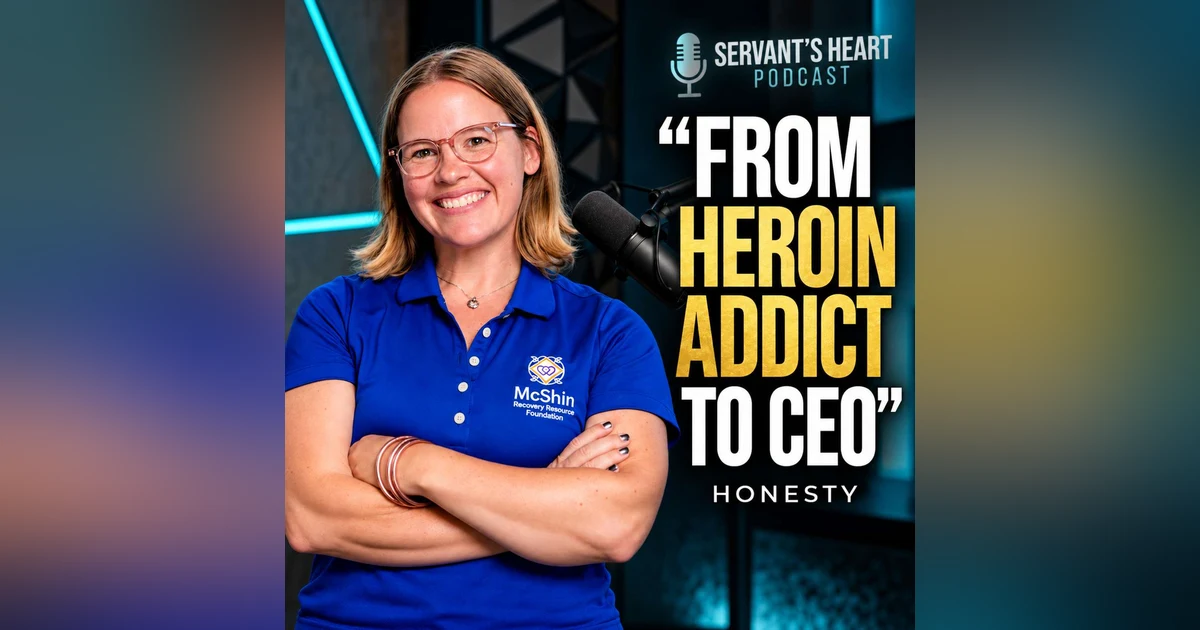
Send us Fan Mail Business Community https://www.skool.com/thebusinessnetwork Newsletter https://doing-business-with-a-servants-heart.kit.com/steveramona 📖 Quote: "We call ourselves hope dealers now instead of dope dealers." — Honesty Liller 📝Description: At 12, Honesty Liller started using to fit in. By 17, she was on heroin, and after an overdose, she spent nine more years in active addiction, including through her pregnancy with her daughter. Today she's the CEO of the McShin Founda...

 Spotify
 Apple Podcasts
 YouTube
 iHeartRadio
 RSS Feed
 TuneIn
 Castbox
 Castro
 Goodpods
 Business Community https://www.skool.com/thebusinessnetwork
Newsletter https://doing-business-with-a-servants-heart.kit.com/steveramona
📖 Quote:
"We call ourselves hope dealers now instead of dope dealers." — Honesty Liller
📝Description:
At 12, Honesty Liller started using to fit in. By 17, she was on heroin, and after an overdose, she spent nine more years in active addiction, including through her pregnancy with her daughter. Today she's the CEO of the McShin Foundation, a nationally recognized recovery organization where most of the staff are in recovery themselves. This is one of the most honest conversations we've ever had on the show.
- Why heroin "covered up everything," and what loved ones need to understand about addiction
- The 28-day program that didn't work, and the peer-to-peer connection that did
- How a five-month stay in a recovery house turned into a career and, eventually, the CEO seat
- Destiny House: the home for moms and children named after her daughter
- Her advice for families (don't give up, but set boundaries) and for anyone still using (start with self-love)
- Why she chooses to be joyful, not just happy, after attending hundreds of funerals
PS: When I first met Honesty, her story stopped me cold. What moves me most is that she doesn't hide any of it. She turned her worst years into a blueprint for helping thousands of others. That is a servant's heart in action.
CTA: Learn more about McShin's work at mcshin.org and follow Honesty on Instagram at Diary of a Woman in Recovery. If this episode moved you, share it with someone who needs hope today, and catch Together We Serve every Friday at 2 PM Pacific / 5 PM Eastern.
🎯 What You’ll Learn:
✅ Your Past Can Become Your Purpose
✅ Love Them, But Set Boundaries
✅ Healing Grows Through Helping Others
⏱️Timestamps:
[00:02] Hooked at Age 12
[00:05] Pregnancy and Methadone
[00:11] Five Months at McShin
[00:16] Leading McShin & Destiny House
[00:17] Advice for Families
[00:22] Dinner with Bob Marley
🤝Connect with Honesty Liller :
💥Web:
💥YouTube:
💥LinkedIn:
💥IG:
💥FB:
💥X:
💥TikTok:
🤝Connect with Steve Ramona:
💥Web: https://steveramona.com/
💥LinkedIn: https://www.linkedin.com/in/steveramona/
💥IG: https://www.instagram.com/bizopportunitynow/
💥Podcast: https://www.servinginbusinesspodcast.com/
💥YouTube: https://www.youtube.com/@doingbusinesswithaservantheart?sub_confirmation=1
🔖Tags:
#BusinessWithHeart #ServantLeadership #SuccessMindset
Free Business Community: https://www.skool.com/thebusinessnetwork
https://app.nucalm.com/purchase/free-trial?coupon_code=NUCALM15&ref=steve57
Subscribe to our Podcast Newsletter
https://doing-business-with-a-servants-heart.kit.com/628f9d5962
Join Me on Substack: https://podcasthost.substack.com/
Doing Business with a Servant's Heart Named Top 20 Small Business Marketing Podcast
https://podcast.feedspot.com/small_business_marketing_podcasts/
Welcome everyone to doing business with a servant's heart podcast. I'm your host, Steve Ramona. I'm thrilled to have you join us today. This podcast is dedicated to exploring the idea of doing business and living life with a purpose, serving others, and yes, achieving success. We believe that we make when we make a different approach, when we can approach, it's hard to say, when we approach our work and our lives with a servant's heart, we can truly make a difference. We create a show for you because we want everyone to be motivated, inspired, and educated to make an impact in your world. Hey, whether you're an entrepreneur, a community leader, or simply someone looking to bring more purpose into your daily life, this podcast is here to support and uplift you. My guest is gonna tell you a story that's gonna blow you out a lot when I first met her. It's just amazing. But where she's at now is so awesome. But while you listen to her today, I want you to think about who you're gonna serve today and how you're gonna create that service. Today's episode is brought to you by an amazing sponsor, Pantheon Alliance. Picture yourself joining an elite community of thriving business owners from a variety of industries, all working together to create a powerful referral marketplace. It's an incredible opportunity to expand your network and elevate your business to new heights. Reach out to me if you have any questions, I'll get you more information. With that being said, as this show is always about impact with a servant's heart. Welcome, honesty. You've got such a big impact you're gonna share with the audience.
SPEAKER_03Thank you for having me. Yeah, I'm excited for our conversation.
SPEAKER_02Start in the beginning where this all started and go for it. It's a crazy story, but a great story at the end.
SPEAKER_03Sure. Um, so I am in recovery from a substance use disorder. So I started using drugs when I was 12 years old. Um, I just wanted to fit in. I smoked a lot of marijuana and did acid and went to concerts and did a lot of things that a typical 12-year-old um didn't do back then. Um, I was really just this hippie chick, um, really just, you know, marijuana growed from the ground, peace and love. And yeah, it was really fun, those those first few years of just kind of doing my thing. My family never knew I was using. Um, I was doing a lot of acid, you know, drinking alcohol. I just wanted to fit in. I never really liked myself as a child. Um, there was some trauma in my home as well. And it just kind of covered all that up. It got me through a lot of things when I was a very, very young girl. And um, after all of that, when I was 17 is when I started using heroin. So that is really when my addiction took over. I fell in love with heroin the first time that I did it. I remember where I was at, everything. Um, and then shortly after that, I overdosed and I was at a party and I overdosed on the heroin and other drugs as well. Um, and I got brought back to life with Narcan, nalaxone. Back then, it was just intervenous. They didn't have the nasal stuff that they do now. And that's when my family found out. They found out I was using drugs. I hid it for five years, and um, that's when I started my first form of treatment. And what back then, what it was was shots of biponorphine in your butt. So I had to do those when my parents had to do it. Um, I went to my first 12-step meeting when I was 17. I didn't stay. I went to a couple when I was 17, and just everyone was a lot older than me. So it just wasn't my jam. And I started using within a week after my overdose. Um, I started out like smoking marijuana again and drinking, but that only lasted like another week, and then I started using heroin again. So throughout all of those years, I used heroin and other opiates for nine more years after that overdose. Um, really, what opiates do is they take over your central nervous system, they take over your receptors in your brain. Uh, my receptors love opiates. And you get addicted pretty quickly. I mean, I got addicted pretty quickly. I committed lots of crimes. I um stole from everyone I knew, especially my family, because we harm the people that are closest to us when we have a disease of addiction. And during that world, when I got pregnant with my daughter, so I really thought then um I was 21 years old. I thought that I would um stop using because God, I was taught God gives you a gift as a child. So I used my whole pregnancy, I used heroin and smoked cigarettes and stuff. So she was born substance exposed when I was 21, which means she had to go through withdrawals from the heroin that I was using um and putting in my body. So then the Department of Social Services came in, obviously. Um, they mandated me to a methadone program. So I went to that for like two years. I graduated on paper, but I was bringing in fake urine and doing drugs the whole two years. Um, I just didn't want my daughter to take be taken away, but I didn't know how to be her mom. And when you have addiction like I do in a substance use disorder, you just you're living in this world of chaos and insanity, um, that you think you're okay just because you're doing this drug and not this drug, or vice versa, or alcohol. So that child, she didn't get a chance um because I was still using the whole time after she came out of my womb. And, you know, I did the best I could, um, but my addiction took over really hard. Um, I got when she was four, I got sent away to a 28-day program. I did this rapid detox, but I did it backwards because I was still using heroin. And so your brain chemical shut down. It was a mess. I was a zombie. And I did the 28 days, and then I came home. Um after the 28 days, I met a boy at the 28-day program. So that's lovely. That's what happens sometimes in rehab. And I came back here to Richmond, and everything was handed to me, my daughter, my kid, my job, and my apartment. Um, so 28 days really ain't my jam. Um, I don't really advocate for that. I think the longevity of recovery and a quality of life is long. And um, so I ultimately me and the boys started using again. He was my then boyfriend, now husband. So we are actually married. Um, so I started using um the last year of my 14 years was the hardest year. Um, I did things as a woman, I did things I never thought I would do because you get to a desperate point when you're dope sick or going through withdrawal is what it's called, but we call it dope sick. Um, for me, I mentally and physically couldn't handle it. You literally, it's like the flu times a thousand. So you have to do with so I stole and lied and cheated and did everything I had to do to get money or drugs. And you know, my daughter was in the backseat, and she, you know, was a part of that life until I left her with my biological mom when she was five. And then some months later, I ended up going into the McShenn Foundation. So I was 26 years old when my stepmom um knew John Schinholzer, the co-founder of the organization, and I moved in there in May 27, 2007, is my first day of recovery, and I haven't used since. So I have over 17 years in recovery.
SPEAKER_02So that's how I got I was just gonna say, uh, honestly, I didn't do it justice. That's a whirlwind story. Yeah, a couple things not being taking drugs, and and there's no judgment here, but my perspective from the outside looking in, you see something interesting to me. Loving heroin. I hear that and go, Well, that's crazy. Explain that a little bit more for people out there that might be dealing with people dealing with drugs.
SPEAKER_03Sure. So, I mean, I believe I was born with these chemical that well, you have chemical receptors in your brain. So, like some people really the receptors really thrive when opiates are in their bodies, and then some people can't like my daughter had all four of her wisdom teeth. She took one like hydrocodone, I think, and she hated it and she threw up, which I was like, Oh, thank you, thank you, thank you. Yes, but she hated it. Um, so I mean, it's just it's just something chemically in your brain, also, that um everything just goes off. And then it was like um the stuff that I have had already been through, even up to 17 years old, and then all those other nine years, I went through a lot of trauma and it just covered up everything. It makes you numb, it makes you not have to deal with life. Um, of course, all the side effects of that is the dope sick and stealing and and the things that happen um with that. But to to be able to do a drug and avoid everything going on in my life, that's what made me fall in love with it.
SPEAKER_02Yeah, okay. Thank you. The other thing now I understand much more, and and this is why I love meeting people like you because when I run to somebody that has a drug issue or somebody, I can help them a little bit, of course, get them to you or somebody. But understanding knowledge is great. The other thing is you said fit in. I kind of have the idea, but explain what you said. I did all this to fit in.
SPEAKER_03Well, in the beginning, more was to fit in. So I was hanging out with older people when I was 12 and 13. Um, and they were already smoking and and drinking and stuff. And I and I said no a couple times, but I um have never liked my body since I can remember. So I was always like the chunky friend, and my family situation was all jacked up at home. And so it was just more of like, I just wanted friends, I just wanted, you know, people to like me. And I've been and I was like that for years in my addiction. I just wanted people to like me and love me, and um, so yeah, I just started using because everybody else was doing it.
SPEAKER_02Yeah. Well, let's get positive. Let's get excited, let's get a servant's heart because this is where this thing really takes off that I love this girl so much about is 2007. You went to McShin, the program, and you've been um I don't know what's the word because uh in recovery since then. But your life took a even a better step. What happened?
SPEAKER_03Sure. So my plan was to just detox. Um, I was just gonna stay there a week. Um, I ended up the magic happened, that peer-to-peer connection, living with other women like me, getting their life together. Um, I ended up living there for five months. So I I immediately um started to work, like within the first two weeks. Um, the executive director at that time hired me to, you know, I was digging ditches, doing landscape. I was doing whatever, like every single day I complained, but every single day I put my head on that pillow in that recovery house, and I just didn't do drugs that day. You know, it's as simple as that, but it's so hard and difficult. Um, so like every day turned to weeks, turned to months, and I was trying slowly getting a quality of life back, which I didn't even know what life was because I started like my brain and everything never fully developed. You know, your brain don't develop till after you're fully 21. So I was putting hardcore chemicals in my body when I was 12 to then. But um, so the magic happened living in in an environment on the 12-step community adopted me because there was no uh female staff at McShine at the time. It was three males, and they had three recovery houses at the time. So one was for females and two for for men. And then after five months, I needed to get my daughter back. So my older sister let me and my daughter live with her until I had a year in recovery. And then me and the boy that I met in rehab got an apartment um after our year in recovery and then a house and blah, blah, blah, blah, blah. Um, so that was the plan, but I just stayed. And then after I moved out of the house, I started working at McShene. So really just giving back to women because it wasn't any women's staff. Um, and I knew I picked up a some traits throughout all the jobs that I had while I was using of like admin stuff, like Microsoft Word and Excel. So I slowly built a career really from my heroin addiction, to be honest with you.
SPEAKER_02It's interesting. Yeah, it saved your life, but increased your life by giving you a career.
SPEAKER_03Correct. Correct. Yep.
SPEAKER_02Does your story give hope to people either dealing with drugs or taking drugs?
SPEAKER_03Oh 100. I mean, we call ourselves hope dealers now instead of dope dealers. Um, oh, totally. I mean, anytime I have a chance, I mean, I wrote a book, it's very short, but anytime I have a chance to just talk about what recovery is, um, because unfortunately, I love my career and I love what I do. But on the the dark side of it, I have been to a lot of funerals and memorials, hundreds. It's it's um insane right now with the fentanyl and now the xalezine, there's a bunch of new drugs. Um, because when I was using it was just old-fashioned heroin. It wasn't anything like this because I wouldn't have survived either, I'm sure, if it was. Um, so any opportunity that I get to speak, or our team gets to speak because all of the team at McShin are all in recovery, and about 90% of our staff are alumni of our program.
SPEAKER_02You're a true servant's heart. You took your catastrophic life, turned it around, and you're giving back.
SPEAKER_03Yeah.
SPEAKER_02How does that make you feel?
SPEAKER_03Um, pretty radical. It really is. Like sometimes I I just celebrate in May 17 years in recovery, and sometimes I look around and it's like, you know, even in the days where it's like so hard, you know, because you're dealing with addiction every single day, and um, you're dealing with humans, which is hard too. And you know, it just I get up every morning and I know that I am walking in my purpose. Like I have no question. I know what I do in my life to help, specifically moms, because we have do have a women and children's house now in McShene, which I love. It's named after my daughter, it's called Destiny House. Um, I know I know all the 14 years of me using drugs and alcohol and the trauma and the pain and everything that I went through has made me a the woman that I am today, but B, I'm not ashamed or anything about any of it because I know I've helped hundreds, if not thousands, of women and men too, throughout these 17 years of just sharing my story. I mean, why not? I mean, we only have this one life on this planet, and if you know, people can get into recovery from whatever form of addiction and have a successful life, then we need to continually talk about it.
SPEAKER_02God bless you. Yeah, the way you turn this around is just amazing. Every time I see your name, honesty is such a great name for you because you're honest of your life. Where are you now with McShin?
SPEAKER_03So I'm the CEO. I've been the CEO for 11 years. Um, and well, I'm kind of the director of development too. So I wear a lot of roles. Um, but the co-founder just retired December 31st. So I am now the lead, lead, lead. Um, so yep, I've been that for 11 years, the CEO. So I do a lot of the grants, the fundraising, um, cultivating donors, uh, relationships, a lot of stuff nationally, because McShane is accredited and nationally known. So we help other states open recovery community organizations and recovery housing. So we do a lot of technical assistance as well. And then I do help a ton with Destiny House, like that's the house out of our 15 houses that we do have um that I really um spend time with the moms and the children. And you know, I don't, it's my baby. The babies are my baby, yeah.
SPEAKER_02It's your passion that destiny always be first because it's your daughter's name. Yeah, so I know this is a hard question, but what's a uh a simple piece of advice you give somebody either dealing with drugs from an outside looking in or doing drugs? What could you tell them?
SPEAKER_03Sure. Dealing with it, hold on. Um, you know, don't ever give up on your loved one, but also set healthy boundaries. There's a ton of national organizations, families anonymous. Um, there's a ton, there's craft training, there's a lot out there. We have a family program, but um, really like a lot of people that I've encountered just don't even my daddy, he wanted me to take a magical pill and make this all go away. He didn't understand what addiction was. He just wanted to just stop. And it's hard when you're addicted to drugs or alcohol, you just can't just stop normally. Um, so really get your education and really understand what your loved one is going through. Um, that's what I would say to the families like, don't ever give up on them. But also, there is a point in time where you have to have a healthy boundary. That's why you talk to professionals and get all that under underway. Um, as far as the individual using, like, don't give up on yourself. Like the shame and the guilt that I felt as a mom was the biggest. That's why I kept using for those five years until I found McShin because I hated myself and what I did to my daughter and all the stuff I continue to do and put her in danger. So the biggest thing that I teach the humans that we serve at McShin is self-love, really understanding the radical gratitude that you have in life, like the drugs and alcohol, don't do in those, don't do those. That's obvious, whatever. I really focus on the inner soul and like how you can forgive yourself for the crap that we do while we're using so you can move on. And it's the ultimate key to recovery is helping someone else. So, like, just hold on and definitely reach out to your local community service board, to the hospitals, to an RCO, uh recovery center, a treatment center. There's so much out there now. There wasn't much back in the day when I was um getting help, but there is a lot out there. But just also be careful, you know, definitely read the reviews because there are um places out there that aren't um that aren't my jam, you know, and safe to go to.
SPEAKER_02Great advice. And it's coming from so many experiences. I always say that's the best advice. I couldn't give that advice because I haven't experienced it. You lived it. Sure. And that leads to life. You live an incredible life, good and you know, terrible and good. So, right now, what does life mean to you?
SPEAKER_03Um, a lot of travel baseball. Our son will be 50 Monday. So we he actually has a local tournament I'm going to right after this. Um, no, really, life is just under like I've I understand that this is my only life. So every single day, like this is my room back here. I go and I and I read readings every morning. I do, I love the coloring, meditative coloring books. I exercise at least six days a week. I do ice baths, I'm in therapy. Um, so I do a bunch of things for my mental health and for recovery, my recovery. But the biggest thing is really like trying to be joyful, not necessarily happy every single day, and really helping someone else, whether it's my neighbor, even it doesn't have to be someone in recovery, you know, really just being a good human out there into the world and uh reflecting that on my children since they're the next generation. And I think we've done a pretty good job. We're not perfect either. Like I definitely um pop off, you know, you got a teenager in the house, so sometimes it's not that pretty. Um, but for the most part, I mean, he's like our best friend. He's our our daughter's now 22, so she still lives here. She works at a restaurant and is in nursing school. I mean, we're just we're all, I mean, we're family and we're parents, but we're really just friends and you know, hanging out in this thing called life. Um, you know, we're not promised an hour. You don't, you just never know what's gonna happen. I've just dealt with so much death that um I really strive to just rock out life and um yeah, live a radical existence, period, because it's yeah, you live like you live death too.
SPEAKER_02So that's the other thing. Yeah, yeah.
SPEAKER_03That was weird. That's another whole that was I saw the light. Yeah, it's crazy.
SPEAKER_02Yeah, well, and I appreciate you saying that. And the thing I'm getting from you, you've said recovery a number of times. You're always gonna be in recovery. I think that's a great lesson for somebody that's been on drugs, been addicted. Your mindset should be your from the day you till the day you die, you're always in recovery, right?
SPEAKER_03Mm-hmm.
SPEAKER_02Okay.
SPEAKER_03Oh, yeah. I mean, it's a longevity, it's a lifestyle. Um, and then you get a life that you never even dreamed of. It's not really getting your life back because even before I was using, I don't want that, it was pretty traumatic. Like, I don't want that life. Um, I've developed with my husband and our children and and our team at McCurry. Shan like developed a life that um that's worth living every single day. So it's it's just life, but it's drug and alcohol free and and a lot of soul searching, and it's pretty cool.
SPEAKER_02God bless you, because I love to hear the happiness in your voice. Everything you just share with us. I don't know if I could have survived it. And I you know, and just I miss it. That's when my thoughts come to. So God bless you. But let's have a little fun. Okay. So you're going to a restaurant, you've got a table of four. You have one chair. Who are the three other people in the in the chairs, dead or alive? Why are they gonna sit in those chairs? And what food would you order?
SPEAKER_03Oh, totally. Bob Marley, number one. Um he's my favorite of all time. He puts me in a place ever since I was little, like puts me in a happy place no matter what's going on in my life. Um, one I've seen one love probably seven times since it came out.
SPEAKER_01Is it good?
SPEAKER_03It's really good. I mean, I love Bob. I they did it was beautiful, it was awesome. So literally, my husband's like, You're watching this again, and I just I love it. So 100% Bob Marley, definitely my husband. He is my best friend, he is my rock, he's seen me because we used together too. So, like, he's seen me through thick and thin. Um, two more. I think um Dan Levy from Shits Creek. There's something about him that his um I've watched Shits Creek probably 20 times. There's something about him, his humanism um outside of David Rose that I really value and um absolutely love. And the fourth, I probably I don't know who the fourth, probably some type of um funny. You know, you know who I think it'd be like, you know who I do really do like is Jul Julia Louise Dreyfus. Amen.
SPEAKER_02I love her.
SPEAKER_03She's super funny, she's super real, she stands up for women. Um, and I don't get fake at all. And I know she's a celebrity, but I just I I really think we would become best friends if we hung out. As far as food, I don't eat pork or beef, so it would definitely be some type of healthy, huge salad. Um, if I had any, also choice would be ice cream for desserts for sure. Um, and I'm a I'm a big roll girl. So if you have a good roll with um like cinnamon butter, um, I do like that. Um, so I'm pretty simple with the food. I like earthly food and and chicken. So I eat chicken a lot in tuna.
SPEAKER_02Well, I like that you made it a cheat day too, because that's what I would call it with your rolls and the ice cream. Let's have a cheat day. Yeah, I have that cheat day. Yeah. Well, honestly, we come to the end of time. I can't believe time flew by. I knew it would. Thank you for sharing your story and inspiring, motivating others, and educating us, people, especially who haven't done drugs, how to be able to handle it much better. People listening, how can they find you?
SPEAKER_03Sure. So McShinn.org, mcsh-in-.org. Um, my personal, I am on Insta, Instagram, um, at Diary of a Woman in Recovery. You can check that out. McShin is on Facebook and Instagram and TikTok. Um, yeah, I mean, I'm on TikTok, but I don't really know what I'm doing. So you don't need to follow me. Yeah, yeah. Uh I don't know what I'm doing. My son is like, what are you doing? So um, I don't know. But yeah, really, Instagram is really what I strive on. Um, and McShinn is on all three.
SPEAKER_02Great. So reach out, I'll put it in the show notes. And I want to thank the audience. You know, me and honesty, thank you so much for watching or listening to this podcast. I I know you got motivated because I did. I'm fired up right now. Um, don't forget my TV show together. We serve every Friday, 2 p.m. Pacific, 5 p.m. Eastern. And as always, I want to, you know, look to see you at the next episode at Doing Business with a Service Art. See you all later.