Chasing the Dollar Is Not Solving a Need | Steven Shackelford
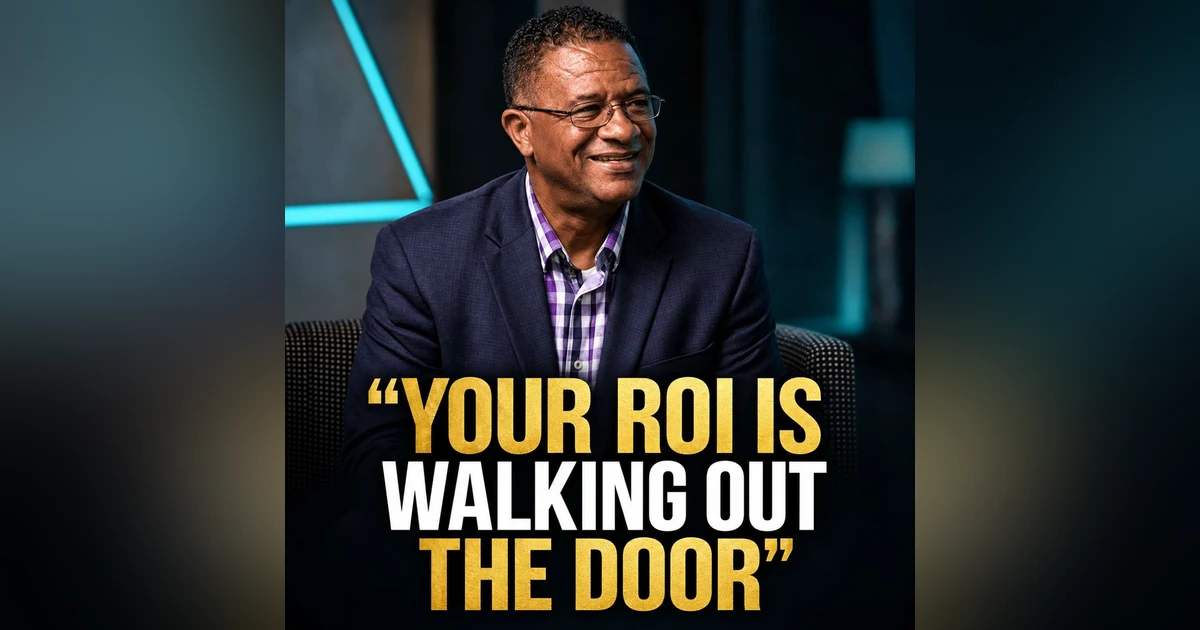
Send us Fan Mail Business Community https://www.skool.com/thebusinessnetwork Newsletter https://doing-business-with-a-servants-heart.kit.com/steveramona 📖 Quote: "ROI means nothing if I don't know why these people are leaving." — Steven Shackelford 📝Description: What if the real return on your career isn't the money, the titles, or even the nine state championships, but the text you get years later from a kid you almost lost? Steven "Coach Shaq" Shackelford has spent 35 y...

 Spotify
 Apple Podcasts
 YouTube
 iHeartRadio
 RSS Feed
 TuneIn
 Castbox
 Castro
 Goodpods
 Business Community https://www.skool.com/thebusinessnetwork
Newsletter https://doing-business-with-a-servants-heart.kit.com/steveramona
📖 Quote:
"ROI means nothing if I don't know why these people are leaving." — Steven Shackelford
📝Description:
What if the real return on your career isn't the money, the titles, or even the nine state championships, but the text you get years later from a kid you almost lost? Steven "Coach Shaq" Shackelford has spent 35 years coaching varsity football and advising business owners in the financial world, and he runs both on the same playbook: find out why someone does what they do, then build the game plan around it.
In this episode, Steve and Coach Shaq cover:
- The dinner-table lesson from his father Dwight that shaped everything that followed
- The senior who wanted to quit, the conversation that changed his mind, and the message that arrived years later
- Why starting with someone's "why," not their money or goals, is the key to real financial planning
- How risk tolerance, retirement, and "work optional" look different at 35 than at 63
- Why ROI means nothing until you know why your best employees are walking out the door
- Marrying his high school sweetheart and the four mentors he'd want at his dinner table
PS: Coach Shaq got choked up telling the story of the player he convinced not to quit. Watch for that moment. It's the clearest picture of a servant's heart we've had on the show in a long time.
CTA: Connect with Steven at Invest Financial (steven@invst.com | 317-294-0358). Then subscribe to Doing Business with a Servant's Heart, leave a comment with your biggest takeaway, and catch Together We Serve every Friday at 2 PM Pacific / 5 PM Eastern.
🎯 What You’ll Learn:
✅ Impact Outlasts the Scoreboard
✅ Lead With the Why
✅ Retention Is the Real ROI
⏱️Timestamps:
[00:03:00] Dad's Lesson on Impact
[00:06:15] The Player Who Almost Quit
[00:11:50] Start With the Why
[00:16:45] Risk and "Work Optional"
[00:21:00] ROI Through Retention
[00:24:00] Sweetheart and Mentor Table
🤝Connect with Steven D. Shackelford:
💥Web: https://invst.com/
💥LinkedIn: https://www.linkedin.com/in/steven-shackelford/
🤝Connect with Steve Ramona:
💥Web: https://steveramona.com/
💥LinkedIn: https://www.linkedin.com/in/steveramona/
💥IG: https://www.instagram.com/bizopportunitynow/
💥Podcast: https://www.servinginbusinesspodcast.com/
💥YouTube: https://www.youtube.com/@doingbusinesswithaservantheart?sub_confirmation=1
🔖Tags:
#ServantLeadership #BusinessSuccess #Podcast
Free Business Community: https://www.skool.com/thebusinessnetwork
https://app.nucalm.com/purchase/free-trial?coupon_code=NUCALM15&ref=steve57
Subscribe to our Podcast Newsletter
https://doing-business-with-a-servants-heart.kit.com/628f9d5962
Join Me on Substack: https://podcasthost.substack.com/
Doing Business with a Servant's Heart Named Top 20 Small Business Marketing Podcast
https://podcast.feedspot.com/small_business_marketing_podcasts/
Welcome everyone to doing business with a servant's heart podcast. I'm your host, Steve Ramona. I'm thrilled to have you join us today. Wait to hear about this guest. You're gonna love them. This podcast is dedicated to exploring the idea of doing business and living life with a purpose, serving others and yes, achieving success. We believe that when we approach our work and our lives with a servant's heart, we can truly make a difference. We hey, we create a show for you because we want everyone to be motivated, inspired, educated to make an impact in your world. And the key word is your. Whether you're an entrepreneur, a community leader, or simply someone looking to bring more purpose into your daily life, this podcast is here to uplift you and support you. And while you're listening to this incredible guest and get your pen and paper ready if you want to take notes, think about how you're gonna serve today and what impact you create today. Again, another key word I like to highlight is today. Why wait to tomorrow when you can change somebody's life today, either small or very big? And when today's uh episode is brought to you by our amazing sponsor, Panthen and Alliance. Picture yourself joining an elite company community, excuse me, of thriving business owners from a variety of industries all working together to create a powerful referral marketplace. It's an incredible opportunity to expand your network and elevate your business to new heights. So impact is a big part of my monologue, and people who've been listening to me for a while. Servant Heart and Impact, they go together. Just talking to my guests for 10 minutes before the show. Wow, what an impact. And what I love, love, love about him, he's mixed sports with business, which I think is a home run. Steven, welcome to the show.
SPEAKER_01Thank you so much, Steve. It is an honor and privilege to be here with you. And uh I am extremely excited uh to spend the next uh half hour or so with you.
SPEAKER_02Me too. This is great. Let's start with you were telling me before the show in the green room 35 years of coaching and business by serving. Talk about how you did that, what was your mission or thought process?
SPEAKER_01Absolutely. Uh at a very early age, uh my father instilled in, you know, we have four boys and one girl in our family, and uh, we all played football. Uh, but my father, you know, he was a tremendous advocate of giving back. Uh I remember he used to serve his community at a very early age, and we would also accompany him. Um, well, one day he sat us down and said, it doesn't matter where you live, it doesn't matter what kind of car you drive, it doesn't matter how much money you have. What really matters at the end of the day is the impact that you have on others. So find something that you're extremely passionate about and use that passion to give back to your community to bring others up. So, my way of doing that was through coaching football. I've had the opportunity to coach uh varsity football as well as develop athletes literally all over the U.S. because of my business practice taking me in so many different places. Um, and it it wasn't about winning state championships. We won nine, by the way, um, for all the programs that I've been blessed enough to be a part of. Uh, but the the impact that I've had on those kids and to see those kids flourish in real life is the real payment, uh, in my opinion. And it it has just been tremendous. And I thank God every day, and I thank uh my father for instilling that in us at a very, very early age.
SPEAKER_02What's your dad's name?
SPEAKER_01Dwight. Dwight.
SPEAKER_02Shout out to Dwight for being an incredible dad and showing the way for his kids. And I I just have to shout out, put it out to the universe because that's a powerful message, and and it spills over to business, which we'll get in in a minute. But do you think today, even more so, we need to make more of an impact on these high school kids and college kids that are playing football or whatever?
SPEAKER_01Absolutely. You know, it's funny because through analyzing team sports and the impact a coach can have on an individual, you never know how much that impact is going to how great that impact is going to be on a daily, weekly, yearly, and lifetime experience on behalf of that young man or a young woman. So anytime we have an opportunity to guide and counsel through coaching, I think we we certainly have to, you know, take that path and run with it because there are so many youth today that do not have those avenues of people that they can work with. And as a result of that, it impacts our community significantly. And when we see that, we we have to take a step back and say, how can I make someone's life better? Even if it's for 10 minutes, you never know if that 10-minute conversation is going to change the course of someone's life. And I've seen that happen over and over and over again in over the over a 35-year period.
SPEAKER_02Stories are great to get the message out. Can you tell us a story of a uh of a guy you coached and how you changed him? I know you have because I can tell in your voice, I can feel it. Tell us a good story, one or two athletes you work with.
SPEAKER_01Absolutely. Um, there was a gentleman that uh I ended up working with in high school. He was in his junior year. And at the end of this, he didn't have the greatest season of the world. Um, and his senior year, he came to me and he said, and everyone calls me Coach Shaq, by the way. So he came to me and he said, Coach Shaq, I'm not playing my senior year. And I said, No, no, that would be a mistake. I said, You have a lot of talent, not just physically, but also internally. I see the way that you work with your teammates. You are considered to be a leader on this team. It would be a detriment if you did not play. So I really had to convince him to play because his junior year experience, he didn't get out of it what he thought he was going to get out of it. Fast forward, his senior year, he had one heck of a year. I mean, he he ended up playing in the state all-star game here in Indianapolis, uh, getting invited to play in that game. Uh, he was one of the top safeties in our region. Um, and at the end of the season, he gave me a big hug and he said, Thank you so much for you know allowing me to play. And I get worked up when I talk about this story. So um, and then about this what I kid you not, Steve. About things ago, the same young man reached out to me, and I hadn't spoken with him in this was about three or four years. And he reached out to me via text, and he just said, Thank you for all of your wisdom when I wanted to quit, because there were times in my life where I wanted to quit, and I thought about that conversation we had, and I was able to pull myself out of the gutter and uh be successful. And and I had to call him at that point. I said, you know, this is the reason why I coach. So it was just a tremendous story, it made me feel really good.
SPEAKER_02The power of a servant's heart right there. Audience, if there's any reason to be a servant, Steven, Coach Shaq, I love that name. Coach Shaq just showed you a reason. If you did that one time in your lifetime, I think God is gonna shake your hand when you get up there. Of course, we'd love to do more, but you can impact people that way. And I think you're in my head. I think we're online because I was gonna ask you, what has sports done for kids and you to help in business? Because you're right, he left high school three or four years, but he took your lessons and in the sport of football. So talk about that.
SPEAKER_01Yeah, you know, it it's it's interesting because I've had the sincere pleasure of working for some of the finest financial advisory firms and mutual fund companies in the world over the years, over my career. And when I think back on the impact that I've made on business owners, it's not it wasn't about, you know, making the money. It was never about the money, it was about listening to what they need to do based on their business model and being able to add value to those business owners beyond that of just their linear focus. Because as business owners, oftentimes what you find is they're so busy making widgets that they can't really see um through other areas of the business and the impacts. And that is the reason why I do what I do. Um, it's about how can I help that business owner and help the employees within that business develop in a manner that allows them to live the lives that they want. Because at the end of the day, if I can share some insights that's going to help that business owner make better decisions on behalf of their retirement plan and their employees, then that whole community benefits. And the business owner's business will continue to flourish. They will continue to be that small business that others in the community utilize, right? And they'll also build a retention strategy, which is essentially building a family network within their community.
SPEAKER_02You're building your abs. It's an acronym I just came up with. A friend helped me yesterday. Always be serving. Work in your abs, always be serving. And I love your focus was you meet a business owner, it's not transactional, it's transformational. The focus is off that. If you get paid, great. If you don't, you've helped somebody, you move on to the next person you help, and then the money comes and it's come for you. You've been successful, right? You know, I I like to say this, he's not homeless, he's not you know sitting in the corner of a street, he's been successful serving. That's always about this message of Steven. Thank you for putting that out there. The other side of this coin, which is very interesting to me, is finances. You're in the financial industry, a massive emotional industry. You're dealing with people's money, their life. How do you tie in serving with that?
SPEAKER_01Yeah, you know, it's interesting, it's about the why. So when I'm speaking with their employees, I want to get at what is their why. Their why is going to be different than the person sitting next to them. But if I can understand their why, then I can formulate a game plan around what they're trying to achieve on behalf of their organization and their employees. You know, it's funny because in the financial markets, oftentimes you hear about investments and you hear about all these different levers that are trying to get at a financial solution. But unless you can solve for what their internal, what drives them to be successful, unless you can solve for that, you're never going to be able to solve the problem for the financials because you're not going to understand what's motivating them to drive the business and help their employees. So I would say that if you begin with the why and you have a clear understanding of the why, then you can build a financial game board around that why. And that's what we do here at Invest Financial.
SPEAKER_02Yeah, and amazing. You never talked about money, that whole conversation you just had, that whole speech. And it's not a speech. That's what I love about you. It's why. You never ask money, you never ask goals. It was why. And then those come later, if it's a fit. You know, if their why is I want to steal from every person that I has as a client, not that they would say that, but something that route, you'd be going, probably not going to work together, right?
SPEAKER_01Right. That's exactly right. And we've turned away clients as a result of that. Uh, because at the butt at the end of the day, I have to not only feel good about what I'm doing and the impact that I'm making on those business owners' lives and their employees. We also have to make sure there's alignment in culture. And I think that's a big disconnect in the business world, especially in the financial markets these days. Uh, there's a huge disconnect because everyone is driving for the dollar. When you drive for the dollar, you forget about what makes that business owner tick, what's important to them and their families, and how are you solving for that need? Chasing the dollar is not solving a need. Chasing the dollar is that is the end result of trying to get at financial success. Well, if you focus on the why, you focus on their needs, you focus on solving problems because at the end of the day, it is about the client. It's not about you. You're just able to provide additional resources to help them solve for their need. And that's the way that I always look at every business conversation. I really want to help those business owners solve for whatever their needs are, and then get down to the participant level to solve their needs as well. And if we're able to do that, Steve, and do that consistently, everybody wins.
SPEAKER_02No, and and you said something I think you humbly went by that it caught my ear was, you know, you're chasing a dollar. Guess what? That's your need. I'm a sales guy, I'm chasing a dollar with you. You're feeling my need and you're flipping it and going, I want to know your need, see how it can fit. And you say no to people, which audience have said many times, you say a no is a servant's heart because they're not a fit for you, they're not a fit for both ways. They go find somebody else that's a fit for them, and that's great. Nothing wrong with that. I kind of say the word next, you know, next. Okay, who's the next person I'm gonna serve? So I love that. Chasing the dollar is their need. I gotta write that down. Skydiving. Have you ever been skydiving? Why the hell would you do that?
SPEAKER_01You know, I've I've I've had some friends that have uh been skydiving on numerous occasions, and they've always tried to uh have me attend those sessions with them, and I've always declined because I just do not see the need to jump out of a perfectly good airplane.
unknownYeah, there you go.
SPEAKER_01I'm a thrill seeker, but I'm not a thrill seeker at that level. That's a whole different level of thrill seeking.
SPEAKER_02I love it, I love it. Well, and it's interesting that leads to my you must be in my head because these questions are coming up. You're bringing it to me is skydiving is a risk, you know, not big risk, but risk management, because I do uh trading myself, that's the other servant's heart. Find out the talk about risk with your clients.
SPEAKER_01Yeah, so and this gets back, Steve, to the original why. So when you're when you understand the why, you start to understand what their tolerance is for risk, without necessarily saying, what's your risk tolerance? You get at it through a consultative process by asking a number of questions. Risk is different for everyone. You know, for instance, in our industry, we have something called target date funds, where you know, financial organizations apply a number, let's say 20 years out to someone's retirement, and think that that number is going to be managed to the individual long term. So as long as you're in this particular fund, you're going to be fine for retirement. Well, the needs of one person are much different than the needs from another. Someone else may need to be, may have a higher risk tolerance versus someone else that may be nearing retirement, they their risk tolerance may be a little lower. So unless you ask the right questions to get at financially where they want to be, which ties right back into the why, right? Then you're never going to be able to set them up based on their individual tolerance. You're essentially putting them in a box. And if you put them in a box, then chances are they're not going to meet their financial goals long term. Because here at Invest, we want our clients to retire on their terms. And we actually call it work optional, right? Because some folks want to work in retirement. Well, if you want to do that, then we will set up a financial game board to allow you to do that. Whereas versus others want to buggle out and buy an island. Well, if that's your why, then we're going to build a financial game plan around that. We're not going to tell you what to do with your money, but we're going to consult with you to help you understand, based on your own words, your own why, how you're going to get there. And then we pull all the right levers and put all the correct resources in place to help them.
SPEAKER_02I love that levers analogy. It's so perfect. And it changes from a 35-year-old to me as a 63-year-old. Risk tolerance. And doesn't that why change? What my why at 35 is different at 63 as life goes about. So that's why it's important to talk to somebody like you, whether it's you or somebody else, to kind of put this on paper and then make the changes that need to be changed.
SPEAKER_01That's exactly right. And you know, and I find that all the time, you know, working on with 401k plans, what I find is the plan that was that was developed for a lot of these businesses, let's say five years ago, and the business is now flourishing and doing very well, it's the same plan in place. That same plan may not meet the needs of the business today. So we we have a um a tagline that we typically will use. We're gonna grow with your business. So as the business continues to grow, we're gonna evaluate whether or not that retirement plan, that 401k plan, is still meeting your needs. If it's not, then we can talk about other ways to enhance and modify that retirement plan so that it's customized based on the growth of the business and just as important, based on the growth of your employee base.
SPEAKER_02That's that's powerful. Anybody in finance or really any industry, growing with your client base is so powerful. You say that message mate, I'm sworn you side by side, I'm not making money off you, making money off you, making money. And a real quick note, audience, I've been in in situations where financial advisors have been really bad where they've affected. I'm not gonna tell the story, some people know it. So a good financial advisor like Steven, or what he's doing for you, you want to work with because if they want to grow with you, I want to find a company right now, I'm hiring you right now. So I'm putting it out there. Um so the other thing with finances is you know, companies will go, ah, you know, ROI, that's the big elephant in the room, ROI. How do you handle that? I'm sure yeah, you do hear it. How do you handle that?
SPEAKER_01You know, it's funny because that's that's a buzzword in the industry. You know, what is the ROI? Well, if you think about how you're impacting the lives of the individuals working within that organization, you're gonna see multiple ROIs. And what the way that I describe it is you're going to see multiple benefits to your organization. Let me give you a couple of examples, Steve. Let's say that a business owner is managing a business and they're having an issue with retention. Right? So you can't put a dollar sign on retention unless you understand what the issues are that are causing the retention. Problems. So ROI means nothing if I don't know why these people are leaving. So let's take a step back, analyze the source of the issue, correct the source. Now, with the financial guidance education that we provide, now you understand how to retain those employees through offering potentially better benefits to executives, better benefits to the rank and file employees, and reducing your tax strategy, your tax liabilities as a business owner. Now there's ROI on three different levels there. And if I'm able to retain a good quality employee and keep them from leaving to go across the street for $5 more an hour, and then having to backfill that position and train, and there's significant resources associated with that. Any business owner will tell you that their biggest expense is what? The bottom line, the employees. So why not understand how to retain those employees by offering potentially better benefits and then put the ROI in place based on the expenses associated with managing that component and looking at the value that that external party, the wealth management firm, is bringing to the business. You'll see that the expenses far are far less than the overall value that you're adding to the business.
SPEAKER_02I love it. I love it. This is audience, you better be taking notes. I've got notes myself because and I'll get his contact, we'll get out a shout out, reach out how you can reach out to him. But let's get a little personal. Let's get deeper into Steven, even though we've got really deep with you. So I got married two years ago at 61. You got married young. Why?
SPEAKER_01You know, I was very fortunate. I grew up in in Irvine, California. And I was extremely fortunate to meet my future wife in high school. So I actually married my high school sweetheart. She's been with me every step of the way. Uh, just she's literally my right arm. Uh, we just had our 34-year wedding anniversary, by the way.
SPEAKER_02Congratulations. Cheering out there, audience.
SPEAKER_01And uh, we we've been together for over 40 years, and in fact, she's part of my team now here at the office.
SPEAKER_02That's great.
SPEAKER_01That's so we do we do a great job of separating church and state. But yes, she is she is my world. I would do anything for her. She's followed me all over the United States with all the opportunities that I've had and have been blessed with. And uh I just couldn't imagine living my life without her.
SPEAKER_02Moms and wives, you're all serving hearts. And this is a great example of a servant heart. So, this is a little deeper question. So you go to a restaurant, you have a table of four, you occupy one of the seats. Dead or alive, who would you want in those three other seats? And what food would you order?
SPEAKER_01I would have to say uh my father would be one that I would want in one of those seats. Um, a gentleman by the name of Steve Malbasa would be another. Steve is was my business coach since I was at working with the Capital Group American Funds, and I was that big. I mean, he really helped me to understand the industry. Um, tremendous, tremendous mentor on the financial side. Um, the other seat I would have to say should be occupied um by coach Hinnigan. He was my high school football coach, uh, just a tremendous man. He he ended up uh you know losing uh his life recently, uh natural causes, but uh another tremendous mentor. And uh the fourth, I would have to say Scott Jarrett. Scott Jarrett is the owner of uh Invest Financial and Scott, the based on his life and what he had gone through at a very early age, and to see what he's achieved now based on his giving nature, his ability to uh interact with people and doing it for the right reasons, um, he would definitely have to be at that table. And the meal is simple a good porterhouse steak and potatoes.
SPEAKER_02Okay, I'm gonna buy another seat, so make it five because I'd like to eat that with you. Oh my gosh, that's awesome! And what's interesting, I love asking this question, Stephen. You picked mentors. Some people will pick people they want to learn from. All good, but I love that every all four of them are mentors in your life. And shout out to the family of coach and who lost his life, uh, you know, praying that they're they're healing because of that. Um, Steven, you showed in this podcast what a servant heart is, what a servant heart can achieve, and what a servant heart feels. I I want to thank you so much. How can people find you? I know people are gonna want to reach out.
SPEAKER_01Sure. Uh, thank you very much, Steve, by the way, for allowing me to participate in your podcast. It's it's it's a famous, famous podcast. And I know your schedule is awfully busy, my friend. Uh, you can reach me at Steven V-E-N at InvestIn V S T dot com. And my cell phone number, and it's always on, is 317-294-0358.
SPEAKER_02Awesome. We'll get this information on the show notes too. Or can you do me a favor, uh, audience, comment on the podcast on the YouTube or podcast when it comes out, put a comment in there. Like, don't like, doesn't matter. Give us critique. Love all that because it only helps us grow, me and Steven. And uh, I we have the same name except for that one letter. We're not the same letter. He just added an end because he's much much bigger than I am, but that's okay. I'm still lovely guy. But you know, don't forget about my TV show, Together We Serve every Friday at 2 p.m. Pacific, uh, 5 p.m. Eastern. I hate time, so I was always forget those the three hour difference. And uh, audience, I want to thank you, and Steven wants to thank you for watching and listening to this podcast. And we look forward to seeing you on the next episode of Doing Business with a Servant's Heart. See you soon.