Empathy in Leadership: How It Drives Profit | Dr. Melissa Robinson-Winemiller
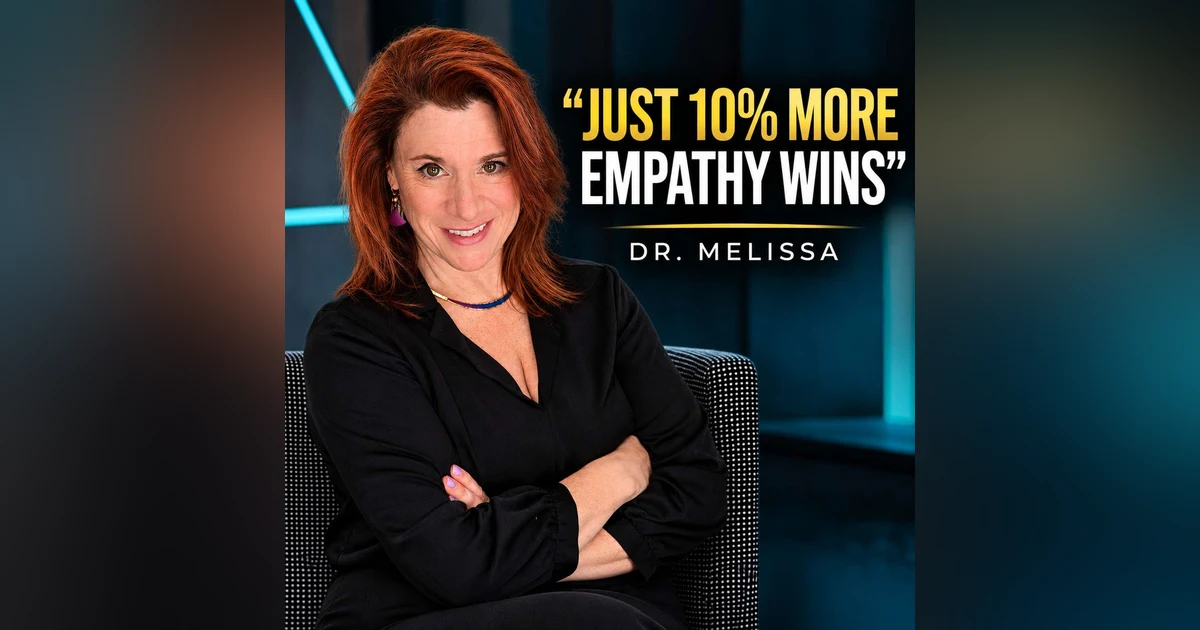

Send us Fan Mail Business Community https://www.skool.com/thebusinessnetwork Newsletter https://doing-business-with-a-servants-heart.kit.com/steveramona 📖 Quote: "If you're actually in empathy and you're relating to someone on a human-to-human level, you can't judge them at the same time." — Dr. Melissa Robinson-Winemiller 📝Description: Can empathy in leadership actually improve your bottom line? Dr. Melissa Robinson-Winemiller is an emotional intelligence (EQ) expert, a ...

 Spotify

 Apple Podcasts

 YouTube

 iHeartRadio

 RSS Feed

 TuneIn

 Castbox

 Castro

 Goodpods
Business Community https://www.skool.com/thebusinessnetwork
Newsletter https://doing-business-with-a-servants-heart.kit.com/steveramona
📖 Quote:
"If you're actually in empathy and you're relating to someone on a human-to-human level, you can't judge them at the same time." — Dr. Melissa Robinson-Winemiller
📝Description:
Can empathy in leadership actually improve your bottom line? Dr. Melissa Robinson-Winemiller is an emotional intelligence (EQ) expert, a leadership coach, and the author of The Empathic Leader. She joins Steve Ramona on Doing Business with a Servant's Heart to explain why empathy is a courageous, practical leadership skill and not a soft extra.
- Why empathy and judgment "can't be in the same room," and what that means for divided teams and communities
- Emotional intelligence made simple: the EQ "tool bag," and how empathy tells you which tool to use
- The "never show weakness" myth, and why vulnerability in leadership takes real courage
- Why self-empathy is the first step for every high-achieving CEO and founder
- A real client story: one 20-minute daily habit that raised innovation, productivity and profit
- How empathy and servant leadership fit together "hand in glove"
PS: Stay to the end to hear who Dr. Melissa would invite to her dream dinner table. Her picks include a martial arts legend, a fiercely authentic icon and a street artist nobody can identify. Her choice of cuisine connects back to her years as a touring musician.
CTA: Want to lead with more heart? Subscribe to Doing Business with a Servant's Heart, then pick up Dr. Melissa's book The Empathic Leader and connect with her on LinkedIn. Share this episode with one leader who needs it today.
🎯 What You’ll Learn:
✅ Empathy Replaces Judgment in Divided Teams
✅ Self-Empathy Is the First Leadership Step
✅ Human Connection Drives Productivity and Profit
⏱️Timestamps:
[03:00] Empathy in a Divided Culture
[05:00] Empathy vs. Judgment
[07:00] What Is Emotional Intelligence (EQ)?
[08:30] Vulnerability in Leadership
[11:30] Self-Empathy for CEOs and Founders
[19:00] Empathy and Servant Leadership
🤝Connect with Melissa Robinson-Winemiller:
💥Web: https://eqviaempathy.com/,
💥YouTube: https://www.youtube.com/@TheEmpathicLeader
💥LinkedIn: https://www.linkedin.com/in/dr-melissa-a-robinson-winemiller-mba-prosci-cp/
💥IG: https://www.instagram.com/empathyqueen.eq/,
💥Web: https://stan.store/empathicleader
💥X:
💥TikTok:
🤝Connect with Steve Ramona:
💥Web: https://steveramona.com/
💥LinkedIn: https://www.linkedin.com/in/steveramona/
💥IG: https://www.instagram.com/bizopportunitynow/
💥Podcast: https://www.servinginbusinesspodcast.com/
💥YouTube: https://www.youtube.com/@doingbusinesswithaservantheart?sub_confirmation=1
💥 Reduce Stress/ Sleep longer: https://app.nucalm.com/purchase/free-trial?coupon_code=NUCALM15&ref=steve57
🔖Tags:
#Leadership #LeadershipDevelopment #Empathy #BusinessLeadership #WorkplaceCulture #DoingBusinessWithAServantsHeart #TheEmpathicLeader
Join our Business Community: https://www.skool.com/thebusinessnetwork
Better Sleep/ Less Stress https://app.nucalm.com/purchase/free-trial?coupon_code=NUCALM15&ref=steve57
Subscribe to our Podcast Newsletter
https://doing-business-with-a-servants-heart.kit.com/628f9d5962
Join Me on Substack: https://podcasthost.substack.com/
Doing Business with a Servant's Heart Named Top 20 Small Business Marketing Podcast
https://podcast.feedspot.com/small_business_marketing_podcasts/
Business with our servants' hearts. Welcome to the podcast. Inspiration, motivation, takes. Listen to the podcast. We're all about to talk about life. Our guests will share their life story. We want you to success in life and business. We're ready and we will start Shortly We're gonna talk a life We're gonna speak on business You're gonna shine bright We are gonna win Business with our servants hearts With host is Tibra moderati Inspiration education thoughts Listen to the podcast
SPEAKER_01Welcome everyone to doing business with the Servant's Heart Podcast. I'm your host, Steve Ramon. I'm so thrilled to have you join us today. This podcast is dedicated to exploring the idea of doing business in life with a purpose, serving others and yes, achieving success. We believe when we approach our work and our lives with a servant's heart, we can truly make a difference. We create a show for you because we want everyone to be motivated, inspired, and educated to make an impact in your world. Whether you're an entrepreneur, community leader, making millions and billions of dollars, or simply looking to bring purpose into your daily life. This podcast is here to support you. And if you want to be happy today and you're not having a good day, you'll want to listen to my guest because she's going to bring the energy, positive energy level to the next level. Please stay and watch it. Take notes. Get your pad and paper out. While you're listening to her today, I want you to think about how you're going to serve today and what impact you'll create today. Don't wait till tomorrow. Let's do it today. Today's episode is proudly sponsored by our phenomenal partner, Pantheon Alliance. Imagine being a part of an exclusive community of high-income, successful business owners and entrepreneurs from diverse industries. And together they build this network and referral marketplace to unlock the potential of building a philanthropic thought leader platform. Get your message out quickly and enjoy working with others who are at the same place you are. If you have any questions about Pantheon, please reach out to me and I'll get you all the information you need. Now, as I say, I talked about lead impact. Well, to be empathetic, empathetic is an impact. And we're not doing enough these days. I mean, just today's July 22nd. Yesterday, a big thing happened in our government, and the world is fighting each other. It's diverse, divisive. Why don't we be empathetic? Okay, this happened. Let's work together. This is what my guest does. She's a freaking rock star, so I'm excited to have her on. Dr. Melissa, welcome to the show.
SPEAKER_02Thank you, Steve. I'm so excited to be here. Thank you so much for having me.
SPEAKER_01And I want to dive into that real quick because we're, you know, some the big thing Joe Biden just dropped out of the race. I'm not political and stuff, but I noticed that on messaging today and people talking, it's you know, people are fighting against you. So oh, this should happen, that shouldn't happen. That's not being empathetic, is it?
SPEAKER_02No, no, by no means.
SPEAKER_01How do we solve that?
SPEAKER_02I mean, well, wow. Same as getting world peace, I think. Um that's a big question.
SPEAKER_01I love it.
SPEAKER_02Well, if you've if you drop down into the roots of empathy, the whole point is that you feel what someone else is feeling, right? So what's going on in the blogosphere right now is a lot of people feeling a lot of things, you know, whether it's up or down or sideways, but not thinking about what other people are feeling at the same time. Because there's a huge range of emotions out there right now, just like you said. I mean, from elation to absolute depression to absolutely everything else. So, you know, this is exactly where we should be understanding each other a little more. And in the process, understanding that what we are are human beings being human. So there's gonna be some off remarks. There's gonna be some stuff that people don't want to hear. There's gonna be some divisive stuff happening. But to be able to relate to each other as human beings and go, okay, I'm gonna let that roll off. Okay, I don't need to attack on that one. Maybe I don't agree, but it's still, you know, these are still other human beings being humans. So maybe if we all just back off 10%, this all might be a little more conducive to discussion.
SPEAKER_01Yeah. So a divided community, whether church, school, your business, uh, your school, and we go on and on and on, sports fans, whatever, empathy can be the answer. So it's not a divided community. How do you see that working?
SPEAKER_02Oh, absolutely. Because the thing is, is if you are relating to someone, right, on a one-on-one basis, you and I are relating as human beings, suddenly it becomes a lot harder to be divisive because at the heart of divisiveness and being divided is judgment. I'm judging you. I'm saying I don't like this. And because of that, I don't like you. Well, if you're actually in empathy and you're relating to someone on a human-to-human level, you can't judge them at the same time. The two things just can't be in the same room at the same time, they're mutually exclusive. So by not judging and relating to you as a human being, now I'm talking to you instead of just addressing your behavior or what you're saying. You and I are human beings. We have more in common than we do different. So why not start with what we have in common before we start picking at what we have that's different?
SPEAKER_01Yeah, you must have been read my mind because I was going to ask you about judgment and judging. Um, it's it's and I've been guilty other than we're human, we're fallible. We're guilty of it. It's what we do after that step. How do we correct the fix it, whatever the word may be? So the interesting we talked about in the green room before the show was how you started this business and how people were like turning a different uh I don't want to say the phrase you said, but by an eye, you know, like looking the other way, like, come on. Why do you think that's happened? Why do you think that happened?
SPEAKER_02I think a lot of it actually is a result of the pandemic and the aftermath of the pandemic. Because the thing is, is going in, so we've been talking about EQ since 1989. This has been floating around for 35 years. And people are kind of like, oh, yeah, yeah, I've heard this before, you know, send me to another training. But then when the pandemic happened, suddenly we had to tap into our empathy in EQ because everything was falling apart for everybody. There was no way around it. So then coming out of this, employees are like, well, wait, I've seen you use empathy. I've seen you use EQ. We need to do that now as well. Just because it's five years later and the pandemic is over doesn't mean we should forget the skills that we learned.
SPEAKER_01Yeah. EQ, define that, and maybe a listener go, what's EQ? What is EQ?
SPEAKER_02Emotional intelligence. So what it is, in essence, is the ability to understand and control your emotions and to understand other people's emotions. And the way I like to think of it is it's kind of like a tool bag, right? So you've got all these different tools in it, whether it's communication, whether it's self-reflection, whether it's an ability to understand other people, whatever it is, it's all in this tool bag. And that's where I come in with the empathy via EQ. Because what I teach is that if we use empathy to relate to each other, we then know which tool to pull out of that tool bag. We're not just throwing these skills at the wall and hoping something works. But rather, I understand if I need a wrench or if I need a screwdriver. And that's where the empathy comes in.
SPEAKER_01Well said. Oh man, you're a rock star, Dr. Mosley. That is, but you simplified it because that's, I think, the problem with EQ is it gets so complex out there. People are like, oh, it's over their head. So I've talked to business owners, CEOs, founders. I can't show any weakness to my employees. If I show weakness, they'll step all over me. I know you've heard that. I'm sure you work with that. What's your answer to that?
SPEAKER_02That it's an antiquated thing. It's old thought that doesn't hold any place in today's leadership positions. That's like an old command and control style, is what they would have called it. You know, that I'm in charge and I'm strong and I show nothing. But I mean, now we look at books like Dare to Lead by Brene Brown, where she says, your strength is in your vulnerability. There is nothing weak about being vulnerable. And in fact, just the opposite, you have to show a lot of courage. So let's go back to the empathy definition, right? If I'm gonna feel what you're feeling, and I know that this is going to be dark, and I know you're feeling something horrible because somebody died, because you're losing your job, because you know, you've got strife going on at home. I already know that's gonna cause me discomfort. I am walking into that dark cave, but doing it anyway. And that takes courage. There's no weakness there at all. So, this idea of portraying strength, it's it's old, it's old news.
SPEAKER_01Yeah, no, and that's a great antiquate, it's so perfect to answer. And I love that. I think the the manager that the employee comes up and says, Hey, yeah, my father died. I need to take a week off. Don't say, You better be back in a week. They should be empathy, should be whatever time that you need will make it work. And being prepared for empathy is that a big part of business too? Like the manager's got a system set up, like Steve Ramona's leaving, so we have a system to fill that gap until they come back. How big a component is that?
SPEAKER_02Um,
SPEAKER_01or is it
SPEAKER_02I'm not sure. Can you clarify that for me?
SPEAKER_01Well, because I think a lot of times people go, ah, I can't be without Steve Ramona. I need him.
SPEAKER_02You
SPEAKER_01know what I'm saying? And it's like, I can't show empathy because this is gonna affect my business. Our numbers are gonna drop. Where if you have a system that says so force come in, empathy is much easier to project, probably the work.
SPEAKER_02Absolutely. The beautiful thing about empathy is when it's working correctly, it actually works in both directions. So that, okay, yeah, maybe you know, you're like, well, I can't do this without that without Steve Ramona. He was he was the linchpin, he's my empathic leader, he's the guy that has the skills. But if I'm already showing empathy to my workforce, they're gonna bring that culture right back to me. So, yeah, we're absolutely gonna miss Steve Ramona because he was a fantastic guy and we wish he was still here. But on the other hand, we have all these other human beings working really hard to do the same thing. We're not gonna fill that hole, but we may find new members that fit just perfectly.
SPEAKER_01Yeah, and such a positive attitude, which I think is and mindset. I mean, it's all mindset stuff.
SPEAKER_02Yeah.
SPEAKER_01What somebody listening is a founder, CEO, high-level executive. I have a few that watch that. They're going, Dr. Melissa, this sounds great, but you know, what's my first step?
SPEAKER_02Always charity begins at home. So, first step is understanding yourself. What I've found over and over and over again is that you get these people in these high positions and they're driven and they're they're gunners and they they are really ambitious. They want this. But because of that, sometimes they lose touch with themselves. So before you can show compassion or empathy for anybody else, you've got to learn how to do it for yourself. And understanding that with empathy, if the definition is feeling what someone else is feeling, the response I've gotten is, well, I know my own feelings. I'm living in here. Yeah, but do you have you taken the time to actually understand and show yourself mercy and grace? Or are you like a lot of other high-level leaders where you end up with questionable habits, where you end up with obsessions, where your family life is falling apart, you know, where there's all of these issues. Your health is drowning because you won't go for a run when you need it, or you won't eat healthy. Are you showing yourself that empathy? Because you got to start there. If you want to be able to show it to other people, first you got to know how it feels. And that starts at home with yourself.
SPEAKER_01So your coaching is pretty dang powerful, then, because I'm a CEO, and I keep using me, but let's just do that. And I'm going through problems at home, maybe it's even a divorce, that affects the business. We all know that. People don't talk about it, but we all know. So as you work with me in my business, you're also helping my personal life.
SPEAKER_02Absolutely. Just like you don't leave your personal life at the door when you come to work, you don't leave your work life at the door when you go home.
SPEAKER_01Yeah, yeah. That's the new thing. The antiquate way is just that balance. Leave that stuff at home. With this world these days, you can't do that.
SPEAKER_02No.
SPEAKER_01Tell tell us a great story of a client you work with that they brought empathy into their business and the results of that.
SPEAKER_02You got it. Um, because with my book, what I actually talk about is how empathy and EQ can create better profit, productivity, and innovation. So, and of course, people are like, Well, how can you say that? You know, show me a metric, give me a data point, do something like this. So I've been working with this gentleman. He's in a director position. I actually do a lot with kind of those sandwich leadership positions, which I think is fantastic because they can manage down and up. So they can really affect a lot of people. But so he walked into this health system and he was trying to figure out how to better some cultural issues that had been there. And as you know, when this cultural stuff gets really ingrained, it can be difficult to unhinge from where it's connected within all these people. Well, he did one thing differently that I suggested, and that's that he needed to raise the no, like, and trust factor. He needed to make sure his people knew him, knew his face, knew his voice, knew he cared, so that they could in turn like him. Once they could learn to like him as a human being, they could learn to trust him. So we made one really small change in that he did, he called it making his rounds. He would make his rounds on his people. So once a day, when he couldn't stand his computer anymore,
SPEAKER_01he
SPEAKER_02would take a 20-minute walk down to the core. So he's actually doing himself good too, right? Because he's getting away from his desk. Yeah. And he would go and he would see his people and he would just talk to him. And he didn't stand and chat. He didn't, you know, get into massive conversations. Hey, how you doing? How's the baby? How's the wife? How are things happening? Fish are biting, you know, that kind of thing. But they started to know him. They knew his voice, they knew his face. 20 minutes a day, within about two weeks, he started having people come to him. You know, we've got this really inefficient process. I mean, they wouldn't say it like that, but there's this inefficient process that if we just tweaked this a little bit, we could create so much more productivity. Well, already his people are coming to him with ideas because they trust him. So the innovation is going up. Because of that, their productivity went up. They were able to see more patients in his department, they were able to do more. And then because of this mix of innovation and productivity, their profit was showing way better than it had in the past. And all it took was for him to make that human connection. And it was really not a big deal. And he was happy to get it from his computer.
SPEAKER_01Yeah, and there's so many branches of this that you ask them to work an extra hour, they're gonna do it, maybe a weekend work or a lot of the things that you shouldn't, you know, that you're gonna ask when there's something coming up. That's why you make more profit because people are willing to work. You need to work in the restaurant industry because I know a lot of managers of restaurants, they'll sit in their office for 10 hours because they want to deal with that stuff. They don't know they're a waitress, they don't know their chefs, they're all cooks. And I worked at a restaurant, that's why when you were talking, it's like that's what they need. Um, great segue to the book. Talk about your book, the mission of the book, and the what I'm gonna get out of the book.
SPEAKER_02Absolutely. So, this book is kind of a compilation of all of my techniques and the big stuff that I teach. So, I'm kind of thinking of it as a handbook. You know, this is if you want to be able to integrate EQ via empathy, these are the high-level things you need to know. And I do take some time and touch on big stuff that's happening now, like generational friction. I do spend time talking about AI, I do spend a little bit of time talking about data and metrics. But this is if you want it in a nutshell, you know, to try and condense it as much as possible, there it is. And I've even included some videos, like at the end of each chapter, kind of as a digital bonus, just because sometimes people don't have time to sit and read the whole chapter, but they can get the Cliff Notes version, figure out which bits and pieces they want to read right now and which maybe they want to read later, and synthesize that. Plus, we all learn differently. Some people like to listen, some people like to see things, some people like you know the touch and feel. So let's get it out to as many people as we can.
SPEAKER_01Yeah, I love the video part because you're right, people learn in different ways. Do you have a QR code out of each chapter, or is there a link that they go into a website? How how they see the videos at the end of the chapter?
SPEAKER_02QR codes at the end of the chapter. Guys,
SPEAKER_01AU authors out there, I've heard this from publishers. That's a game changer. And maybe it's a video, maybe it's to their website. That's because we all have our phones and just scan and look and pull it up, and away we go. Love this book. If I read this book, how much am I gonna change?
SPEAKER_02Well, that depends on you.
SPEAKER_01Yeah, okay.
SPEAKER_02Because I make that really clear in the beginning of this that it isn't a you know, enhance your leadership in four easy steps, 48 hours to leadership excellence. It's it's not like that because when you're talking about self-reflection, it's a practice, not a performance. So it's one of those things you integrate and you learn how to do and you do every single day. It becomes a habit, it becomes a pattern. So if you put in the work, I think the sky's the limit, but it really depends on you.
SPEAKER_01Yeah, no, well said, and that's where I was going with that kind of a trick question or question to get because I want people to hear that. I mean, I read her book, got nothing. Well, if you don't take action, you're indecisive. Bye-bye. You
SPEAKER_02exactly
SPEAKER_01take 10, 20, 30 down the tubes now being uh empathy, gratitude, servant heart, these are skill sets in my eyes. I think you agree with that. So, how does a leader bring an empathy to these other skills that they're learning as part of the package?
SPEAKER_02I think it all goes together. And I mean, especially when you're talking about servant leadership, because the whole basis, it's it's the only kind of leadership where your absolute supreme focus is on the people following you, on the people you are leading. So, right there, being able to make that human-to-human connection so that you can provide the kind of service that they need. It's that idea again of taking those emotional intelligence skills and just throwing tools all over the place or making a strategic connection, because that is how I teach it. It's a strategic application of empathy for actionable and effective EQ. That's the other side of this for me, because people talk about having EQ, they talk about having empathy, but they don't talk about making it actionable. How do I make this work? And I think that just fits hand in glove with servant leadership because it's not enough to say, I am a servant leader. It's all in the actions. Show me how you're a servant leader. Let's do it together. Let's step up and do this.
SPEAKER_01Yeah. And you're right. If you you don't have empathy, you can't be a servant leader.
SPEAKER_02Yeah.
SPEAKER_01In my eyes, too. I serve people because I have empathy. They need help. Here's a resource. They need introduction. That's what empathy is. I feel their feel. As I say, shut up and listen. So what in your case it'd be like feel and then feel them, in a sense, kind of making that up. But I can't kind of idea my and it works in my head. We'll just say
SPEAKER_02perfect.
SPEAKER_01So servant leadership, what's your definition?
SPEAKER_02To me, a real servant leader never allows the people that they're leading to leave their mind. It never ever becomes about them. It is always about us. And I think I mean there's there's so many, you know, there's so many definitions floating around out there. I mean, there's another one. It's been around since like 1970, 1971, something like that. So it's, you know, there's a lot of time for people to blow things out of proportion and get different definitions in there. But for me, I think that's the basis of it is it's always a we, it's never a me.
SPEAKER_01Oh, that's exactly. You can't be a servant leader. You can be a leader to yourself, but you can't be a servant leader because that's the active the action of service. I mean, I could be wrong, so I probably get a lot of emails. I know you're but that's what I feel. I and I think you're right. Um, we're coming close to the end here. This is you've changed my mind. Well, not changed my mind. I see why you're doing so well with empathy because the world needs it more today. And you mentioned COVID is a great example. What do you think the future of empathy looks like?
SPEAKER_02I think it's one of those things that will ripple out that the more people use it. And the more they integrate it and the more other people see it. Because that's the thing with leadership positions is, you know, for for lack of a term, they're always on stage. Someone is always watching, someone is always going to want to emulate that. So the more they display these behaviors and it ripples out, then we see other people displaying the behavior and it ripples out. My thing is just what would happen if I go into a company and everybody in that company ups their empathy by 10%. Just 10%. That's it. You know,
SPEAKER_01that's one of your best tips I've heard is it doesn't take a lot to change, especially in a community.
SPEAKER_02Yes. Maybe
SPEAKER_01me, myself, yourself, you know, maybe there might be a lot more change happening because you don't have empathy at all. You need to build it. But I love that. Uh, I tell people all the time, get better 1% every day. Do that with your empathy. Get better 1% every day. And it's a skill set, you got to work on it. So, and that's what you help with. Um, got a fun question I like to end with. I want to get to know you a little deeper. So we got you come into a restaurant, there's a table of four set up for you. You're of course going to sit in one of the chairs. The other three chairs, who would sit in those chairs, dead or alive, and why? And what food would you order?
SPEAKER_02Oh, wow. Okay. Well, so first and foremost, um, one would be Bruce Lee, because I think he's phenomenal. He was one of those people he really wanted to um be a philosopher. He actually went to school to be a philosopher and he dropped out because he felt his English wasn't good enough. And so his second best was to become a Hollywood star. He was pushing boundaries of diversity in a time when it didn't happen. And he's Kano. I mean, that's he's one of the green horn at work. So definitely Bruce Lee would be one. Um I actually think another one would be Grace Jones, because she's just she is so almost viciously authentic. She is exactly who she is. She is that is not changing. She is not gonna give in to anybody else. This is who I am. Come whatever high water. And I really admire that that stictuativeness to who she is. The third I would probably invite, although he would probably turn me down, uh, is the artist Banksy. He's the one in England that does all the graffiti and all of the street art. And a lot of it is is, you know, kind of socially oriented, not all of it, but he's he's kind of a card. And I really think he's he's amazing. But of course, since no one knows who he actually is,
SPEAKER_01yeah,
SPEAKER_02he would probably decline the invitation.
SPEAKER_01Yeah. Or come fully in black and you'll never know who he is. Absolutely. Okay, so what would be what would we be eating? What kind of food will we
SPEAKER_02eat? Man, you know, if I had my choice of anything in the world, I would probably choose Hungarian, some kind of Hungarian. That's the first place I ever got to travel as a musician, because I was a musician for a long time. And uh, it was the first place I got to tour. And I have a real soft spot for the people and the food and the culture. So I don't know how that would go over with my guests, but if it were left up to me, that and I could choose anything, that's what I'd choose.
SPEAKER_01It's your table, you get the Hungarian. Well, I got a new, I got a new nickname for you. You're E. You are now EE, the empathy expert. You have just proven it. Handover fist on the show, and I appreciate that. Because such a you just saying empathy just makes you smile, besides everything else it does.
SPEAKER_02It's less of a of a job or a career and more of a quest. It really is, because I've seen both sides of it when it's missing, but then when it's there and it blossoms and people have it, and everyone benefits from it. And yes, I want to go out and tell the world.
SPEAKER_01It's a great column. So, speaking of telling the world, how can people support you and find you?
SPEAKER_02So you can always find me on LinkedIn and Instagram, and I'm always happy to you know respond and chat. I have a YouTube channel called The Empathic Leader, and it is empathic and not empathetic, um, just because there was already an empathetic. And I I actually that's kind of my playground. That's where I go to play with some of these concepts and put them together because this is this is new. No one has put this together in quite this way before. So I'm still kind of playing with the blocks and figuring out how they all fit together. Um, so I love people to join me there and the more the merrier, and that would be fantastic. And then I do have pre-sale for my book right now. There is a stand store link. It's you know, at Empathic Leader. And it will be coming out in September. But in the meantime, if anybody wants to catch me there, there is a slight discount from what it'll be when it's actually released. And I'll be happy to sign the book before I send it because who knows, maybe someday that'll be worth something. You never know.
SPEAKER_01There's a great reason to reach out and get a book. Signatures, I love it. No, I think they're great. Got a few here, and I just it just makes you smile when you get that. Well, I want to thank you, Dr. Melissa. This has been a blessing, and what you do is a blessing from God. So keep keep doing what you're doing.
SPEAKER_02Thank you. This has been a joy. I've enjoyed myself so much, and and you too. I mean, the more we get the word out on servant leadership and the human-to-human connection, the better. So keep doing what you're doing.
SPEAKER_01Thank you. Amen. We've got a lot to do, but uh I'm excited about the future, it's gonna be great. Speaking of the future, don't forget my TV show every Friday, 2 p.m. Pacific, 5 p.m. Eastern. Together we serve, taking the doing business of the servants' heart to we now serve as a community, really similar, Dr. Melissa's doing. And a little side note, she's gonna be invited to my TV show. She doesn't know that yet. But we need to talk about empathy there as well. And, you know, as always, me and Dr. Melissa, thank you so much for watching and listening to this podcast. Reach out and in the comments. If you have comments, I'll get it to her. If you need to find her and you can't find her, reach out to me. And we'll see you all the next episode of Doing Business with a Servants Heart. Have a great day.