Why It Pays to Get It Right | Emily Purry
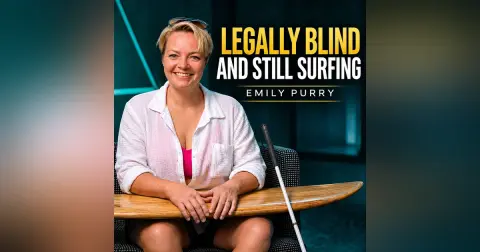
Send us Fan Mail Business Community https://www.skool.com/thebusinessnetwork Newsletter https://doing-business-with-a-servants-heart.kit.com/steveramona 📖 Quote: “I can either live life... sad and gloomy, or I can live life to the fullest I can. It’s a choice every day.” — Emily Purry 📝Description: Disability inclusion in the workplace is the conversation most companies are too afraid to have, and it is costing them talent, customers and trust. Emily Purry, founder and CE...

 Spotify

 Apple Podcasts

 YouTube

 iHeartRadio

 RSS Feed

 TuneIn

 Castbox

 Castro

 Goodpods
Business Community https://www.skool.com/thebusinessnetwork
Newsletter https://doing-business-with-a-servants-heart.kit.com/steveramona
📖 Quote:
“I can either live life... sad and gloomy, or I can live life to the fullest I can. It’s a choice every day.” — Emily Purry
📝Description:
Disability inclusion in the workplace is the conversation most companies are too afraid to have, and it is costing them talent, customers and trust. Emily Purry, founder and CEO of Purry Consultants, is a legally blind keynote speaker, corporate trainer and surfer who helps companies and organizations talk about disability without fear. She joins host Steve Ramona on Doing Business with a Servant’s Heart to show leaders where to start.
In this episode:
- Why the Americans with Disabilities Act (ADA) protected people but quieted the conversation about disability at work
- The restaurant job application story that shows how one bad moment costs a business a whole family of customers
- Website accessibility lawsuits, and why prevention beats fear
- How employee surveys and disability awareness training reveal the gaps leaders cannot see
- Disclosing a disability at work, and what dating with a disability is really like
PS: Emily is losing her central vision to Stargardt’s macular degeneration, and she was heading out to surf the weekend we recorded. Her answer to “why don’t you let it hold you back?” is worth the listen on its own.
CTA: Connect with Emily Purry at purryco.com or on LinkedIn. Follow Doing Business with a Servant’s Heart, leave a review, and catch Together We Serve every Friday at 2 p.m. Pacific / 5 p.m. Eastern.
🎯 What You’ll Learn:
✅ Disability Inclusion Starts with Conversation
✅ Accessibility Is a Business Advantage
✅ Hard Work Beats Limitations
⏱️Timestamps:
[00:00] Meet Emily Purry
[02:16] Living with Stargardt’s Macular Degeneration
[05:10] The ADA and Workplace Disability
[10:20] Disability Buying Power
[16:55] Disclosing a Disability at Work
[22:25] Dating with a Disability
🤝Connect with Emily Purry:
💥Web: https://www.purryco.com
💥LinkedIn: https://www.linkedin.com/in/emilypurryspeaker/
💥IG: https://www.instagram.com/purry.consultants/
💥FB: https://www.facebook.com/PurryCo
💥TikTok: https://www.tiktok.com/@purryconsultants
🤝Connect with Steve Ramona:
💥Web: https://steveramona.com/
💥LinkedIn: https://www.linkedin.com/in/steveramona/
💥IG: https://www.instagram.com/bizopportunitynow/
💥Podcast: https://www.servinginbusinesspodcast.com/
💥YouTube: https://www.youtube.com/@doingbusinesswithaservantheart?sub_confirmation=1
💥 Reduce Stress/ Sleep longer: https://app.nucalm.com/purchase/free-trial?coupon_code=NUCALM15&ref=steve57
🔖Tags:
#AmericansWithDisabilitiesAct #DisabilityInclusion #Accessibility #DEI #Leadership #ADA
Join our Business Community: https://www.skool.com/thebusinessnetwork
Better Sleep/ Less Stress https://app.nucalm.com/purchase/free-trial?coupon_code=NUCALM15&ref=steve57
Subscribe to our Podcast Newsletter
https://doing-business-with-a-servants-heart.kit.com/628f9d5962
Join Me on Substack: https://podcasthost.substack.com/
Doing Business with a Servant's Heart Named Top 20 Small Business Marketing Podcast
https://podcast.feedspot.com/small_business_marketing_podcasts/
Business with our servants' hearts. Servants home. Welcome to the podcast. Inspiration, motivation, takes. Servants. Listen to the podcast. We're all about to talk about life. Our guests will share their life story. We want you to success in life and business. We're ready and we will start shortly. We're gonna talk about life. We're gonna speak on business. You're gonna shine bright. We are gonna win Business with our servants' hearts. With host is deep from moderating Inspiration, education, false. Listen to the podcast
SPEAKER_02Welcome everyone to doing business with a servant's heart podcast. I'm your host, Steve Ramona. I'm so thrilled to have you join us today. This podcast is dedicated to exploring the idea of doing business and living life with a purpose, serving others and yes, achieving success. We believe that when we approach our work and our lives with a servant's heart, we can truly make a difference. We created this show for you because you want everyone to be motivated, inspired, and educated to make an impact in your world. Whether you're an entrepreneur, an eight to five business, you know, job, or you're a highly successful business owner. We're here to support you by teaching you how to be a servant's heart. So I listened to this incredible guest that, oh my God, you guys are going to be blown away by this guest. I want you to think about how you're going to serve today and what impact you create with that service. Today's episode is brought to you by our amazing sponsor, Pantheon Alliance. Imagine your business is connected to high-level, high-earning, highly successful businesses, sharing networks, sharing referrals, and getting educated and learning to grow and educate and scale your business. If you're interested, please reach out to reach out to me and I'll get you some information on the Pantheon Alliance. With that being said, impact comes in many packages. My guest today is legally blind. She can see, but she has a disability. She took her disability as serving others. To me, the biggest servant heart in the world is when you take your disability and you help others. Emily, welcome to the show.
SPEAKER_01Thank you so much. I'm glad to be here.
SPEAKER_02Real quick, tell the audience, and I asked this question. You're legally blind, so you can see, but it's really tough. Is your blindness getting worse?
SPEAKER_01Yes. So I have Stargards, macular degener macular degeneration. And so my central vision is slowly deteriorating. So my peripheral vision is the strongest. As we're here today, you might see my vision drift to, I think it's the right for you, but it's usually the left. Um, and that's because that's the best way I can see. And so my brain tells me to, you know, makes my eyes do what they do. And so often I look to the left of folks when I'm talking to them. But um, yeah, my central vision is deteriorating slowly but surely.
SPEAKER_02You don't let it hold you back. No, no. Why not?
SPEAKER_01Because it's life. Um, I can either live life sitting in a in an apartment and being sad and gloomy, or I can live life to the fullest I can and be with my kids and go surfing. You know, it's it's a choice every day.
SPEAKER_02And you surf and you're legally blind.
SPEAKER_01I surf, legally blind, yes. Well, I'm heading out on Saturday. I can't wait.
SPEAKER_02Well, this is exciting because how many people you probably talked to like I have is oh, I you know can see clearly of 2020 vision and sit at home and and I can't do this, I can't do that. Here, you're legally blind, you're losing your eyesight, and you're super successful. What do you accredit that to?
SPEAKER_01I actually accredit to that. Um, to my vision disability, I have had to work harder than most people. I have had to struggle through things more than most people. And I have, I am not the smartest person. I will admit that right off the bat. If I told you my SAT scores, if I remembered them, you would be like astonished. But I will outwork anybody that I'm around. And so I will figure it out, I will put in the effort and I will get it done. And I do think that's because nothing has really come easy to me ever, you know, as a soccer player and a javelin thrower in college, and it was difficult, it was a lot of work, and it just I whatever I wanted, I had to go get and I had to work hard.
SPEAKER_02So God, you're so much like me because my SAT scores suck too. Uh and in sports, I always as a good athlete, but I was always told you made the team or you're better because you worked harder.
SPEAKER_01Yeah, yeah.
SPEAKER_02You know, all the talent in the world usually gets wasted, not usually, but gets wasted because there's gotta be work and talent and they've got to go together and you can develop your talent. Let's talk about disability. Um it's a big thing, DEI. You work with right now with you know your government in Oregon, but you work with companies and governments. What's your main goal with that?
SPEAKER_01So the Americans with Disabilities Act this month actually um was passed 34 years ago, and it and it provided incredible um protections for folks and laws and regulations and standards, etc. But because of a law, any law cannot change the culture that it's trying to affect. It can it can provide supports for sure. But when the ADA was passed, a lot of conversations stopped about around disability because people were scared of being sued. People are scared of saying and doing the wrong things, so therefore they just don't say anything. And so the impact that I hope to have inside companies and organizations is educating, is probably my primary um source of income and my primary service. And so I educate companies and organizations, the employees at ground level, leadership, all of the above, to become more aware and to normalize the conversation of disability inside a workplace. It shouldn't be something that's weird and uncomfortable and awkward like it is. Disability is just another human difference, and we need to, you know, provide accommodations, but we truly just need to understand and start talking about it inside organizations. And people are just terrified to do that.
SPEAKER_02So you're the megaphone for companies to shout loud and proud about disabilities, that it works. It's be aware of it, not put it in the corner, this little corner of the office, and go, we'll get to it when we get to it.
SPEAKER_01Absolutely. And be respectful about it, but you have to learn about it to be respectful about it. You know, we are we're expected in all diversity, equity, inclusion buckets, we as adults are expected to know everything, yet often we have not had conversations, we have not had education around how to be respectful in inside of cultures and communities that we're not aware of. And so the more we can normalize it and talk about it in respectful and and kind ways, the further and faster this work can evolve and people can bring their full selves to work.
SPEAKER_02Yeah. So it's like the mechanic doing heart surgery. You wouldn't want a mechanic to do heart surgery on you. You come in as that heart surgeon to do heart surgery. I guess that's a pretty good analogy, I used to think about it. To come in and educate, but make sure and the because ROI is always the elephant in the room, is to help them grow with this disability, but also not get fined or get regulated because of the disability, correct?
SPEAKER_01Yeah, absolutely. Absolutely.
SPEAKER_02Have you heard any stories of people uh being fined because of their lack of disability in their business organization?
SPEAKER_01Yes, and it's uh it's a sensitive subject for me in the sense that yes, it needs to happen. People need to be held accountable to the laws and regulations that have been in place for 34 years. Um, and the digital space is where we hear this most often is that websites, apps, softwares are not accessible for folks with disabilities. And so there are people who are out there intentionally finding websites, intentionally finding companies and filing lawsuits, which yes, there needs to be that accountability. And we need to do it if we're educating and trying to be preventative, and companies are really attempting to be preventative and say, okay, yes, I never thought about looking at the accessibility of my digital space. Now that I know that is a thing that I need to do, I'm gonna move forward and do that. Um, I would rather have companies and organizations have that thought process versus I need to do this or we're gonna get sued and get in trouble. Because that just perpetuates the fear and the stigma around disability versus being preventative and really um bringing awareness and understanding and understanding the impact of an inaccessible website, for example. Like there's a bigger impact than just oh, people want to come sue me, which is what give the the perception starts to be around people that are you know filing those suits.
SPEAKER_02Yeah, yeah. No, and I appreciate that because that's the wrong message that needs to go out. And I'm thinking as you're talking, I don't what I don't know, I don't know.
SPEAKER_01Exactly.
SPEAKER_02But Emily comes in and says, you'll know.
SPEAKER_01You'll know, and we can do more digging. And I have the resources to help you. Um, and yeah, so it's a priority. And when we look at, you know, one in four, more like one in three, in my opinion, people in the US experience disability. There's a large population of people you are excluding from your business or your organization, whether that's as a high somebody to hire, whether that's somebody to buy your products and services. If your products and services aren't accessible, that's money out of your pocket that you could be, you know, gaining by being accessible to someone.
SPEAKER_02These are one of the things that you do with the company is show them the increase to the bottom line by working with. Talk about that a little bit. It's so interesting to me.
SPEAKER_01Yeah, if we look at the buying power. So, for example, I'm not going to mention any names. I had an experience and I was applying. This is back when I had more sight than I do now. Um, I was still able to write and read like an a job application. And yes, this is when we would handwrite a job application. Um, but I was able to do that at that time. However, because of my site, I have to hold everything really close. And so I was at a restaurant trying to apply. This is when I was in my early 20s, trying to apply for a job. And someone came over and being funny ha ha and joking about whatever with his friends, and he put a big beer mug under my face, between my face and the paper. And he said, Can you see it now? Ha ha ha ha ha. Laughing, laughing, laughing. Thought it was hilarious, walked away. I just sat there like, did that really just happen in a place of employment? Like, I'm filling out a job application, and it was just mind-boggling. But I wrote choice words on that job application and I left. But um in that moment, I never will ever eat at that restaurant again. So there's my server, there's my business, the money out of my pocket. I will never eat there. And I told my family, so my mother, my father, my sister, my brother, anyone around me, every time we drive past that restaurant, I say, never eat there again because of this experience. So we're not just talking about the one in four people who have a disability that can affect a business, but it's the buying power. And I think it's $8.1 trillion of buying power between us and the ones who love us. And so something's inaccessible, or somebody treats somebody badly at a place of work or establishment, you can guarantee you're gonna lose a significant amount of revenue from that.
SPEAKER_02Great story. Uh, and I'm glad you didn't take the job. I was like, holy mackerel. You know, and that's sad too, because the company owners and managers should have they've got to be in control of that. And it's probably he's been doing it for a while, they just let it go and it's gonna it bit him in the boot in the booty.
SPEAKER_01Yeah.
SPEAKER_02I'm very curious as going through your whole bio and everything you do. What's the journey? I have a company, you know, I got 100 employees, I hire you to come in. What's the journey that you work with me to help me with disability and DEI?
SPEAKER_01Yeah, it depends on what we're looking at. If we're looking at um internally versus externally, so there's different aspects there, but I really like to do an employee survey. Um, as a third party, I can do an employee survey that touches on all demographic information to really judge the experience of your employees and based on their identities. So we're able to look at cross-sectional data to say, hey, people who are um disabled, who have visible disabilities or excuse me, apparent disabilities, we have a better experience than those who have disabilities who have non-apparent disabilities. So something you can't see or recognize right out the bat. So we can take that data and break it down. Then we can understand, like, okay, there's a big gap in you as an employer around this population of people. We can do that with race, we can do that with gender, we can do that with disability, we can do that with all different and age, and see how your workforce and you know where there might be gaps in you as an employer helping your people with different identities. So there's that piece. Then there's just education. So corporate training, disability awareness 101, we have a 201. Um, I have I personally do high-level diversity equity inclusion. So, like the big broad bucket of why it's good to be nice to people who look, don't look like you, act like you, move like you, believe like you, think like you, vote like you. Um, and understanding bias and microaggressions and intersectionality and whatnot there. Um, but then also I have contractors that have lived experience in other identities. So I am really passionate about not trying to stand up here as a white woman talking about what it's like or how to interact with a person of color because that is not my lived experience. So I have contractors that I work with in all the other buckets, you know, um, race and ethnicity, LGBTQIA plus, uh multi-generational workplace, the veterans experience, intersectionality, and then I handle disability. So I have contractors to cover all those buckets in the education field. Um, and then I also do consulting. So from that, we might notice you don't have an accommodation process for folks to request accommodation, so I can help you develop that. You might not have uh you want to take a look through policies and procedures and make sure they're not unintentionally excluding folks. And then there's the last bucket of keynote speaking. So I do keynote speaking for conferences, large meetings, um, facilitations and stuff like that. And that's more around a general bucket of belonging, or I can go specifically into disability. So I kind of have those areas that I speak.
SPEAKER_02So you'll do that inside of a company too. You'll go, hey, we're gonna bring the whole hundred-person staff in my company, we're gonna you're gonna keynote speak and talk about a general bucket. Ah, I love that. Yeah, I love that education, and then they get to know you, they can ask questions and all that.
SPEAKER_01Absolutely. And as a third party for all of these things, there's a huge trust issue that happens inside most organizations. And if the trust isn't there, you're not gonna find out the information that's really happening. And so, as a third party, I'm able to take in that information and then disclose what I need to in order to make progress in the organization, but there's nobody who's gonna be called out, nobody's gonna be, you know, tokenized or targeted based on the information they share. So that's also really important.
SPEAKER_02Man, I love what you're doing. You have a down pat. Um we got a little bit of time here.
SPEAKER_00Yeah.
SPEAKER_02Somebody is listening, they have a disability and they're unemployed.
SPEAKER_00Yep.
SPEAKER_02And they're being bullied or um discriminated. Couldn't think of that word. What would you tell them?
SPEAKER_01I do a lot of coaching around what has happened. Have you disclosed the conversation of actually disclosing a disability is one of the most common ones I have. Um, how much have you disclosed? So have you mentioned that you, you know, are have a vision, you have low vision, we'll say, but you haven't asked for any services because you're afraid. Um, have you mentioned that you have and there has been retaliation? What does that look like? What is the process that you've taken? And then how can we start doing some reparative work? Um, I work with a lot of super supervisors and managers to talk about um disability and managing somebody with a disability in an appropriate and open and honest way. And so there's that component there. But for the person with a disability, it really depends. I can't say you should always disclose because that's the ADA says we can. It's not safe to do that. Um, and so it's working with that person within the guidelines that they feel comfortable talking about and you know, walking through okay, what is the next step we can take without you potentially, you know, being fired or let go or retaliated against? And and that's a real thing, unfortunately.
SPEAKER_02Yeah, let's flip to the other side. Uh a business owner's listening and like God, you're making some great points. What's a tip you'd give them to start their journey on being more um what's the word I want to use?
SPEAKER_01Inclusive, yeah.
SPEAKER_02Inclusive, that's exactly thank you. See, host needs help all the time. She's so smart, love her, can't do good on SATs, but she's smart with inclusiveness, and that's the most important. So, what would you tell them? Somebody's listening.
SPEAKER_01Honestly, training has a really bad rap right now. Corporate training or training inside your organization has a bad rap. And I want to say that let's not go there. Is training in itself going to change your organization? Absolutely not. Like one class or uh, you know, two classes is not going to change your organization. So, however, it is going to lay the foundation, especially around disability, because disability is often not talked about. We don't know the language to use, we don't know what a microaggression looks like inside of a disability versus versus a racial um microaggression, et cetera. And so we have to lay that foundation. Once we lay that foundation, most likely the employees are going to be the ones that are like, hey, Emily said this, let's ask some questions. Is this program accessible? Is this product accessible? How can we make this process more accessible? And so once those seeds are planted, especially in the realm of disability, because we've never had a safe space to talk about it, then we're going to start looking at our daily activities and being like, huh, I wonder. And then as an employer, it's your job to say, okay, I'm getting enough questions about this, this, and this to start taking action. And so what does that look like? We can also go from the, you know, of the evaluative state and say, let's take a look, like I said, with the employee survey. Let's do a basic training to get started. And then let's review your policies and procedures and see, you know, what is going on there. We can also do physical space walkthroughs. Is your space accessible? Not just by the standards of the ADA code, but when a human enters that space, does it is it welcoming? Does it feel good? Is it able to be navigated? So that's the physical space. And then we also do the digital space evaluations. So we're able to assess your digital space, your website, your apps, your whatever, and say these are not accessible and these are the things you need to change.
SPEAKER_02Yeah. I love it. You're so powerful. You really are. You're making a difference. And this is these are world changers here because that's what it's going to take. Um, I've asked some questions.
SPEAKER_01One more thing, just really important, is I am very passionate about coming from a very positive lens.
unknownYeah.
SPEAKER_01And there are people who dispute that. Like, I live this identity. It is exhausting some days to constantly teach and coach and train on my lived experience. As in my life, I'm also navigating having a disability and not being able to drive and all the things. So it is exhausting, but I really am passionate about making sure that it's coming from a positive lens versus that accusatory, or you're a bad company, you're a bad employer, you're a bad this. We might recognize negative things inside the company and organization, but let's take it for what it is and say, okay, we are now aware of these things. How do we move forward? I don't need to do all the shaming and blaming and all that to make it feel Like a really horrible experience. It is what it is. And now let's move forward and see how we can make it better.
SPEAKER_02It's a great lesson for any part of a business, not only the inclusiveness and DEI across the board. More positive you are in your culture, the better the company's going to be.
SPEAKER_00Yeah.
SPEAKER_02And I love that you said that. Um, I asked some questions you've never been asked before. And this one really just I'm so interested. What is it like dating with a disability?
SPEAKER_01Oh of course that's the one you pick. Oh my gosh.
SPEAKER_02Yeah, of course, right? It's just I'm interested because I don't have a disability. I never thought about that. But then when I read it, I'm like, that is an interesting question.
SPEAKER_01Yeah. Um, so for the listeners, I'm recently divorced. Um, and it I have taken the last year, year and a half to really do the work on myself. But it's also around how do I do this again? Like when I was married, when I met my ex-husband, I was 27 something, 27, I think, somewhere around there, and I had a lot more sight than I do now. So because this is progressive, I could hide it better back then. So I didn't tell him that until like two or three weeks in of us dating that I was legally blind. He just thought I couldn't drive. And his assumption was that I got a uh DUI driving under the influence. And he was like, okay, whatever. But I told him about my site. But there's the whole thing just like an employer. Number one, do I put it on my dating profile? If I do, will I ever get a date? Um, when do I tell them? Do I tell them before I meet them? Do I tell them after I meet them? Do I, you know, I have a guide dog. She's basically retired at this point, so I don't take her like I used to, but that's not always safe. So there's like this constant navigation, and there is people who are like, okay, I've told, you know, I have a vision disability, I don't drive, and they have been like, cool, I'm not interested. And no, no, it's it is hard and it is uncomfortable and it hurts like hell. Um, but I think the more I'm thinking more about when and how and what they'll think, and to a certain extent, it's I'm getting better about just being like, screw it, you know, I have a lot more to offer. I know I'm an amazing partner, and if you can't deal with that, then I'm I'm good. But it's still that constant thought of your head.
SPEAKER_02But in the back of your head, too, you're like, I'm glad they said no. Instead, you went through this journey of two or three or four or five weeks and going, you know, they ghost you, they leave you. You start, yeah. I mean, it's it's hard, but in the long run, the short term is hard, long term, it's great. And I'm gonna say this to you and tell the audience you may be losing your sight, but your heart is getting bigger every day. And that's what people should look at. And anybody, whether they have sight or not, what is their heart and soul more than if they have no arms or can't hear or can't see? That's the most important thing. And I think you will have somebody to love you, no matter what their disability, love is still love, doesn't matter where you're at in your life, right?
SPEAKER_01Yeah, and that's an acceptance piece, I think, for me. Yeah, it's you know, it's not a one-time acceptance either for me. Like somebody who loses a limb, that's an acceptance that that's in that moment, and I'm not discounting their experience at all. But like, because it's progressive, the constant like adjusting I have to do and thinking about like uh in the future, I don't know how much I'll see. You know, there's always this I don't know about my site, it's not a clear-cut path. Uh, and so it's just it's it's a constant acceptance for me and understanding that I do have so much more to offer than my site. And if you can't get over the fact I can't drive, then you know next. Yeah, I make it simple.
SPEAKER_02I hate to be crappy, it's really next, and single guys out there listening. I'm just not a dating uh dating podcast, but I love this girl, and I'm much older, I'm an old guy, and I'm married, all that. But you you come my sister for but yeah, again, it's all about the heart, and you really do have that. So we're at the end here. We're a little over, but I'm glad we are because you're so awesome. Let's have a fun. I got a fun question for you. Okay, I always end my shows with this. So you're walking into a restaurant and it's a table of four, you've got one chair, so the other three chairs are empty. Who would occupy those chairs, dead or alive? Why? And most importantly, what food would you order?
SPEAKER_01Oh, it would definitely be sushi. I know that right off the bat. I love sushi. Um, the one that comes to mind mostly because she was on my walls all my life was Mia Ham. I was a big time soccer player. I wanted to play, you know, bigger collegiate soccer than I did. I wanted to play pro for sure. Wanted to go to North Carolina. Um, so Mia Ham would be there on the on one chair. Um, The Rock, just because he's gorgeous. Um I love The Rock.
SPEAKER_02Okay, I'm with you there.
SPEAKER_01He is good. Um and oh, two, one more, one more. Uh there's a very um amazing surfer who is I can't remember if she's completely blind or if she's partially blind. Melissa Reed, and just hearing her journey in the sport, I think I'm gonna say her. Oh no, it would be Michelle Obama. Oh, Michelle Obama, but Michelle Obama.
SPEAKER_02Well, you could do four. We'll do four. Let's break the rules.
SPEAKER_01So Melissa Reed would be one, just so I could uh understand how she learned to surf and be as good as she is, and what challenges she faces in the sport of surfing, and then Michelle Obama, just an incredible woman.
SPEAKER_02Oh yeah, absolutely. And this is not an opra.
SPEAKER_01Oh my gosh, I can't.
SPEAKER_02Oh, there you go. We make five. That's okay. It's your table. You can bring many chairs, you know. There's more chairs, so that's okay.
SPEAKER_00Yes, more tables.
SPEAKER_02And by the way, we have a pretty big podcast, maybe it's big enough. But the rock, if you're listening, reach out to her.
SPEAKER_01Yes, I love everybody.
SPEAKER_02And on a site, no audience probably heard me say, I'd love to get him on my show because talk about a servant's heart. Oh, yeah. We can talk all day about the rock. But with that being said, people listening want to reach out to you. How can they find you and support you?
SPEAKER_01Um, I'm on Instagram, Facebook, TikTok. Um, my website is PuriCo, so P-U-R-R-Y-C-O.com. And um LinkedIn as well, Emily Purry on LinkedIn. So I'm I'm on all the major ones and I'm always available.
SPEAKER_02So thank you so much. You're God bless you, you're a blessing. Keep doing what you're doing. I'm gonna support you any way I can in the future. And please, audience, support her. This is this is a big topic. It's controversial, but she can definitely help or help her support her in any way you can. Don't forget my TV show, Together We Serve, every Friday at 2 p.m. Pacific, 5 p.m. Eastern. Also, uh me and Emily, thank you so much for watching and listening to this podcast. And we look forward to seeing you all in the next episode of Doing Business with a Servant's Heart. See you all.