From a $1,500 Loan to Broadway: The Fallback Position That Built Every Career | B. Jeffrey Madoff
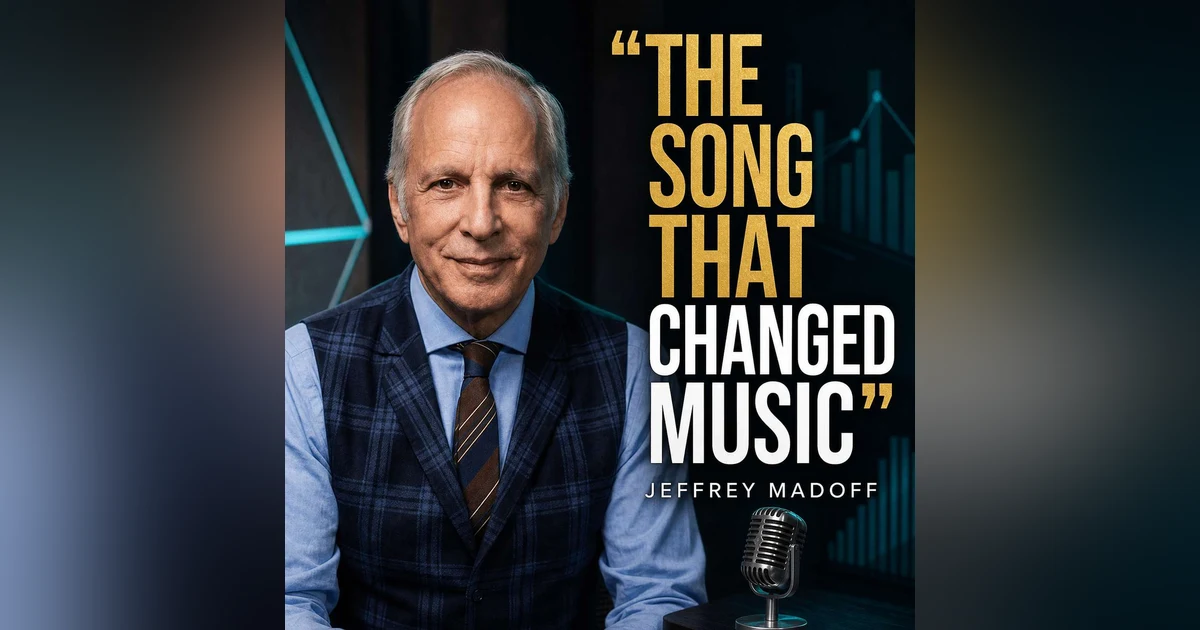
Send us Fan Mail Business Community https://www.skool.com/thebusinessnetwork Newsletter https://doing-business-with-a-servants-heart.kit.com/steveramona 📝Description: At 21, B. Jeffrey Madoff started a clothing company with a borrowed $1,500 and no idea what he was doing. Two years later he had 120 employees. Since then he's built a film and video production company, taught for 16 years, written a book, and brought the Lloyd Price musical Personality to the stage — now headed to ...

 Spotify
 Apple Podcasts
 YouTube
 iHeartRadio
 RSS Feed
 TuneIn
 Castbox
 Castro
 Goodpods
 Business Community https://www.skool.com/thebusinessnetwork
Newsletter https://doing-business-with-a-servants-heart.kit.com/steveramona
📝Description:
At 21, B. Jeffrey Madoff started a clothing company with a borrowed $1,500 and no idea what he was doing. Two years later he had 120 employees. Since then he's built a film and video production company, taught for 16 years, written a book, and brought the Lloyd Price musical Personality to the stage — now headed to London.
In this conversation with Steve Ramona, Jeff shares the through-line behind a career that refuses to sit still — and why he's never once had a "fallback position."
What you'll hear:
Why your real safety net isn't a backup plan — it's your resilience, savvy, and refusal to fold
- How a doctor's-office phone call led to uncovering the untold story of Lloyd Price, whose "Lawdy Miss Clawdy" shattered the "race music" barrier and sold over a million copies
- What 16 years of teaching taught him about context, curiosity, and why there are no boring topics — only boring teachers
- The difference between confidence, courage, and ego — and why perseverance beats talent every time
PS: Jeff's definition of a great interview — "a conversation where the interviewer is a proxy for the audience" — is a masterclass for anyone who hosts a show, sits across a table from a client, or just wants to be a better listener. Listening, as he puts it, is a gift you give someone that instantly becomes a gift to you.
CTA: Listen to the full episode of Doing Business With a Servant's Heart, then follow Jeff on LinkedIn (B. Jeffrey Madoff) and Instagram (@creativecareer). His book, Creative Careers: Making a Living With Your Ideas, is available wherever books are sold.
🎯 What You’ll Learn:
✅ Bet on resilience, not a backup plan
✅ Perseverance beats talent
✅ Context turns information into insight
⏱️Timestamps:
[00:02] What makes a great interview
[00:04] The accidental clothing designer
[00:09] Uncovering the Lloyd Price story
[00:14] Why teaching keeps him learning
[00:22] The fallback position myth
[00:25] The dream interviews
🤝Connect with B. Jeffrey Madoff,:
💥Web: www.madoffproductions.com
Instagram: acreativecareer
Instagram: madoffprod
Instagram: bjeffreymadoff
www.acreativecareer.com
🤝Connect with Steve Ramona:
💥Web: https://steveramona.com/
💥LinkedIn: https://www.linkedin.com/in/steveramona/
💥IG: https://www.instagram.com/bizopportunitynow/
💥Podcast: https://www.servinginbusinesspodcast.com/
💥YouTube: https://www.youtube.com/@doingbusinesswithaservantheart?sub_confirmation=1
🔖Tags:
#[tag]
Free Business Community: https://www.skool.com/thebusinessnetwork
Subscribe to our Podcast Newsletter
https://doing-business-with-a-servants-heart.kit.com/628f9d5962
Join Me on Substack: https://podcasthost.substack.com/
Doing Business with a Servant's Heart Named Top 20 Small Business Marketing Podcast
https://podcast.feedspot.com/small_business_marketing_podcasts/
Welcome everyone to doing business with a servant's heart podcast. I'm your host, Steve Ramona, and I'm thrilled to have you join us today. This podcast is dedicated to exploring the idea of doing business and living life with a purpose, serving others and yes, achieving success. We believe that when you can approach your your work and our lives with a servant's heart, we can truly make a difference. We create this show for you because we want everyone to be motivated, inspired, and educated to make an impact in your world. And that's your world. Whether you're an entrepreneur, community leader, or simply someone that wants to have purpose in your daily life, this podcast is here to support and uplift you. So let's get the show started. I talk about impact. I just had a great conversation with my guest before the show. You're going to be blown away. He has done a lot of things and he's done them very well, but he's also a servant's heart. Jeff, welcome to the show. Well, thanks for having me on, Steve. Talked about class and people who asked this question. I think the audience needs to hear an answer about from this question because I think it's very important, especially you podcast hosts out there. What is a good interview?
SPEAKER_00A good interview is a conversation where the interviewer is a proxy for the audience. And so I think it's like if you were sitting down and having a cup of coffee with a friend and you're excited about what you're going to be talking about, and you are engaged, which means you listen and respond to the conversation as opposed to going down a list of questions. That is a good interview. And that there's enough spontaneity built into it that you never really know where it's going to go. And as long as both parties are open to that, you can have a great conversation. And that great conversation can also be a great podcast or a great interview.
SPEAKER_02Oh, how many interviews have you done?
SPEAKER_00Is that including the times I've been arrested?
SPEAKER_02Let's include the arrest. That's a nice interview, by the way.
SPEAKER_00Oh uh, you know, uh a few hundred times, I guess.
SPEAKER_02Okay. My point is, audience, this is not something he's doing two interviews he's done it. And this is part of your work and what you do for your work, and that's really important.
SPEAKER_00That's right.
SPEAKER_02So I love inspiration. What inspired you to start Madoff Productions?
SPEAKER_00Well, Madoff Productions started uh back in 1982. And uh I had been working with a company and decided that I really wanted to start my own production company, go in the direction that I wanted to go into, tell the kind of stories that I wanted to tell. And uh it was interesting because I made a transition from my previous career, uh, which I also had no education in. Uh, my first adult career was I was a uh clothing designer. So I designed and manufactured clothes. I didn't know anything about that business before I started it. I was 21. And by the time I was 23, I had 120 employees in an office in New York. I was based in Madison, Wisconsin. Uh, went to college at the University of Wisconsin in Madison. And uh I had a double major in philosophy and psychology because I wanted to make sure that I got two degrees that would absolutely prevent me from getting any kind of a regular employment. And I succeeded.
SPEAKER_02Like typically a lot of college students, I had to say out there. Let's just be honest about that. Yeah, and it's interesting how you had no so people listening. I want to hear more about you go into why'd you go into clothing design not knowing anything about it? How'd you get through it without any education?
SPEAKER_00Uh good question. Uh, I had graduated from school and uh I was working in this little boutique in Madison, which is Madison's a very cool city, and uh I did the buying for that store. I learned how to do that. And uh dear friend of mine, who his mother and my mother grew up together, uh called me up one day and said, Listen, I he graduated a year before me. He said, I I saved up some money. Uh can you think of a gig that would earn more than bank interest? Well, I was sitting in the store when he called me, and uh I said, Well, you know, I see what we sell, and I've done some buying, uh, and I can draw, I'll start a clothing company. And uh he said, Okay. And he sent me what was at the time the most money I ever had at one time. Memory's a little foggy on both of us. I think it was $1,500, he thinks it was $2,500. In either case, it wasn't much, but I didn't know that. It seemed like a lot at the time. And I started a company and we were doubling sales every three months.
SPEAKER_02That's impressive. Not knowing what you're doing, but I think the big part of that question, and I want you to talk about is decision. You made a decision fairly quickly without knowing anything. How important was that?
SPEAKER_00Well, I think when you're young, uh your ability to assess risk is uh not what it becomes as you get older. So, you know, I was uh fortunate that my parents raised me to be confident. Uh, and I felt that if something was interesting to me, I can learn how to do it. Uh and so I knew a bit about the business, and my parents were retailers, so I knew you know things about markups and that kind of thing. And I also had the kind of aesthetic that seemed to appeal to other people. So when I had some of uh the people that did our alterations and tailoring at the store, when I drew up some uh designs and picked out the fabrics for them to be made in, uh, you know, I could hang them in the store, and they sold out like 12 pieces sold out in one day, and we got 20 more, and they sold out really fast. So I didn't know I was doing what I was doing at that point, but I was kind of market testing, if you will. Yeah, and uh and I can't say that I did that consciously. What I did is I of course wanted to see people's responses, would they buy this stuff? And they did. And pretty soon I packed up a bunch of designs, uh, strapped it to the back of my my Triumph motorcycle, and drove from Madison, Wisconsin to Chicago, where I had found found a list of 18 kind of hip clothing boutiques, and made appointments before I went, met with 18 stores, sold 15 of them, and all of a sudden I hit another major obstacle that I knew nothing about was so how do I actually get this shit made? One thing to sell a product, you got to also deliver the product in order to get paid.
SPEAKER_02Yeah, yeah. Well, it's interesting too. We're at a different age than the young people. So you were how old were you at this time? Uh I was 20s. Well, I started when I was 21. Okay, so 21. And and I always tell young people, what's the worst thing that happens? It doesn't work next. You find something else. You know, I'm being very flippant about it, but it's seriously that's true. A lot of people have failed, and you know, Warren Buffett, how many times he's failed. So I really appreciate that story. Uh, I want to get into production because I'm really excited to find out what inspired you. The production dude personality, Colin, the Lloyd Price, the Lloyd Price musical. Tell me about that.
SPEAKER_00So, you know, I've done a number of things, and the through line of everything I've ever done, from the clothing design to starting a uh film and video production company, teaching, writing, and the Lloyd Price play, which is the most recent addition to what I do, is that I'm seduced by the idea. I'll figure out how I can make money from it. Uh, but if I'm really seduced by that idea, if I really want to do it, I'll figure out a way to do it. And so uh, like so many ideas, this one started at a doctor's office. Uh I did a phone call. I had done uh a film for the 75th anniversary of Radio City Music Hall. The executive producer uh for Radio City who hired me, loved my work. We became friendly, and I get a call from him, and he said, Do you know who Lloyd Price is? I said, Mr. Personality. I mean, I know his music, but I I I don't I don't know anything about his life. And he said, Well, he's here with me at the doctor's office, and I've been telling him about you, and we want to do a short documentary about him. Uh, could we come over and meet you? Sure. And uh on their way home from the doctor's office, they stopped in my office. We talked, Lloyd and I really hit it off. I was hired to do the documentary. And in doing the documentary and researching him, then interviewing him, uh I realized what an amazing, I discovered what an amazing life this guy had. And you know, he was at the crossroads of the youth movement, the civil rights movement, and the birth of rock and roll. And he's in the rock and roll hall of fame, and he was an amazing person. Most people don't know anything about his life at all. Uh, he was responsible because of how successful his first record was, which was Laudie Miss Claudy, recorded in 1952, which has been covered by everybody Elvis, the Beatles, Chuck Berry, uh, on and on, the number of people that have covered his music. And I was just so taken with his story, and it was a story that was untold. And I said to Lloyd, you know, after I finished the documentary, he really liked it. And I said, I want to tell your life story, man. There's a story here that needs to be told. And what was interesting about Lottie Miss Claudie is prior to it coming out, you know, the music business was an adult business. Uh, kids, teenagers were not buying records up until the 1950s. That's when that started with Lloyd and his era. And uh I think the top-selling song by a teenager or top-selling song by a young person, uh, and I'm going into the 20s, their 20s, was They Call Me The Fat Man by Fats Domino. And uh it sold, I think, 29,000 copies initially, which was amazing. When Lottie Miss Claudie came out, and coincidentally, Fats Domino played piano on Lottie Miss Claudie. Uh, so that was that was pretty cool. But Lottie Miss Claudi sold over a million copies, so it was a seismic change in the music industry, and I thought, God, this is such an incredible, incredible story. And Lloyd was very open. We became very, very close friends, and he was very open in talking about anything. And when I wrote the first couple scenes of his uh show, and I got the biggest compliment from him I could get as a writer because I had said to him, I know I can capture your voice. And when I read him the first few scenes, he said, Well, I don't know if I actually said that, but I sure could have. And yeah, and I love that. Uh, it was really cool. And the impact of Lottie Miss Claudia in selling over a million copies is it shattered the wall that was called race music. Prior to that song, if you wanted to buy a record by a black artist, you had to go to a black-owned record store. You couldn't get your music on uh white jukeboxes, and uh nobody is prejudiced against green, and that's what that song represented to the labels. And so uh Lloyd's life and career just skyrocketed from there.
SPEAKER_02It's interesting, successful people like that stay in the shadows, like he did, because like you said, nobody knew his story until you're bringing it out today. This is how they live their life, right? Privacy, yeah. Which is we gotta honor that and do that. What an incredible story. I've learned a lot about music in the last five minutes. I didn't know. And I'm assuming Lloyd Price is black, and that's why he had this issue.
SPEAKER_00That's correct.
SPEAKER_02Yeah, he sold a million copies and fast on with the 29,000. That's that's an amazing story. Um, great song, too, by the way. I'm singing it in my head right now as we speak. So I want to dive into teaching because I think and I thank you, I think all teachers need a double pat on the back because it's important in this world and seems to be diminishing and not being as popular and all that stuff. What you know, what's most fulfilling about your teaching?
SPEAKER_00There's a few things. I think maybe the most fulfilling thing about teaching for me is that I am uh passing on knowledge to a younger generation. And uh teaching is a great way to learn. And so I'm constantly learning, constantly uh having to uh refresh and be relevant to the lives they're living. And doing what I think is uh incredibly important when you teach anything or when you discuss anything is establishing the context for that. Uh words, phrases without context don't mean anything because you can't assess anything if there's no context associated with it. So, like when I told you that the largest selling record up to that point by a young artist was 29,000. But then when I say and Lloyd sold a million, all of a sudden it's wow. And you know, I think that the teaching is both very primitive and incredibly profound when you are able to engage with other people because I also don't think you can teach without learning. And I have boundless curiosity and love learning, and so the satisfaction also, because I taught for 16 years on the college level, where some of the students became friends long after their graduation, and that they would reach back to me. One of my students moved back to Paris, where she was from, when she graduated in 2017, she would attend some of my classes via Zoom because uh of COVID, we were locked down and doing classes online, and then in 2023, she said, uh, my husband and I are moving to New York, and I'd love to get together with you. And we've done that, gotten together a few times. We had brunch together on Saturday, and I just love that because then the dynamic has changed, you know. And meanwhile, when she went back to Paris, she got both a master's and a doctorate. So I love I love the whole exchange, I love the learning, I love the fostering of the curiosity, and I love the passing on of knowledge and being challenged, my ideas being challenged, me being challenged by the students. So it's that whole dynamic. And I think that there are no boring topics, but I think there's lots of boring teachers. And so on the first day of class, I tell my students, I will try not to be a boring teacher. Uh, and and I don't always know what that means, but it's uh I I really enjoy it, and I love sometimes the relationships that go on for years as a result of it.
SPEAKER_02Sounds like engagement, honesty, authenticity, and building relationships is important as a teacher.
SPEAKER_00It's important as a human being, yeah. And I completely agree with you. Absolutely, those are the key words. That's powerful.
SPEAKER_02What add empathy to that? And empathy is a perfect. That's a great one. Absolutely great. If your teachers out there, listen to this over and over. Those four words he gave you are could make you a better teacher. That's one it could be a million-dollar heart hit, not a money hit, but a heart hit. Help you with your heart. So, those teachers out there, or those students, what's tips do you, you know, what tip would you give them right off the top of your head to help them be better?
SPEAKER_00Pay attention, uh, show up, be prepared. You know, there are I have said to some students over the years, I said, you know, you walk into class 10 minutes late, 15 minutes late. And to you that's not a big deal. But you have your fellow students who you're disrupting, the guest, because I would have a guest every week in the class, a guest who you're not showing respect to, and me who has put this whole thing together for your benefit. So show up, be present, do the homework so you can get the most out of what's going to be talked about that particular session. So I think that that is that is really important. And you know, I think that it's if as I have said to some of them, do you know if this was a job and it wasn't school, you'd be fired. So you need to show up and you need to show up on time and be ready. And you know, when you get fired, that's kind of like you're getting a D or an F, right? You know, so uh I fortunately didn't have a lot of that. Uh but there are certainly students that are in school because they have to be in school. You know, their parents expect them to go on to college, but they haven't thought about what they want to do or what they want. And although it's a small percentage, I would say maybe over the years, 10% of the students I had were people that might have done military service, might have traveled the world, whatever it was, but they had a one to four year gap between graduating from high school and then going to college. Without exception, they were better students because they were there with a sense of purpose. And that sense of purpose is something that is often missing from students who aren't even thinking about asking themselves, well, why am I taking this? Why am I doing this? So I think that that's really important. And I think that listening is a gift that you give someone, which simultaneously is a gift to you because you'll receive from them in the same way. And I think that that's really, really important too. So I think those are the most important aspects to it.
SPEAKER_02You're an incredible man, Jeff. I mean that from my heart now, because I'm gonna get it's emotional to me because I went to college at 40. I did exactly what you did. I was a star, I had all these kids follow me. High school, I was terrible. I was a sports guy. But you're right. I was afraid to go in. It was the best experience of my life. Didn't get my degree, and things happened. That's okay, but I learned so much more. And I love that you told that story because there's older people out there I've talked to that want to go back to school. If you can afford it, get it, do it like anything in life. Go ahead and do it. So thank you. Um, being a great man, being successful, like all great men and successful people, you had some influences. What were some influences in your career that really helped you?
SPEAKER_00You know, I think. And I can't say that I actually looked at it as influences. Uh my parents were very open. Uh they saw when they saw that I could draw, you know, they would bring home craft paper from the store. And in my bedroom, if I wanted to tape that to the wall and draw or whatever, I could do whatever I wanted in my room. That was my place. I could do whatever I wanted there. And they uh, through their actions, encouraged me when they saw there were things that I was interested in. And they never said to me, uh, and this is a this is something that I think is really important. If you're going to be an accountant or a lawyer or a doctor or in the financial world, nobody ever says to you, what's your fallback position? You know, but if you're going to be an actor, a dancer, a singer, a comedian, a writer, whatever, well, what's your fallback position? Well, your fallback position to me is this, and I've been asked that. And my answer was always, my fallback position is up here. It is my resilience, my perseverance, my savvy, my cleverness to figure out what the next steps are when there's so many obstacles in front of me. And that's what it is. And so I think that uh the influences that I had were parents that encouraged me and that gave me the confidence so that I felt I could tackle any task. And that's huge because a lot of parents don't do that for their kids.
SPEAKER_02Yeah, the other huge thing is what you just said about up here, I'm clever and more. Some people go, Oh, he's egotistical. Absolutely not. He's confident. Confidence is much different than ego.
SPEAKER_00Absolutely. And it's it's also, you know, it's interesting. There's confidence and there's courage, and they're very different. And uh it's not about ego, it's about survival. You know, the question is, how are you going to survive given the obstacles you are inevitably going to confront? And if you fold up quickly, and I think the biggest word, more than talent, is perseverance, you're done. You know, if you can't put up with disappointment, if you can't get back up after you're knocked down, uh as an entrepreneur, you won't make it because inevitably, no matter how hot you start out, the shit's gonna hit the fan. Things are gonna happen. And that resilience, adaptability, and perseverance are absolutely incredible, uh, incredibly important in terms of pushing forward in life.
SPEAKER_02So great. We're getting to the end here. I could talk to you all day. I'm learning so much, and I know you our audience are as well. I'm gonna get a little personal. If you could interview, you've done a lot of interviews. What's a dream interview for you, dead or alive? Person, historical, whatever. Wow. Uh well, that's it's a tough one, I know.
SPEAKER_00Yeah, it's that's a well, because it's like it's a very crowded, it's a very crowded palette, right? You know, I was because it's you know, it's interesting. There's all kinds of people that I would like to talk to. Uh given that you can have a really candid conversation, you know. Uh so who would I like to talk to? I'd like to talk to Billy Wilder, who was one of the great directors and screenwriters of all time. He did Some Like It Hot. Uh he did uh Sunset Boulevard. Uh he did uh what was I'm sorry, I'm blanking now, but he did some oh uh double indemnity. So in every genre from film noir with double indemnity to comedy with some like it hot, he did every genre and did one of the best films in that genre. So he was a master storyteller, a masterful director, and uh and he had a thing way back then in the 40s and 50s and 60s when he was active, which was he'd do one for the studio and then he'd do one for himself, meaning he'd take all the chances he wanted to because he made them money. So he had the leverage in the negotiation to say, This is what I want to do. So I would love to love to do that. I think it would be amazing to talk to Abraham Lincoln and you know what was going on in his mind, uh, and what bridged the difference in him from uh during his presidency when he wasn't initially against slavery, he wasn't going to abolish it initially. What happened? What changed? I'd love to interview Albert Einstein, you know, uh, and such an extraordinary brain and what he did, but very much a human being. Uh, I'd love to interview Sigmund Freud, you know, and uh because he thought about thinking and all of that sort of thing. So, you know, uh it would be interesting to interview Marilyn Monroe, who 70 years after her death is still iconic. And you know, and the pain that she had, and the addiction she had and the challenges she had, and all of that. So, you know, I'm I'm not giving you an answer because there's so many rich personalities out there that would be phenomenal to talk to and to learn from, and you know, just what that is. So sorry I couldn't give you just one, and and I really edited myself down just for you.
SPEAKER_02I can tell, but you told me a palette, so you were very upfront. You said I'm gonna give you a palette. So, and you did. And interesting about Marilyn Monroe, I would have liked to ask her, would you do it again if you started all over? I'd love to know the answer because all the pain, which a lot of people don't know, all the pain she had, which was pretty traumatic. Uh, same with Van Gogh, you know, his mind went crazy, but he was in you know one of the top painters artists in the world. I want to thank you. You are a blessing. You've taught my teachers who are listening, you're doing some great things. How could people reach out to you?
SPEAKER_00Well, they can write a check. Uh and okay, and what's that number? Is it got six arrows or five? Yeah, when you're doing the back when you're doing a play, you know, uh, a play is a startup, it's an entrepreneurial venture. So it's funny, like any business, you cross a certain threshold, and we're moving the show to London next. That's where we're going to be performing. So uh, you know, I that people can reach out to me on LinkedIn and they can see some of the clips that I post from my class and some of the things that I've done. Uh, and on Instagram, on LinkedIn, it's my name, B Jeffrey Matoff. Uh, on Instagram, it's at a creative career. Uh, they can go to Matoff Productions.com and see my film and video work. They can go to a creative career and see some of that. And I have a book out that's based on my class, and it's called Creative Careers, Making a Living with Your Ideas. And it's available at all fine bookstores. And uh and it touches on a number of the things we're talking about. And uh, you know, I think that I'm very proud of the book. And from the feedback I've gotten from people, that's gratifying that it seems to have made a difference for some people. So that's kind of cool.
SPEAKER_02Well, Jeff, thank you. And what I've learned and audience, I want you to take from us, we hear a lot of stories about entertainment, crazy stories, drugs and cheating and all that crazy stuff. Jeff's proved to us there's still many servants' heart entertainment. He's in musicals and plays. It gives me lots of hope and fun that there's good stuff out there, and there's more good stuff coming. I want to, me and Jeff want to thank you so much for watching or listening to this podcast. And we look forward to seeing you on the next episode of Doing Business with a Servant's Heart. See y'all.