From Ranked #19 to #1: The Trust-First Turnaround Playbook | Steve Margerin
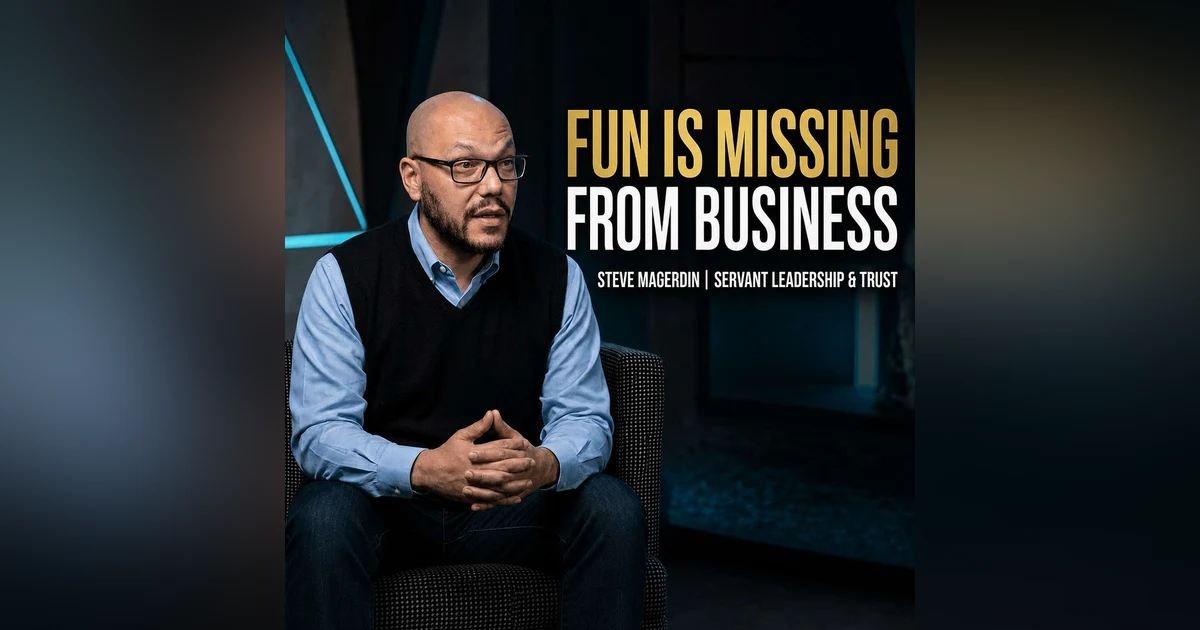

Send us Fan Mail Business Community https://www.skool.com/thebusinessnetwork https://app.nucalm.com/purchase/free-trial?coupon_code=NUCALM15&ref=steve57 Newsletter https://doing-business-with-a-servants-heart.kit.com/steveramona 📝Description: What does it actually take to turn a struggling team around? Steve Marjorie walked into a global organization's unit ranked 19 out of 21 — and left it ranked #1 or #2, with double the profit margin and the first year in five with zero c...

 Spotify
 Apple Podcasts
 YouTube
 iHeartRadio
 RSS Feed
 TuneIn
 Castbox
 Castro
 Goodpods
 Business Community https://www.skool.com/thebusinessnetwork
https://app.nucalm.com/purchase/free-trial?coupon_code=NUCALM15&ref=steve57
Newsletter https://doing-business-with-a-servants-heart.kit.com/steveramona
📝Description:
What does it actually take to turn a struggling team around? Steve Marjorie walked into a global organization's unit ranked 19 out of 21 — and left it ranked #1 or #2, with double the profit margin and the first year in five with zero cuts. His secret weapon wasn't a new comp plan. It was trust.
In this conversation, host Steve Ramona and Steve Marjorie unpack the servant-led leadership approach that transforms morale, revenue, and culture at the same time:
- Why every turnaround starts with trust — and how admitting your own mistakes builds it faster
- The Harvard-backed reason vulnerable leaders are seen as more competent, not less
- Why "bad salespeople" are rarely the real problem — and the six infrastructure components that are
- The owner's trap: neglecting sales vs. micromanaging it while the rest of the business floods
- How to inject fun into a workplace (yes, including a carnival kickoff) without losing focus
- Self-actualization as the real purpose behind the work — and aiming for "98%"
PS: The line that stuck with me: "Businesses are made up of people, and people are inherently emotional, so businesses have a heart to them." Two NFL and college coaches told me the exact same thing about their locker rooms in the last six weeks — work hard, then have fun together. The sports-to-business parallel is real.
CTA: Listen to the full episode, then connect with Steve on LinkedIn (search "Steve Marjorie") or visit MarjorieAndAssociates.com for his sales tools, resources, and blog. And catch Together We Serve every Friday, 2 PM Pacific / 5 PM Eastern. Drop a comment on YouTube and I'll connect you directly with Steve.
🎯 What You’ll Learn:
✅ Trust Before Tactics
✅ Admit Mistakes Faster
✅ Fix Systems, Not People
⏱️Timestamps:
[00:02] Servant Leadership Defined
[00:04] Trust Builds Teams
[00:06] Admitting Mistakes Wins Trust
[00:08] The 19-To-1 Turnaround
[00:12] Fixing Revenue Growth
[00:16] Injecting Fun At Work
🤝Connect with Steve Margerin:
💥Web: www.stevemargerin.com
💥LinkedIn: https://www.linkedin.com/in/stevemargerin/
🤝Connect with Steve Ramona:
💥Web: https://steveramona.com/
💥LinkedIn: https://www.linkedin.com/in/steveramona/
💥IG: https://www.instagram.com/bizopportunitynow/
💥Podcast: https://www.servinginbusinesspodcast.com/
💥YouTube: https://www.youtube.com/@doingbusinesswithaservantheart?sub_confirmation=1
🔖Tags:
#ServantLeadership #BusinessGrowth #LifePurpose
Free Business Community: https://www.skool.com/thebusinessnetwork
https://app.nucalm.com/purchase/free-trial?coupon_code=NUCALM15&ref=steve57
Subscribe to our Podcast Newsletter
https://doing-business-with-a-servants-heart.kit.com/628f9d5962
Join Me on Substack: https://podcasthost.substack.com/
Doing Business with a Servant's Heart Named Top 20 Small Business Marketing Podcast
https://podcast.feedspot.com/small_business_marketing_podcasts/
Welcome everyone to doing business with a service heart podcast. I'm your host, Steve Ramona, and I'm thrilled to have you join us today. The podcast is dedicated to exploring the idea of doing business and living life with a purpose, serving others and yes, achieving success. We believe that when we approach work in our lives with a servant's heart, we can truly make a difference. We create this for a show for you because we want everyone to be motivated, inspired, and educated to make an impact in your world. Whether you're an entrepreneur, a community leader, or simply someone looking to bring more purpose into your daily life, or this podcast is here to support and uplift your work. Think about how you're going to serve today or think about the impact you're going to create with that service. Well, my guest today is impactful, intelligent, and is somebody you're going to really want to take a piece of paper and a pen and write down some notes or listen to this podcast over because you're going to get some great information. Steve, welcome to the show.
SPEAKER_01Yeah, thanks, Steve. Uh appreciate you uh having me on. I uh I'm excited for the conversation.
SPEAKER_02You bet.
SPEAKER_01I I really like what you're doing with the podcast. This is uh you know important topic, and you know it's near and dear to my heart. So again, thanks for I mean, thanks for having me, man.
SPEAKER_02Well, thank you very much. It's it was all about you're a servant. Well, let's talk about that. What's a servant leader sound like to you?
SPEAKER_01Yeah, I mean, you know, servant leader is kind of it's almost become a buzzword, right? That it means a lot of things to a lot of people. Um, but I think uh, you know, overall, when I think about uh, you know, what I hope to put out there in the world, it's uh things that lift people up, right? Things that help people along. And uh, you know, from my experience, I know by doing that, uh, you know, I get just as much value out of it, right? So um one of the challenges in uh in uh in business is is is finding a platform, applying finding a way to kind of blend those two things, right? Um, you know, often I'll talk with folks who are either deeply religious or have, you know, strong spiritual backgrounds. Um, and you know, they'll have challenges blending their work life with that personal life when it comes to challenging topics like how do I deal with conflict in the workplace, right? How do I deliver a difficult message to somebody who's um unwilling to take criticism, right? Those are challenging things for folks that live in their personal life with a servant heart and then bringing it into the workplace. So um, yeah, I mean, living with a servant's life, how do we lift others up? How do we, how do we inspire others to achieve their best, right? Um, all those things that uh really for me come down to you know what the meaning of life is, right? And that's self-actualization, right? How do we how do we improve ourselves in the mold and and uh um our authentic true self that we hope to be, right? Um so yeah, servant heart means a lot of things.
SPEAKER_02It does, and that's a good start, and and that's the great thing about servant heart. You could go anywhere. With that being saying, you said inspiration and impact, they go together. You inspire somebody, you've made an impact. How do you approach building high performing teams? Because teams are what businesses are about, community, team, whatever. How do you go about helping teams?
SPEAKER_01Yeah, it starts with trust, right? Um, and uh, you know, you know my background a little bit in turnarounds. And uh the first thing when I'm you know encountering a challenging team or a challenging organizational challenge uh situation um is you start with trust, right? And and uh the faster we can get to a place of trust with the majority of the folks, um, the faster we can start turning that into you know productive conflict and productive changes that bring about positive outcomes. Um and there's there's you know lots of different ways to build trust depending on the scenario. Um, but for me, I found that uh the more authentic I am and uh the the uh um the less perfect I uh I uh present myself, um, the more folks see me as a as a leader who's a person. Um, and uh it helps me align goals in the same direction. Um and once we kind of agree that we're all trying to head in the same direction, then it's just understanding differences in personalities and opinions and and thus trust built, right? So, and there's lots of different kinds of workshops out there. Um, I'm a real fond believer in something called the Colby assessment and the Colby Index, which is a personality profile that that focuses on how we all work together, um, how different personalities and styles work together. And on the other side of that is uh is an air where we can kind of all laugh at each other, knowing our own personalities are different, and you know, hey, that's just because you're this way, and and we can we can use that humor and that uh um that kind of fun uh poking at each other to to be at a place of of common, you know, common understanding, and you know, then we can move forward with trust. But it all starts with trust.
SPEAKER_02How important is a leader to be transparent when they make mistakes?
SPEAKER_01Uh so again, going back to great question, right? Um God, you this is right in my right in my wheelhouse. Things are passionating me. You you really said that you were gonna hammer on me and you did. So so you know, I think it's super important, right? Um, and uh uh my experience tells me that I may be in the minority opinion on this one, um, unfortunately. But uh, you know, when I when I say that it all begins with trust, um being honest about my own faults, right, as I'm making them, um and the faster I'm able to do that, um I've seen that I get closer and build build trust faster um with the people I'm working with, right? And that's true, um certainly, you know, left to right, um, horizontally in the organization, but definitely as I look down into my my downstream, um, you know, somebody who admits uh admits their mistakes is actually um, and there's some Harvard studies built on this, um, is actually considered more competent and more trustworthy. So uh, you know, the the studies are out there, but I think it it takes a strong character, and I'm not perfect at it, right? But it takes a strong character and somebody who has some strong values to be able to quickly do that, right? It's unfortunate, but often leadership is uh is seen as somewhat of a a posturing and a and a modeling and masking to be the way that you think you know, a leader was 25 years ago, right?
SPEAKER_02Yeah, yeah, and that's powerful because ego should not be part of the equation. That's to me is not the good leader. Egotistical just isn't, you know, it works for short, it's a short period of time, but if you keep pounding on people with your ego, eventually they're gonna walk out the door and you have nobody, right?
SPEAKER_01Yeah, absolutely. And and you know, uh one would say that you know, ego and trust can't can't occupy the same same space, right? So uh that's a good one.
SPEAKER_02What's yeah, what's the most significant significant continuous improvements you've delivered during your career?
SPEAKER_01Oof. Uh so in organizations?
SPEAKER_02Yeah.
SPEAKER_01Yeah, so um, and there's there's been a there's been a few. Um, I think one that that sticks out to me because it was it was uh it was so drastic was uh I was called into an organization, relocated from from Houston up here to the Midwest um with a uh struggling organization um that uh was ranked 19 out of 21 um in units across uh it was a global organization, global um 100 organization. And and it was, you know, this particular unit was ranked 19 out of 21. And and uh long story short, we were ranked number one or two when I left. Um and and over five years, it was really um uh the first time that I was able to, you know, define and apply this model that I've been developing over my career, um, where we build trust, we build authenticity, we speak frankly with each other, um, and we're uh we're open and honest with things when they're not going well, right? Um, but I think most of all, and the reason why I'm I'm very proud of this one, is most of all the challenges inside of this organization um was a general morale issue um inside of you know the whole organization, but uh specifically with the revenue engine. So the sale the sales folks and the folks driving revenue had uh significant morale issues. Um and no surprise, prior to I got there, um over seven years they had seen five different um senior leaders, right? So five different executives in my position. And and so no surprise, right, that there was, you know, this, you know, what's next, and hey, I just want to fly right under the radar, do just enough not to be noticed, and you know, all those kind of things we know that happened in these kind of low morale environments. And so um, you know, as you know, I'm I can be somewhat of an energetic fellow, and I, you know, I kind of uh lead with my passion and and keep my uh my emotions oftentimes on my sleeve, and and that was new, and I think um that drove some energy into the environment immediately. Um and as we worked on these trust exercises, it was like, okay, Steve's not here to, you know, to cut people. In fact, we grew over that time. It was the first, uh, the first, my first year there, it was the first time in five years that we hadn't cut people in that organization, in that unit. Um, and so, you know, by the second year and then the third year, it was like, oh wow, you know, Steve really is, you know, here to here to grow the business. They're not here to, you know, drive profit, right? Although we did, right? We doubled profit with as a percentage um over that time. So uh yeah, it you know, inspiration is important to me. I believe that uh it's amazing what the same person can do going from a place of uninspired and not aligned with values to a place where they're inspired and uh they have activities and and um uh goals in front of them that align with their values. It's amazing how much more uh productive they can be, not only for a business, but for themselves, right? These are also people who are going home, you know, not feeling like you know, they're gonna kick the dog or whatever that's the saying is, right? Um, where you know you're just going home and bringing work home with stress and all that. So um thanks for asking. That that's one I was real proud of. And you know, when I when I handed back the organization, um, you know, I like to do turnarounds. I I I like to move on to the next thing. And so I did, um, as a you know, and and my boss said, you know, hey, that you're handing this back in significant better place than when we got it. And I said, well, you know, just make sure you keep treating the people right, right? And because that that's that's what it was. That's that's what it was, right?
SPEAKER_02So we all want that feeling too of being successful, and that's such powerful marketing, KPI, revenue, income, sales, you know, these are buzzwords in in business tied to growth. What strategies do you suggest for businesses and that you work with for growth in the company? Because it's important. We have no income or revenue, we're probably not gonna make it.
SPEAKER_01Yeah. Yeah, I know. Uh you know, revenue, uh, the old saying, right? Revenue covers a lot of sins in business, um, but it exposes them just as fast when things go go south. So um, yeah, I mean, it depends on the scenario, right? The situation. Um, there's you know, there's a lot of different um uh scenarios that people could be facing um when it comes to revenue growth. Um but the thing I see the most in my consulting work um is companies that do that haven't thought through um what their organizational structure looks like inside of revenue generation, right? They haven't uh, you know, if you don't have a background in sales or if you don't have um uh a study in sales, um oftentimes sales is is kind of a black box, right? We hire people and and uh and hopefully revenue comes out. We you know put a comp plan together that we think makes sense, and you know, we have the best product in the world, and so it'll go out the door and it'll be great. And and if there's something wrong with sales, we have bad salespeople, right? Which in my experience is uh less likely to be the cause um than infrastructure problems. And when I say infrastructure problems, I mean sales processes, um, sales motions, compensation plans, uh, organizational structure. Um, you know, one that I see a lot uh when I talk about organizational structure is an owner who has taken on the responsibility of managing sales. And uh uh one of two things can happen. Uh one is they're so busy doing everything else and uh selling themselves that the sales team is really floundering with no direction, right? Or the exact opposite, they're so ingrained in managing the sales team and you know, it's their hot passion because it's their business that they end up micromanaging and may or may not be successful um in managing sales team and managing a sales team. And meanwhile, the rest of their business is floundering because they're not paying any attention to it, and they're having a problem managing sales. So um, you know, it there's there's about six different components I look at. Um obviously infrastructure, um, CRM that gives us good forward-looking data so we can have some leading indicators and those kind of things, um, sales process and sales playbook, um, and then obviously assessing the team skills and and people, um, and then you know, obviously count plan, right? Um, and inside of that, we have to have the right training to drive them in the right way. Yeah. Um, but you know, depending upon the scenario, one of those six may be more important than others.
SPEAKER_02Right. And that's what you find out, which is what your discovery calls to find out the pain points and do that.
SPEAKER_01Yeah. I think there's not a lot of it. They're all important, it's just where where you start, right?
SPEAKER_02Yeah, exactly. The the roadmap, the journey you're going on. I think fun is missing in businesses because of COVID, recession, prices going, you know, all the which happens all the time in the world. It's just more glaring now than ever. But how do you bring fun and especially collaboration to a workplace? You've talked about trust. What are other ways you can do that?
SPEAKER_01Yeah, I mean, it does all start with trust. Um, and I think uh in between trust and and having fun, and I'll talk about having fun, but in between trust and having fun is giving a sense of uh certainty, or at least uh getting a team comfortable with uncertainty, right? Um, and and that comes down to vision, right? I know that uh in that scenario that I was talking with with you earlier about, um, it was probably every week, if not more often, I was talking, I would talk about where we're heading, right? Here's where we're gonna be number one, right? We're going to get um, you know, marketplace of the year, right? We're gonna do that. And uh, you know, funny enough, when I first when I first get there, right, you say that kind of stuff, and you're like, yeah, whatever, right? We're number 19, we're never gonna get there. And that happened to other companies too. I had this crazy goal that seemed aspirational. Um, and amazingly, you know, we we hit them, right? Um, and my intent is not necessarily to hit them, my intent is to give an aspirational goal of where we're heading directionally, right? So giving some clarity of purpose. Um, after you, you know, develop trust, you you you generate some clarity of purpose. Here's the direction we're going, we're gonna get there, guys. Come with me. Um, and then and then you inject fun, right? And and fun is kind of three things for me, right? It's uh how I interact, you know, every day, right? So uh, you know, as I'm talking with with uh a staff member or something, um, I have an opportunity to get them out of uh stress and worry, right? Hey, I'm sure it'll work out. I know it's stressful for you. How can I help? All right, yeah, hey, we've seen this before, right? Hey, by the way, how did, you know, how did it go with your with your brother yesterday? Or, you know, whatever, and and and and um, you know, decrease the amount of stress that that has, right? While at the same time um showing that I have trust in their abilities, right? Often the stress comes from, you know, what does my boss think of me, right? So trying, you know, there's lots of different kinds of kinds of scenarios that that uh can bring stress stress and and how we can address that, but decreasing the amount of stress inside of their daily life. Um, and and then second, like I talked about, you know, continuing to to talk about that vision, but then measuring it, right? So showing that we're making progress, right? Showing that we're making progress and celebrating it, right? Um, and then you know, finally building in, building in events and and um specific uh milestone, uh I don't want to say milestone, but times where we can celebrate and have fun, right? Um we may talk about business, but it's it's less important than making sure that we're building relationships, right? Because that's really what what we're talking about when we're having fun. Um one of the things we did the second year at that one scenario is we had a carnival. Um, you know, every quarter we'd do a kickoff for the quarter and that kind of thing. And and uh uh one of the one of the guys who interestingly enough wasn't um highly engaged when I got kind of poo-pooed, um, but he came up with this idea. He said, Why don't we do like a carnival theme kickoff? And I was like, what a great idea. So we had games and that kind of stuff, and you know, it the important thing wasn't to have these great, uh, great carnival thing. The important thing is that we're having fun and doing silly things and and uh and and you know having a good time and recognizing that uh businesses are made up of people and people are inherently emotional, thus businesses have an emotion and a heart to them. So um we gotta address that.
SPEAKER_02I've talked to two successful and uh college coaches, high school coach last six weeks. That's what you said. That's exactly what they said. I that's why I love the parallel to sports to business. Same thing. You know, we have two days and then we have fun. We'll go out for a beer bash or I'll take the enlightenment out to dinner. It's gotta be included. It can't just be work hard or hard because you're working them hard anyway. So they know that. I love what you're doing. This is a great way to great reason to reach out to Steve and learn more about what he does because this is the stuff that he's learned. Now, with your personal experiences, how have they shaped your leadership style?
SPEAKER_01Yeah. Um I uh early on in my life, and uh um, you know, we've talked about it before, I was forced into a point of really looking at myself and understanding what you know what uh impact I was going to make on the world and who Steve was, and and uh, you know, those those forced opportunities to spend time really digging into um my heart and who I am and how I go about the world, that's informed me throughout my career, right? And and I think uh um during those early times I came to that understanding that uh, you know, my purpose of life is is kind of that self-actualization, right? Um how can I be the best person I can be? And that that means, you know, in lots of different spheres, right? Certainly achievement, right? To whatever level, you know, God's graced me with skills to do. Um, and so that means, you know, am I being as productive as I am? Am I, you know, balancing my work life the best I can I can? Am I, you know, showing up with as much learning and training? Um am I showing up well prepared? You know, all those kind of things that lead to achievement, but it also means spirituality, right? Um, you know, how how how strong is my spiritual world, right? How how uh how am I feeding that? Um, you know, how am I showing up for my kids? Am I the best parent I can be? Um and the answer is always no, right? We can always do more, but it's that aspirational thing of self actualization, right? How can I how can I um continue to improve um in these various areas of responsibility and influence and and action? So um as I look at my my work world, right, um, that's super important. On every level, right? How do I treat people? Right? Is this the best way that I could coach this person? Was that the um the best approach to help them be successful? Right. So all those questions are the same, right? And and I think at some point, you know, um today I think of that as, you know, am I acting out aligned with my values? Right. And, you know, the answer is never yes, perfectly, right? The answer is, you know, some percentage or some some close um, you know, uh uh grade towards that, right? With the goal that, you know, the aspirational goal that someday towards the end of my life, I can say, you know what, I got to 98%, and that's pretty darn good, right?
SPEAKER_02Yeah, no, I like that. Aspirations are good. Let's get a little personal. We're coming to the end of the show, which flew by. I knew it would because you get so much great information. If you could interview anybody, dead or alive, who would it be and why?
SPEAKER_01Oof, gosh, I have a few, uh, a few on my list. I think uh um, you know, I've always had Albert Einstein on my list. Um, and uh, you know, just because uh, you know, that that uh that level of intelligence and that level of uh of uh you know craziness with his intelligence, um, it would be interesting just to see how I could communicate with that, right? And uh supposedly, I don't know him great, but uh or I haven't studied him much, but but uh he had a very uh down-to-earth persona, right, or or personality. So um I would love to see how that interplays. Um another one that that's been on my list that uh for obvious reasons he probably wouldn't take the meeting, but uh uh Mark Twain, um just that wit, um, and uh you know, kind of down to earth with those quick uh quibs and and all of that, um, and super intelligent, right? I think that would be an awesome one. Yeah, so I could probably I could probably list 20 of them, right? Because you know, people interest me and history interests me, right? And so yeah, yeah. But those are those are two for you that I love.
SPEAKER_02Well, and that's and that's good because that's why I love asking that question. It gets to get to know you a little deeper, you know, more intellect is part of what you like to that that sparks you. And that's everybody's different, and it's great to learn that. So we're at the end here. How can people reach out to you if they want to ask questions or get to know more about you?
SPEAKER_01Yeah, so uh, you know, I'm on LinkedIn and uh certainly look me up, Steve Margarin on LinkedIn, or uh reach out to my website, which is margarinassociates.com. And uh, you know, on my LinkedIn you can see some of my uh work on talking about leadership and and talking about faith and leadership and and those kind of topics. So certainly follow me there. And on my website, there's sales tools and resources, and and uh you can hear some thoughts on uh um on sales leadership uh on my blog uh found there as well at margarineassociates.com. Um and uh my phone number is on there too, so feel free to uh give me a holler. I'd love to chat.
SPEAKER_02That's a servant's heart. Anybody gives out their phone number like I do, that's somebody that's not scared that's that's willing to work with you. It's just a great sign. Um thank you again, Steve. This has been incredible. I knew it would be. I want to remind you my TV show every Friday together we serve, 2 p.m. Pacific or 5 p.m. Eastern. Uh, don't forget to comment on a YouTube or a podcast. And I'll give Steve or whoever the guest is, I'll give that information to him, or just reach out to them or all this information will be in the show notes or or you can click a link and be right there and connect with them. I guess I suggest to connect on LinkedIn too. It's such a great way to get to know him and learn more about him. Uh and as always, me and Steve, thank you so much for listening or watching this podcast. And we'll see you on the next episode of doing business with every time.
SPEAKER_01Thanks, Steve. Thanks everybody for uh