The Sales Lessons Hiding in the World's Greatest Battles | John Golden
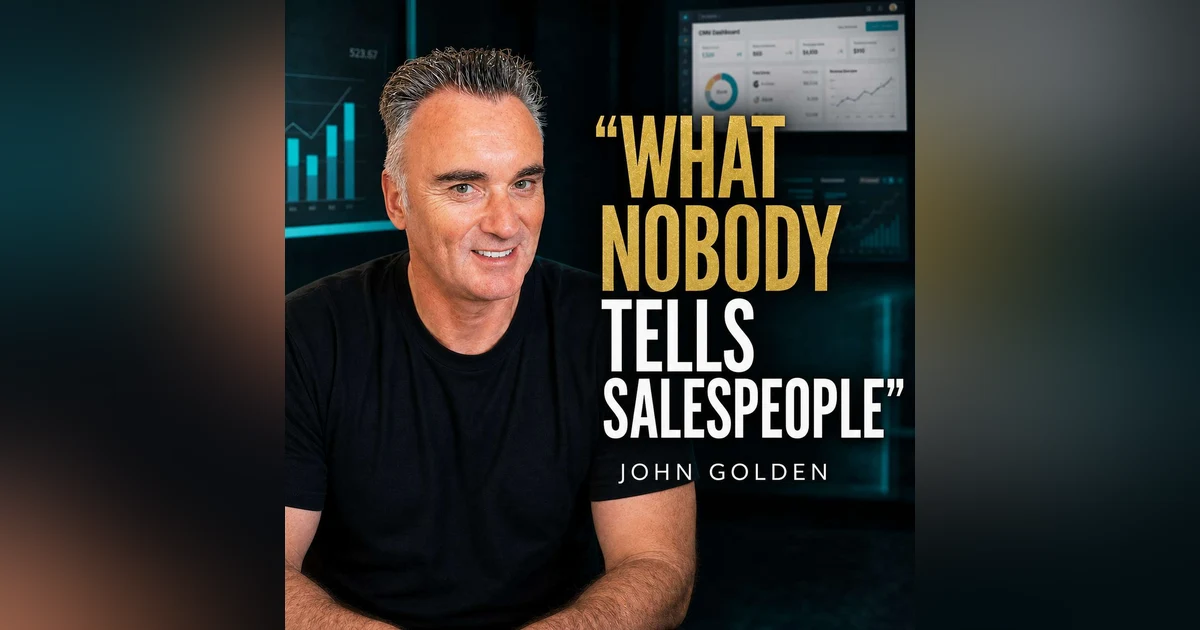
Send us Fan Mail Business Community https://www.skool.com/thebusinessnetwork Newsletter https://doing-business-with-a-servants-heart.kit.com/steveramona 📝Description: What does George Washington crossing the Delaware have to do with closing your next deal? More than you'd think. In this episode, Steve Ramona sits down with John Golden — CEO of Pipeliner CRM, host of the SalesPOP! podcast, and author of Winning the Battle for Sales — for a conversation about resilience, efficiency...

 Spotify
 Apple Podcasts
 YouTube
 iHeartRadio
 RSS Feed
 TuneIn
 Castbox
 Castro
 Goodpods
 Business Community https://www.skool.com/thebusinessnetwork
Newsletter https://doing-business-with-a-servants-heart.kit.com/steveramona
📝Description:
What does George Washington crossing the Delaware have to do with closing your next deal? More than you'd think. In this episode, Steve Ramona sits down with John Golden — CEO of Pipeliner CRM, host of the SalesPOP! podcast, and author of Winning the Battle for Sales — for a conversation about resilience, efficiency, and leading with a servant's heart.
John shares hard-won wisdom from running global sales organizations, studying the SPIN Selling methodology at Huthwaite, and decades on the martial arts mat. It's a masterclass in doing more with less and getting back up when the deals stop coming.
Inside this episode:
- Why scaling by headcount is the worst thing you can do — and what to do instead
- The bonus structure that had customer support asking salespeople about deal profitability
- The SPIN Selling trap that makes reps pounce on the wrong problem
- What martial arts teaches about competing with yourself, not everyone else
- How one blog post about Valley Forge became a McGraw Hill book
- The Kobe Bryant fundamentals secret that applies to every sales slump
PS: John gave away a story that could be worth thousands to the right listener — the "reward the effort, not just the outcome" system a top prospector used to survive the grind. If you've ever beaten yourself up over a day of no's, this one reframes everything.
CTA: Listen now, then subscribe to Doing Business with a Servant's Heart. Grab John's book Winning the Battle for Sales on Amazon, check out the SalesPOP! podcast at salespop.net, and start a free trial of Pipeliner CRM at pipelinersales.com. And don't miss Steve's TV show Together We Serve — Fridays at 2pm Pacific / 5pm Eastern.
🎯 What You’ll Learn:
✅ A small, motivated, skilled team beats a large inefficient one.
✅ Compete with yourself, not the people around you.
✅ Reward the effort you control, not just the outcome you can't.
⏱️Timestamps:
[00:01] Welcome & the servant's heart mission
[00:04] Building Pipeliner CRM & free education
[00:05] Efficiency beats scaling by headcount
[00:08] SPIN Selling and the pounce trap
[00:11] Martial arts, resilience & competing with yourself
[00:16] The book, Valley Forge & rewarding effort
🤝Connect with John Golden:
💥Web: https://www.pipelinersales.com/
💥YouTube: https://www.youtube.com/c/SalesPOP
💥LinkedIn: https://www.linkedin.com/in/johngolden/
💥IG:
💥FB:
💥X: https://twitter.com/RealSalesPOP
💥TikTok:
🤝Connect with Steve Ramona:
💥Web: https://steveramona.com/
💥LinkedIn: https://www.linkedin.com/in/steveramona/
💥IG: https://www.instagram.com/bizopportunitynow/
💥Podcast: https://www.servinginbusinesspodcast.com/
💥YouTube: https://www.youtube.com/@doingbusinesswithaservantheart?sub_confirmation=1
🔖Tags:
#ServantHeart #Podcast #BusinessGrowth
Free Business Community: https://www.skool.com/thebusinessnetwork
Subscribe to our Podcast Newsletter
https://doing-business-with-a-servants-heart.kit.com/628f9d5962
Join Me on Substack: https://podcasthost.substack.com/
Doing Business with a Servant's Heart Named Top 20 Small Business Marketing Podcast
https://podcast.feedspot.com/small_business_marketing_podcasts/
Welcome everyone to doing business with a servant's heart podcast. I'm your host, Steve Ramona, and I am thrilled to have you join us today. This podcast is dedicated to exploring the idea of doing business and life and living life with a purpose, serving others and yes, achieving success. We believe that when we can approach our work and our lives with a servant's heart, we can truly make a difference. Remember, we created this show for you because we want everyone to be motivated, inspired, and educated to make an impact in your world. Whether you're an entrepreneur, community leader, or simply someone looking to bring more purpose into your daily life. This podcast is here to support and uplift you. With that being said, I always talk about impact. We're going across the pond, as they say, in the UK. I believe uh John's in the UK, right, John? Uh no, no, I'm actually in San Diego. Oh, from are you from the UK? Uh no, I'm actually Ireland. Ireland, okay. Well, I missed two of those. I see hosts can screw up as well. And it's live raw, and that's okay. And I love San Diego, so he's on the other river.
SPEAKER_02No, I'm I'm originally Irish, so I'll I'll forgive you for confusing me with there.
SPEAKER_00You go. Well, my Irish family will forgive me too, I hope. Well, welcome to the show, John. I'm super excited. You've been extremely successful with some of the work you've done. Um, let's talk about uh Pipeliner and Sales Pop, those businesses. What inspired you to get those going?
SPEAKER_02Well, um Pipeliner CRM was founded by Nicholas Kimla in Vienna about uh 14, 16 years ago. And about uh 10 years ago, uh he 10, 12 years ago, he moved the business to the US. And uh I had actually started uh my own consulting company at that point, and he was one of my first customers. Uh and my issue had always been with CRM, uh, Steve, is that when I ran these other businesses and we were like Salesforce and that is, uh I ran this uh global consultancy company, Huthwaite spin selling, right? So sales methodology went around the world, you know, training uh uh global companies how to use the spin selling methodology. But my biggest issue is we couldn't embed it in the workflow of the organization because the CRM, even and and at the time we were using Salesforce because the parent company had a big install, I couldn't even do it on our own uh um our own uh install of of uh of Salesforce. So fast forward, uh when Nicola when I when Nicholas contacted me and we were doing some work together, I said, I love pipeliner CRM. I love it because you can very easily you could bring alive any sales methodology and you can reinforce it with not just with your stages but with the steps inside the stages. You can even make them mandatory, you can have all the documents, playbooks, everything. And and so he said, Well, but why don't you come on board and uh you know help me bring this to market? So I was like, okay, sounds like a sounds like a good idea. So that's uh that's how I got in with Pipeliner CRM. And then Sales Pop was really our kind of we're big into education and you know and learning. We wanted to do something primarily for salespeople to begin with, was like an altruistic give back, and that's create a lot of really high quality content for them uh to help educate them. And and so I started doing that by interviewing, you know, uh global experts and and you know, we expanded beyond sales, but today there's like over 1500 videos, and there's lots of ebooks and blog posts and everything covering sales, marketing, leadership, entrepreneurial. Um, so we see that as our give back because, as I said, like we're very big into education, and we also are very big into elevating the role of the salesperson.
SPEAKER_00Yeah, great education. That's a servant's heart right there, especially when you give it freely to people, which I talk to coaches all the time. They don't want to give up their IP and like give it up, they can't use it until you teach them. You're laughing because you understand that. So, what did you learn as a CEO Huthweight? Uh, is how do you say that again? Huthweight, yeah. Yeah, I did say Huthweight and Omega perform performance influence your role today. What did you learn and what people could learn from that that you learned?
SPEAKER_02That's a great, that's a great question. Um I I think I think the biggest thing is uh is efficiency, to be honest. Uh efficiency and productivity. Uh, one of the things that I was fortunate uh I was able to do when I took over both of those businesses. The first one I took them over uh just after the around the time of the financial crisis, right? So uh, you know, revenues were on the slide because everybody everybody's revenues were on the slide at that point. Uh you know, everybody, you know, the years before had been loads of revenue because people had full budgets, money was cheap, and they didn't, and to be honest, and people didn't even care that much about the uh the expense side and the bottom line because they're making so much money. So, but anyway, so I took over it the during the financial crisis and I thought, okay, um, well, we're gonna have to do a lot of rationalization here and and uh and uh if really dissect the business and figure out how we can still return a profit but on less revenue as we grow back because of the uh the economic situation. And so that's what I learned to be honest, Steve, is is a lot of companies never don't focus on the expense side of the business, right? And they tend to scale by people. And I think that's the worst thing you can possibly do is is scale is just scale by people. And what I mean by that is is that you say, Oh, there's something that needs to be done now, maybe we're at a different point in our business, and well, let's hire somebody to do that. And instead of that, going, well, let's see the most efficient way of executing what that needs to be done, can it be done by somebody here? Can we automate it? Could it be done by our contract? All of those sort of things. And one of the things that I uh I did at the time, which was we which had a big impact, was obviously the salespeople had commissioned, so they were already incented, you know, to hit their targets. But uh but we but the the the uh the parent company was more interested in our operating profit, right? Um that was that was what I was getting measured on. So I thought, okay, how can I how can I get all these other people in the businesses involved, in the business involved, right? The project managers, you know, the customer support, the the product development folks. And I thought, hang on. I I introduced uh a bonus structure that if we hit our operating profit target, then anything above that, then they all got paid out extra money. So now they were incented as well. So now for the first time, and this was you'll love this, Steve, right? I had customer support or product development people or project managers asking salespeople to give a breakdown of the profitability of the deal they just did.
SPEAKER_00Wow, I do love that. That's it.
SPEAKER_02And asking them and saying, Well, why are you giving this away free?
SPEAKER_00Yeah.
SPEAKER_02So so one of the things I was able to bring from those experiences is, and and this has been throughout my career, this has been uh something that I have lived by is that I think I believe you can achieve a lot more with a handful of highly motivated, highly skilled people who really know what they're doing than you ever will with like having hundreds of people but being inefficient, and you know, and and and people doing you know parts of jobs really well, but other parts not, because you don't really have a job for them, and that kind of thing is I really think a small bunch of talented, motivated people will always outperform a larger organization.
SPEAKER_00Yeah, I'm totally with team is the you know, I'm a big sports guy, team is all what it's all about. You don't have a team, you can't do it alone. I that's such a great story. You said something earlier that I'm very curious, I'm sure audience is spin selling. Give us a little brief synopsis of that. It's very unique. I've never heard it, but I'd love to hear more.
SPEAKER_02Well, um, spin selling is uh it was developed by Neil Rackham and he did uh research in the 60s and 70s. Uh uh, and uh he actually took a bunch of researchers and he went out and he did it pretty much almost a time emotion study on salespeople to see uh to see if he could isolate what the best salespeople did. And so he was able to isolate it and then codify it into spin selling, which is basically situation questions, problem questions, um, uh implication questions, and then needs payoff. So situation is what's going on. The problem is okay, let's identify this as the issue you have, Steve. What are the implications now if you don't solve this issue? Uh or if you do solve this issue, well, the imp positive, what are the implications? Negative. And then, okay, if I was able to do that for you, blah, blah, blah. Are you interested in moving ahead? So it's a method, it's a questioning and and and developing methodology because one of the things I think sometimes people, especially salespeople struggle with is that they go in and they you know ask a question, and maybe you say, Yeah, yeah, yeah, that's yeah, we're having a bit of an issue with that. And I hear, oh, issue with that, I think I can solve that. So I'm gonna dive straight into solution mode now. However, if I took it a state further and actually went into the implications and that and dug a little deeper, I might discover that's actually an issue you don't care that much about. You're prepared to live, live with, it's not the most important thing. And now as we continue our conversation and we go, as I expand on all these issues, you know, we get to the ones that really matter and maybe even surprise you a little bit as we explore them. You go, Oh, that's even more important than I thought. But you can see where the the trap is, where a lot of salespeople, the minute they hear, oh, that's an issue I can solve, they just pounce on it. And it could be the wrong thing they're jumping on.
SPEAKER_00Yeah, because we yeah, you could have that's time, it's such a big factor in business. What you're focused on.
SPEAKER_02Yeah, the spin selling book uh that Neil brought out, still I think the best-selling business book of its type of all time, still sells many copies every year. Neil still goes around and uh speaks and gives talks around the world. But uh yeah, yeah, very um if you've never looked at spin selling, you should take a look at it. It's a very interesting, and as I said, it was a it was an an actual um you know primary sourced research project.
SPEAKER_00Great tip for my audience and me. I'm definitely gonna take a look at I'm actually traveling this weekend, so I'm gonna grab it and read it while I'm traveling. I love to be able to have that do it to be able to do that now. John, you got a huge unique background, martial arts. Yes. How does the martial art? I'm curious about this because I always wanted to do it, never did it. How has martial arts influenced you, inspired you, or helped you with your sales and marketing in your businesses?
SPEAKER_02Oh, yeah, in in in so many different ways. And uh I you know, I have to say, I think the first thing is in in martial arts, one of the first things that you learn is that you know, there's gonna be bigger, faster, stronger, more flexible. You know, there's always gonna be people who can do certain things better than you or attributes better than you. So when you when you start your martial arts journey, it can be very demoralizing if you're looking around and going, oh, I can't do that, or look at he's at this higher, all that, or she's this. Uh the key is to understand that your your competitor is not the people around you, your competitor is yourself. And and when you go to when you go to a class or a session, you you have to ask yourself at the end of that, did I give my best? Did I improve on where I was last week or last month or whatever? And so that's one of the biggest lessons I learned is like is not to come is is yeah, it's fine to go look at people and admire them and say, Oh, I'd love to, you know, oh I like the way they do that. I'm going to try and emulate that or whatever. However, not using people always as a comparison, but coming back to yourself and saying, okay, what am I supposed to be? Where am I going? And am I progressing on that journey? So that that's the number one thing is learning learning to be in competition with yourself. Uh and I and the and the second thing, to be honest, uh Steve, is just resilience and uh and the the core strength that people have. Like I have seen, I have seen little shy little kids or whatever, you know, who come and they they start and they do the like their first test and they're they're they're crying and they're afraid and they want to run back to their mom and dad, but you know, they the master like helps them through the test and everything. And then the change afterwards of to putting yourself out of your comfort zone, doing something like that in front of me, all of that, it's amazing. And so it's a great uh it's a great confidence builder as well. Uh and I think it's the other thing, it helps you it helps you confront your fears. Uh, because one of the things, like most people, we're we're not hardwired to get to to want to get smacked in the head by people, right? We're we're hardwired to try and avoid that. So one of the other lessons from from martial arts is is learning to be okay in an uncomfortable situation, right? So if I if I go to, you know, if you go to um a spar, and this is why I always say to all the kids is like, don't be afraid of sparring and don't be afraid of going to competitions, because if you go to, if you if you step in the ring to spar, right, at any level, it doesn't matter, the lower, you know, the local level or you're at your dojang or whatever it is, is you already are doing something that 99% of the rest of the world won't do, right? 99% of the rest of the world is not deliberately standing up and saying, I'm gonna put myself in this situation where I could actually get hurt, right? And and I think that is, and and I just instill that is that it's the showing up and having the guts to put that put your two feet in the ring. Whatever happens after that doesn't matter, to be honest. It doesn't matter, you're already a winner, and I think that's the biggest thing is like being comfortable with putting yourself in uncomfortable situations. And guess what, Steve? Most people discover you get smacked a couple of times, you go, it's not as bad as I thought it was. I mean, clearly, if you get knocked out, that's a bit different. But I always think it's uh I always think like the first time, you know, just God forbid you ever get yourself into a situation or whatever. But I always think the first time you get hit, you don't want that to be in a situation outside where you're so shocked by the you know, by getting hit that you can't focus on anything else.
SPEAKER_00Great lessons, great. I play football, not that it's martial arts, but I remember as a kid getting hit the first time and then a few more times. It's it's like you're saying, really not that bad. Not that we want to do 24-7. You don't want to get hit that much, but an hour a day is or when you're training, that's good.
SPEAKER_02Exactly.
SPEAKER_00Talk about your book. I'm excited. I looked at some of it. It sounds very informative and inspirational for people. Talk about the book, name of the book, or where they can get it.
SPEAKER_02Yeah, so the the book is winning the battle for sales, the lessons from the world's greatest military victories. You can get it on Amazon and all good uh book retailers. Um, that book, uh, that book is interesting, uh, Stephen, just in the genesis of it, uh, in that uh, and this is good advice for anybody out there who's considering writing a book or whatever, is it came from one blog post. So I was writing a short blog post, uh, and I was considering uh when salespeople are in a rut, right? When just you know your deals are going south, everything is, and you're just like nothing's working for me. Um I always likened it to um like I'm a big football soccer fan, right? And sometimes you'll have the guy who's supposed to score the goals, right? And he's in a drought, right? He can't couldn't score to save his life. And and oftentimes it's just like they just need to just keep trying, and eventually, like some ball like goes in off their knee or whatever, you know, ugly, ugly goal, but doesn't matter, they've got the breakthrough, and then they go back to scoring regularly. So I was I was I was looking at that from a sales perspective, and I can see because it can become self-perpetuating in that in your mind, right? Self-fulfilling, if you like. Oh, I'm gonna lose this next deal because I've just lost all the other ones. And and I was reading about George Washington and the Continental Army, and how uh you know they'd reached that point of the war where things were going really badly, and most of the people in his army when they were in uh Valley Forge, I think most of the people in his army their contracts were up, they had signed up for a period of time or whatever, and they're all about to head back, and there was illness. Anyway, it was a there was a disaster, and that would probably would have been the end of the American Revolution had Washington then said, No, we'll cross the Delaware and we'll do this you know surprise attack on the Hessians, I think it was. And and so anyway, he went across the the river and had this surprise attack and they won. And just that just that little victory changed everything, right? It changed the whole trajectory of the war. You know, more people came to sign up and all of that, and people believed in victory, right? Um, it was a lit it was pretty limited victory, but as the point of it was that it was a victory, right? And they did something surprising. And so uh that blog post did pretty good, and then we talked to McGraw Hill and they said, Well, why don't you turn it into a book? And that's what we did. So we uh I went back and I I worked with one of my colleagues and said, Okay, let's find, and I actually did history in in college, so I'm interested in history, and I said, Let's find you know battles and and comparable things to this, and let's let's map a sales lesson to it. So, therefore, you know, when you're in a sales situation, you can do uh you know that recall exercise by just going, Oh, yeah, that remember that's like David and Goliath's you know, uh story, or that's like the you know, the battle of Islam Wallah or whatever. Uh and that that was the genesis of the book, and it was a lot of fun to do, and we even got a cartoonist to do little cartoons at the beginning of every chapter, so yeah, it's a fun, fun project.
SPEAKER_00What a great project because I think military, there's so many business lessons in the military. That's what caught my eye because I love military veterans on my show. So I really appreciate you writing that. And what I'm hearing too, which in the sales is so important, is the decision. You know, George Washington make the decision. Hey, we've lost, we're we're going away, we're gonna put our tail between our legs and we're done. But making the decision we're gonna fight one more time, tip the tipped America. We probably wouldn't be sitting here today, maybe, if the decision was to quit, right?
SPEAKER_02Yep, yeah. No, absolutely. And I think that I think that resilience and being able to pick yourself up when uh you know you're being constantly knocked down, that that's really that's really important. I think sometimes when you're in that rut, what you need to go back and you need to look at some of your past successes and and sort of revisit them and say, what did I do for that? And and just check check in with yourself and say, Am I doing everything the right? Because even back to um martial arts for a moment, Steve. One of the things that is I I'll go like I go, I'll be going up there tonight, right? I could conceivably I could go in tonight and we could end up spending the whole uh the whole class doing uh basic stances, right? ones I've learned, you know, I don't know how many thousands of times I've done these, I've learned them years ago. But I guarantee you, I'll get corrected on pretty much every single one of them. Because there's all because you just get into little bad habits, you forget a little bit, you get a little lazy, you know, this, and that's why you have to constantly revisit the foundations. And I think it's the same for salespeople. Sometimes when you're in a rotten when things aren't going your way, it's good to go back and say, Am I doing all of the basics? Am I covering everything? Or am I taking some a few shortcuts? Am I are there things, and that's why it's good to look back at some previous successes and and examine the process and say, Oh, I did this and I did this and I did this. I didn't do those recently. I need to get back to doing that. And so I think uh I think that's really, really important as well, is to go back and look at what made you successful when you were successful, and then check that you're doing all of those things, but you're also doing all of the fundamentals as well.
SPEAKER_00Well, that's a great sales tip, especially if you make high-ticket sales, game changer. I mean, that could make somebody listening to this thousands, if not millions of dollars just doing that. And I love the fact of your foundation of basics. Every sport does that. They start their, you know, NFL starting, you know, our football, our football, not the European football. You know, they're starting their mini camps, and you know, like they want to cut them back. And they're like, no, we need to practice, practice. You're so right.
SPEAKER_02There's and somebody told or I read somewhere, somebody told me, like, uh, you know, Kobe Bryant used to go in, I think, at five. Morning, or something ridiculous, like when he was first into training. And people assumed, you know, somebody assumed like he'd be going in there practicing all these fancy trick shots and everything. When somebody asked him, they said no. He said he told them he says, No, I do the same high school drills, I always did. And because he knew he knew that it was the fundamentals, him having the fundamentals like so down that he could do all the other stuff.
SPEAKER_00God, that that that story is so parallel with sales. Get it back up tomorrow morning at five o'clock. You had five no's today. Tomorrow might be a I love this, John. I just met John, just so you guys know, just before this show. So I'm learning so much about him because we complex sales because of this old hard head. We make it different because it's not that hard. It really isn't. I don't know. People listen, like, oh, you got to be in my shoes. Well, get his book, and I think it'll help you. Let's do that. Um, let's get a little personal. Can I get a little personal with you?
SPEAKER_02Sure. So I'm Irish, you know. So yeah. Uncomfortably in my seat.
SPEAKER_00Oh, there we go. Okay, I'm gonna give it to you then. So Friday night, what does John do on a Friday night?
SPEAKER_02Whoa, Friday night. Um, well, often on Friday nights, uh, here when the weather's nice, which is a lot of the time, is we uh myself and my wife, you know, we finish the week off by taking the dog down to the uh seafront and we walk four or five miles with the dog. Uh and you know, that's that's often our Friday night. Um, or we uh or we if it's a really nice evening, we may do that and then crack open a bottle of wine and sit in the backyard and have a have a glass of wine. So that's uh you know, for Friday, Friday, I think is always a good you have to mark some demarcation between that and the rest of the week.
SPEAKER_00Yep, and that's why I picked Friday. Thank you. See, he's this guy's brilliant. That's why it because people go, why don't you ask people Friday if not Zach? Because it's the end of the week and most people need to what'd you call it?
SPEAKER_02Yeah, just demark, just say, you know, that that was the end of that week. And is and even if you even if you're doing some work over the weekend, that doesn't matter. It's just say that week, this is closed now, and you know, you got stuff you have to do tomorrow or whatever, that's fine. But just close it, but mark it with the clothes, because I think that's the other thing. And and Steve, I'll just share you one other one tip. Yeah, some this was given to me by somebody else, and his name escapes me as somebody I interviewed. But he said, like so when he's prospecting, right? He said, Okay, you know, who likes prospecting? And prospecting is a grind and all of that. But what he will do is he will say, Okay, I'm going to make you know 50 calls today. And if I if I uh secure a an appointment out of it or immediate, yeah, I'm gonna reward myself with um watching a movie tonight. And then he said, But he said, Okay, if I make those 50 calls and I don't land the appointment, he goes, if I can honestly say there's nothing else I could have done better today, then I won't give myself the movie, but maybe I'll award myself some ice cream or a treat of some kind because I put the effort in. But I thought that was a real interesting way of doing it, of even like saying, Okay, I didn't hit the target today that I wanted to hit, but did I do everything I could have done to hit the target? And if not, then maybe it's just the day that's in it.
SPEAKER_00Audience, you can see why this guy's so successful. That is so brilliant because we get so hard on each other. It's so good. Yeah, you didn't get those two say you know, two appointments, but you taught the people and you did everything that you're supposed to do for your plan. Yeah, because we get down ourselves with the end goal, yep. And not that some because we're not in control of that, we're not controlling the other person on the phone on the phone call on the other side. We're just not, but we can control ourselves and what we do and how we do it. Uh, this has been a brilliant show, an incredible show, John. I want to thank you. Uh, what's the name of the podcast again and the name of the book?
SPEAKER_02Yeah, salespop is the podcast. I'd go and encourage you to check it out on the uh salespop.net or just go to YouTube. Uh, we have a very robust uh YouTube channel, and the book is winning the battle for sales. And then, you know, uh please go check out pipeliners.com and take a trial of pipeliner CRM and see see the difference for yourself.
SPEAKER_00An audience do that, especially if you're struggling with your CRM. I I hear it once a week. Ah, I don't remember. Well, I like my CRM. Well, now guess what? I've got a CRM I can refer them to, which is great because if you're in any sales at all, you have to have a CRM or at least minimum a spreadsheet, but get a CRM, it's much easier. You need a CRM. Yeah. Well, thank you, audience. We me and John appreciate you watching or listening to this podcast. It's been great. Don't forget my TV show Fridays at 2 p.m. Pacific, 5 p.m. Eastern. Uh, together we serve. It's got the ability to uh really do like we're doing here, but for 56 minutes. Um, and also I want to thank all of you for watching and listening. Me and John so appreciate that. I know you probably got something out of this. Reach out on YouTube or on my podcast platform. Send me a comment, I'll get it to John, or reach out to John if you have a question. He's a servant heart. He'll get that answer his team well and actually help you move forward in your life and make that impact I talked about. With that being said, we'll see you all in the next episode of Doing Business with a Servant's Heart.