Why Success Comes Before Confidence (Not After) | Steve Lover
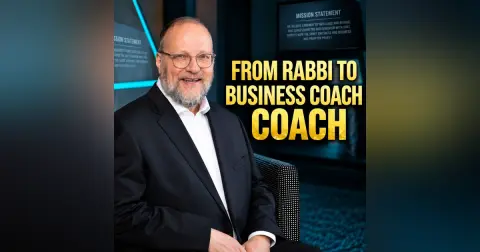
Send us Fan Mail Business Community https://www.skool.com/thebusinessnetwork Newsletter https://doing-business-with-a-servants-heart.kit.com/steveramona 📖 Quote: “We make a mistake. We think that success comes after we’re confident, and it’s just the opposite.” — Steve Lover 📝Description: Most leaders wait for their people to feel confident before handing them the hard stuff. Former rabbi turned business coach Steve Lover says that’s backward: confidence is built by doing...

 Spotify

 Apple Podcasts

 YouTube

 iHeartRadio

 RSS Feed

 TuneIn

 Castbox

 Castro

 Goodpods
Business Community https://www.skool.com/thebusinessnetwork
Newsletter https://doing-business-with-a-servants-heart.kit.com/steveramona
📖 Quote:
“We make a mistake. We think that success comes after we’re confident, and it’s just the opposite.” — Steve Lover
📝Description:
Most leaders wait for their people to feel confident before handing them the hard stuff. Former rabbi turned business coach Steve Lover says that’s backward: confidence is built by doing the uncomfortable thing and winning. In this episode, he shares what “world-class” really means and how servant leaders grow confident, accountable teams.
- World-class, redefined: Decide, plan, execute on time. That’s it, and few companies actually do it.
- Mission, vision, values that are real: Why most statements are marketing fluff (look up Enron’s), and how to write ones that guide decisions.
- Lead people, manage things: The confidence model behind his book Ignite: inspire the challenge, encourage the work, celebrate the results.
- Expectations vs. agreements: Why unspoken expectations wreck teams and marriages alike.
- Pleasing vs. serving: The “dirt on your tie” story that shows what real care looks like, including walking away from a sale.
PS: Steve’s path runs from Jerusalem and Amsterdam pulpits to a six-figure business failure to coaching insurance wholesalers who doubled their numbers in a year. His line that fear and courage are “brothers, not opposites” is one I’ll be repeating for a long time.
CTA: Connect with Steve on LinkedIn (search “Steve Lover”) or at Blue Mountain Business Coaching. Then subscribe to Doing Business with a Servant’s Heart and catch Together We Serve Fridays at 2 PM PT / 5 PM ET on Apple TV, Roku, and Samsung.
🎯 What You’ll Learn:
✅ Success Builds Confidence, Not the Reverse
✅ Agreements Beat Unspoken Expectations
✅ Serving Beats Pleasing
⏱️Timestamps:
[02:30] What World Class Means
[04:10] Systems, Metrics & Rhythm
[05:00] Mission, Vision & Values
[08:20] Lead People, Manage Things
[12:30] Pleasing vs. Serving
[18:20] Inside the Book Ignite
🤝Connect with Steve Lover:
💥Web: www.bluemountainbusinesscoaching.com
💥LinkedIn: www.linkedin.com/in/your-business-coach
🤝Connect with Steve Ramona:
💥Web: https://steveramona.com/
💥LinkedIn: https://www.linkedin.com/in/steveramona/
💥IG: https://www.instagram.com/bizopportunitynow/
💥Podcast: https://www.servinginbusinesspodcast.com/
💥YouTube: https://www.youtube.com/@doingbusinesswithaservantheart?sub_confirmation=1
🔖Tags:
#[tag]
Free Business Community: https://www.skool.com/thebusinessnetwork
https://app.nucalm.com/purchase/free-trial?coupon_code=NUCALM15&ref=steve57
Subscribe to our Podcast Newsletter
https://doing-business-with-a-servants-heart.kit.com/628f9d5962
Join Me on Substack: https://podcasthost.substack.com/
Doing Business with a Servant's Heart Named Top 20 Small Business Marketing Podcast
https://podcast.feedspot.com/small_business_marketing_podcasts/
Welcome everyone to doing business with a servant's heart podcast. I'm your host, Steve Ramona, and I'm thrilled to have you join us today. This podcast is dedicated to exploring the idea of doing business and living life with a purpose, serving others and yes, achieving success. We believe that when you approach our work and our lives with a servant's heart, we can truly make a difference. We create this show for you because we want everyone to be motivated, inspired, and educated to make an impact in your world. Whether you're an entrepreneur, a community leader, or simply someone looking to bring more purpose into your daily life, this podcast is here to support you. While listening to the show today, this guy is going to be incredible. So get your pad and paper out. Think about how you're going to serve today and think about that impact you're going to create today. And the key word is today. And today's episode, speaking of today, is brought to you by an amazing sponsor, Pantheon Alliance. Picture yourself joining an elite community of high-income and successful business owners and entrepreneurs from a variety of industries, all working together to create a powerful referral marketplace and also get educated. It's an incredible opportunity to expand your network and elevate your business to new heights. If you have any questions or more information, just reach out to me and I'll get it to you. And with that being said, impact, we're going to talk about world-class impact. He's going to tell us what world class really means in business and not what some people are saying. Steve, welcome to the show.
SPEAKER_01Thanks a lot for having me, Steve. It's a pleasure to join you today.
SPEAKER_02Great name, by the way.
SPEAKER_01Thank you. I can't take credit for it.
SPEAKER_02I inherited it. Me too. We're both in the same boat. So we talked before the show in the green room about world class. I love your definition in business respect. Tell us what your definition is.
SPEAKER_01Sure. Typically, world class, people think of a lot of things and think of big in size and other things. The way we define real world class is somebody who decides what they want to do, a plan of action, and then they execute it. So decide this is what we're going to do as a company, and then they set everything in motion to make that happen and they do it on a timely basis that they want to get it done. And that's what we call world class.
SPEAKER_02Sounds like a lot of companies aren't doing this.
SPEAKER_01Did you say are or not? Yeah, it's actually companies that really dial it in and get it right are few and far between. And that's why it becomes world-class when you have somebody that does that, it's so special.
SPEAKER_02What is the you might not know the stats, what's the stats of a world-class company compared to non-world class?
SPEAKER_01Can't tell you. I can tell you this that when we deal with companies and we start working with them, we look at creating a three-year outcome. And then we create everything in place and we really think about the business owner. The business owner, what's the thing that you want to accomplish over the next three years for you personally out of your business? And sometimes you'll say things that, you know, I want to go spend a month with my family up in the mountains. Why can't you do that today? Business not equipped that I can be away for a month. All right, let's create that over the next three years. And very often we can do it in 18 months. Because once the focus is set, the breakthrough clarity is set, and the organizational process is set, sustainable growth is the easy thing to do. How important are systems in this? Extraordinarily important. If you don't have systems, you not only need systems, you need you need metrics and accountability focus, and then finally you need a rhythm. And what that means is the metrics, what are the things you're going to measure? How we know you're hitting the things, how do you know where you're short, where you're ahead? How do how's that work? Number two, creating a focus throughout the company on accountability, and then finally a rhythm. What do you do to create meetings, processes that ever keeps everybody on track and that we can know everything's standing at all times?
SPEAKER_02That's very cool. In this podcast, small business and entrepreneurs are a big audience. How do you boost their product profitability and productivity?
SPEAKER_01So, really, what ends up happening is a lot of time is is lost because we don't have the breakfast breakthrough clarity that we need. In other words, the companies are really good at hiring people, but not telling them exactly what their job is and how to how they want it done. They're really not good at saying who we are as a company. I believe every company needs a mission statement, a vision statement, and a value statement. And anytime you speak to most business owners, they start rolling their eyes when they hear that because they've thrown it a million times. The problem is the way most companies do it, they hand it off to their marketing department, and their marketing department writes something that looks great on the website, great on the wall, great in a brochure, but it's not real. If you'd you want to look up something really interesting, go look up Enron's value statement because you'll be laughing your head off. It's all about respect and it's all about integrity and it's all about these things that had nothing to do with Enron. But when you're really clear on what your company's here to do, your mission's really clear, and then your vision, where you're going, is clear, and then your values, what you're willing to do to make it happen and not. And the way I like to explain the values is let's say your mission was to make a million dollars. Well, you if you didn't have values, you go rob a bank and to do it. But if your values isn't that we do with integrity, we do with honesty. So robbing a bank just fell off, and you have to go find another way to do it. So once those statements are really clear, the base of the company of how we work and what we do, so then we start to build on that and we create the metrics, like I said, and the accountability focus and then the rhythm. So what's is mission and why different or are they the same?
SPEAKER_02Is why? Sorry, missions, your mission and your why are they the same in a business or are they different?
SPEAKER_01Yeah, your mission and why are pretty close to each other. The mission is is what you're doing and the why is what's the reason that's pushing you to do that. So the mission is, you know, how am I serving the world? A lot of people think the mission is to make a lot of money. That's a that couldn't be anything more wrong than that, because money is an outcome. Money is uh comes from doing the work you need to do by serving people, and the mission is who you're serving for what purpose. I want to have a thousand business owners that straighten up their business. If I'm selling, I don't know, cars, I want a thousand families to have an easy way to travel. If your focus is on the money, you're wrong. You're at the wrong place. The mission is about the service you're providing for other people. And the why might be the why that's important to you.
unknownYeah.
SPEAKER_01Very cool. Covey's got a great story in his book that his wife was into frigidair and she only wanted frigid air appliances. And he couldn't understand that. Whirlpool's got this why. And he found out that her father had been in appliances, and he ended up with some situation, it was it was falling apart, and frigidair came and saved him and helped him. They extended him a little extra credit, helped him do things, and so therefore, she had this huge loyalty to frigidair, which had nothing to do with the appliances. And so uh that's that's the why. But the mission is the why. What are you trying to do and who are you doing it for?
SPEAKER_02Yeah, why is so important. A lot of companies don't, as you know, you work with them. I talk about business, anybody. You're a plumber, you're Jeff Bezos and Amazon. We're in the people asset business, asset like finances, but the most important one is your employees. So how do you effectively you know manage the employees through accountability?
SPEAKER_01So, first off, I I don't like the word manage. I like the word lead. It's a very big difference. I believe you manage things, you lead people, and I don't manage people. Uh, you might manage some jobs, you might manage some things, but it's not about managing people, it's about leading people. And uh one of the things that I'm very big on is that the thing that makes great employees great, makes great people great, is sell is confidence. And a confident employee is a good employee. Much I don't care, you can take whatever other characteristics you want, confidence is the is is the key. And I believe that every company can help their employees become more confident every 90 days. I have a model, and basically we make a mistake. We think that the success comes after we're confident, and it's just the opposite. You have to success precedes confidence. So what happens if I go and I do something, I'm not sure how to do it, I'm uncomfortable, it's it's it's out of my comfort zone. And I go and I work on it and I work on it and work on it, and ultimately I'm successful, I'll become confident in that. And that's that's that's where the thing is. So when you're helping your people become better people, it's a very, very big boost to the company in every way possible. I'll give you another example of one that's really interesting. People think that fear and courage are opposites, and they're not opposites at all. Because if I don't feel fear, I have no reason to have courage. Courage is only necessary if I'm fearful. And therefore, the the way we have to look at it is fear and and courage are brothers. Uh when a person starts to feel fear, that's time to pull out the courage and lock arms and go together to get the thing done. The best uh best definition I ever heard of of courage was courage is when you're so frightened you wet yourself. Sorry, fear is when you're so you're so frightened you wet yourself, and courage is going to do what you have to do with wet pants on.
SPEAKER_02Yeah, it's a great, great, great experience.
SPEAKER_01Yeah, you know, so when you can help your employees up their courage, up their confidence, up their success rates, and it's doing because you're you're doing you're serving them. It's not managing them. I I believe every employee wants to be successful. Now, there's some that want it more than others, and some people are just not going to be great employees for your company. But the concept that we can bring things to help our clients, our employees become better, and therefore they become better employees in the process and get more things done. So that's that's what it's all about. But again, that's all about service.
SPEAKER_02Yeah. So on the flip side, we're accountable, employees. What's what do we do with an employee that's not accountable?
SPEAKER_01Well, if we can't get them to the point of accountability, then that's probably not a good fit for the company. And that's okay. Uh, one of the things that again, I a distinction that I like to use is the difference between expectations and agreements. Most actually, if you look in the world, most people that are upset with their world is because the world didn't come up to their expectations, which usually were not voiced. Look at a marriage, husband and wife, it's not going well. It's because somebody has an expectations they haven't voiced properly and agreed on. But if you have an agreement, you don't have that problem. And so, therefore, if you have an employee that's working and you come to them and say, these are the things we need to get done, how can we do this together and get them to buy in and agree to the work they're gonna do, you're three quarters of the way there because they own it now. And if they own it, the chance of them doing it better. Now, there you know there's gonna be some people that you're not gonna be able to do it, they're not gonna be able to, they think they can, they'll try, but they're too afraid, they can't get the courage out, they can't do it. And you try to help them, and you can't, at that point, you say, look, this is just not the right place for you.
SPEAKER_02That's it's the servant server that does that. Yeah, that's exactly it. So leadership is a big part of it. You said lead, you've mentioned lead a few times. What's a servant leader in your eyes?
SPEAKER_01So there's a there's a very important distinction when it comes to service. And that is there's something different between pleasing and serving. And most people out there are pleasers. They want, you know, when you're little kids and your ma takes your mother takes you to the store, she says, you know, if you behave really well, I'm gonna give you a lollipop when we get home. So the kid's on this best behavior and gets a lolly. They're being taught to be pleasing. Do what makes me happy, and I'm gonna reward you. And we go into life later on in life where business is no purpose for that whatsoever, zero purpose for that. And we try to be pleasing. We want everyone to love us. And as a business owner or a boss, that's the worst thing in the world because now everybody starts to learn the game of how to please you, but they're not serving, and you're not serving them. And real service is when I care about you enough to put myself on the line that I might lose out, but I'm doing the best thing for you. There's a similar distinction between nice and kind. It's really very similar to service and pleasing. And uh the way I like to use that as a story that happened with me. I used to be a a manager in a at a uh Fortune 100 insurance company. And I once came out of the restroom, and evidently I blew my nose or something because a guy came over to me and said, Hey, Steve, you got some dirt on your tie. And I looked down, it was kind of embarrassing. And he said to me something that really hit me very strong. He said, Steve, I know you feel uncomfortable. I do too. But I care about you too much to let you walk around for the rest of the day because there's a lot of other nice people who won't tell you about it. And so he cared about enough about me to risk that I would be unhappy with them or to risk something in the friendship because it was more important to serve me. Whereas other people would see it and say, Oh, that's gross. I would love to tell him about it. But if I tell him about it, you know, uh maybe he's gonna be angry at me. Kind of like the old scope commercial. I'm not gonna tell him, you tell him, right? And they spin the bottle, okay, it's on you. And the guy takes a shaking a little bit, takes the scope bottle over to the owner, and the owner says, Yeah, I started using yesterday. Great stuff. Good, good, you know. So it's the same thing. So pleasing and serving is the same thing. I care too much about you. And by the way, it's with sales also. You want to buy that, but it's not the right thing for you to buy. I'm not letting you buy it. I'm not gonna sell it to you. Yeah, and you have to be willing to let go of the sale if that's the wrong thing for the client.
SPEAKER_02Yeah, yeah. We don't force or pitch slap, as our good friend Clay Clay would say. Don't pitch slap. So I want to throw that out there. Interesting journey you have. I want to get a little personal. You start, you were a rabbi at one time, and now you're a business coach. That's quite a bridge to jump. How'd that happen?
SPEAKER_01So, actually, in certain ways, it's not really a bridge because as a rabbi, you do a lot of things helping people uh get to places they want to be. And uh, I was an insurance agent and a business owner in between. Um, I got to a point, I had actually was um, when I first got married, I was living in Jerusalem. And then we moved to Amsterdam, where I had my first uh synagogue where I was a pulpit rabbi and I was in a fellowship program. And then we moved to Minneapolis and Los Angeles, uh, where again I was in the field. And then finally got to a point that my family grew enough I wanted to go from nonprofit to profit. I opened my own business, and the only thing that comes to mind is, you know, Walter Mondale, when he was when he lost his election against Ronald Reagan, said I wanted to run for president in the worst way possible, and that's exactly what I did. And when I created my first bat business, I failed horrifically with six figures of debt. Uh, and it was the wrong business, had no business getting into it. I didn't have the capital I needed, got an important lesson from the world, ended up going into the insurance industry, did really well, became a business um a trainer for one of the biggest insurance companies in the country. And as I was doing the training, I said there's a piece missing. Because the insurance company had this great perspective. And the perspective was if a guy knows he's got the knowledge what to do, he knows what to do, he's got the skill, he can prove that he can do it by a role play and he's got the desire. There's no reason he's not being successful. And I had a room full of agents that had the knowledge, had the skill, and had the desire, and they were falling on their face. Because if you have those three things, but the phone feels like it's 3,000 pounds for you to pick up, you're not gonna make the calls. I don't care how much skill, desire, and knowledge you have. And when I had that, I so I started, you know, speaking to the insurance company. Maybe we need to change a few things. No, we kind of like it the way we we have it. And the truth is uh one of the things that they I think most of them don't know, let alone share, they can't afford to have more agents stick around because if they did, it would mess up their whole model. And so I started out by um coaching people in the industry. And in my first year, I had three wholesalers. One took his unit from 50 million to 100 million in a year, one had gone from number 43 out of 52 in his zone to number two, and the final one had never received all of his bonuses by December 31st, maxed them all out September 30th. So I was doing something right. And the business just continued that way.
SPEAKER_02That's very cool. Those are great stories. Loved hearing that on both sides of the fence.
unknownYeah.
SPEAKER_02It's a win-win. 100,000. Let's talk about your book. I believe it's called Ignite. Make sure I say it right. Talk about the book and the mission.
SPEAKER_01So the mission is really clear. When it comes to getting a business straightened up so they can really become world-class, there's two sets of skills. There's hard skills, and those are the kind of things we spoke about defining the break, getting the breakthrough clarity, creating accountability focus, and so on. But there's also soft skills. And the soft skills, how is you as a leader help your people get where they want to go? So I'm pretty anti-motivation. Because, and and I'll tell you why. Motivation is when I get you to do things that I want you to do for my reasons. I'm much for, much for, much more for inspiration. Where I get you to do the things you want to do for your own reasons. And again, we're kind of with the idea of service. When I come to you, this is what we gotta do. So that you have to go do this. I don't have you buying, but if I come to you and say, hey, Steve, you know, wouldn't you like to take a really good vacation with your family in the summer? What is it gonna take to make that happen? So let's talk about how we can make that happen. Okay. So if you take these actions, we can get there. Are you interested in that? So can we get an agreement that that's what's gonna be our plan for the next six months, year? Now all of a sudden I'm I'm now that that's not gonna take care of the whole problem because that's gonna create something he's gotta do. But the problem is it's really good to agree at it now, but when I start having to make the calls, I'm getting a little uncomfortable. And that's where the courage comes in. So, what my book is really about is how do we increase confidence in the workplace? There's three sections to the book. Section number one is where does confidence come from and how do is how do we grow it? Section number two is what are confidence killers? And there's tons of them. And then finally, number three is what are the three things I as a leader have to do to help bring confidence out of my employees and help them become more confident. And uh to real quickly just look at the model, and the models explained the depth in the book. Uh, there's there's three things you have to do to increase your confidence. You take something you've never done before, it's outside your comfort zone, and you take on that challenge, and then you take deliberate activity to make that happen. That's the bottom right of the Venn diagram, and you get results. And when you take on that challenge, you do the work, you get the results, your confidence goes up. So, what's the job of the leader? It's to inspire the challenge, to encourage the work and the effort, and to celebrate the results. And I'm gonna just touch on those last two for just a second. The word encourage means to give somebody else courage. And it's very easy if I'm not in the throes of the difficulty to encourage you that yes, you can do it. If you've ever lifted weights before and you got to a new weight and it's hard on the eighth one, the guy, the guy who spied you says, Come on, it's all you, it's all you, you can do it, you got it, you got it. Yeah, it's all it is a little encouragement, and you push it up to the left and you maybe get the next one, also. So it's how do you encourage people and give them that sense that they're gonna do it? One of the stories I tell in the book is when people go bungee jumping for the first time, they get ready, they get their bungee uh jumping on, and then everyone starts counting down as a group. 10, 9, 8, and the guy's and it one he jumps. That group of people is an encouragement. Most people, I believe 50% of the people when bungee jumping, if they go alone, they'd put it on, they'd start counting themselves, they would say, No, forget it, I'm not doing this. But it's it's that kind of that that encouragement that comes from the group that everyone's gonna do it that makes it easier. And then finally, when they get the results, it's so important to have a proper kind of celebration. And for those parents out there, I'll give you an example, I'll give you an example. Johnny comes home with a 99 on his math test, but he struggled for math all the years. And dad says, Good job, Johnny. That's almost a compliment, let alone a celebration. But if Johnny's, if dad says to Johnny, hey, Johnny, you know, I know you struggled for math through years. I've seen the last couple of weeks you've really worked hard. And today you brought home a test with a 99 on it. I'm really proud to be your father that you worked so hard to get there. Let's go to the ice cream store and get some ice cream. How much more meaningful is that celebration? And because of the celebration, he's going to be ready to go take his new challenge. I believe that every 90 days we should be finding new challenges to grow with. So what happens is we have the challenge. We go and we do it, we get successful. Let's celebrate in a way that makes me say, wow, I want to do this again.
SPEAKER_02And encourages about it. Yeah, encourages a fantastic word. The servant leader encourages. And change and growth are part of every business across the world. 100,000 percent. Like you just said, and that's what you teach and grow. You know, it's interesting. Um, your coaching is very faith-driven, and I love that because that's what encouraged. I have faith in my employee, I'm gonna make him accountable, and I love that. And and audience, this is a powerful message. But I want to get personal, I want to ask you a question that don't ask anybody prep them for, because it just we learn a little bit more about you. So, Steve, you're going to a restaurant, you've got a four, a four-top, four seats, you're sitting in one of the seats, the other three seats are occupied either dead or alive, three people you want there, and why do you want them there? But most importantly, what food would you order?
SPEAKER_01The food really wouldn't is not a big thing for me. Or it doesn't really make a difference. Okay. I'm not um, you know, yeah, sure, like a steak, I like a salad. It doesn't, but but that's not that's not really where it's at. The three people that I would like to uh have at the table. So I'm gonna limit it to the business world. And I'm doing that for a reason, because if I didn't do that, I'm getting the religious world, so it would be in the Jewish world, it would be people from a long time ago, people nobody you've ever heard of or anybody of your audience has ever heard of, and that wouldn't be a fair answer. So from the business world or the the the American world, um I'd love to have a sit down with Abe Lincoln. Abe Lincoln was uh talk about people that overcame difficulties, if you know his life story and the different things he had to do to finally make it, and the courage and face of fear, he's he was was unbelievable. That's one person I'd really like to sit down with. Um Ben Franklin's another one that's probably somebody that would be on that list. That's a person who had some incredible insights. And if you know his story, what he was like as a young person, and what he did as he got older and more mature. Uh, the stuff that uh what's his name from How to Win Friends and Influence People brings down some really interesting stories from him. I think that's a second person I'd really like to meet. It's a tough question.
SPEAKER_02I'm glad it's tough because as we get deep in our soul, we do this as well. Yeah.
SPEAKER_01Maybe Gandhi. Gandhi was a person that had a perspective. Actually, a lot of it I don't think was all correct. There's a very famous letter back and forth with one of the Jewish leaders in Gandhi, and he said during what was going on in Germany at the time that the Jews should just um passively uh resist and everything would be fine. And uh the rabbi's response to him was that worked great when the British did not want to kill you, but when the Germans want to kill us, they don't care if we're gonna be uh passive resistance. But no question he had some humongous knowledge and energies and way to do things. Uh maybe Thomas Jefferson would be another one, because that was a that was the framer of the independence, the declaration. Also, I would probably put him actually before Gandhi. Big part of our history, Thomas Jefferson.
SPEAKER_02Yeah, yeah. Well, we've come to the end here. God time flew. Uh and that's what a great guest does and with great information. I appreciate you so much. How could people reach out to you?
SPEAKER_01So the best place to get me is LinkedIn. Go to LinkedIn, just put in Steve Lover. And um, I don't, there's not a lot of lovers on LinkedIn. So uh you'll either get me or my brother, but I'm the only Steve. So that's one. That would be the easiest place. If somebody wants, they could reach me through my website, Blue Mountain Business Coaching. Um, it's a very uh very simple site, but it's an easy way to connect to me. Or Steve at Blue Mountain Coaching is uh my uh email address.
SPEAKER_02Okay, perfect. And I will answer all emails. What I no, I appreciate you saying that and thank you for being on. This has been a blessing, and and you're definitely a servant's heart, and that's why you're on the show. And audience, you're very welcome. And audience, don't forget the TV show, Together We Serve. It's Fridays at 2 p.m. Pacific, 5 p.m. Eastern on Apple TV, Roku Samsung. See this big old head on a TV screen of 70 inches, but you'll see my guests more than me, which would be a good thing. And as always, me and Steve, thank you so much for watching or listening to this podcast. And we'll see you all in the next episode of doing business with a server design. Have a great day.