Why the Best Leaders Create Space Instead of Pushing Harder | Vanessa Ferlaino
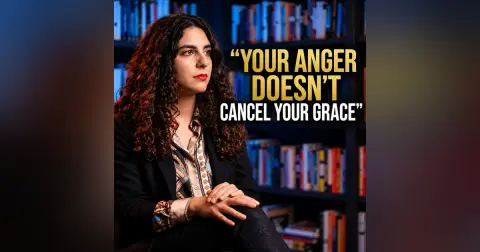

Send us Fan Mail Business Community https://www.skool.com/thebusinessnetwork Newsletter https://doing-business-with-a-servants-heart.kit.com/steveramona 📖 : “Your anger does not invalidate your grace. It is here, and it is here for a reason.” — Vanessa Ferlaino 📝Description: What if the secret to doing more is learning to do less? Vanessa Ferlaino — impact investor, certified mindfulness teacher, award-winning author, and host of The Human Challenge — joins Steve to unpack how m...

 Spotify

 Apple Podcasts

 YouTube

 iHeartRadio

 RSS Feed

 TuneIn

 Castbox

 Castro

 Goodpods
Business Community https://www.skool.com/thebusinessnetwork
Newsletter https://doing-business-with-a-servants-heart.kit.com/steveramona
📖 : “Your anger does not invalidate your grace. It is here, and it is here for a reason.” — Vanessa Ferlaino
📝Description:
What if the secret to doing more is learning to do less? Vanessa Ferlaino — impact investor, certified mindfulness teacher, award-winning author, and host of The Human Challenge — joins Steve to unpack how mindfulness goes far beyond stress relief. It’s about alignment, interconnectedness, and leading from your truth.
- Why mindfulness is a daily practice, not an emergency tool, and the morning routine Vanessa uses to set her intention
- The question every leader should ask: “What’s taking up space, and how do I release it?”
- How Vanessa learned that her anger doesn’t cancel out her grace, and when to walk away from a misaligned project
- Navigating media and social media without losing yourself to the algorithm
- How to pitch journalists with value, not a sales pitch, and how to handle questions you’d rather not answer
- Her journey from tech to impact investing, her podcast The Human Challenge, and her upcoming second book
PS: Steve shares how cutting from 12–13 meetings a day down to five actually grew his income. Vanessa’s “step back” philosophy is the same lesson from a different angle. And don’t miss her table-of-four answer: her late father, Buddha, and a world historian (plus French fries).
CTA: Connect with Vanessa at vanessaferlaino.com or on LinkedIn. If this episode served you, subscribe, leave a comment on YouTube, and share it with a leader who needs permission to slow down.
🎯 What You’ll Learn:
✅ Create Space Before You Push
✅ Your Emotions Don’t Cancel Your Grace
✅ Truth Over Likes, Always
⏱️Timestamps:
[02:30] Mindfulness for Leaders
[07:50] Doing It All
[12:10] Media’s Double Edge
[15:50] Pitching With Purpose
[21:20] The Human Challenge
[26:20] A Table of Four
🤝Connect with Vanessa Ferlaino :
💥Web: vanessaferlaino.com
💥YouTube: https://www.youtube.com/@vanessaferlaino/streams
💥LinkedIn: linkedin.com/in/vanessaferlaino
💥Web: insighttimer.com/vanessaferlaino
🤝Connect with Steve Ramona:
💥Web: https://steveramona.com/
💥LinkedIn: https://www.linkedin.com/in/steveramona/
💥IG: https://www.instagram.com/bizopportunitynow/
💥Podcast: https://www.servinginbusinesspodcast.com/
💥YouTube: https://www.youtube.com/@doingbusinesswithaservantheart?sub_confirmation=1
🔖Tags:
#BusinessSuccess #ServantsHeart #Entrepreneurship
Free Business Community: https://www.skool.com/thebusinessnetwork
https://app.nucalm.com/purchase/free-trial?coupon_code=NUCALM15&ref=steve57
Subscribe to our Podcast Newsletter
https://doing-business-with-a-servants-heart.kit.com/628f9d5962
Join Me on Substack: https://podcasthost.substack.com/
Doing Business with a Servant's Heart Named Top 20 Small Business Marketing Podcast
https://podcast.feedspot.com/small_business_marketing_podcasts/
Welcome everyone to Doing Business with a Servant's Heart Podcast. I'm your host, Steve Ramona, and I'm thrilled to have you join us today. This podcast is dedicated to exploring the idea of doing business and living life with a purpose, serving others and yes, achieving success. We believe that when we can approach our work and our lives with a servant heart, we can truly make a difference. We create a show for you because we want everyone to be motivated, inspired, and educated to make an impact in your world. Whether you're an entrepreneur, a community leader, or simply someone looking to bring more purpose into your daily life, this podcast is here to support you. While listening to this incredible guest today, please get some paper out and want to take notes. Very successful one. Think about how you're going to serve today and what impact you'll create today. The keyword there is today. I tell people don't wait until tomorrow because you may never do it. Start serving somebody today. Today's episode is brought to you by our amazing sponsor, Pantheon Alliance. Picture yourself joining a lead community with thriving business owners from a variety of industries, all working together to create a powerful referral marketplace. It's an incredible opportunity to expand your network and elevate your business to new height. So as I talk about in that whole monologue, which I guess shortened a little too long, but that's okay. Is impact and serving, impact and serving. If anything that you learn from my guest today, that's what she does, and that's what you should do. Whatever that looks like to you, it can be many different things. But let's talk about uh serving. Vanessa, welcome to the show.
SPEAKER_02Thank you. Thank you so much for having me, Steven. Thank you for that perfectly timed monologue.
SPEAKER_01I love it. Practical mindfulness tips for leaders. Mindfulness is not a word used a lot. Explain that and what tips you have for leaders using that.
SPEAKER_02Absolutely. Um, you know, I think it is funny. I think mindfulness is is used a lot, but we tend to see it in a very secular sort of perspective. So kind of uh we tend to see from the perspective of of reducing stress, reducing anxiety, and those are all fantastic. Um, but there is so much more behind mindfulness. Um, I'm a certified mindfulness meditation teacher through the lab of meditation, which is accredited by the International Mindfulness Teachers Association. And my training was grounded in Buddhism. And there's a lot around um, there's a lot about interconnectedness, you know, it's it's not just about the the how it makes us how it can reduce stress and all the effects for us in the body, but it's also how it connects us to ourselves, how it connects us to our teammates, how it connects us to the rest of the world. And so mindfulness tips for for leaders, um, you know, one, do your daily breathing. If you can work it into the morning, um, I love to do it. When I can wake up, I will journal. I'm a busy person, so there's always thoughts trying to intrude in my brain. Um, not always intrude, but you know, sometimes you've got to separate them out a little bit. And so I try to just jot down some things that are just taking up some space. Um, and then I'll always move into a small little yoga routine, uh, very much more along the lines of yogic stretching. And then I follow that up with either some breathing or some meditation. Um, but that tends to be very helpful just to help me set the intention every morning. And so I definitely invite that to any other leader, just really setting in your intention. If we're really committed to working from our hearts, um, we have to make sure that we're in alignment. And so we do that when we create space in the body. And that is really the power of mindfulness is how can we create space? A lot of prompts I think of are okay, you know, what's taking up space in the body? What does it feel like in the body? And then how can I, how can I release that? How can I use the breath to tune into the body and maybe release that and create some space? And of course, it doesn't take three breaths and you're done. It's a practice, and it's a practice for a reason because that allows you to explore what's happening within. So, in addition to all these great things that it can help us with, you know, decreasing anxiety, decreasing um our stress, decreasing all these things, it is also a way for us to really get in touch with ourselves and make sure that we are aligned. Are we aligned with our intention? And I think that's the biggest question. And one of the things that I would always offer to any leader is what's the intention and are we aligned with it? And if we're not, what's taking up space? And what how can we release that so we can embody our intention?
SPEAKER_01I I love that because meditation, you know, you watch TV shows or by watching a movie last night, and the person was going crazy, like, take deep breaths. We think that breath work should be when we're in trouble. But I love what you said. It's a skill set you need to be using every day as if you're a day exercise health guy, uh, you know, how you eat. So I love that because that's lost in it. It's like, oh, I'm gonna meditate and I need it. No, it's an everyday thing.
SPEAKER_02It's it's a practice, and that's why we say it's the practice, you know, it's a practice and it's a practice for a reason. It is something, it is a commitment, you know, it's a commitment to yourself. And those were words that I had heard from my mindfulness teacher at the time was it's a commitment. It's how are you know, it's it's committing to yourself in every way and every form and in every moment. And it's I think the more that we build that awareness, the more that we realize, wow, there's a lot of stuff that that's kind of here that isn't actually mine. And how can I find me again in all of this? And I think that's what mindfulness is. It allows us to really slow down and really allows us to come back so that we can not just set our intentions, but again, I use the term embody our intentions. So what's taking up space and how do we create that space? And what do we need to do to create that space? Maybe it's take a step back. I know as leaders, I used to operate on this mind frame that if I wasn't doing anything, oh, I was never gonna grow, I was never gonna build a business, but that's not actually correct. I was just creating so much more stress. And when I actually just kind of took a step back and allowed for things to happen, you know, that can also work too. And so I think as leaders, it's extremely important to remember that that we don't have to be pushing, pushing, pushing all the time. Sometimes it can be really, really helpful to just observe what are the dynamics and how can we, how can we navigate some of these dynamics? How can we create opportunities that are in front of us in all of these dynamics?
SPEAKER_01Yeah, I first I love the word me. That's the mirror to me. When you said me, I'm thinking of look in the mirror, me. What am I doing for me first? Take care of me first. The other thing is about and I'm getting into busy because you are busy, but the fact that you were talking about all the stuff going on, and I'm a perfect example. I was doing 12, 13 meetings a day. And then my business sat down and goes, Steve, are we really helping each other? Hell no, so I cut down to five, you know, five meetings a day. So I'm a perfect example of what you said. I get more done doing less meetings than I mean, you know, I'm growing. My income's growing, like so. I don't want to talk about me, but I I just love that you said that. The step back usually can help you grow more than moving forward too fast. I love it, love it, love it. You're a busy woman. Books podcast, we're gonna talk about impact investing. You've got this great heart business. People listening are gonna go, we love it, but how the heck are you doing it?
SPEAKER_02Um, thank you so much for acknowledging that. You know, I um I I think the reason the way I'm able to do all the things that I do is because I am committed to embodying my intentions. And so when you're committed in that way, everything that that is that I create is is a part of me. You know what I mean? So I I believe in it that it's like, you know, um, I don't have to push so hard. And it's for me, I'm not doing all these things. I am all these things, you know what I mean? And so I have really spent so much time understanding me and my truth and how I can create all these different things that are all parts of me and how they all work together. And so um I think too, um, a lot of what I do is I've really, really over the last little bit have really been committed to I think my grace, you know, and really being able to come back to that whole space with it, but also to allow myself to feel what needs to be felt. Um, you know, and and I think I feel like it's a little bit weird, but I mean, the reason that I can do all these things is because I've created space and I know how to create that space and I know when I need to take a break. I know when things are taking up space, I need to take a step back, I need to move on to something different. But everything that I create is coming from a place of truth. And I really do my best to embody my grace in that. And I want to clarify what that means, especially for I think a lot of potentially women leaders, diverse leaders, I'm Mexican-Italian, um, I came from immigrant parents. And so uh to me, my grace though, does not mean that I never get angry. It doesn't mean that I don't experience any of those other kinds of um, you know, feelings of frustration or hurt or sadness. I think being in your grace is again that how we're holding space, right? If we're creating that space, how do I hold space with myself when these other things are arising? Um, you know, I did have an experience recently where I was extremely frustrated with someone that I had been working with, um, but it was because the frustration was not because of them and it wasn't this thing that I'm trying to blame somebody, but there was a misalignment of intentions that was impacting me and my ability to actually get my job done and do the things I needed to be doing. And so there was a lot of frustration there. Um, and I remember being angry and I was almost struggling to be angry because I was like, oh, this isn't graceful. And I had to really come back to myself and really hold space with myself and really remind myself, no, Vanessa, you know, your anger does not invalidate your grace. It is here and it is here for a reason. And these things are here to tell us how do we need to move forward now? And so my way of moving forward in that scenario was I actually had to let go. I had to let go of that and I had to move on and I had to, I had to completely disconnect from that project. But I think that that only comes again when we can really understand how am I like what's taking up space, how can I create space, and uh how am I holding space with myself?
SPEAKER_01Servant leader does exactly what you said. They let go of stuff, create space. It's okay to say no. I had to learn this lesson myself to say no to people because you're serving them and serving yourself. It's not a fit. You're not helping them either. Even though trying to put the circle in the square peg, it doesn't work. But the other thing that is a powerful message you just said is so incredible, Vanessa, is your why and your passion. That's why you can do so much, and that's what I'm hearing from hearing it, and I'm doing is I'm passionate about what I'm doing, like you are. It doesn't feel like it's busy.
SPEAKER_02Exactly, exactly. That's exactly it. Doesn't feel like it's busy sometimes, or it can be busy, but you know, the busyness is around you, not inside of you, and you're just sort of you still find that flow, right? Amongst the busyness, amongst all the craziness and the dynamics. You've still kind of found your little flow, your little dance, and you find ways.
SPEAKER_01Yeah, it's great. And honestly, you haven't found your flow yet. Me and Vanessa had to find ours. I found it two years ago. I'm 63, took me 61 years. That's okay. I don't it it is what it is, and my course, but we all we all start from zero. We all start our flow at zero and it goes to where it goes. You just need to move towards that. Something in your bio about media exposure, it's great and it's bad. There's a yin and yang to that. Media exposure could build your brand or destroy your brand. And I'm not gonna say names, but people can go political, just go political. Things are happening in the political is good and terrible in both ways. Talk about media exposure and how it's impacted you and your career.
SPEAKER_02I think for me, a media exposure has been it's I I almost say it's really tested my commitment to myself. You know, I think it's very easy. There's a certain almost energy, I would say, on the media where you know there are things that they want you to say and they want you to behave and they want you to do, and and you know, to really, and especially in in the media, a lot of it's on the fly too, you know. Um, you can show up in certain spaces, you can have a pre-interview and and it could go all great all you want, but then you can show up for the real interview and things are gonna go different. You're gonna be throwing all these curveballs. So um I think for me though, media exposure for me has really helped me continue to commit to myself, you know, and to really, and again, embracing a lot of those mindfulness practices that, you know, when you're throwing those curveballs, come back to the body. All right, let me come back here and and let me make sure that I can. There's this crunchiness, this hardness, there's something coming up, taking up space, but I can still be truthful even with this here. And so I I definitely think that's what media exposure has has has uh that's the role media exposure has played in my journey. Um, I would say it's been a few years. I think when I first started, um it was a lot harder and it was definitely a lot easier to to kind of give in to what needed to be said or to who I'm supposed to be. I would actually throw in social media like Instagram. I think it's it's the exact same, you know, the algorithms know what they're looking for. And so if you don't match that algorithm, it's way harder. And when you're younger, it's hard. And when I first started, I was probably 20, 21. And it's definitely hard to not want to give in, you know, to not want to give in to the likes and the hearts and the follows and all these things. But I did learn the hard way that that that's not really that's not a truthful, I guess, quote unquote valuation, right? Of me, of my company, of the things that I do. Um, the likes, all those things don't actually matter. It's it has to be, I have to be doing what's what's best for me. And at that point, I will attract, or not what's best for me, but what's truthful for me. And then I will attract what what is supposed to support, right? And so um, but that that would be the role for me. And it was, it was definitely a journey. But as you, as you, you know, it's a commitment, right? And so as we continue to be more committed to just who am I embodying my intentions, then it just gets a little bit easier because we keep uh getting a little stronger in that. We trust ourselves a little more. We can really, we don't have that fear of like, who am I? It's like, no, I know who I am, I know what my truth is. And even if that's not defined in words, I think a lot of times we have this conversation and we're like, who are you? And then we try to define it. I'm this person, I'm that. And it's like, no, you're not. Maybe you're just a human being and you have all these parts of you that just coexist here in this space, and you can trust that. You can trust you have these parts of you, and then that's who you are, and that's it. And so, um, but but yeah, I think that's been the role of media in in my journey.
SPEAKER_01Yeah, I like that. And I'm same with me, media and great ideas. So go back to your body, be servant heart, have that mentality, and it it's that's what I've done. It's been great. Usually it's not a problem when you do that. Uh, but we're human, we're fallible on both sides, and just if you know that, life gets a lot a lot easier. Just know people are gonna make mistakes, totally not me and you include. So, with all that being said, now how is an entrepreneur attract media attention but with a servant's heart or with a positivity, a positive message?
SPEAKER_02That's a great, great question. Um, I think that you have to find the right channels, you know. Um, I think that the media is actually very segregated, uh, not segregated, but uh, how would you say, like kind of categorized um and and built based off of their communities, who they're serving. And so I think when you can really understand who who wants to hear what you have to say, who embodies you, or you or look at yourself, you know, if you're truthful to you, you're looking for people that are similar to you that are going to also be truthful. And so, where do you look for news? Where do you look for media? What do you look for? What are the things that you care about? And how do you find that information? That is the approach that I would take. And then I think reaching out to journalists, to uh writers, bloggers, et cetera, who also care about those issues and really trying to try to talk about those issues. I think a lot of times it's very easy, especially I come from tech. My journey entrepreneurship was tech. I went from tech to, you know, tech investing to then now I'm in, I went to actually then I went into corporate innovation. And so I was actually in a in a corporate company for a few years. Then I went into impact investing. And so my trajectory is very different because tech is a very, it's kind of hard. There's a kind of a hardness to it and it's very tiring, and you're in that push mentality. And, you know, being a woman in the space is very challenging. And so I kept, you know, my journey actually went from tech and very slowly. I was like, okay, more impact, more impact, more impact. And that's where I am now because more purpose-driven, uh, right. But I would say that especially being in the tech space, we're kind of given this mentality to always be selling, you know, sell yourself, sell the product, sell the business, sell this, sell that, sell that. But a lot of people don't, I think, respond to that. And especially now because we're inundated with all everything through social media and the media. So I think when we approach people andor journalists and when we want media attention, we need to be talking about the things that are important. We need to be offering new value, we need to be offering new perspectives. And so I think that's the approach. And I would say that's the intention that I would go in with when it's time to, you know, talk, talk to a journalist or whatever is what's the intention that I'm going to have when I'm approaching them. What's my intention here? My intention here is to offer something new, offer a new perspective, offer new feedback, maybe it's tips. I don't know. But I think that's that's the approach that that I would invite to anyone else who is considering this on their journey.
SPEAKER_01Yeah, I I love I love what you're saying. It's great. I get asked all the time as an entrepreneur, uh, with entrepreneurs I mentor. I'm asked a question I'm not comfortable with. How do you handle that?
SPEAKER_02Um that's a really great question. Um can you tell me, is this question often asked from like the context of investors, like when you're working with an investor, or is it more like a customer thing or just like a media-driven.
SPEAKER_01They jump on a podcast or a radio show or a TV show because they've seen I do it, so they ask me. And I I usually don't get asked that question because I framed it. That it's a servant's heart. That's my whole message, networking with a heart. But you know, they might ask, you know, uh, an example would be they might ask me a question. So where does my network it doesn't work? Should I stop? I'm like, that's not a good example. But you know, maybe it's more of a moral, political, or religious question. Yeah, that's where I that's where they're coming from. Something that hits their soul, and like, I don't want to answer that because I don't want to answer it.
SPEAKER_02Yeah, that's really, really yes, I I definitely hear that. Um, and I know now things are very political, things are very challenging. There's a lot of global issues that are really coming up, and I think we're seeing things very differently now, the way the economy works, the way the system is structured. Um, you know, for me personally, I'm kind of in a journey where I see a lot of the interconnectedness between, you know, the military complex and and uh, you know, land displacement, refugees, you know, these things. And and so yeah, those a lot of topics like that can be very challenging when you're in the media. But I think I always think that if you're if you're truthful, I mean, there's nothing that can really go quote unquote wrong, you know. Um, you're again, if you're always acting from your truth, um the people that know that are always still going to be there. Um, you're still going to be attracting that, right? And so uh that being said, if you're uncomfortable with a question, you can completely decline to answer the question. Um, you know, there would be nothing wrong with that either. But I don't ever think that not embodying your truth, you know, no one should ever be afraid to embody your truth, to say what you believe about something. Um, we are all human beings. And and you know, I mean, there have been scenarios where you'll say something and you might change your mind after. That's cool too. Then you go on the next podcast and talk about that experience, you know. Like, like and because the real and the reality is like people, that's what people I think honor. We honor that type of truthfulness, you know, when when it's like, you know what, I believe this, and then actually I realize I didn't believe this, and that's okay too, you know. Um, but I think that when you're committed to embodying that truth and always acting from that place of truth, there's nothing to really ever worry about because the world will kind of self-organize around you, if that makes sense.
SPEAKER_01No, no, no. It's a great answer because that's what I tell them. Just respectfully with a servant's heart, just say, I decline answering that question. And you're right, I love that you said that. It's okay. And if that person's mad and not happy about it after the producer, the oh, whatever, move on. That's it. It's just you gotta stay with your own soul, with your own spirit. I love that. Let's talk podcasting. I love podcasting, I do a ton of it. I think it's a rock uh for businesses. Talk about your podcast, the name, and what your mission is.
SPEAKER_02Absolutely. Uh, my podcast is called The Human Challenge, and we explore all the human challenges in today's world, the challenges of being human, and how we can challenge ourselves to be more human for the greater good. Um, I it started out, we're about 30 episodes in. I I took a bit of a break the last couple months. Um, but one of the things I'm I it's really important to me that I think. We're we've been talking about truth embodying our intentions. And I think that that was where the podcast came from. It was how do we do that? You know? And so we I talked to a bunch of different people. I've spoken to Olympians. I've spoken to award-winning authors. I've spoken to um to journalists. I've spoken to a lot of really, really fantastic people. And that's what we we talk about that. We talk about how, oh, I also spoke to Canada's first uh Canadian female astronaut in outer space. And um, you know, we we talk about those I those things, how, what is it like to be human and how do we challenge ourselves to be more human? Because the reality is that it's hard. It is hard in the system sometimes when the world is always gonna tell you who you need to be, what you're supposed to want, how to value yourself, what you're worth. You know, I I sometimes see advertisements that just make me like cringe. It's like, you need this product and this service to be happy, to be this, to be that. I'm like, oh my gosh, it's just way too much for me sometimes. Um, but but those are things that we talk about, you know, we talk about those conversations. I love to hear stories. And and, you know, I had one episode that focused on the Anthropocene, which is essentially how the earth we've human intervention has just caused the earth to accelerate and age into an entirely new era. And that's just over the last like since the industrial revolution. Like that's wild, you know? And so that that's what we talk about. It's really to talk about those things and to hopefully invite other people to have those conversations with themselves, you know, like, oh, like what is my contribution? What does it mean to me to be human? And how can I be more human? And how can I prioritize my humanness and being human over sometimes these material things that I'm always around? And so I um I love the show. It was an Amazon Music Indie Podcast, indie podcast amplifier in December, and which was very exciting to because at that point we were probably 20 episodes, and so you know, it's pretty it was pretty cool to have that recognition being that early on in the game. But um, I I I I love the show and I love to meet people through it and I love to hear stories, and I do believe that it really does invite people to consider how can I create change.
SPEAKER_01Beautiful changes is so big, changing all the time. Life, life is just a change. I love that, and and being able to prepare for it. And we're coming to the end here, but talk about your book. You're an author and it's a best-selling book. Talk about that thing too. That thing.
SPEAKER_02Thank you. That thing. No, I thank you for asking. So the book, um, yeah, it's funny. When I the podcast came from the book, and then I also have the being human foundation, which also came from the book. So the message of the book is, you know, my journey of being more human to myself and how that allowed me to be more human to other people and the rest of the world. And so, you know, be human to yourself, be human to each other, be human to the world. That's kind of where, you know, then you get the podcast, right? Kind of fits in that. And then the foundation is the being human to the world part, you know? And so, um, but the book is where all that started. And it's it's crazy. That also won a couple awards. And I actually do have a book deal. So I have a second book. I'm actually writing it right now. I'm working with a publisher on that, and um, it actually is expected to be up by the end of Q4, but it's essentially going to be the first book's called Human. And so this book is actually a reflection of the of the first one, and not necessarily not a reflection in in the way that it's like uh comparative, but it's really, you know, what was being human in the first book? And then what what would I say now five years later? What does being human mean now? You know, and uh yeah, I'm I'm super pumped for it and and and yeah, I'm pretty excited about it.
SPEAKER_01I I love what you're doing. You're doing a lot. You're just a rock star. Where can they find that book?
SPEAKER_02Um, that one is, I think it's available on Amazon. Uh, human, also uh my website, VanessaFurlano.com. But I think in Amazon there's probably only like 40 left. And to be honest, I don't think we're restocking it because the next book will be coming out soon. So um, and frankly, trying to move off of Amazon, if I'm being totally honest, like trying to, you know, use some other maybe more sustainable.
SPEAKER_01Yeah, yeah. No, it's it's like it's a necessary beast for some reasons, but not all. Yes, yes. We're at the end here, but I always like to finish because we've talked about you from a business and deep life, but we're gonna get personal now and learn more about you. I don't prep this question, audience, and you guys know if you listen to multiple kind of shows. So we're at a restaurant, you are there's a table of four, you occupy one of the chairs. So the three other chairs, dead or alive, who would sit there and why? But I think the most important thing is what food would you order and drink.
SPEAKER_02That is an excellent question. Who would be there and why? Um my goodness. Who would be there and why? Um, you know, my I lost my father a couple years ago to brain cancer and uh actually a lot longer ago than than I think I think it was in 2018, which is way more years than when I actually think and like sit and think about it. I'm like, wow, that was actually a while ago. Um, but it you know, but but I think I would definitely be happy to see him at the table and be like, hey, you know, catch up and and what's been happening and and you know how's how's spirit world, what's up over there? Yeah, um would love to you know as a certified mindfulness meditation teacher, would love to have Buddha at the table with me, would love to, you know, hear some of I've seen the translated versions versions of many of his sermons and and and would love to you know have the opportunity to to hear them, you know, them in the flesh. So would love to have Buddha across for me. Um just two people. I think I would love to have, I don't know if I have a name, but I would love to have some sort of a historian, you know. I think that the way the world works is very interesting to me. And and as an impact investor, we integrate a lot of systems change into that. And but I think that historians have a unique or different perspective of looking at systems. You know, it's not really they look at, you know, countries and and and and civilization, maybe, um, but but and maybe some will hopefully weave in politics, you know. But I think that's why I think it's interesting because in a way it is systems, but it's a very uh different analysis of a systems approach. And so I would love to have a type of historian that could lecture me on on world history. Tell me where the world's been at and why is the world the way it is today, and then how can we what can we bring back that needed to stay? And what can we change that needs to not stay?
SPEAKER_01Yeah, love it, that's so good.
SPEAKER_02And what would I would order? I'd probably order. I love French fries. I love fries, and I think that's that's what I'd probably have to order some French fries.
SPEAKER_01French fries, beautiful. What a table. Holy crack. Storyan Buddha and your dad. That's why I love that question because it really goes deep into people's souls with their their thing. Everybody's different, you know, a lot of different answers. So I love that. Thank you. Thank you for being on. This has been a blessing. My heart is just tied of because it's servant heart. If you're a human and you're a servant heart, it's a they're tied together all the time. I mean, that's what I think every day. How can people get a hold of you if they want to reach out or support you?
SPEAKER_02Um, VanessaForlano.com is the best way. Um, and then uh you can contact me through the email forms there. I'm also on Instagram and LinkedIn. Actually, I'm very active on LinkedIn. Um, probably one of the best ones. Yeah, but to reach me directly.
SPEAKER_01You know, if we don't have that in the show notes audience, you'll be able to access her. Do me a favor, review this on YouTube, the podcast, give those thumbs up, but even more so, leave a comment. And I'll make sure she gets them, or whatever it may be. If you can't find her, reach out to me and I'll make sure you connect with her because as you can see, this is a true servant's heart to why she was on the show. And I think I'm gonna have to ask her to come back. There's a lot more we can cover.
SPEAKER_02I'm in. Happy to come back. Thank you so much.
SPEAKER_01I love hearing that. Well, as always, me and Vanessa, thank you so much for watching or listening to this episode of Doing Business with a Servant's Heart. And guess what? We'll see you on the next episode. All have a great day.