How to Digitize Old Family Photos Before They're Lost | Melissa Foote
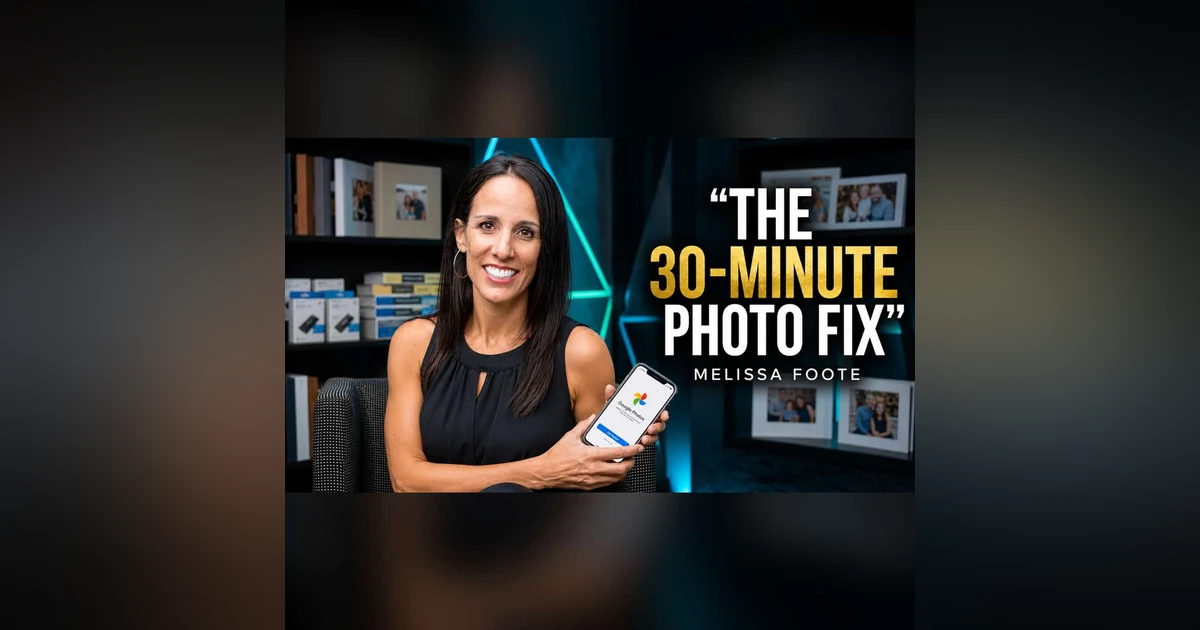

Send us Fan Mail Business Community https://www.skool.com/thebusinessnetwork Newsletter https://doing-business-with-a-servants-heart.kit.com/steveramona 📖 Quote: "It would just be devastating if our generation were the ones who cut the tie of having printed photos from past generations." — Melissa Foote 📝Description: Boxes of old printed photos are sitting in basements everywhere, and many of them are the only copies. In this Part 2 conversation on Doing Business with a Servant...

 Spotify

 Apple Podcasts

 YouTube

 iHeartRadio

 RSS Feed

 TuneIn

 Castbox

 Castro

 Goodpods
Business Community https://www.skool.com/thebusinessnetwork
Newsletter https://doing-business-with-a-servants-heart.kit.com/steveramona
📖 Quote:
"It would just be devastating if our generation were the ones who cut the tie of having printed photos from past generations." — Melissa Foote
📝Description:
Boxes of old printed photos are sitting in basements everywhere, and many of them are the only copies. In this Part 2 conversation on Doing Business with a Servant's Heart, Steve Ramona talks with Melissa Foote, founder of Step by Step Tech, about how to digitize old family photos with your phone and organize them so your family can find them and keep them for generations.
- Why professional organizers are seeing family photos end up in the trash, and what that costs future generations
- Melissa's 30-minute method for scanning printed photos with the free Google PhotoScan app
- How broad digital albums in Apple Photos or Google Photos keep you from creating new digital clutter
- Turning photo sessions with aging parents into a family legacy book full of their stories
- Which photos to keep and scan, and which can stay in the box
- Leaving a near-retirement teaching career in her 40s to serve seniors through tech
PS: Two Saturdays ago my wife and I went to a memorial where every table had copies of the couple's photos for guests to take home. My wife will keep those pictures for the rest of her life. Melissa's work makes that kind of gift possible. And catch Together We Serve every Friday at 2 PM Pacific / 5 PM Eastern on Apple TV and Roku.
CTA: Pick one envelope of photos this weekend, set a 30-minute timer, and scan the best of the best. Then visit Melissa's website for her free weekly photo tips and her self-paced scanning course. Subscribe to Doing Business with a Servant's Heart so you don't miss an episode.
🎯 What You’ll Learn:
✅Scan Printed Photos in 30-Minute Sessions
✅Organize Digital Photos into Broad Albums
✅Preserve Family History Before It's Lost
⏱️Timestamps:
[00:02:50] Why Photo Organization Matters
[00:04:30] Saving Printed Family Photos
[00:10:30] 30-Minute Photo Scanning Method
[00:14:50] Digitizing Photos with Seniors
[00:21:00] Biggest Photo Organizing Mistake
[00:33:00] Changing Careers in Your 40s
🤝Connect with Melissa Foote:
💥Web: www.stepbysteptech.org
💥Blog: https://www.stepbysteptech.org/blog
💥LinkedIn: https://www.linkedin.com/in/melissa-foote-colorado/
💥Podcasts: https://www.stepbysteptech.org/podcasts
🤝Connect with Steve Ramona:
💥Web: https://steveramona.com/
💥LinkedIn: https://www.linkedin.com/in/steveramona/
💥IG: https://www.instagram.com/bizopportunitynow/
💥Podcast: https://www.servinginbusinesspodcast.com/
💥YouTube: https://www.youtube.com/@doingbusinesswithaservantheart?sub_confirmation=1
💥 Reduce Stress/ Sleep longer: https://app.nucalm.com/purchase/free-trial?coupon_code=NUCALM15&ref=steve57
🔖Tags:
#DigitizePhotos #FamilyPhotos #OldPhotos #DigitizeOldPhotos
Join our Business Community: https://www.skool.com/thebusinessnetwork
Better Sleep/ Less Stress https://app.nucalm.com/purchase/free-trial?coupon_code=NUCALM15&ref=steve57
Subscribe to our Podcast Newsletter
https://doing-business-with-a-servants-heart.kit.com/628f9d5962
Join Me on Substack: https://podcasthost.substack.com/
Doing Business with a Servant's Heart Named Top 20 Small Business Marketing Podcast
https://podcast.feedspot.com/small_business_marketing_podcasts/
Welcome to the podcast. Inspiration, motivation, takes sense. Listen to the podcast. We're all about to talk about life. Our guests will share their life story. We want you to success in life and business. We're ready and we will start shortly. We're gonna talk about life. We're gonna speak on business. You're gonna shine We are as honor with Business with our servants' hearts We host this team from all Inspiration Education Falls Servants Listen to the podcast
SPEAKER_01Welcome everyone to doing business with a servant's heart podcast. I'm your host, Steve Ramon. I'm so thrilled to have you join us today. This podcast is dedicated to exploring the idea of doing business and living life with a purpose, serving others and yes, achieving success. We believe when we approach our work and our lives with a servant's heart, we can truly make a difference. Hey, we created this show for you because we want everyone to be motivated, inspired, and educated to make an impact in your world. And the key word there is your. Whether you're an entrepreneur, you're making a ton of money, you're a community leader, or simply want to uh looking to bring more purpose into your daily life. This podcast is here to support you. And today my guest is gonna talk pictures and organization, which are a lifeblood. My wife, sorry, honey, but she got 20,000 pictures on her phone. I don't know how to find them. And this lady is gonna rock your world. But while you're listening to her, I want you to think about how you're gonna serve today and what impact you'll create today. Let's not wait till tomorrow. And today's episode is proudly sponsored by our phenomenal partner, Pantheon Alliance. Imagine being part of an exclusive community of high-income, successful building owners and entrepreneurs from diverse industries. And together they grow their network, grow their events, and be able to be thought leaders and experts to change the world. If you want more information on Pantheon Alliance, reach out to me and I'll get you more information. So, with that being said, this is part two with my guest. And she is just so valuable in a in a market you don't think about, but is a pain in your butt. Organization and pictures. You know, we kind of go, oh, I got 30,000 pictures, or this person, and I look at I don't have a lot of pictures, but a lot of people do because we have access to a phone. Start taking pictures. What do we do with that? Well, today you're gonna learn how to take care of it and actually work with her to do even more. Melissa, welcome to the show.
SPEAKER_02Hi Steve, thanks for having me back. It's been about a year and I'm really excited to join you again.
SPEAKER_01I I love it. There's a long monologue, but I I because I was thinking it before you came on. It's like, you know, we take all these pictures and then we go back, like uh somebody I was talking to was trying to pull up all the and they couldn't find the pictures. Oh, remember that event last year we were at? And they couldn't find them. And it took about five or ten and they get frustrated. But it's kind of something out of sight, out of mind. You you solve that problem, don't you?
SPEAKER_02Yeah, and I think that um in this digital age, so many of us just take for granted that we can capture every moment. And sometimes
SPEAKER_01we
SPEAKER_02take multiple pictures of a single moment, and so we just know our pictures are on our phones. And I think that we overlook the importance of getting them organized. So you can actually do something with them. I think we take pictures for a reason, we kind of forget that until we need to find that quick photo over lunch to show a friend, or maybe you want to print one for a birthday party or whatever it might be. But um, coming up with some sort of organization system is really important and making these actually accessible to you if you're going to spend your time taking all of your photos.
SPEAKER_01Yeah, and it's interesting, which I told you in the green room before the show, six billion pictures were taken from a phone or taken with a phone last year. So this is a large market.
SPEAKER_02Well, and I think it spans age and you know,
SPEAKER_01place.
SPEAKER_02It's everybody wherever you go, whether you're on vacation or at your kids' sports games, every person is out there taking photos of something. And even younger kids' generations, even if they're taking selfies, they're taking photos too. So I think it applies to basically everybody who has a phone a smartphone anymore.
SPEAKER_01Yeah, you talked about in the green room the story of the organizer. They were telling you about people throwing away pictures. Talk about that and the emotional impact that's gonna have.
SPEAKER_02Yeah. So the first time I was here, we talked a lot about our digital photos and how to get them organized. But in the last few months, I've started working with professional organizers, many of whom move people from one season of life to another, whether they're living in a home and going to an assisted living facility or whatever it might be. And a lot of times pictures are one of the possessions they have. And professional organizers often don't know exactly what to do with them. And so I've heard many stories of them working with more adult children and they just don't know what to do with all of their parents or grandparents' printed pictures. And sometimes they even end up in the trash. And it has just broken my heart and made me even more passionate about this um topic than I was before. I think a lot of times printed pictures are single copies, a lot of, you know, baby boomers, you know, even people just above 40, a lot of our lives are documented in these printed photos that we just have sitting around. And um, you know, because they're the only copies, it's really unfortunate if they do get thrown away or misplaced or whatever, you know, may happen to them. Our kids and grandkids might never see them. And that's truly the um, you know, their family history that they're going to be missing out on. And historically, we've been passing photos down from generation to generation. And I just really hope to help people not have that end here because even as time goes on, our photos will become just as important to our kids and grandkids, even if they're not right now. Someday down the road when there's a wedding or a funeral or a milestone birthday or whatever it may be, you know, that's what we do. We get out photos to share stories and tell stories and laugh and cry and whatever it may be. And it would just be devastating if our generation were the you know what ones who kind of cut the tie of having printed photos from past generations.
SPEAKER_01So somebody has a grandmother who's 100 years old, and and the other place they're gonna go is of course to heaven, or you know, they're gonna pass and die, is you know, 100 years of her life, you know, say it's a hundred pictures or a hundred thousand, it doesn't matter. When they're thrown away, all the other generations miss out, right?
SPEAKER_02Oh, a hundred percent. And even I'm, you know, my parents are in their 70s and most of their life has been documented and printed pictures. And so even for me to pass on, even though my kids are still, you know, in relationship with my parents, that someday when they're telling their kids about their grandparents, it would be such a shame for them to not have photos of them. And I think a lot of people don't do anything with the printed pictures because so many of us have boxes and tubs and, you know, hundreds, if not thousands, of printed pictures and people just don't even know where to start or what to do with them. But it's easier than you think, and you can scan pictures right from your phone. It will digitize them in real time and put them so that you can access them on your phone, which is great for, you know, to connect with younger generations, but you don't have to scan and digitize all of them, you know, thousands or hundreds. Nobody has time for that in the busyness of life. But even just taking a, you know, a handful of some of those photos and having them accessible, not just to you, but to future generations could be life-changing down the road.
SPEAKER_01You're making me smile because it's so powerful. I just went to a memorial with my wife two Saturdays ago, and it was very interesting. This fits you so well. Is at every table they had copied pictures of their parents. They're the mother and father died within weeks. And it was so cool. We're leaving, and they're like, these pictures are for you. The memories of our parents. You know, like, are these are no, no, no, these are copies. That's the power of a picture right there. Is I can my wife took home a couple pictures of this couple that she's gonna have for the rest of her life.
SPEAKER_02Right. And I think we missed the point. It's, you know, say I have one printed picture of my grandfather. I'm able to digitize it, and now I can share it on my phone to my kids, to my sisters, to everybody in the family. But then say, you know, um, there was a memorial service and you have these printed photos and people can take them home or whatever they want to do with them. And you don't have to worry about that being the only copy. It's almost like that person's story can live on, you know, even more so than before, because now we can have access to making multiple copies and printing them, which is just it's a gift for people who know knew and loved them. And so I think that um, you know, my kids are um 19 and 14, but you know, my 19-year-old, um, all of his baby pictures are printed. And so I went through and I didn't digitize all of them. And right now he would tell you he doesn't really care about it. But someday when he gets married or he has kids or whatever it may be, I have digital copies and albums I can just share with him. And now he has access to them versus thinking of the overwhelm of going into a basement or a garage where there's just boxes and tubs. And then now it's like this huge job he has to tackle of sorting and going through things. It's like I gotta pick which photos I wanted to save. And now I have them digital, and it's just a few clicks on my phone and I can share it with him, which is much more likely for him to access it than if I was asking him to go through boxes and tubs of photos. So I think um, whatever stage of life you're in, it's really important to start thinking about how you're going to tackle some of those printed photos, especially if they're the only copies.
SPEAKER_01And that leads to now I do what you say and I digitize everything. But now you've got to show me how to organize all that so I can find that picture, like I was saying earlier, of me as a baby that somebody might want to see. How do we do that?
SPEAKER_02Right. So the, you know, huge benefit is I started my photo organization business with digital photos. And so I'm able to easily help people get that organized. And I actually have a whole system that I encourage people to use. So I tell people, you know, set aside one set of pictures at a time, whether it's a photo album, an envelope, a box, whatever it is, and just spent 30 minutes scanning. You don't need to spend any longer than that. And that's going to help you just go through and sort. You don't want to scan everything, just scan the best of the best. And so in 30 minutes, you might end up with a dozen pictures. And immediately before you even move on or go eat dinner or whatever it might be, you create an album in either Apple or Google Photos, whatever you have on your phone. And I could say, you know, my son Brody's baby pictures. And then I immediately create that album and put those 12 pictures in his album. And then that way those digital photos are already organized. So if I want to find them in five days, five years, I can go in and just go Brody's photo, you know, baby pictures, and they're all right there. And in the same breath, if I keep working on his baby photos for the next few weeks, you know, maybe I'm doing 30 minutes a week or whatever it may be, I can just keep adding those pictures to an album I've already created. And it that um prevents that digital clutter. Instead of just I'm scanning and scanning and scanning, I can actually go in and immediately put them in albums so they're easy to find on my phone.
SPEAKER_01And you make it so not daunting, because you're right. If I pick up a box of photos and there's 500 photos in there, it's gonna take me forever to scan those. But take the ones, but then go back a week or a month later, spend another 30 minutes, a little piece at a time, pretty much you're gonna have all those digitized, of course, that you want that you want digitized because you might have duplicates as well. That makes it easy.
SPEAKER_02Yeah, and I think that that's what people um what stops people in their tracks. They think they're going to sit down and they're going to organize decades worth of photos. And when they start pulling photos out, it becomes very overwhelming very quickly. And then before you know it, it just gets shoved back in the basement for another day, which really doesn't happen. And as I've heard from so many friends working with, you know, so many seniors in transition, they probably wanted to do that too. And now they're at a point where they can't really go through their pictures. And sometimes unfortunately, they get thrown away. And so I think that if you set yourself up, first of all, to see the importance of scanning your pictures just so that you're passing down family stories. And then also, you know, set aside 30 minutes to an hour once a week. That's it. We spend time doing so many other not as important things like scrolling social media or watching Netflix. If you just spent, you know, even 30 or 60 minutes a week, scan a handful of pictures out of a box, create a digital album on your phone, and then put it away until next weekend, and then you can come back to it. I also think when you're creating digital albums, to think in really broad terms. So I wouldn't do, for example, my son Brody, you know, at one year old and then at two years old and then at three years old. I just do Brody's childhood. And then that way, if your boxes of photos aren't overly organized, like some of ours aren't, you know, maybe you just have a stash of photos thrown in a box. They're not organized chronologically. You can pull out pictures and scan, and they don't have to be in an order. And then when you get to that last time, you know, 15 minutes of your organizing time and you're putting them into digital albums, you could go, oh, I already have an album for Brody's, you know, childhood, or I already have an album for the 1960s, or you know, you think really broad categories so that as you continue scanning what might be a total mess of printed pictures, you have really broad categories of albums you can start putting them into just to get them organized on your phone.
SPEAKER_01Melissa, that's brilliant. That's absolutely audience right there, jack fire. I'm not promoting that, but it's it's brilliant because you again, it's gotta be simple or people are gonna stop doing it. So let's segue into what you're doing now and start with the seniors and actually physical pictures. I can see this daunting seniors like I don't know what to do, so they shove it in a corner. What walk us through the journey with a senior and probably working with a son or a daughter with the senior to organize these physical pictures.
SPEAKER_02Yeah, I think I, you know, really just to even start the process, I think jumping into having them understand the absolute power of these pictures and how many stories they hold. Because if you just think of them as printed pictures, people often are like, oh, it's not that important. But when you realize this might be your only copy of your grandmother's wedding or the house that your mom grew up in or whatever it may be, it's really important to understand these, the power of the photos. And then I think having people understand that it's progress, not perfection,
SPEAKER_01and
SPEAKER_02that you really have to plug this into your busy life if you want it to be important or if you want it to be, if you want to set yourself up for success, you have to go into it, understanding this is going to be in small doses. And so people don't think they're gonna go sit eight hours with a you know, grandma or mom and and hash out all the pictures and have them done. It's just a few minutes, you know, 30, 60 minutes a week. And then um, the scanning app on your phone, it takes a little bit of learning. It's pretty easy. It walks you step by step through the process. It's called photo scan, and you can just download it for free right to your phone. And once you get the hang of it, you figure out, you know, I'm gonna take this one envelope of pictures, I'm gonna spend 30 minutes. I set a timer because you know how it is. Sometimes you get started on projects or things, and before you know it, two hours has gone by. And then, you know, you go down this black hole and next weekend you're like, I don't have time. I spent my whole last Saturday doing this. So set a timer so that you can make this manageable and then just scan and think, you know, again, really broad categories. I think for some of the seniors I work with, creating digital albums is a little bit overwhelming. But if you have adult children in their 40s or 50s or even younger, they can probably go and figure out how to open and start a new album. Um, but yeah, it's just a process. And honestly, I did this with my parents a couple of years ago, and we ended up creating a legacy book. And so we took out a lot of their old photos, and over, you know, each decade, we took, you know, maybe five or 10 pictures, and then they told me the story of each photo and we put it together in a book with written stories. And it's such a treasure because now my sisters and I and our kids will all have these stories of my parents. Some of the the stories I never even knew, which is, you know, hilarious because you grow up with your parents and they're your parents. But now as an adult, I appreciate these stories of the challenges of their life or whatever it was, you know. So I think um if seniors are up for it and they're retired and they're ready to tackle this, they can absolutely do it themselves. I um I give away free photo tips every week. And so they can go onto my blog even and I have step-by-step directions for some of these, or I have an online class, you know, you can find resources. And if that is overwhelming for you, maybe you um are an adult child and you help your parents start this project. It's such a blessing of time. I got to spend about nine months with my parents going through these. We only did an hour a week, and that is probably some of my favorite time I've ever had in my whole life with my parents. So if you even look at it as like this um priceless, you know, moment you get to spend with your family and your parents or grandparents or maybe, you know, a neighbor or best friend or whoever it is that was important in your life, it's such an amazing time to hear stories and they want to be heard and they want their stories to live on, just like we do. Our generations maybe are posting our life on social media, you know, people who are in their 50s, 60s, and 70s didn't have that, but they still want their kids and grandkids to hear their story. It's who they are and why they are who they are. And so I think it's just a blessing to take on this very important project and just make sure that printed pictures don't become a thing of the past.
SPEAKER_01Yeah, and it's a great, such a great tip. And I keep saying that because you're so awesome. But I'm thinking, you know, here's something that's uh an idea. You do a uh dinner, okay, fry every once a month, Fridays. Let's have dinner at the house and let's go do pictures. Kind of like game night or poker night. Let's do photo night. I I like that. And then the other thing I'm gonna add that brings you so much value is uh we bought a product called Aura, which is that digital frame for my parents, and it is a game changer. They get to sit down and see these pictures, there's like a thousand pictures, but rifle through their story of their grandkids and their kids. And and this is the value that you're bringing to be able to bring joy to people's lives. I mean it's powerful. It's bigger than we I'm making it big because it's super big in my eyes, and it's a game changer for family. So let's now move into the 25-45, who you're starting to work with, or the 40-year-olds that now are starting to get pictures, as we talked about before the show. How would you work with them?
SPEAKER_02They're probably a lot more tech savvy than seniors. So I have a class I've been teaching in person for the last three years. It's step-by-step scanning printed pictures, nothing fancy about the name. And I have been teaching in senior communities for since 2020. And I put this class in a self-paced online course so that people who are interested in it can jump online and take the class and do it themselves from home. Because I do think that probably a 25-year-old or a 35 or 45-year-old is probably really busy as we all are, but maybe they would prefer to be able to do it from home in their own time versus I think seniors like the community vibe and the community aspect of showing up together and being able to ask questions and have me, you know, side by side working with them to actually show them on their phone. You know, as a former teacher of almost 20 years, I feel like I've really been able to use my skills that I used for so many decades in a career to be able to now help in my business, help people really understand how to do things in a way that they need to hear it. Um, you know, some people are visual, some people are auditory, and so just kind of being able to read how people want to learn. And so I think for the younger generations, um, not all of them, but a lot of them would rather learn something online and take an online digital course. And so they can do that as well.
SPEAKER_01Yeah, we'll get in the show notes of how people get access to that and your blog as well. We'll talk about it at the end. What's the biggest mistake people make when they're organizing their photos?
SPEAKER_02I think setting themselves up to think they're going to just do this in one fell swoop, whether it's a weekend or a month or whatever it may be, you know, I always compare it to a garage or basement. It takes us years to collect the sometimes clutter that we have in our spaces. And so it takes time to declutter. And I think with photos, there's such an emotional attachment. It's not something you just get out and you can decide, um, I want this, I don't want that. You know, sometimes you get out a photo and it brings up so many memories and stirs up emotion you didn't even know was. There. And so it does take a little bit longer. But honestly, progress is better than you know not starting at all. So I think just to have people understand this isn't a one and done. This isn't a quick process. You want to set yourself up and give your times, yourself space to be in this emotional bubble where you're going to be going through pictures. And some pictures bring up, you know, positive, amazing memories, and some can be kind of painful too. So it can be a longer process than people think. But truly, I think just committing to a little bit of time, even for the rest of the year, you know, six more months this year. If you even just say, you know, every Sunday morning or Saturday night or whatever, while I'm watching a show, I'm going to get out a box of pictures and spend an hour going through and scanning, you would make so much more progress than you can ever imagine. And honestly, at the end of the day, your kids and grandkids will thank you that you went through the hard work because again, you don't want these pictures someday being thrown away because somebody isn't really up for the task of going through them. So
SPEAKER_01I like that because a lot, because it keeps the senior involved, tied with the family. There's legacy and all that that's happened. Every time I talk to you, it's so cool because it's really you don't realize it till it's done. You go, here's my child's sixth grade graduation. Here's the and when you can find it easy, it's such a less stress level, as I talked about earlier. Let's talk millennial. Go ahead. You're gonna say a comment.
SPEAKER_02Well, I was just gonna say, you know, I talked about this with you last time. We um, I mean, there are so many weather events happening around the world where people are losing homes and things, and you hear it time and time again that so many things that we have can be replaced, but pictures cannot. And so digitizing them is even important in that realm because you can at least protect them from physical harm or loss. And so, again, not not digitizing all of them. Say you have 10,000 pictures. Tell yourself you're gonna scan up one percent of them even over time, you know, then at least you still have something because photos can't be replaced, where most of everything else we have can. And so I feel like um whether you think in the day today these are your most prized possessions, they truly are some of our family's most prized possessions and so important to take care of.
SPEAKER_01Yeah. Let's talk millennials. They have all these photos on their phone. I mean, every event we go to, people are taking pictures of a sporting event, a graduation, a ballot, you know, whatever maybe you know, see pictures taken concerts.
SPEAKER_02Yeah.
SPEAKER_01What is your thought in the importance of taking some, not all of them, of course, but taking some and making them physical? What's the emotional change with that? And what's the power of making them a physical copy?
SPEAKER_02Um, I think that while we want them to have, you know, frames and photo albums and all of these things like we're used to having, I just don't think that is their world. My son has been on some pretty amazing vacations and I've created photo books for him, and I'm pretty sure he probably doesn't even know where they are. But I do have all those pictures digitized and organized in albums. So, you know, when five, 10 years down the road he can show his kids he went to the World Cup, he went to Africa, whatever it may be, they're all organized in one space. But I don't think printing pictures is as, you know, relevant to them as it is to us.
SPEAKER_01Yeah.
SPEAKER_02But like you said, you just went to a memorial service. I mean, we've had a handful in the last year, and that's what people do. People get together, they figure out what photos are going to be out on the table or in a slideshow or whatever it may be. So there will be a time when they do want to print them. And so just having them easily accessible by being organized is probably more the route they would go, I would guess, for many, not for all of them, but for a lot of them.
SPEAKER_01No, and it's it's a daunting test. I've done that uh when my dad passed. It it it when we do it, you know, it's having a third party like you come in because what a great way of doing it. Hey, I've got this memorial, hey Melissa, or online, wherever way you connect with them, communicate. I need help. And then you could probably you know walk through that. Is it like, hey, Steve, there's a picture of your dad in the army? If that's a good one because of this, or asking me questions like, what do you feel about this picture? Is that how kind of you walk me through what I should keep where I shouldn't?
SPEAKER_02So I actually have done a few photos for memorials, but I only really do them for close friends and family because um I don't really know people on a personal level, and pictures are so personal, especially for a memorial. But I have had people who have had loved ones pass away who call me and they have tubs of pictures and they already have so many things to do on their list going through such a traumatic time. And so I show them how they can just scan a few photos to add to the slideshow or whatever. And I think even just understanding how they can do this from their own phone from home while they're sitting around with all the visitors who are coming into town has been really helpful for some people.
SPEAKER_01Yeah.
SPEAKER_02So I just guide them into um, you know, for every decade, pick a handful of photos that you feel like represent your loved one's journey or story. And then if they're printed, scan them from your phone and create an album so that you can put them all in one place. And then even, you know, depending on where you live, you can upload pictures to the drugstore website and get your photos printed. You can create a collage, whatever. There's so many options anymore. But I think the hardest part is getting them all in one place. And so having one place where your digital copies can be organized, and then anything new that you scan can also be added to that same folder, makes it really easy to jump on Walgreens website or whatever it may be and just upload all of your photos and get printed copies of them.
SPEAKER_01So does this organizal skill with the photos translate to organize in my closet, organize in my garage? Are they similar skill sets?
SPEAKER_02I think so. I'm kind of a thrower-outer though. So if you ask my husband, he would say, Don't ask her because I throw away anything I'm not using. I'm kind of a minimalist. But I do think that when it comes to photos, especially printed pictures, let's say, I think people often don't know what to do with them. And so they really struggle to throw them out. And what I encourage people to do is remember that back in the day when we took actual photos with a camera, we weren't taking 10 copies of a photo to make sure everybody was smiling. So of all your printed pictures, probably most of them aren't great photos. And so just keep the ones that see dry, you know, stir up emotion for you or are really meaningful. And the other, you know, 90%, they're great photos, but they're probably not going to mean as much to you. And whether you want to get rid of them or at least just keep them in the box under the stairs, scan and digitize just the ones that are the most important. And it, I also think a lot of times we take photos, especially I've gone through a lot of pictures with seniors. They have pictures from, you know, going to the Grand Canyon in the 1960s, and our kids aren't going to care about a picture of a bunch of rocks from the 60s, you know, but pictures with people are what really are the important ones. So I encourage people to keep the ones with people, keep the ones that stir emotion and the rest of them, maybe leave in that box. Or if you're really crazy, want to get rid of them, you can probably get rid of them. But you only really need a very small number of those photos scanned because those are the ones that drive emotion and tell stories.
SPEAKER_01It's a great tip. Photos with people that tell a story. I like that. That's fantastic. You're a servant heart. I love what you're doing because you're passionate about what you do. And like I said, it's a game changer, it's one of those doesn't really affect my life until you organize it. And then it's like my life's much better, which I love. What is your definition of a servant leader?
SPEAKER_02I think anyone who's serving in the community and helping people. So if at the end of the day, if you've helped 20 people, that's amazing. And even if you've just helped one person, if you're making someone's life better or helping them take the stress out of something that's really overwhelming, I think being selfless and not making it look a certain way. When I started my business, I thought it was going to look in a very exact way. And I've learned very um clearly time and time again, I'm just open-minded. If people have a problem and I can help solve it, whether it's my love of organizing photos or of teaching, I can jump in. And, you know, sometimes it's seniors I'm serving that don't have family here. And sometimes they're just lonely and they want me to come over and I think I'm helping with photos, and I end up just chit-chatting with them. I feel like that's serving through my business, even if it's not what I thought. So just, you know, doing being a good human to other people and serving and helping them.
SPEAKER_01It's a great story about see, I didn't think about a senior that's alone, their family's so far away. They're alone, and you come and start. I'm sure you pull up a picture, and then right away she or he's going, let me tell you a story about that picture. That's where I met my wife before, you know, what a powerful way of engaging with a senior.
SPEAKER_02Well, and I think that so many of them, especially after COVID, felt so isolated. And some of them live in these great communities where I get to teach, where they do have group classes and they have opportunities for seniors to show up and do an event with a bunch of other of you know, of their peers. But I work with a lot of seniors who still live in the same house they raise their kids in and they're all alone and their kids are busy as we all are, you know, raising kids, running businesses, working at a job. And so I think in so many cultures, seniors are so respected and they live in multi-generational housing. And I think here we have a lot of lonely seniors. So even if it's a neighbor or a friend or your best friend's mom and your best friend doesn't live here anymore, it's such a great way to just show up and see how you can help. I think that um through my business that started as serving seniors, I've learned how amazing their lives have been and what great stories they have to tell. And oftentimes they feel very isolated and alone in their later years because people don't even know they were doctors or lawyers or started nonprofits or, you know, were teachers for 40 years because they've just been living in their little house alone for the last 20 years. So I think it's super important to take care of our seniors in whatever realm, whatever business you're in, or even if you're just being a kind neighbor, it's really important.
SPEAKER_01I love that. Yeah, I totally agree with you. How hard was it? And what was the challenge of switching careers in your 40s?
SPEAKER_02I think I left teaching during COVID. So that part wasn't so hard. But I, you know, I miss my students. I love my students. I was not a fan of the way education was going with all the bureaucracy of everything. And so that part was easy. But I think that I was so close to retirement. People in my life around me and just, you know, in my community thought I was crazy for leaving something when I was so close to being done. But honestly, I would never change it. And I feel so much more fulfilled in what I'm doing now. And I think a lot of times in our society, people go to college or get a job and they've worked for the same employer for 20 years and they think that's just what they're supposed to do forever, but they're miserable in their job, and we just don't know how much time we're given. And so I'm a fan of not suffering or just settling for any one thing. And so my husband just switched um to a totally different industry, and it's amazing. He is so much happier. He went from IT to now he's a project manager, and he just loves his job and serving people. And so I feel like if you are midlife and you've been in a career that you think is what you're supposed to do, but you're not happy. I think God gives us talents and gifts, and even wherever you've been, for me, it was education. I think I was meant to be a teacher for almost 20 years because now I'm teaching still in just a totally different way. And I think it's hard for us sometimes to think outside of the box. You know, a teacher is in an elementary school, that's where we teach. But I was able to thankfully find my own niche of like, oh, I can still teach, and now I can teach this amazing population of seniors who, you know, really does need help with technology and photos. And it's been amazing. So I think a lot of our career paths could be beneficial to people and maybe a way you're not thinking. So if you're not happy, dig deep, you know, listen to the universe to God, whatever it is for you, and figure out what's next because I don't think we're supposed to settle in on happiness for any reason.
SPEAKER_01Amen. Wow, well said. Um so how can people find you? They're listening, going, okay, I got a bunch of pictures. How do I find the support, Melissa?
SPEAKER_02So my website was a great place. You can contact me there. You can see my blog, even if you want to look at old blog posts for the last four years, or if you want to sign up to receive them, it's free. I send it every Tuesday. It's a really short tip. Um, all my online classes are on my website. Um, so my website is stepbysteptech.org. Um, and I'm also on LinkedIn. So it's just Melissa Foote, Colorado. And my last name has an E on the end. And so a lot of my information and resources are on there as well.
SPEAKER_01Yeah, jump on those courses. You know, if she's got them up there, listen to the blog. Blogs are great, but educational tools are simple, fast, and easy. I'm sure they're not very long. So you can go through and find, oh, this subject, okay, good and learned. I love that. And you're still serving heart by educating and helping people. I love that. Um, let's have some fun. You ready to have some fun?
SPEAKER_02I am.
SPEAKER_01Okay. So here's the question. It's a personal question. You walk into a restaurant, there's a table of four setups, you're gonna sit in one of the chairs, dead or alive, who are gonna sit in the other three chairs. Why? And I think the most important question is what food would you order?
SPEAKER_02Well, the food part is easy. My favorite food is tacos. So I would order tacos because you can get any type of taco you want. So I love tacos. I would get um tacos and chips and salsa. I could eat that every night of the week. Um I'm not really enamored by famous people, but I think my grandfather passed away about 20 years ago, and he was one of the most important people in my life. So I would do anything to have him back and have a conversation with him and tell him about my kids. Um I think that this is gonna sound silly, but I love Oprah. She's been, you know, I grew up in the 80s and 90s, and I think she's overcome so many hardships and made such an um incredible path for women. I would want her there. Um I'm a Christian, so probably Jesus sounds like somebody who would be cool to have at the table. And I don't know, a fourth person. Um, I'm really inspired by some famous authors, maybe. Um Jamie Kernlima is a more recent author that I've really been following. I don't know if you know her story, but she's amazing. She uh kind of came from nothing and has really had a lot of perseverance to become a you know incredibly wealthy and successful person who inspires other women. So
SPEAKER_01that's great.
SPEAKER_02Yeah,
SPEAKER_01uh Oprah and Jesus are taking the lead here. So you're not a lot of people have mentioned those two, so it's great. Hey, she's she's done incredible things. So I love that.
SPEAKER_02Yes.
SPEAKER_01Well, I want to thank you, Melissa, so much. Part two is even better in part one, and part one was so darn good. Thank you again for coming back on. I really appreciate it.
SPEAKER_02Yeah, thanks for having me, and thanks for all the information and podcasts and content you share. I think you're such an amazing role model in our world of business and just serving people. So thank you.
SPEAKER_01God bless you. Thank you. And by the way, don't forget about my TV show. Together we serve every Friday, 2 p.m. Pacific, 5 p.m. Eastern. Always forget these time zones. Cancel these time zones, screws me up every time. So, you know, together we serve Apple TV, Roku. Get this big old head on your TV screen, 70th screen. Uh-huh. But you'll look at my guests more than me. So you're okay. And as always, me and Melissa, thank you so much, whether you're watching or listening to this podcast. And we'll see you all in the next episode of Doing Business with a Servants. Have a great day.