Selling Your Business Without Losing Yourself | Brett Story
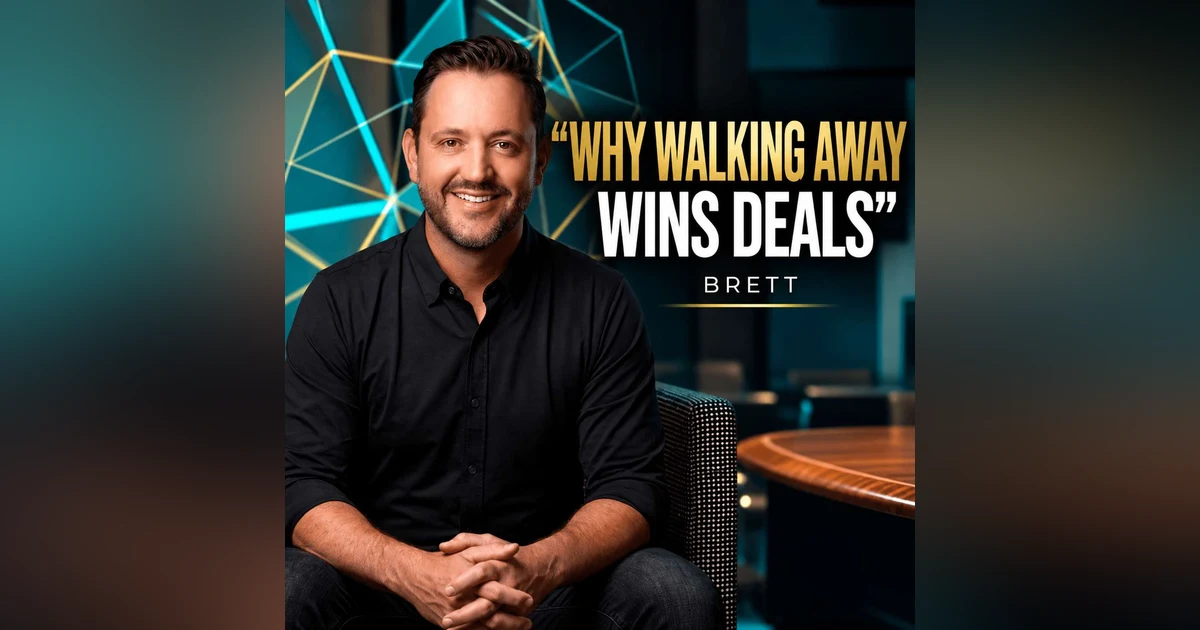

Send us Fan Mail Business Community https://www.skool.com/thebusinessnetwork Newsletter https://doing-business-with-a-servants-heart.kit.com/steveramona 📖 Quote: “The ability to walk away and mean it is the strongest negotiating position you have.” — Brett Story 📝Description: Your business is probably your biggest asset, and also your biggest risk. Investment banker Brett Story of Brighthorn joins Steve Ramona to take the fear out of private securities, private equity, and selling a c...

 Spotify

 Apple Podcasts

 YouTube

 iHeartRadio

 RSS Feed

 TuneIn

 Castbox

 Castro

 Goodpods
Business Community https://www.skool.com/thebusinessnetwork
Newsletter https://doing-business-with-a-servants-heart.kit.com/steveramona
📖 Quote:
“The ability to walk away and mean it is the strongest negotiating position you have.” — Brett Story
📝Description:
Your business is probably your biggest asset, and also your biggest risk. Investment banker Brett Story of Brighthorn joins Steve Ramona to take the fear out of private securities, private equity, and selling a company. He explains why the deal you walk away from can matter as much as the one you close.
- Public vs. private securities: what the difference really is, and why the rules matter
- The pizza bagel principle: why a smaller slice of a bigger company can beat owning 100% of a small one
- Don’t go it alone: why even successful owners should never try to sell their own business
- Prep 12–18 months out: tax strategies, trusts, and the client who moved states before a $40M sale
- High-touch, not high-volume: why Brighthorn takes only 4–6 deals a year, and the client who said “I feel like we broke up”
PS: Brett started out as a lawyer. What changed his path was watching a publishing-business owner cry at the closing table. That owner had mortgaged his house twice to build the company. Brett has spent his career since helping owners win, including the ones who never become clients.
CTA: Subscribe to Doing Business with a Servant’s Heart wherever you listen. Connect with Brett Story on LinkedIn or at brett@brighthorn.com. Catch Together We Serve every Friday at 2 PM PT / 5 PM ET on Apple TV, Roku, Samsung, and other streaming platforms.
🎯 What You’ll Learn:
✅ Take Chips Off the Table
✅ Prepare Before You Sell
✅ Help Without Expecting Return
⏱️Timestamps:
[02:40] Public vs. Private Securities
[04:00] Why Sell or Raise Capital
[06:50] Get Expert Market Advice
[08:30] The High-Touch Client Story
[12:20] From Lawyer to Banker
[18:40] Never Sell Alone
🤝Connect with Brett Story:
💥Web: www.britehorn.com
💥LinkedIn: https://www.linkedin.com/in/brettstory/
🤝Connect with Steve Ramona:
💥Web: https://steveramona.com/
💥LinkedIn: https://www.linkedin.com/in/steveramona/
💥IG: https://www.instagram.com/bizopportunitynow/
💥Podcast: https://www.servinginbusinesspodcast.com/
💥YouTube: https://www.youtube.com/@doingbusinesswithaservantheart?sub_confirmation=1
🔖Tags:
#BusinessWithHeart #ServantLeadership #Podcast
Free Business Community: https://www.skool.com/thebusinessnetwork
https://app.nucalm.com/purchase/free-trial?coupon_code=NUCALM15&ref=steve57
Subscribe to our Podcast Newsletter
https://doing-business-with-a-servants-heart.kit.com/628f9d5962
Join Me on Substack: https://podcasthost.substack.com/
Doing Business with a Servant's Heart Named Top 20 Small Business Marketing Podcast
https://podcast.feedspot.com/small_business_marketing_podcasts/
Welcome everyone to doing business with a servant's heart podcast. I'm your host, Steve Ramona. I'm thrilled to have you join us today. This podcast is dedicated to exploring the idea of doing business and living life with a purpose, serving others and yes, achieving success. We believe that when we approach our work and our lives with a servant's heart, we can truly make a difference. We created this show for you because we want everyone to be motivated, inspired, and educated to make an impact in your world, whether you're an entrepreneur, a community leader, or simply someone looking to bring more purpose into your daily life. This podcast is here to support you. Now, while you're listening to my incredible guest, oh my God, he's got some cool stuff he's going to talk about, which I'm excited about. Um get your pen and paper ready, by the way, take notes. Think about how you will serve today and what impact you'll create today. And in today's episode is brought to you by our amazing sponsor, Pantheon Alliance. Picture yourself joining an elite community of high-income, successful business owners and entrepreneurs from a variety of industries all working together to create a powerful referral marketplace and also get educated in our mastermind. It's an incredible opportunity to expand your network and elevate your business to new heights. If you have any more uh any uh uh need some information on that, please reach out to me and I'll get that information to you because I'm part of the Pantheon Alliance myself and I love it. So, with that being said, uh impact and servants are my guest is gonna talk finance, money, crypto, a few things, but some stuff that I think people don't understand and get fearful of in finance, but he's gonna help uncover those uh fears and and and wipe them away from the map. Brett, welcome to the show.
SPEAKER_01Thanks, Steve. It's great to be here. Looking forward to the discussion.
SPEAKER_02As we talked about it, you know, earlier before the show, I'm a fan of securities and all that. But what's the difference between public and private securities? What should people know about that?
SPEAKER_01Yeah, it's um it's a popular misconception, but uh all securities uh, which are really just the shares of ownership of a company or an entity, are either public or private. Um, there's no third option really. And so um the key difference is in how they're regulated and and what needs to be done uh to follow the law if you are selling uh shares or equity in a private company. And that's what we specialize in. Um and there are um regulations and rules, both at the federal and state level, that you have to follow and to make sure that you keep your nose clean and out of the crosshairs of uh the SEC and the Department of Justice. So um that that's the biggest difference. I mean, once stuff that makes it onto the public markets, the the New York Stock Exchange or NASDAQ, uh, it's been vetted and it's jumped through a bunch of hoops to get there. And there's similar hoops that you have to jump through in the private markets.
SPEAKER_02So, our owner listening that wants to do private equity, this this private securities, what's the steps? Uh of course, not everybody should do it because of their company. How do you go through that? How do you analyze that for a company?
SPEAKER_01Yeah, we we work backwards from what the owner's goals are. And a lot of times, uh, well, always that involves a financial decision, but a lot of times there's a lot more to it than just uh valuation and money. And so the question is, you know, why do you want to sell part of your business or why do you want to raise capital? And why now? Like what what is prompting the decision to be made right now? And then and then we set forth uh and explain their options and and we tailor a process uh most often in the sale of a business, but we do raise capital as well, uh, to to make it to meet as many of those goals as we can. So if there's there's 10 things that are really important, if we hit seven or eight of them, we've done a great job. And um we find the right you know counterparty, whether that's a private equity firm or a strategic buyer or a family office, um, to uh to match up with the with the seller and and allow them to keep building going forward.
SPEAKER_02So that's interesting. So I have a private private company. Is what's the value of me doing that? Uh I know you answer some all that, but let me give you a scenario so people can understand because this can be very complex for people. It was for me until I learned a little bit. So I've got a plumbing company and I've got you know one shop. I want to go to a hundred shops all through California. Of course, I need would this be an example of something you might talk to me, talk to me about?
SPEAKER_01Sure. Uh, and and there's two reasons you would think about doing that. And the first is is risk. Um, for 99% of the business owners we work with, their biggest asset, their most important asset is their business. And there comes a time at which it makes sense to uh to diversify a little bit because there's a ton of risk in having your whole net worth tied up in a business. There's a ton of reward as well. But you know, there things can happen. You can get sick, you can lose a major customer, you can lose key employees, and um, not having taken some chips off the table along the way will leave you kicking yourself down the road. The other thing is OPM, other people's money. So you've got a business and you uh need to get to a hundred stores, but you can't finance that yourself. Perhaps it's right to bring in a private equity partner who will help finance that growth. Uh, yes, you're giving up some equity, but you're going to have uh a smaller slice in equity, but in a much, much bigger pizza pie than owning a hundred percent uh of a pizza bagel, so to speak. So um if you remember those from back in the day. Yeah. Uh it's been a while since I busted out the pizza bagel analogy, but but that's what I'm uh but that's uh that's essentially the the reason we do this.
SPEAKER_02Yeah, that and that's good. And most of the people aren't going to be that side of the side of the public securities. A lot of fear out there, recession, interest rates. I think they're announcing they're gonna go down, whatever. But how secure are securities? You know, somebody goes, I want to jump in the stock market, is it really a place they should be, or should they have somebody helping them advising them?
SPEAKER_01Yeah, they really should have somebody advising them. And and what I'm going to tell you is my own personal opinion, doesn't reflect the the position of Brighthorn Securities, but um, you know, over a long time horizon, and that's the key thing, is to assess both your investing time horizon. If you need the money tomorrow, don't put it in the market. Uh, if you need this money when you retire in 30 years, traditionally and historically, uh the stock market is has performed well. Um, but it's only one component of a basket of assets that you really should be uh focused on if you're building long-term wealth. But uh in every case, there's there's people whose full-time job it is to help manage money. And um there's an informational disadvantage that most retail investors have uh vis-a-vis folks on Wall Street and large funds and large firms. And so trying to beat the market as a as a retail investor is is very, very difficult. Um, most of the hedge funds don't even beat the index, and they've got resources and information. Um, so you know, trust somebody who does it for a living and and don't micromanage, just just know that you know there's gonna be ups and downs, but over time that money should grow.
SPEAKER_02I thank you. And that's why you read my mind. We're thinking like because I want people to hear that you can't hear that enough. Oh, I could jump on a you know, weebull or Robinhood, and I'm gonna buy Apple stock or buy fractions, and next thing you know, their thousand dollars is gone. And I use this analogy you don't want your mechanic working on your heart surgery, yeah. Just yeah, you know, we know what's gonna happen with that. Securities is emotional, it's fine. I any money talk is always emotional. How do you serve your clients the best?
SPEAKER_01You know, uh, I'll tell you a quick story, and this I think is uh illustrative of how we work. So we just sold a business, um, it was a great result. They sold to a public company. Um, it was the right fit for the team, and and they made out very well financially. And um the the the largest shareholder and CEO took some time off after the deal, and he was down in the Caribbean on a sailboat, um, kind of classic story, right? Um, and he called my partner, uh, Bobby is her name, and said, uh, I feel like we broke up because they hadn't talked for two weeks. And uh during the course of the deal, they were talking as much as six, eight, nine times a day. And that's really um an example of the kind of relationship we build with our clients because there's a lot of emotion, there's a lot of fear, there's a lot of excitement and opportunity. Uh, but we're a very high-touch firm. That's our model. We'll only do four to six deals a year, and and that's by choice, so that we can spend a lot of time with every client that we have. And um, that's resulted in some great outcomes. We've been doing this for 13 years, have closed a lot of deals and have helped a lot of people sort of uh achieve their dreams financially.
SPEAKER_02High touch is a big word for a servant, servant leader, servant heart. I love that you said that in audience. Remember that. High touch. We can bring love into our like this story you just told about Bobby, but that's business love. It's not love of your wife or your husband. I I don't know why love and business has gone away, but I love hearing that when I said love again, because that's what it is. You built she built this great relationship that was so strong that you want to stay connected somehow.
SPEAKER_01Sure.
SPEAKER_02In regards to uh you know, the servant heart, but how about the servant leader? What does securities companies do wrong that people need to be aware of when they're talking to a company?
SPEAKER_01Well, I can I can speak most specifically in our industry, which is investment banking, mergers and acquisitions, but it's it's viewing the deal as just a transaction like selling a house. I mean, people can be emotional about selling their family home, but but emotion tends to be, you know, not as big of a deal in selling a house as it is in selling your business, which could be your life's work. A lot of our clients have poured their blood, sweat, and tears into these companies. Um, they've run the business for 20, 30 years. It's so enmeshed and intertwined with their sense of identity. They're known at church or the country club or in their social circles as uh Jane, who owns XYZ Co. And so to break that, to sever that sort of um identity, uh, it comes with a lot of fear and a lot of emotion. And and uh we treat that with the earnestness and respect that it deserves when we're doing deals because we realize that for most of our clients, this is a once-in-a-lifetime thing, selling their company. And and a lot of uh investment bankers, especially you know, some larger firms that are more predicated on volume, um, they don't see it that way. They see it as just a transaction, they see it as just flipping a company from one buyer to the next. And um, that's not our approach.
SPEAKER_02Yeah. You know, Brett, I'm hearing so much passion in your voice about what you do. Two questions. One, where'd that passion come from and why do you have it?
SPEAKER_01Yeah, so uh I started my career as a lawyer and I worked for a large firm that did big public company deals, and there was not a lot of emotion involved there. Uh, my second stint, though, was with a smaller firm uh where we worked with private company uh sellers and private business owners. And and I remember vividly uh the first large deal that I kind of worked on, uh the guy had run a publishing business, tells you how long ago it was, and uh it was out of his started out of his garage. He had mortgaged his house twice. I mean, he was all in on this business and he had taken a lot of risk, and and you know, his his marriage had become difficult because of everything, but he's he saw it through, he persevered, and and when he was at the closing table, and I think he was walking away with 30 million bucks, uh, he was in tears. And I thought that was really cool that this guy had finally won. And and I like that. I mean, I'm a big believer in small and medium business, they're really the backbone of uh of the US and the economy. And uh, I just love helping business owners win. And so uh when I found my way to investment banking from from law, I I really landed in the right spot because um not only am I meeting with business owners every day who who may become clients, or I can help them in some other way, but then obviously we get to see when our clients win and and we get to see them after they win, like when they're on their sailboat in the Caribbean. So it's very gratifying. I I I love it.
SPEAKER_02I it's uh I'm glad you're not a lawyer, I'm glad you're doing this. There's so many lawyers out there actually, you know. I'm not gonna say the joke, I promise.
SPEAKER_01Yeah, yeah.
SPEAKER_02And I love what you just said. I want to highlight that again is you'll talk to owners, and you guys aren't a fit, you'll find a fit somewhere. Talk about that how because I don't hear that in the in the in finance a lot. Talk about that.
SPEAKER_01Yeah, you know, it's um it's as simple as making a a choice. Do I want to help and do I want to see that through? And 99% of the time, it's no more than an hour of my time max. And and I just made a decision long ago because so many people helped me when I was transitioning to investment banking, or just help me generally, that I'm gonna try and do the same thing. So if we come across a business owner whose company isn't a fit for us for whatever reason, or maybe they don't want to sell, but they, you know, need help with tax planning or or what have you, I'll just block off some time, I'll calendar it out and say, I'm gonna spend this hour helping Steve. How can I help Steve? Who are the five people that I can introduce to Steve and make sure that he's in good hands? And we don't ever expect to see that come back um in a linear fashion, but I just believe that's the way uh to live, that's the way to do business, and um we're proud of that. And and I think it's resulted in in a great reputation, not only just here locally in Denver, but around the country where where we've done deals because people know that that we're good folks.
SPEAKER_02No, no, I I'm I'm glad you said that message because Madoff comes to my mind, and all these you know stories that people hear, like, oh God, Brett's and securities. Oh no, they're bad people. They're not bad people. You hear it here firsthand, live or recorded, that they're good people and they want to help and they can help. Let's talk a little personal. What is your biggest fear besides money?
SPEAKER_01Um you know, I just turned 45 and and it I think it's just uh like a random unforeseen illness. Um I've had a I've had a couple of friends who who have gone through some really serious things and otherwise very healthy people on the surface. And so I'm uh I'm maybe a little bit uh of a hype, not hypochondriac, but definitely a little bit um anal about getting blood tests and trying to get ahead of anything that that may come down the pike. But I think that's it because we've obviously I've worked really hard, I've I've been fortunate, and I want to be able to enjoy my my friends and my family uh well into the future. So that's that's probably the the biggest fear that's outside of business.
SPEAKER_02I see you're a book reader. One, what is your favorite book? But firstmost, how important is personal development for any leader like you or any business in any industry?
SPEAKER_01Yeah, it's huge, and I try and be regimented about it. Um my attention span is shot these days. I used to be able to uh read, you know, a long novel, and and it's harder and harder. But uh one of my favorite books that I read fairly recently was by Ryan Holloway called Ego is the Enemy. Um, and it's uh it's got a stoic uh stoicism bent to it, but it's more about how your ego gets in the way of your happiness and prosperity, how it can be a powerful tool, but that it needs to be harnessed like any other tool. Um, but whether it's books or or a lot of podcasts, or um, you know, I've taken some executive education courses, that's that's an important part of development. And and I I love learning, I love learning about new topics and and continuing to sharpen my skills. So uh it's something I spend a lot of time on.
SPEAKER_02And I like that because you're successful and being more successful, but you're successful and you're still doing it. It doesn't stop because you've hit the top or close to the top. Uh, I know Warren Buffett studies all the time, even in his 90s. I hear, you know, the perfect example of somebody doing that. And did you say Ryan Holliday?
SPEAKER_01Ryan Holloway. Holloway. I think it it might be right, it might be Ryan. I I want to say it's Holloway, but the the book is called Ego is the enemy. And he's uh he's kind of a sales guru. He's written a couple of others that are really good as well. Yeah, uh, but that one in particular, I think, is a great one, especially for business owners and high achievers who can be guilty of patting ourselves on the back a little too often.
SPEAKER_02I love it. What that's it's uh it's such a great book. Business owners are out there in your inner across the board. They do listen to this show. What's one tip you could give them you learned over these years?
SPEAKER_01So you've built a great business and you've done it by wearing a lot of different hats, and you deserve uh all of the success in the world. But please, please, please do not try and sell your company yourself. Um, I hope you hire us if we're a fit, but if you don't, please hire a competent investment banker or MA advisor to run the process for you because I have seen cautionary tale after cautionary tale of people who got jerked around, who didn't get the value, who had a bait and switch happen at the 11th hour, and all of that can be prevented in working with the right kind of advisor. And the worst thing that can happen is you try and do the sale process yourself. You take your eye off the ball, the business suffers, maybe revenues drop or profitability goes down, you don't close the deal, and then you're in a worse-off position had you never taken that buyer call to begin with. So that's probably the biggest thing. And it's a temptation because a lot of these uh business owners have done so well doing it themselves. But this is the one area where you really should leave it to the experts.
SPEAKER_02Yeah, and I like that again, it goes back to mechanic heart surgery, but also too, I've heard from experts like you saying sometimes saying no to a buyer is the best thing you could ever do, right?
SPEAKER_01Yeah, the ability to walk away and mean it is the the strongest negotiating position you have. And sometimes it's about the deal you don't do. And that's why, yeah, you know, the the the sales process is really a mutual interview. And you've got to ask yourself, what do I, you know, yeah, if you're if you're not planning on being in the business after you sell it, then this is less of a factor. But if you're planning on remaining, like let's say you're selling 70% of the business and keeping 30% equity, and you're gonna build with this partner, you got to know what your life's gonna look like um after the fact. And and that's a that's a huge factor in whether or not to do a deal.
SPEAKER_02That's you get me speeches, which is rare because those answers are so good. Hope audience that you're listening because if you have a company, and I think you need to start this early. Like I, you know, my company's 10 years old. Let's go back to my plumbing company and go, you know what? I can make 10 million next year, let's sell it. That's not a good mindset, I would think.
SPEAKER_01I might be no, no, I mean the the preps, the the preparation to get ready to sell really happens, you know, 18 to 12 months out, depending on the state of affairs with your books and and everything else. But there's a lot that can go into it on a personal level too. So there's some tax strategies around gifting or uh different trusts and mechanisms you can set up. Um, perhaps it means you change your state of domicile. We had a client who was gonna sell uh his business in Chicago. He knew that uh about a year, 18 months away, he moved to Nashville, bought a house, opened an office so that he's not gonna get hit with, you know, the state of Illinois, whatever, 11% tax on his $40 million. It's real money. So, you know, there's all sorts of things like that that you can do uh leading up to a sale uh before you ever start the process. And that's really important, you know, prep work.
SPEAKER_02Okay, Brett, you proved it. This is a complex thing. You gotta hire somebody like you. You just I'm like, holy mackerel, all this. I you know, I would never have known that. Again, it's let's go back to that and uh I'm not gonna answer anything, but hire Brett or somebody, you know, go out, reach out to Brett, and I'll get he'll get you his contact information. You have a question about that, you know, don't go alone in this. Uh alone doesn't work in anything we do in business. Always try to try to have a great network that you have, and that's fantastic. Uh, we're coming to the end here, and I'd like to ask this very fun question. You ready?
SPEAKER_01Yes, sir.
SPEAKER_02Make you think I love it. You know, you're so he's so smart, guys and girls. He's always ready. So we're in a restaurant, it's a table of four. You're sitting at one chair, the three empty chairs, who will sit in those chairs, dead or alive, why, and what food would you order?
SPEAKER_01Fantastic question. Um, Jesus, just to I I I myself am a Christian, but but beyond that, to understand what it must have been like to live during that time and and sort of the ability to turn the other cheek and and take the degree of suffering, whatever you believe, is uh, I just want to know where that comes from. Um, Tiger Woods, uh, for very different reasons, but the uh the consistent drive to keep winning in spite of being generationally wealthy, uh, is a is a fascinating one. And then maybe somebody um who led a movement, someone like Martin Luther King or or someone in the suffrage movement, just to understand how it is uh they were able to inspire people. I think that that's um uh something that I don't believe I I necessarily possess. And I'm fascinated by people who can who can really be leaders with that gravitational pull. And then I love anything curry. So whether it's Indian food or Caribbean curry, that's if I'm in control of the menu, that's what we'd have. We'd have a bunch of different dishes. Everyone could try a little something here, a little something there. Uh, so that's probably the most random answer to this you've ever gotten, but that's uh off the cuff. That's what I came up with.
SPEAKER_02Well, Jesus got and Jesus leader of the pack right now. I'm not surprised. Okay. Well, it's but I love the Caribbean food because that's your jam. But uh, I just had to throw that one joke in there. Great food, by the way. Started to learn a lot of curry. My wife's doing it. It's it's really good. Nice. Brett, this has been great because you really broke down securities and money with a servant's heart. It's hard to do. You did it easily, so I thank you because people need to know we gotta put our money somewhere, we gotta be safe with it, we gotta be smart with it. And you really gave us some great tips, and I appreciate you. How can people find you and reach out to you?
SPEAKER_01Yeah, always open to a conversation. Um, and and again, would love to be helpful any way I can. Uh I'm on LinkedIn, Brett Story, pretty easy to find. Um, I could also be reached at Brett B-R-E-T-T at Brighthorn, B-R-I-T-E-H-O-R-N dot com. And uh please just reach out and and don't hesitate and we'd love to have a conversation.
SPEAKER_02Thank you, Brett. Appreciate you being on. This has been awesome. Please reach out to him, comment on the YouTube channel uh or on the podcast when he comes on, and I'll get those messages to him. If you can't find them, reach out to me or or just send a question to me. I'll get it to him and get it answered. I'll take care of that. Because he said that all I call it ABL Always Be Learning. That's what Brett does. I'm gonna do more of he's in and inspired me to do that. You should do that as well. Also, don't forget about my TV show, Together We Serve every Friday at 2 p.m. Pacific, 5 p.m. Eastern. You'll find me on Apple TV, Roku, uh, Samsung, all those streaming uh TV services. See my big old head on a 70 inch screen. You'll look at my guest more, I hope. And with that being said, me and Brett, thank you so much for watching or listening to Doing Business with a Service Heart Podcast. We look forward to seeing you in the next episode. Have a great day, everybody.