The Silver Tsunami: How Matt Bodnar Is Buying Up America's Retiring Businesses (Warren Buffett-Style)
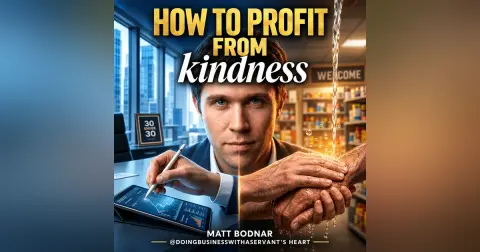
Send us Fan Mail Business Community https://www.skool.com/thebusinessnetwork Newsletter https://doing-business-with-a-servants-heart.kit.com/steveramona 📝Description: Over the next decade, roughly 12 million baby boomer-owned businesses will need a new owner — and most of them have no succession plan. Eidolon Capital founder Matt Bodnar built his entire investment thesis around that gap, borrowing his playbook from an unlikely mentor: Warren Buffett. How Matt landed Forbes 30 Und...

 Spotify
 Apple Podcasts
 YouTube
 iHeartRadio
 RSS Feed
 TuneIn
 Castbox
 Castro
 Goodpods
 Business Community https://www.skool.com/thebusinessnetwork
Newsletter https://doing-business-with-a-servants-heart.kit.com/steveramona
📝Description:
Over the next decade, roughly 12 million baby boomer-owned businesses will need a new owner — and most of them have no succession plan. Eidolon Capital founder Matt Bodnar built his entire investment thesis around that gap, borrowing his playbook from an unlikely mentor: Warren Buffett.
- How Matt landed Forbes 30 Under 30 by reverse-engineering the path and finding a "who" who'd already done it
- The "silver tsunami": ~$10 trillion in business value transferring as boomers retire, with no buyer lined up
- Why acquisition — not organic growth — is the real billionaire playbook (Amazon/Audible, Amazon/Whole Foods, Anthropic)
- Turning a 51-year-old, carbon-copy-paper business into a modern, trackable operation with a few simple changes
- Why "servant's heart" investing (keeping employees, profit-sharing, long-term ownership) is a competitive edge in private equity
PS: Matt would give his dinner seat to Charlie Munger before Warren Buffett — and he'd invite Genghis Khan. You'll want to hear why.
CTA: Subscribe to Doing Business with a Servant's Heart and grab Matt's free weekly newsletter on buying businesses and acquisitions at MattBodnar.com.
🎯 What You’ll Learn:
✅ Reverse-Engineer the Path and Find a "Who"
✅ Buy the Business, Don't Build the Department
✅ Servant's Heart Is a Competitive Edge in Private Equity
⏱️Timestamps:
[01:18] The Forbes 30 Under 30 Story
[07:00] Naming Eidolon Capital
[09:00] The Silver Tsunami Thesis
[13:00] Buffett's Billionaire Playbook
[18:00] Modernizing a 51-Year-Old Business
[23:00] Dinner With Buffett, Munger, and Genghis Khan
🤝Connect with Matt Bodnar :
💥Web: https://eidoloncapital.com
💥LinkedIn: https://www.linkedin.com/in/mattbodnar/
🤝Connect with Steve Ramona:
💥Web: https://steveramona.com/
💥LinkedIn: https://www.linkedin.com/in/steveramona/
💥IG: https://www.instagram.com/bizopportunitynow/
💥Podcast: https://www.servinginbusinesspodcast.com/
💥YouTube: https://www.youtube.com/@doingbusinesswithaservantheart?sub_confirmation=1
🔖Tags:
#BusinessWithPurpose #ServantsHeart #Podcast
Free Business Community: https://www.skool.com/thebusinessnetwork
https://app.nucalm.com/purchase/free-trial?coupon_code=NUCALM15&ref=steve57
Subscribe to our Podcast Newsletter
https://doing-business-with-a-servants-heart.kit.com/628f9d5962
Join Me on Substack: https://podcasthost.substack.com/
Doing Business with a Servant's Heart Named Top 20 Small Business Marketing Podcast
https://podcast.feedspot.com/small_business_marketing_podcasts/
Welcome everyone to doing business with a servant's heart podcast. I'm your host, Steve Ramona. I'm thrilled to have you join us today. This podcast is dedicated to exploring the idea of doing business and living life with a purpose, serving others, and yes, achieving success. We believe that when we approach our work and our lives with a servant's heart, we can truly make a difference. We create a show for you because we want everyone to be motivated, inspired, educated to make an impact in your world. Whether you're an entrepreneur, a community leader, or simply someone looking to bring more purpose to your life, this is a podcast to support you and I'll put it back. This guest is gonna blow you away for a lot of reasons, and I'll I won't say that right now. But while you're listening to him today, I want to take your paper and pen out because you're gonna want to take notes, but also think about who you're gonna serve today and what impact you'll create today. And today's episode is brought to you by our amazing sponsor, Pantheon Alliance. Picture yourself joining an elite community of thriving and very highly successful business owners from a variety of industries, all working together to create a powerful referral marketplace and mastermind. It's an incredible opportunity to expand your network and elevate your business to new heights. With that being said, impact this guest has had a ton of impact. Within five minutes, I can tell this guy's a perfect guest for this show because he has a service heart, but he's in his 30s. And I love younger men and women that are doing great things to show other younger men and women, younger men and women. That can be done, but it doesn't matter what age you are. Matt, welcome to the show.
SPEAKER_02Steve, thank you so much for uh having me on and for that wonderful intro. I've got uh I've got big shoes to fill, so I I I appreciate it.
SPEAKER_00What size shoe are you? Big shoes to fill. That was good. Okay, I love it. So awards are great, uh, distinctions and all that, but they're also important to show that a servant art is being successful. Talk about your Forbes under Forbes 30 under 30 award that you got a few years ago.
SPEAKER_02Yeah, so I'm uh it's been it's been a few years now, as we were talking about in the pre-show. But um, you know, when I got Forbes 30 under 30, uh, or I guess how I got it, um, was really by following a strategy that I try to use in a lot of places, which is basically there's sort of two components to that. One is reverse engineering what's worked, and the second piece is finding what I would call a who or a person who can help me do it that's done it before, right? And those two things can go together and and work together. And so in the case of 30 under 30, I remember when I was in my early 20s, I randomly picked up an episode of Forbes or an episode, excuse me, uh too many podcasts. Uh picked up a uh, you know, a copy of Forbes magazine. And I was it happened to be the 30 under 30 episode. I didn't even know that uh that existed, but it um I started leafing through it and I was like, oh, this is really cool. Like I, you know, put it on my bucket list. I want to be on this list one day. And every year I would watch the list coming out and I would pay attention and see who was on there. Um, and eventually there was uh an acquaintance of mine, basically, somebody in my extended network. We weren't close friends, I didn't know them super well, but that was on the list. And and I, you know, was like, oh wow, that's really interesting. I was like, and it kind of motivated me. I was like, hey, if they can get on the list, I think I could get on the list, right? Being probably overoptimistic and ambitious and thinking, like, all right, hey, if they could do it, I can do it, right? And so that was that two or three years elapsed, didn't make it on the list, wasn't really making any headway. And eventually, I don't know uh what dawned on me, but I was like, hey, I should go talk to that person and ask them how they got on the list, right? And so I reached out and was like, hey, uh, his name was John. I was like, hey, John, um, you know, long time no chat, hope all is well. I I'm curious, I'd love to grab coffee, right? Or just got lunch. And I said, Hey, I'm really curious, how did you get on the Forbes 30 or 30 list? Like, what happened? Tell me, tell me how it worked, what did you do? Um, and you know, he had been on there two or three years ago at that point, and he was uh tremendously helpful. And he basically walked me through how he did it. And he's like, Look, if you want some help, I'm happy to uh, you know, introduce you to a couple of the folks and you know, put in a good word with the judges and that kind of stuff. And right, and having that insight angle, I think was tremendously valuable. Um, and he walked me through a couple of the other little pieces of the puzzle in terms of just tactical stuff, you know, how to approach it and fill out your application and those kinds of things. Um, but really having that connection point of somebody who had done it in the past and asking them for their help, right? Which he he had a servant's heart, thankfully. Um, and that was really instrumental in kind of giving me an inside track to some extent. And I think there's tons of people every single year who uh are qualified and eligible and would make a great winner on the 30 under 30 list, and they probably just don't have any connection points or connectivity or whatever. Uh, I was fortunate enough that there was somebody in my extended network that, you know, happened to have been on the list at some point. But I think if you, you know, if you watch the list for years and you, you know, you kind of do a good job, and I know you do a great job of this, Steve, cultivating your network, there's eventually going to be some connection points, right? And if you're focused on adding value and helping people, et cetera, um, you know, you can you can find the right inroads. And whether it's 30 or 30 or really any activity, I think those approaches have served me super well in terms of trying to figure out who's already accomplished what I want to accomplish, and can I get a hold of them and and get their perspective, insight, feedback, guidance on the path that they've already walked and if they would be willing to help me walk it. And so that was really instrumental to helping me get on the list.
SPEAKER_00I I love that. That is so powerful. And thank you for the segue because that's exactly where I wanted you to go. I didn't know the story, but one lesson, audience, is he asked. How many times have you not asked? Nothing's gonna ever happen. And again, as we always say, you ask, what's the worst thing to happen? And he just says no to you and you don't get on 30 on 30 and you move on. But you got the the home run, the grand slam instead of just you know the single. So that's cool. I love the name of your company. I'm not gonna try to say it because I'll probably butcher it.
SPEAKER_02Idol on capital.
SPEAKER_00Idol on capital. Okay, how'd that come about? That's a really cool name.
SPEAKER_02It's so funny. People ask me about the name. Um, the honest answer, I'll give you the I'll give you the real true honest answer. There's two ways that it came about. One is I was brainstorming the name for uh a holding company or an investment partnership, my investment entity. And honestly, one of the big criteria was just finding a domain that was available, right? And it's, you know, in today's world, especially uh in the domain game, everything you can think of with even with like capital or partners or whatever is taken, right? And there's a million different investment funds and head funds and any street, any any two landmarks together, you know, two mountains capital, twin rivers partners, like you know, evergreen capital, like all it if you want to go nautical, every nautical thing's already taken. If you want to go, you know, airplanes, every airplane thing, already taken, like all of these different categories. So I made this huge list of stuff from things that I was interested in, which I'm a huge nerd. So it was mostly like sci-fi and fantasy stuff. And honest to God, I got the name from a magic, uh Magic the Gathering card. Um, and so I it was just there was a magic card that was something Eidolon of Revels, I think was the name of the card. And I was like, oh, Eidolon, what is that? Sounds cool. And I looked it up, and it's the Greek word for phantom, which I thought was pretty awesome. Um, and uh, so I like that it had this kind of hidden meaning, and that was just on my list of put perspective names and the domain happened to be available. And so uh I locked and loaded with Eidolon Capital, and uh, and I've been on that party ever since.
SPEAKER_00What a way to berth a company! Love it! Such a cool way, you know, and it's interesting looking at your background. You were uh you have extensive experience investing in fast growing companies for the financial people out there. What was your strategy and what we were thinking when you did that?
SPEAKER_02So, with with my investment thesis or with Idolon in particular, or oh no, your investment thesis, just your overall thoughts. Yeah, so my my thesis has evolved quite a bit, and and I'll give you my kind of current thinking, um, which is you know, the over the next 10 to 15 years, and depends on which estimates you look at, but there's about 70 million baby boomers that are gonna retire or enter retirement age. You know, obviously some of them have already started entering retirement age. Um, but there's about 70 million business or baby boomers, of which it's estimated that about 12 million businesses um will have to transact or pass on generationally in some form or fashion as baby boomers retire, pass away, leave the workplace, et cetera. And so depending on how you estimate that, I've heard I've seen estimates as high as $10 trillion of total value will be transferred from the baby boomers onward as this great migration happens. And so if if you run the math at about 12 million businesses back of a napkin over a 10 to 15 year period, it's about a million businesses a year that need to transact over the next per year, over the next decade and change. And so there's the people call it the silver tsunami. There's this huge tidal wave of businesses that that have to sell. And the crazy thing is the vast majority of these businesses don't really have any kind of succession plan, right? In most cases, the kids don't want anything to do with the business. They would rather be TikTok influencers or whatever. So they have no interest in staying involved. Um, the, you know, they're the employees of the business maybe don't have the capital or the means or the sophistication to take the business over. And and so there's a lot of these businesses really don't have a home. They don't have a place to go. And uh our thesis is really just about finding um, finding businesses that we think are enduring, interesting, compelling companies and giving them a long-term home. And and the strategy and the approach, candidly, is mostly borrowed from just reading one too many Warren Buffett shareholder letters. Um, but you know, I I really I took it to heart, like the stuff that he talks about and works on and and says, which is hey, we want to buy wonderful businesses and we want to try and own them over a really long time horizon. And the the thing that has almost been a competitive advantage for us, and in a lot of ways, I think we we don't necessarily use this verbiage internally, but I really I think it it makes sense and I think it fits is like we have to some extent this kind of mindset of having a servant's heart in the in the sense that our approach is not, hey, we're some big New York private equity firm. I'm based in Nashville, right? So we're not some big New York PE firm that's gonna come in, we're gonna buy the business, we're gonna fire everybody, we're gonna slash and burn, we're gonna resell this thing in three years, right? Which is a lot of people in the marketplace. Our approach is hey, we want to take care of the stakeholders, the people, the employees, the management team. We want them to have ownership and profit shares, and we want them to be part of the future of the business. We want to shepherd the legacy that the founders of this business have created and give it a long-term home. And, you know, not many buyers have that approach. And so it really serves almost as a competitive differentiator for us to have that, hey, we're we're an alternative, right? And it's I'm not, I'm not a genius going back to the 30 under 30 thing. I just stole that strategy from Warren Buffett. That's exactly what his positioning is, right? I'm just doing it in the smaller side of the market where there's this tsunami of businesses, you know, every day hitting the market. And I'm just trying to sit there with my fishing net and catch a few good ones every now and then and uh, you know, hopefully do a few good deals. So that's that's high level how we think about our investment thesis and and the opportunities that we really look for.
SPEAKER_00And I appreciate now we know what Idolon does, because I was gonna ask you, but now we understand what you're doing. What a better guy to listen to uh those reports than Warren Buffett. I can't think of a better guy. I think I think if he's on this podcast, he'd go, hey, take away. I think he's that kind of guy who would go, hey, you know, not steal, but hey, yeah, take any advice I give you and run with it, right?
SPEAKER_02100%. And I mean, there's you know, uh I I think I'm at least now many decades away from ever even approaching competing with Warren Buffett, right? I mean, we look at very small companies in comparison to what Berkshire Hathaway looks at. Um, but yeah, I mean, he's been a huge um intellectual influence on me. You know, I mean, I my my career going, you know, I worked on Wall Street, I worked at Goldman Sachs out of college for a number of years and eventually moved back to Nashville to start really investing and and acquiring businesses. And it dawned on me again, similarly, took me probably too long to figure this out. But at some point I was like, hey, there's this guy who's at, you know, competes at least for the title of wealthiest person on earth. You know, sometimes he is, sometimes he, I think he's fallen a couple rankings, but at one point he was for a while. And he's an investor. And I, you know, an investor allegedly. And so I should read what this guy is talking about, right? And so then I just started printing out all his shareholder letters and reading them and going deep in um, you know, you can't really see my bookshelf from this angle, but I have pretty much everything written by Buffett and by Charlie Munger, who is his kind of business partner who recently passed away huge intellectual influence on me. Um, but you know, when I studied them, I was like, wow, like why have I dedicated my focus and my time and energy to buying businesses? Well, if you look at a lot of billionaires, I think Buffett's uh personally one who's really impacted my thinking. His entire strategy is just acquire businesses, right? That's that's if you boiled Berkshire Hathaway down, I mean, there's obviously more to it, but that's at the fundamental crux of their thesis. Um, you know, I'm reading a book right now um called how the title's kind of kind of cheesy, kitschy in your face, but I think intentionally so. Um, but there's this book called How to Make a Few Billion Dollars by Brad Jacobs. I don't know if you've heard of it, but no, that book. So I hadn't really heard of Brad Jacobs either. Um, but the book itself is fascinating. So he is, he's he has founded it, depending on how you look at it, because he had two companies. He had one company that spun into three, and they're all publicly traded, they're all billion dollar companies. So he's founded either five or seven, depending on how you count those, five or seven businesses that have all been billion dollar plus companies in totally different industries. So he was in the energy industry, he was in the waste management industry, he was in equipment rental, uh, and most recently in logistics. And, you know, he's he he has this uh seemingly golden touch to create these billion dollar companies. And, you know, you peel back the layers, what's his strategy? It's basically he spends a lot of time picking an industry where he thinks there's some really strong tailwinds, really strong macro trends. And then he goes out and he does a bunch of MA in that industry and buys, you know, he starts by the big business and then he gloms on a bunch of other businesses. And they've done hundreds of MA transactions, you know, across multiple different industries. And that's how they build these massive, uh behemoth, hyper successful multi-billion dollar companies. And so, and it it the list goes on and on, right? Even something like Amazon, right? When you think about, okay, obviously Bezos founded Amazon. He didn't buy it, he kind of created a new category. But when you look at Amazon's growth, over the last 15 years, they've done more than a hundred acquisitions and in major categories, right? So if you think about personally, I'm a huge audiobook listener, right? 80% of my quote unquote reading is really listening to audiobooks. And when audiobooks were really taking the market by storm, Amazon didn't go out and and build an audiobook division, right? They just acquired Audible, right? If you think about, okay, well, I don't know how long, four or five years ago, everybody was starting to think about wow, what if you could get your groceries delivered? Right now that's almost so normal that it's crazy. But like five, 10 years ago, people were getting their groceries delivered to their house, uh, you know, maybe a hundred years ago, right? But not five years ago. Um and Bezos didn't go out and say, we're gonna start, you know, Amazon grocery. They just acquired Whole Foods and they bought that whole infrastructure and that whole expertise and skill set and piggybacked it back onto their infrastructure, right? And so, I mean, even today, right, AI is one of the biggest mega trends, probably the biggest mega trend in the world. Um, Amazon, seemingly limitless budget, thousands and thousands of employees, uh, you know, two trillion dollar company. Instead of building an internal AI department, they've got a $4 billion investment in Anthropic, which is one of the leading AI developers. So you look at the big players across timescales, industries, et cetera, the the billionaire playbook in a lot of ways is buying businesses. And um, there's certainly other strategies too, but to me, that strategy really resonated. And that's ultimately why I I founded Idol on Capital and said, hey, I'm gonna, I'm gonna plant my flag in this torrent of of retiring baby boomer businesses that are coming down the mountain, and I'm gonna grab, you know, I'm gonna find a few of them and and hopefully provide a great home for them and build them into enduring enterprises over time.
SPEAKER_00Audience, well, one thing I want to say is you're not too late, you're 37. And I'm not too late at 62. I mean, I think there's no way you can stop you doing what you do. Kind of want to make a joke of that. When you said that I'm thinking, okay, it's not too late, it's not late for him. But the other lesson that I'm learning is you could do this at a smaller scale with what you're doing. You know, a medical company and buy a bunch of pharmacies to tie that on just making up, and it actually sounds really good. And you build these little mini businesses in a sense that are big businesses.
SPEAKER_02It's it's amazing. I mean, there's there's two different approaches depending on whether you have an existing business, right? If you if you want to become an entrepreneur, there's this whole path of entrepreneurship through acquisition or ETA, which you can go and do some homework on and read about. It's a it's a large industry, but there's crazy opportunities to go and buy. Uh, I mean, we bought a business a couple years ago that was a a 50, it was a 51-year-old company at the time. Now it's like 52, 53. I don't remember exactly how old it is anymore, but 51-year-old company that was completely unmodernized, like no website. The entire business operated on, you remember those carbon copy sheets where you like write it in. So the whole entire company, non-digital, they would get an order, they would fill out a worksheet by hand, they would stack them in actual paper inboxes on people's desks and process them. And you know, I mean, you don't have to be a rocket scientist to come in and be like, hey, let's digitize that, right? We took their ad, their entire marketing budget was a TV commercial from 1992 that didn't even feature any products they still own, like they still stocked. And so we said, hey, instead of that 25-year-old or what I don't even know, 30-year-old TV commercial, let's go spend that on Google ads, right? And digital marketing and stuff that we can actually track a return on investment on. And so if you, if you want to become an entrepreneur, there's uh there's a huge amount of these businesses that are massively underoptimized, that don't have a home, that don't have anybody, you know, don't have any succession plan, uh, and you don't have to be a genius to come in and say, hey, let's let's do some basic, give it some TLC. You know, I mean, and and there's nothing wrong with, I mean, if somebody's been running a business for 30 years and they're making, you know, hundreds of thousands of dollars a year and take home profit, why do they want to inconvenience themselves and go build a sales team and go change what's been working for 25 years and try to hustle and grow the business? They're happy and content. You know what I mean? And they're in a phase of life where they don't want to do that. And so it makes sense why there's lots of businesses like that. Um, but it also means that there's a ton of opportunity for folks who maybe don't have a business but want to buy one. Um, but then on the other side of the coin, if you own an existing business, uh, acquisitions is an incredible growth strategy that it can really augment organic growth, uh, it can supplant organic growth, right? Especially in more mature industries. If you look at companies that grow really quickly, a lot of times it's through acquisition primarily. And you don't have to be some billion, you know, billion-dollar publicly traded company. If you have a business, I mean, I can I can go deep on the math on this. So I don't want to, I don't want to bore folks, but I mean, if you have a business and you buy um, you know, you could buy one company, if you, if you're doing two or three million dollars a year of revenue and let's say five, seven hundred thousand dollars a year of profit, right? Um, if you go buy a business that's doing a million bucks a year of revenue, which is maybe a third, a quarter the size of your company, right? That can easily add, and I can run you through the math if you want to do it, but that could easily add a million dollars of value to your business as the multiple uh and the size of the company grows. You do one of those a year for three or four years, and suddenly you go from three million in revenue. Revenue to 10, right? And you go from a company that's worth maybe two or three million dollars to a company that's worth $10 million. That's a big difference. And it's not, it's not a breakneck pace. It's not these big corporate mega mergers. It's just finding little local business owners and giving them a place to, you know, park their hat as they're thinking about getting out of an industry. So that's that's my uh that's my TED talk about uh why I like acquisitions.
SPEAKER_00I just gonna say we should have recorded a TED talk. And I love your servant's heart about hey guys, let's you didn't come in and ransack the company, you came in and made subtle changes, which will make big impact on their income. Just going from paper to digital, that would make hundreds of thousands of dollars difference depending on the size of the company. And people, private equity can be servant hearts. He's proven it right here. That's exactly right. You can be the servant and be kind. Uh so that's fantastic. We've run out of time here. So let's get a little bit personal. I see that your mentor is Warren Buffett. I want to make that because he's my mentor too. I'd love to meet him sometime. But yeah, we'll work on that on the side outside of the podcast. So you're gonna have dinner. There's four seats, you occupy one of them, dead or alive. Who would you invite and what would you eat?
SPEAKER_02Wow. Okay. This is a great question. Um, you know, it's funny, we talked about Buffett, but I would I would probably give my seat, like I give one of the seats to Munger before I would give it to Buffett candidly. Um, because I've really out of all of the people I've read and digested and uh consumed, I'd say he's had some of the biggest impact on my thinking. Um, so I would say Munger would definitely be one of the people anybody in history, dead or alive. I'm looking at my bookshelf to kind of give myself some inspiration.
SPEAKER_00You could cheat. This is a cheating podcast when it comes to the question.
SPEAKER_02No, let's see. Uh, who else would I want to have on there? I'm gonna go with uh this is a weird answer. Um, but I would really I think Genghis Khan would be super interesting. Um, like I said, kind of a crazy answer. Um, there's this whole really fascinating book about him called Genghis Khan and The Making the Modern World by Jack Um Weatherford, I think is his last name. Um, fascinating read. Um, and you know, he certainly did some some barbaric things, but I also think that he was sort of misunderstood and and maligned by Western culture in a lot of ways and did some fascinating, like really cool progressive stuff too. But anyway, um, I would be curious to get his perspective on some things. That'd be that'd be pretty interesting. Um, and then who else? Um gosh, I mean, maybe I don't know, like a spiritual figure, the Buddha, Jesus, one of those two. I mean, again, that's yeah, if we're if we're going all the way back, um I think is it four total seats, including me? So I get three people, or is it four total people?
SPEAKER_00You you're you added a fourth with Buddha. Okay, sweet.
SPEAKER_02So we've got we'll go with Buddha, Genghis Khan, and Charlie Munger. Quite an eclectic mix of people.
SPEAKER_00Um eclected as hell, man. That's great. So, and then the most important question to me is what would you order for food?
SPEAKER_02I mean, uh, gosh, I really like Asian food. So I don't know, maybe we would go for uh I lived in Asia for a little while, so probably a soft spot for that, but maybe like some really high-end Japanese food or Asian fusion. Um, you know, maybe some kind of hearty Chinese or Sichuan, something like that.
SPEAKER_00Oh yeah, it's getting lunchtime here, and I'm getting hungry. So thank you. No, I I want to thank you, Matt. You're a truest servant's heart. I really thank your time and being a guest here. Um, how can people reach out to you? And an audience, real quick, there are a ton of tips here. And he's got a newsletter that I'm gonna sign up for that you should sign up for your interest at all in finance or buying business if you're not, you know, don't worry about it. But he's gonna give you more of these tips. And guess what? He gets to read all the Buffett stuff, and I just have to read his newsletter. So exactly. And that's exactly your focus. So, how can they get a hold of you and how can they get the newsletter?
SPEAKER_02Yeah, that's a great question, Steve. The easiest way is just mattbodner.com. It's just m-a-t-t-b-o-d-n-ar.com. You can sign up from a newsletter right on there. Um, and as you said, it's all about buying businesses and and you know, investing in acquisitions. And uh, we have a weekly email that goes out where we'll look at deals and we'll look at case studies and talk about how to apply it to whether you're looking to buy a business for the first time or whether you're a business owner who wants to leverage acquisitions. Um, or if you have a business you want to optimize for sale and how to think about the other side of the coin. We talk about all that stuff every week. Uh, and it's it's lots of fun. So I enjoy it. And yeah, it's just my website, mattbonner.com. You can uh you can go check it out.
SPEAKER_00And I'm gonna add, I'm a finance guy. I do a trading in the morning forex, just put it out publicly. I love I love finance and money. I'm just gonna want to get your newsletter for that to learn about your side of the finances because he's listening to Warren Buffett and Charlie Munger. I want to listen to him. So go out, get his newsletter, dang it. Uh, with that being said, don't forget about my TV show. It's Together We Serve every Friday at 2 p.m. Pacific, 5 p.m. Eastern. It's on Apple, Roku. Just jump. You're gonna get my nice head on your 85-inch screen. You'll be able to watch me. And uh on a little side note, I'm gonna invite Mike to be a guest. He doesn't know that yet. But I'm gonna have him on the show. But come take a look, or there's recordings there. It's like Netflix, you just click on it, you get on it. And I want to thank all of you. Me and Matt wanna thank you for watching and listening to this podcast. And we look forward to seeing you on the next episode of Doing Business with a Servant Sorry. See you all soon.