Why This Army Ranger Puts Profit Last (And Makes More) | Jimmy Vreeland
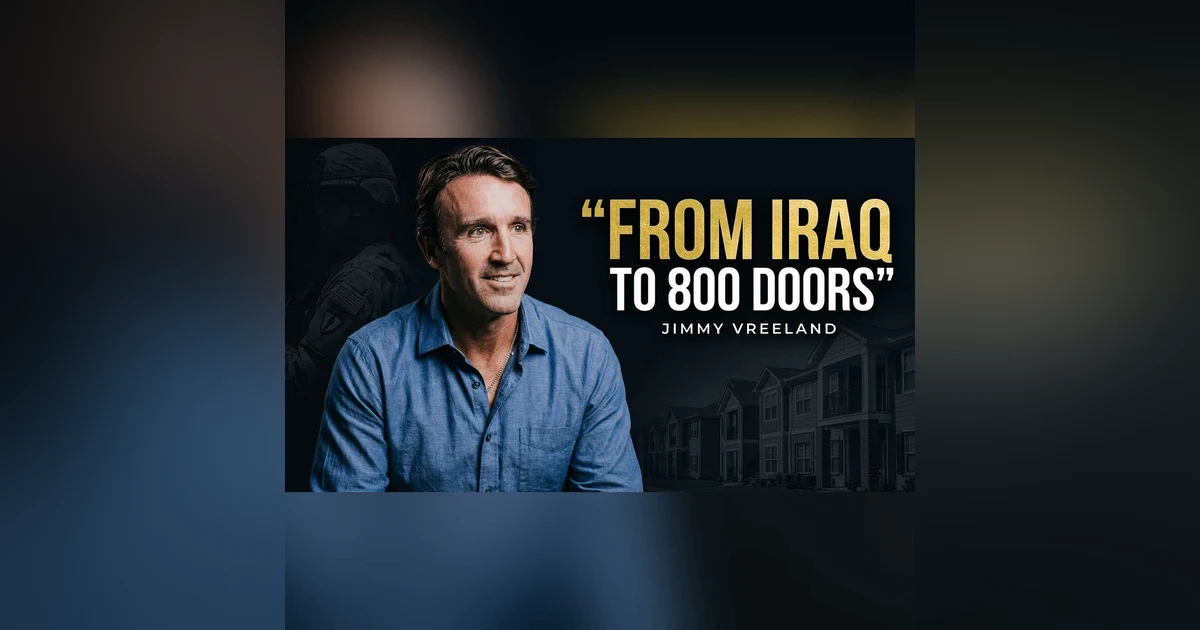
Send us Fan Mail Business Community https://www.skool.com/thebusinessnetwork Newsletter https://doing-business-with-a-servants-heart.kit.com/steveramona 📝Description: What if the reason your business feels like a rat race is that you've got your priorities backwards? Former Army Ranger and Vreeland Capital founder Jimmy Vreeland spent years chasing profit and never feeling like it was enough — until a coach flipped one word order and changed everything. In this episode, Steve Ram...

 Spotify
 Apple Podcasts
 YouTube
 iHeartRadio
 RSS Feed
 TuneIn
 Castbox
 Castro
 Goodpods
 Business Community https://www.skool.com/thebusinessnetwork
Newsletter https://doing-business-with-a-servants-heart.kit.com/steveramona
📝Description:
What if the reason your business feels like a rat race is that you've got your priorities backwards? Former Army Ranger and Vreeland Capital founder Jimmy Vreeland spent years chasing profit and never feeling like it was enough — until a coach flipped one word order and changed everything.
In this episode, Steve Ramona sits down with Jimmy to unpack how servant leadership, a growing "big soul," and a team-first mindset turned a burned-out solo hustler into the leader of a 40-person company managing 800 properties.
- Why "team, customer, profit" beats "profit, team, customer" — and how profit takes care of itself once you reorder it
- The six-figure coaching bet Jimmy made on himself and his team over five years
- How reading Rich Dad Poor Dad while deployed in Iraq launched a real estate portfolio
- The simple two-houses-a-year math that makes wealth "almost inevitable"
- Why the best definition of love in business is "willing the good of the other"
- The paradox of responsibility: doing what sucks most is what gives you peace
PS: Jimmy credits his wife Susie as his "number one team member" — the one who spots when he's "about to do something stupid" and clears the collateral damage out of the way. Behind every ready-fire-aim founder is a partner running damage control. Give Susie a shout-out in the comments.
CTA: Reach out to Jimmy on Instagram or YouTube (@Jimmy Vreeland — V as in Victor, R-E-E-L-A-N-D) or at JimmyVreeland.com to see if building a rental portfolio with his team is a fit. And catch Steve's TV show Together We Serve — Fridays at 2pm Pacific / 5pm Eastern.
🎯 What You’ll Learn:
✅ Reorder your priorities: team
✅ Invest in coaching for yourself
✅ Do it with a team, never alone
⏱️Timestamps:
[00:02] Profit, team, customer — reversed
[00:04] Six figures on coaching
[00:07] Willing the good of the other
[00:10] Lessons from the military
[00:12] Rich Dad Poor Dad in Iraq [00:19] Two houses a year
🤝Connect with James Vreeland:
💥Web: https://www.doneforyourei.com/home#section-f-bT3TqYsP
🤝Connect with Steve Ramona:
💥Web: https://steveramona.com/
💥LinkedIn: https://www.linkedin.com/in/steveramona/
💥IG: https://www.instagram.com/bizopportunitynow/
💥Podcast: https://www.servinginbusinesspodcast.com/
💥YouTube: https://www.youtube.com/@doingbusinesswithaservantheart?sub_confirmation=1
🔖Tags:
#Inspiration #Podcast #BusinessWithPurpose
Free Business Community: https://www.skool.com/thebusinessnetwork
Subscribe to our Podcast Newsletter
https://doing-business-with-a-servants-heart.kit.com/628f9d5962
Join Me on Substack: https://podcasthost.substack.com/
Doing Business with a Servant's Heart Named Top 20 Small Business Marketing Podcast
https://podcast.feedspot.com/small_business_marketing_podcasts/
Welcome everyone to Doing Business with a Servants Heart Podcast. I'm your host, Steve Ramona, and I'm thrilled to have you join us today. This podcast is dedicated to exploring the idea of doing business and living life with a purpose, serving others, and yes, achieving success. We believe that when we approach our work and our lives with a servant's heart, we can truly make a difference. We created this show for you because we want everyone to be motivated, inspired, and educated to make an impact in your world, whether you're an entrepreneur, a community leader, or simply someone looking to bring more purpose into your daily life. This podcast is here to support and uplift you. So let's dive in. But before we dive in, my guest is going to blow you away, guys. You're going to be love this guy. I want you to think about who you how you're going to serve today and what impact will you create. Because that's what this is all about. And you're going to talk about here about a huge impact that my guest Jimmy's going to talk about. So with that being said, Jimmy, welcome to the show. Hey, how's it going, Steve? Very good. And again, I want to not again, but want to thank you for your service. You're an Army Ranger for many years. And I thank you for that. And I'm sure people in the audience do as well.
SPEAKER_01I appreciate that. Thank you.
SPEAKER_03We talked offline before the show started about what you learned about profit, customer, and client, but use different words. Tell that story because I think it's great for the listeners to know about.
SPEAKER_01Yeah, we were talking before, like, hey, you know, I guess, hey, Jimmy, how did becoming a sermon leader kind of hit your radar? And uh when I first started in business, like I was very, I'm gonna call it small soul. Like I love the word magnanimous, Steve. And you know the I'm gonna sound like a real nerd here, but do you know what the Latin word of magnanimous is?
SPEAKER_03I don't.
SPEAKER_01Uh magna, which is great, and then animus, which is soul, so big soul.
SPEAKER_02Love it.
SPEAKER_01And so I I part of like meaning and purpose, I find is growing my soul. Like I would say, remember in the Grinch where they show how smarty, small as heart is, and then it explodes and gets bigger.
SPEAKER_03Yep.
SPEAKER_01So the beginning of my business owner journey, I would say I was very small souled, small hearted, and I was always dissatisfied with the amount of profit we were making. It was never ever enough. It was like a continued people talk about being in the corporate world and being in a rat race. It's the same thing when you own a small business or entrepreneur if you're not growing towards a higher purpose or finding meaning in your work. And so I was had like a rugged individualist, like, I will only do this for the profit. And I had a coach that was complaining that we weren't making enough money. And I was like, he was like, Well, Jimmy, how much is enough? And I was like, I don't know. And he's like, you might want to consider this frame. Well, first he goes, give me your of these three, give me the priorities in order: profit, team, and customer. And I was like, Oh, that's easy. It's profit, team, customer. That's the hierarchy. He's like, you might want to consider the fact that it's team, customer, profit. And since I changed that paradigm, profit took care of itself. I find a lot of joy in being a servant leader for my team, and I find a lot of joy in serving our residents and our investors.
SPEAKER_03You know what's interesting with that story, and that's a great lesson. The other part is you had a coach. People are like, I don't really need a coach. How important was it to have that coach as your mentor?
SPEAKER_01I I have I have not spent less than six figures on coaching for me and my team in the last five years.
SPEAKER_03There you go. And and the cool thing is you said my team too. It wasn't all about Joe Smith, the CEO, I'm gonna be better, better. I want to bring my team along with me. So as they grow, you grow, right?
SPEAKER_01I I can't business at the end of the day is a game, and there's nothing more fun than watching your teammates win.
unknownYeah, yeah.
SPEAKER_03I'm with you there. Oh, amen to that. What were the early days like looking forming uh reeling capital in 2014? Chaos. I'm gonna write that down. That says it all right there. What would you do differently? I mean, you hear this question, but it's a good question because chaos is people are like, why'd you do it then? But what did you learn in the chaos that you know now that's helped you?
SPEAKER_01Uh that I can't do it with the team, and then I learned I had to go through like several months of spiritual counseling with my parish priest to get me to detach my personal identity with my balance sheet and my PL.
SPEAKER_02Interesting.
SPEAKER_01So if I could start all over, I would decouple it with my attitude now that business is just an iterative game and that you're doing it with a team. So I would have started building a team faster instead of me like just running around with a chicken with my head cut off.
SPEAKER_03Yeah, and that doesn't see then the thing too is when you got you got 40 team members now, but back then I should have team members. If you're not successful as a CEO founder, you're affecting them as well. Yeah, they don't grow, or they you go, I'm shutting the doors. Now they lose a job, now they're screwed because now you go find another job, they're out of work, all that great stuff. So what what let me say?
SPEAKER_01Can I say one more thing that's you go for it? Yeah, I I like that you want to put out a 10-year vision, but like I imagine myself meaning, man, I was a great rudder and a great weight to all my team members to make sure they didn't find their God-given purpose in life and reach their full capacity. Like, I can't, I don't want that on my conscience. Yeah, now 10 years from now, working with Jimmy, I was able to find my God-given purpose. I had fun at work, I grew as a person. Like that that sounds like a fun thing to do.
SPEAKER_03Do you love your team?
SPEAKER_01Yeah, yeah.
SPEAKER_03I know you do too. It's why isn't there not more love in business? It's not the intimate love you have your wife, spouse, whatever, but it's that love. Talk about that because I know you got how deep you want to go.
SPEAKER_01We're gonna go deep.
SPEAKER_03Let's go deep.
SPEAKER_01So, I'm a huge fan of Jordan Peterson. You ever heard of him? No, he's uh a clinical psychologist and he's a lecturer, but uh his Instagram and YouTube's awesome. But he wrote a book called 12 Rules for Life, and rule three is be precise in your speech. And so I would say 90% of my arguments with my lovely wife over the last 13 years, I think you could put imprecise speech could be a root cause of most of the arguments, and then of course, when you're married, your newlyweds are getting to know each other. Like, of course, your speech is imprecise because you know what you're doing.
SPEAKER_03Yeah, yeah.
SPEAKER_01But so if being precise in your speech is important, how do you define love? I think society thinks general affection for someone is love, and I kind of disagree with that.
SPEAKER_03I'm agreeing with you, yeah. Because that's a to me, that's a cop out, to be finally honest.
SPEAKER_01Well, I mean, I got four kids, and like when I'm disciplining them, I'm loving them, but I'm not showing a lot of affection at that moment.
SPEAKER_03Right?
SPEAKER_01And like my father was like a very old school dad. I know I love him to pieces, he loved me, but he wasn't it wasn't necessarily affection. So there's a mismatch between love and affection. And when you gotta have crucial, difficult conversations with your team, you can't always start with affection. So I love it. The best definition of love I've heard is willing the good of the other.
SPEAKER_02Yeah, that's a good one. Never heard that one. That's really good.
SPEAKER_01And so the you know, the golden rule, you know, love your neighbor as yourself. Like, I think what Jesus was saying was will the good of the other.
SPEAKER_03Jesus is a hell of a servant, probably the best servant on this earth ever. Absolutely. And he had 12 disciples. Do you think your team is like, I'm not comparing you to Jesus, but the same type of format, these are your disciples that spread your message out about Vreeland Capital, right?
SPEAKER_01Um marketing-wise, yeah, that's what I'm yeah, yeah, yeah. But I as far as the message that I want Freeland Capital to represent, like I think I would love to be a conduit or a pass-through for much better ideas and much better people than than what I could come up with.
SPEAKER_03So your people are better. They your weaknesses, they fix those weaknesses, they fill in those gaps where you're weak at.
SPEAKER_02Yeah.
SPEAKER_03Yeah, that's powerful. That's a that's a big lesson. So you drop your ego and saying I can't do marketing. I'm not saying you can't, but marketing is like my strength.
SPEAKER_01I'm the worst. I'm a salesman. Okay, well, perfect. I can't stand marketing.
SPEAKER_03There you go. So you get that marketing guy or gal doing that, and you're successful. Bottom line.
SPEAKER_01Yeah, then there's always a golden triangle between delivery, operations, and sales. And so somebody's got to be great at each point of those triangles. Right.
SPEAKER_03Yep. I always say if I started a business, I'd hire half my employees as military veterans because I just like you, I love the attitude. I love the they're just good people to work with. What have you learned amidst the discipline and resilience uh over these years and how has it helped you in real estate?
SPEAKER_01Um, you mean from my time in the military?
SPEAKER_03Yeah, correct.
SPEAKER_01So I spent eight years in corporate, and the it was like weird. I would say my soul was growing in the military, and then I went through three deployments, so like I was a little tired. I came out and like I could be a rugged individualist, not a great team player, and still make money. So uh, you know, I went from a place where I had to be a leader to survive, to then all I had to do was hustle in sales. And I could, quite frankly, I could be emotionally immature, interpersonally unintelligent and um very egotistical. And so, sorry, one second.
SPEAKER_02No problem.
SPEAKER_01And so then when it when I when I went back into business and realized I had to be a team leader, I had to go back, like I had to there was like a seven-year blip in my life where I had to go back to all these lessons I learned at 22 and 23. And so the main thing I learned from the military was like a love of teamwork, a love of camaraderie, and that you're very unemotional when it comes to hitting the target. Like the purpose and the meaning comes from hitting the target. And so people in the military, they just understand that it you don't have to describe to them, but teach them the value of that. And sometimes that can come off as unemotional, but I think it's incredibly emotional because all the emotional reserve is held to hitting the target, they're not getting distracted by other things.
SPEAKER_03Yeah, that's that's very good. What inspired you to get into real estate and property management?
SPEAKER_01I uh I read Rich Dab Porad from Iraq. Wow, I couldn't so when you're deployed, you you don't pay taxes. I was getting combat pay, jump pay. I was making for like a 24-year-old guy, I was making some good scratch. And then most importantly, I had no living expenses and I couldn't spend any money. So I spent all I sent all my money back to my mom and brother, and then we started buying rentals back then.
SPEAKER_03Well, how did that start? I mean, how'd you okay good because you read the book and and saw property as a opportunity for yourself at 24 in the army in Afghanistan, right? You were in Afghanistan?
SPEAKER_01Yeah, uh I Iraq when I read the book.
SPEAKER_03Iraq, excuse me. Okay, delve go deeper into that. Well what pulled the trigger for that? That's amazing.
SPEAKER_01Uh, I'm a ready fire aim person. Like, I need about I need a gut feeling about zero information. And then I get to a fault, and I've made several mistakes from this and like been not a great human in this pursuit. But like when I say I'm gonna hit a target, I'm gonna do it. So you that's a line I have found to balance, and that's another great thing about a team is my team knows when I'm about to do something stupid, and they feel free to apparently, and especially my number one team member, my wife, is like, hey, I see you're doing what you're doing, and you're about to do something stupid. And so, at a minimum, Susie will get all the collateral damage out of the way, even if I just be stubborn and like I'm doing this, she'll at least get all the collateral damage and limit the damage if I do something stupid.
SPEAKER_03That's a top team member, right? There, that is picking up for your mistakes, is huge.
SPEAKER_01We had a funny, my wife loves to talk a little smack to me, but we were jawing at each other, like we have a very playful jawing relationship, but she was talking about my ratio of correct decisions to incorrect decisions, it definitely skews to the incorrect. And I was like, I agree with you, honey, but when I am right, I'm right in a big way. We were able to agree, agree on that point.
SPEAKER_03So you hit the grand slams when you hit it, you go deep, you go for it all, or it's yeah.
SPEAKER_01I I'm like, I'm not looking for a high ratio of uh being right or being on, but when I am on, I gotta be really on.
SPEAKER_03So that leads to entrepreneurs that I've talked to, I talked to you know, 50 to 100 a month a month, is the decision making. You know, so many will not pull triggers. How that you know, what would you tell them if they weren't doing that?
SPEAKER_01It's hard for me to speak to that because, like, you know, what's that disease where you can't feel pain, so you're always banging into things?
SPEAKER_03Oh uh, yeah, I know what you're talking about.
SPEAKER_01I don't remember, but yeah, decision making wise, I kind of have that disease. Like, I'll execute, execute, go, go, go, go, but then sometimes not pull my head out of the sand to say, hey, are we serving our overall purpose, our overall meeting? Are we hitting our targets?
SPEAKER_03Ah, that's good, that's really good.
SPEAKER_01And everybody's different, but I there's an opposite side to that coin of people who are always pulling triggers, by the way. That doesn't get talked about a lot.
SPEAKER_03Yeah, that's that's true. Well, I noticed you have 700 properties, that's huge. Why do you go so big? And you know, what system or processes do you use to keep this thing running?
SPEAKER_01So um our operating system is EO entrepreneur operating system. Um, we manage 800 properties, about 80 of those are mine. And so I guess we kind of amass that amount of properties to manage because we sell a thing called turnkey rental. Um, you know, the Midwest, the Rust Belt, has a lot of great properties that make a great investment property that someone like yourself in California, like when I say, hey, you can get a great asset for $150,000, you're like, what houses exist out there for $150,000? I'm like, all day long.
SPEAKER_03That's okay. Yeah. You people in California, you're like shaking your hand right now. Get $150,000 and we'll get you a garage. Uh so you know. So are you gonna is your future looking like growing, or is it just you play it month to month, year to year to see how many properties you work with?
SPEAKER_01Uh no, we're in high growth mode. Um, we are doing acquisitions in Little Rock right now. We're talking about uh two other cities right now, but we are trying to we're trying to do a hub and spoke model where we're the operational operations and and strategy happen in St. Louis, but then we we're working in different markets around the country to you know provide turnkey, flip key, and bird key assets to people who like to invest with us.
SPEAKER_03That's fantastic. So tell me what you think is servant heart. What's the definition of a servant heart leader?
SPEAKER_01Uh oh, this is I'm gonna use Jim Collins, somebody who puts the someone who puts the cause before their own interest, or the mission of the business before their own interest.
SPEAKER_03That's got a little military flair to it too, doesn't it?
SPEAKER_01Yeah, and like Jim Collins, I can't remember, I'm pretty sure it was good to great, but here's a military thing. He sets level five of leader, so my military mind is like, oh, I gotta get to level five. Like, and then I'm like, oh, I'm operating at a three, and then it's like, oh hey, here's a little fun thing. You have to completely drop your ego and cannot be a level five leader unless you're a servant leader, and so I was like, whatever, drop the ego. Like, wasn't quite that easy, it's not quite that easy on a day-to-day basis either. It's still a constant temptation, but you know, you can't you can't find your purpose, can't find your meaning, I don't think, without being a level five leader, which infers you can't without being a servant leader.
SPEAKER_03Yeah, yeah, that's the there go hand in hand. Uh, Lieutenant General Old McCullough used to say, people would ask him, Hey, are you a leader? He'd go, Are you mentoring anybody? And they say no. He says, Unfortunately, you're not a leader at this moment. Not saying you won't be, but that's I love that mirror of I'm mentoring somebody, I'm leading somebody. So I and you're leaving 40 people, which is and well, your wife's leading 40 people, you're just on the further ride, I should say. What's your wife's name? Susie. Susie, shout out to you, Susie. Fantastic. You're an expert in this real estate property investment. I mean that as a company, but do it for years, experience. What piece of advice would you give somebody listening going? You know, I've always wanted to get you know a piece of real estate.
SPEAKER_01Do it with a team, don't do it yourself. Especially if you have a W-2. The best way to leverage your W-2 is to get access to if you're married, 20, 30-year fixed mortgages. If you're single, 10. The only subsidy you're gonna get as a middle class American is a 30-year fixed mortgage. And so being able to get access to, for example, you buy 20 houses in the Midwest for 150K, getting access to three million dollars of the safest leverage out there makes it almost inevitable that you'll become wealthy. So that's a pretty loaded statement there. Probably what's an explanation.
SPEAKER_03No, no, no, it's uh it's understandable. People that get it will buy property, people that don't won't buy property. That's okay.
SPEAKER_01But if you do the math, like most traditional financial planning is set around the 4% rule, right? Uh, are you familiar with it? Yep. So you would however much money you want to have in retirement, you got to calculate how much you have to earn with that after taxes, then multiply per month, multiply that by 12. That's your annual income you want in retirement. Then you got to accumulate a pile of assets that is worth 25 times that amount. And uh, quite frankly, doing it with only your own after-tax or tax-deferred money, it's just too hard. Yeah, it requires around one and a half million of your own after-tax income. It's tough. Where do it with real estate, all you really have to do is buy two houses for 10 years. And so here's a quick math to get $10,000 in retirement, you need a portfolio of $4.6 million. If you buy two houses a year for 10 years and there are $150,000 houses, you'll get to that $4.6 number with only around $600,000 of your own cash as opposed to the $1.8 with traditional financial planning.
SPEAKER_03Now you come in as reasoning capital, as I can come in with $50,000 to be part of the fund. Is that how you work? No, I'm wrong.
SPEAKER_01Oh, so you you own a you come in $50,000, I'd sell you a $200,000 house. That's your down payment. And then you would capture all the returns for that investment.
SPEAKER_03Oh, so you're helping me build a portfolio of real estate.
SPEAKER_01The people I want to work with are people who are doing really well in their active income and need to find some passive income and tax break. And so who want to get 20 rentals over 10 years? I'm your guy. My team does all the work. You're the CEO, I'm the general manager, and then we build that balance sheet for you, build that portfolio.
SPEAKER_03Yeah, I can tell you as EOS, you're so structured. I love how you do it. You make it very simple because this could get really complex where people just get blown out of their mind and they walk away. And it could be a great opportunity. And I love that about you making it simple for us people out here. You know, you guys are more complex as you're in it the day to day, but I'm not. Um, can we get a little personal? Personal question? Sure. So if if you could interview anybody, dead or alive, who would be and why?
unknownC.
SPEAKER_03S.
SPEAKER_01Lewis or Jordan Peterson. And why? I just I love paradox. I love I love like seeming contradictions where really intelligent people explain explain it to you how it actually is. Like Jordan Peterson's whole thing is you'll find your true meaning in life and self-sacrificial responsibility. And so I was talking to my 12-year-old boy. He was complaining, he was it was a baseball game, he made an error and he wanted to blame the ump, blame somebody else, right? And I was like, I got a little, I gotta tell you something tough. The only way you're gonna find purpose and happiness in this life is for accepting responsibility. And the worst thing about accept and the worst thing in life, it just sucks, is accepting responsibility. And so it's like a that's a complete paradox. Doing what you what sucks and what hates the most gives you peace and love and purpose. Like that's an interesting idea to me. And like C S Lewis wrote about three books about that.
SPEAKER_03It's it's and it's true because I know you lived in or you've told us the same thing here. I snow when you go, okay, I screwed up, it's relieving. It's it's just okay, move on. I and people are all so relaxed after you say you admit that, or somebody else admits that, but your ego is like hanging on to it, like you know, like in Lord of the Rings.
SPEAKER_01Uh who was the guy who had this precious?
SPEAKER_03Uh Galah, Gallup Gallup or whatever. Gallup, whatever his name. I know he's a G.
SPEAKER_01But like your ego is hanging on to like if no, don't admit you're at fault. Don't admit you did something wrong, and then that stops your growth. But so I'm not sure my 12-year-old understood it, but I think after the 100th time, I think it'll have an effect.
SPEAKER_03That's well said, because exactly it. We all have to make mistakes a number of times. Realize, yeah, I hit my head on the wall 10 times. I think it's starting to hurt now.
SPEAKER_02Exactly.
SPEAKER_03Last question, I'm gonna include Susie in this one. So, what does a Friday night look like for Susie and Jimmy?
SPEAKER_01Uh, basketball and baseball games. We got we got four kids between nine and 13. I love it. But uh, I go to work to take a take a break for my kids' sports right now.
SPEAKER_03That is heaven for me. I used to do that, I don't do it anymore for my my wife's kids. It to me, it's feel like you're going here, you're traveling here. I said, uh more fun than people know. It's a blast. Jimmy, thank you so much for being on. I've learned so much about real estate, and I love your humbleness and you're willing to help people and be a servant's heart. And that's gotta you know help the world in some part somewhere, maybe the bigger world down the road. So I appreciate you so much. You know, audience, thank you so much. Thanks for listening. Um, don't forget my TV show, Together We Serve Fridays at 2 p.m. uh Pacific, 5 p.m. Eastern. And as always, I say, me and Jimmy, thank you for watching or listening. We really appreciate that. If you got a piece out of it, reach out to me on LinkedIn or uh YouTube, comment, and I'll reach out to Jimmy. And Jimmy's got a well, how can people reach out to you, Jimmy, if they have any questions?
SPEAKER_01Um just my name, uh, put it in YouTube or Instagram, Jimmy Vreeland. It's V isn't Victor R E E L A N D. And then on my website, Jimmy Vreelin.com.
SPEAKER_03There you go. Reach out if you have questions. He's got a servant's heart. Him or his team will reach out, answer your questions, and maybe it's a fit, and you could be part of this wonderful journey they're having with this investment firm. I think is just amazing. Um, and we thank you, me and Jimmy, for watching or listening to this podcast. And we'll see you all in the next episode of Doing Business with a Servant's Heart.