Psychological Leverage: Why Every Emotion Has a Job | Dr. Yishai Barkhordari

Send us Fan Mail Business Community https://www.skool.com/thebusinessnetwork Newsletter https://doing-business-with-a-servants-heart.kit.com/steveramona 📖 Quote: “Leverage is all about being able to get more out of the energy or effort we put in.” — Dr. Yishai Barkhordari 📝Description: Why does success seem effortless for some leaders while others grind for every inch? Dr. Yishai Barkhordari, a doctor of psychology with two decades in the field, says the difference is psy...

 Spotify

 Apple Podcasts

 YouTube

 iHeartRadio

 RSS Feed

 TuneIn

 Castbox

 Castro

 Goodpods
Business Community https://www.skool.com/thebusinessnetwork
Newsletter https://doing-business-with-a-servants-heart.kit.com/steveramona
📖 Quote:
“Leverage is all about being able to get more out of the energy or effort we put in.” — Dr. Yishai Barkhordari
📝Description:
Why does success seem effortless for some leaders while others grind for every inch? Dr. Yishai Barkhordari, a doctor of psychology with two decades in the field, says the difference is psychological leverage: getting more out of the same energy and effort by understanding how your mind handles challenges.
In this episode, we cover:
- What psychological leverage is and why it matters more than hustle
- How mindset plays out differently for executives, business owners, and entrepreneurs
- Why psychology becomes more critical, not less, as a company scales toward ten figures
- The “flashlight” of attention and the biggest mindset mistake high performers make
- A simple, logical equation for decoding any emotion, including why anger is one of the most useful emotions you have
PS: I asked Dr. Yishai to decode one emotion live on the show, and I picked anger. His answer changed how I think about the moments when a line gets crossed in business, and why that feeling is there to protect us rather than to make us react.
CTA: Connect with Dr. Yishai on LinkedIn, check out his podcast Think Mastery with Dr. Yishai, or visit his website (link in the show notes). Subscribe to Doing Business with a Servant’s Heart and leave a comment on YouTube. I’ll make sure Dr. Yishai sees it.
🎯 What You’ll Learn:
✅ Psychology Scales With Your Business
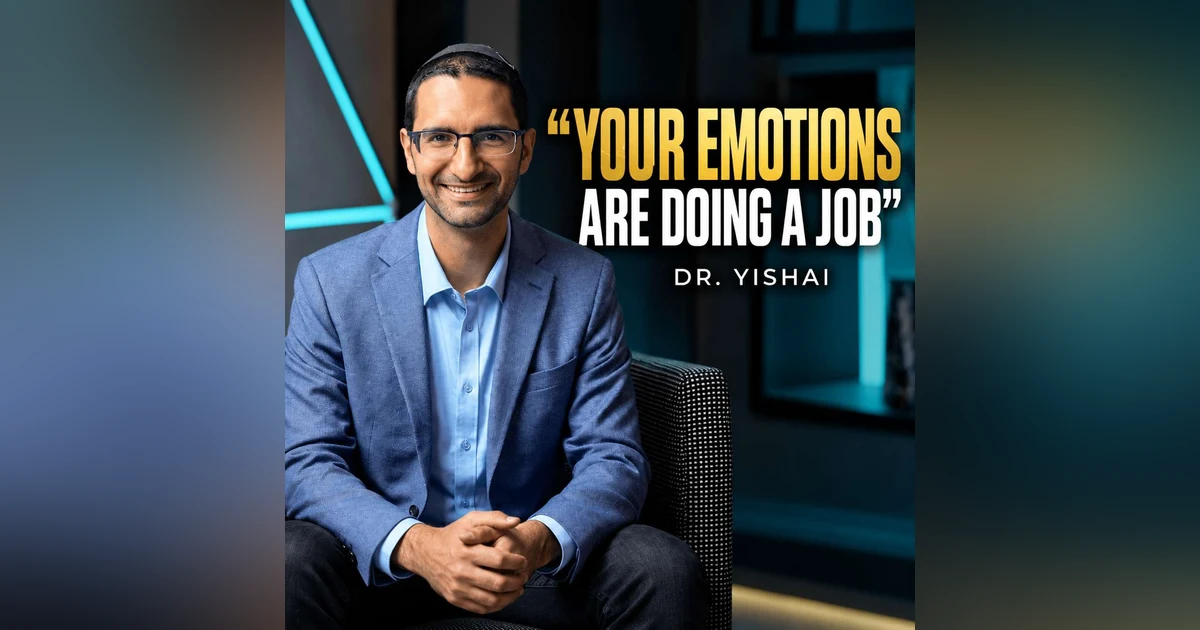
✅ Your Emotions Are Doing a Job
✅ Emotions Are Data, Not Obstacles
⏱️Timestamps:
[02:50] Psychological Leverage Defined
[06:00] Executives, Owners & Entrepreneurs
[10:00] Coaching Billion-Dollar Companies
[15:50] The Flashlight of Attention
[18:00] Every Emotion Has a Job
[23:15] Decoding Anger
🤝Connect with Dr. Yishai Barkhordari:
💥Web: https://www.dryishai.com/
💥LinkedIn: https://www.linkedin.com/in/dryishai/
🤝Connect with Steve Ramona:
💥Web: https://steveramona.com/
💥LinkedIn: https://www.linkedin.com/in/steveramona/
💥IG: https://www.instagram.com/bizopportunitynow/
💥Podcast: https://www.servinginbusinesspodcast.com/
💥YouTube: https://www.youtube.com/@doingbusinesswithaservantheart?sub_confirmation=1
🔖Tags:
#[tag]
Free Business Community: https://www.skool.com/thebusinessnetwork
https://app.nucalm.com/purchase/free-trial?coupon_code=NUCALM15&ref=steve57
Subscribe to our Podcast Newsletter
https://doing-business-with-a-servants-heart.kit.com/628f9d5962
Join Me on Substack: https://podcasthost.substack.com/
Doing Business with a Servant's Heart Named Top 20 Small Business Marketing Podcast
https://podcast.feedspot.com/small_business_marketing_podcasts/
Welcome everyone to Doing Business with a Servant's Heart Podcast. I'm your host, Steve Ramona. I am thrilled to have you join us today. This podcast is dedicated to exploring the idea of doing business and living life with a purpose, serving others, and yes, achieving success. We believe we believe that when our we approach our work and our lives with a servant's heart, we can truly make a difference. We created this show for you because we want everyone to be motivated, inspired, and educated to make an impact in your world. Whether you're an entrepreneur, community leader, or simply someone looking to bring more purpose into your daily life. This is a podcast that's here to support you. While you're listening to my incredible guest today, I want you to think about who you're going to serve today and what impact you're going to create. And the key is today. Today's episode is brought to you by our amazing sponsor, Pantheon Alliance. Picture yourself joining a leak community of highly successful, highly uh income-earning entrepreneurs and business owners in so many different industries to grow your business by connecting and growing your network. Imagine being in a network of a billionaire and what your business will do. Reach out to me and I'll tell you more about Pantheon Alliance and get you more information. With that being said, a lot of coaches out there, but this coach, for me, does it different because he does it from a servant's heart. Not that others don't, but what I love when you coach, you gotta be tough sometimes, but you also have to have a servant's heart. Dr. Yishy, welcome to the show.
SPEAKER_01It's such a pleasure to be here. I am so excited for our conversation.
SPEAKER_00An audience, I'm gonna be very transparent. Yi Shy is how you say it. I've been practicing it for the last two minutes to say it right. Did I get it right? You got it. I got it right. Beautiful.
unknownDr.
SPEAKER_00Yishai, psychological leverage. What a powerful two words. What does that mean?
SPEAKER_01Yeah, so psychology, the way I understand it, the way I think about it, and just a little bit of background. So I'm a doctor of psychology. I have background in training in psychology. Um and so I've been steeped in this for at this point, uh close to two decades, maybe more. Uh and the way I understand psychology, psychology is about our thoughts, our emotions, our reactions, and why it is that we're doing what we're doing. Um, and what I found, and I found this to be such a big part of what both drives people, motivates them, makes them perform at their best, and also could potentially get in their way, is how we navigate both what we want and our challenges and obstacles. And for some people, they seem to have a natural ability for things not to be so difficult when they're trying to overcome challenges or problems. And they seem to really kind of, these are the kinds of people you're like, why is life so easy for them and it's so hard for me? And a lot of times what I found is like, I don't know, 80 plus percent. That's not like an actual statistic, but um, so much of the time, so often, what's happening is that our brain is weighing and evaluating and producing thoughts and having emotions and all of that stuff and how we handle it is a huge part of whether or not or how difficult it is us kind of trying to get to our goals or kind of stepping up to our goals. And for some people, it seems to work really easily or go really smoothly or go really well. And for other people, it seems like no matter what, they just endlessly get caught up and caught up, and there's so much spinning wheels, just putting tons of time and effort and energy or wanting to and really struggling to. And I found that the real big difference between them is how much, you know, the term lever or leverage, um, all the way back from, I forget if it's like Archimedes um or uh Socrates, um, but the the idea of if you give me a lever that's long enough, I can lift the world. Just like you can get such output when you know how to how to handle it and what to do with it. And so I spent, you know, more than two decades, way more than two decades, uh, both personally and then professionally, really trying to figure it out. And so psychological leverage, the way I understand it, is recognizing that our psychology can make our challenges either way easier to overcome or way harder to overcome. And leverage is all about being able to get more out of the energy or effort we put in. So for me, it's really that mission of how do you make it simpler, smoother, faster, easier so you can go further with less effort or it certainly feels more effortless. Um, you know, there's no success without actually putting in work. Um, you know, it would be lovely if any of us could, you know, flick a switch and, you know, money would just drop from the sky. Um that's not that's not reality. So recognizing that there will be effort, and yet there's a difference. For some people, they put in tons of effort and it seems effortless. And for other people, uh, it seems like even a small amount of effort is just so hard to put in and they seem to get so little out of it.
SPEAKER_00How's that relate to business owners, entrepreneurs, and executives?
SPEAKER_01That's a great question. So when it comes to so entrepreneurs, um I'm gonna separate them out. So someone who's an executive, they spend so much of their time making decisions, they spend a lot less of the time doing the on the ground or in the front kind of front lines, as it were, work. And so so much of what matters is what what are they looking at? How are they evaluating a situation? What are they paying attention to? And what are they using to make their decisions? And so for executives who are really, really top, top. Um, and I actually recently had a had a conversation, a really awesome conversation with the Fortune 50 exec. Uh, one of the things that's that shows up really frequently among the top executives is it's their learning what to pay attention to and how to make decisions off of that. And then after that is also how do they communicate it and how do they get the people around them to really be on board and invested in that process. And so there's a kind of decision-making process that really matters. And then there's a how do you approach and communicate with? And in a way, it's almost like gathering a following, people who want to do, right? Instead of trying to drag or bring them along into it. And again, there's a lot of psychology involved in all of that. Um, and that's just for executives, you know, for a business owner, some business owners will be in leadership positions themselves, some are a little bit further back. And either way, there's so much around if they want to expand their business, what is what are the moves that they're making? What's the game they're playing? How are they approaching playing that game? Um, and how are they thinking about that for themselves and the people and then just how they're approaching all of those pieces? Uh, and some business owners are in the business and doing more of the work. And again, it's what are they paying attention to? What are their strengths? What are the areas or the things that when they do them actually lights them up? What are some of the things that for them, when they do it, actually costs a lot of time, energy, or effort? And it's sometimes really easy to tell if someone who's an owner or they're in the leadership position and you can see when they're doing something and it's taking so much energy energy out of them, they're so stressed out, they're way more likely to do things like snap or um or you know, I hope they're not yelling at the people around them, but they might not be at the very least, they're feel so drained, they're not attentive to, they're not recognizing or attuned to when they're getting feedback or they're they may not notice even subtle cues and certainly things end up escalating and creates more fires, um, big fires that they end up having to put out when they're not paying attention to the things that are really important to pay attention to, and oftentimes they end up falling into a more reactive approach as opposed to a proactive approach. Um, so there's like some of those risks and challenges that can sometimes happen. Uh, and for entrepreneurs, for entrepreneurs, it's a whole other ball game, also, because for entrepreneurs, oftentimes their business is their baby. Sometimes for business owners, that's also the case, especially for family businesses. Um, for entrepreneurs, a lot of times they're getting paid out of their business or they're struggling to pay themselves out of their business. And so there's a lot sometimes of their own sense of identity or sense of self-worth or their emotions often get really tied into the ups and downs that they're experiencing. Um, and because of that, there's there's a lot of potential to use that as really useful data to make increasingly better decisions. Um, there's also a risk of that actually really throwing them off. Uh, and so I've kind of seen that in these different contexts.
SPEAKER_00Yeah, I like that because it's all the same, but it's worked differently in each executive, business owner, and entrepreneur. It's still a mindset, but you gotta be careful with that. The interesting question you gave me in the book that we're gonna talk about is you can work with a billion-dollar company even though you've not made a billion dollars. I think it's a fantastic question. But how can you do that?
SPEAKER_01It's a really great question. So the thing about working in a billion-dollar company or building a billion-dollar company, there's gonna be a set of constraints and challenges and problems that you need to overcome in order to grow or scale that much. Uh, and then along with that comes a unique set of its own challenges or problems. So, you know, there's a very big difference between having a company where it's you and a VA or a company where you have 25 employees, a company where you start to have more than 25, you get to 50 or 100. And once you start to get into the like, you know, 10 plus figures, what's happening is you're seeing multiple layers of leadership, you're seeing um executive and sometimes multiple layers of executive leadership, um, C level and and all these other levels. And then there are pieces that come into play that are so different than when a company is smaller. And it's it's not that you if someone has been through that and they've successfully been through it or they've exited, then they might have some perspective on it. What's really interesting is that from my vantage point, uh the bigger a company gets, the more people are involved. The more people are involved, there's more, the more psychology there's involved, and the more that psychology is going to interact between all the people and also the customers, clients, you know, or users, depending on the type of uh of organization, company, and and what their offer their sell, what they're selling services at uh are. So when it comes to someone who's making 10 figures or their company is at um, sorry, not 10 figures. Um uh yeah, 10 figures. Um, what what often is the case is that they are facing a situation where small decisions they make have these huge rippling compounding impacts. And so even the most seemingly mundane decision, and then how it's followed through or how it's handled has a bigger and bigger and bigger impact. Um, you know, the it's kind of like minor major leagues, if you want to think about it that way. Yeah. Um and at every level that a business moves up is another kind of league that it's in, which also by its own nature, as you scale up, increases the complexity of it. And so, sure, there's all the business side stuff. There's, you know, the PLs and the finance, and then on, and there's, you know, can you reduce um the cost and and you know how much it costs to create or produce or fulfill? Uh, and then there's, you know, how do you scale up as far as sales and marketing and advertising? Then you get into branding and stuff. There's all of this stuff, and then that's all on a business side. Um, but then you have on the personal side because the exec um or executive team, they have their own particular challenges that they're facing. And uh it's it's a lot more difficult to maintain the level of performance or the level of expectation. Um, and we see this a lot when companies get really big, you tend to have a lot more bureaucracy. There's a lot more stuff that's falling in between the cracks. Uh, you know, how many times do people complain about companies as they get way bigger that they lose that kind of sense of connection? Um, and it happens on the macro level, when that's happening to the customers and the users, the clients, chances are it's actually a reflection of what's happening internally in the organization, um, all the way up to the leadership. And so, from my vantage point, uh, psychology becomes that much more important and that much more critical. And, you know, another analogy that I'll use is um someone can be an Olympic gold medalist and they might share how they got to where they got to. Um, and that might give them really valuable perspective, and they might be really great mentors. Uh, does that mean that they know everything that they need to know in order to coach someone to become uh an Olympic gold medalist? Um they certainly have a very important, unique perspective and what to contribute, comma. And a coach who's coached, those kinds of athletes is going to have a whole other set of experiences and a whole other perspective to add. And so, you know, in a way, I think for far too long, we've kind of relegated psychology to either the pop psychology or the backseat or um into the the even sometimes just the therapy space. Um, or sometimes we take like these assessments that psychologists come up with and then we try to apply them in the workplace or they're being used in the workplace, um, and sometimes they're even being misapplied, which is another thing. Um and you know, I think it's high time that we understand that performance is so much of performance as psychology, and so much of uh what is really critical for being in that top, top, top percentile um is how we how we see, understand, process, think about, make decisions, communicate. Um, but so much of it is really tied up into all of those things.
SPEAKER_00So well said, and and the good and bad thing is there's good things about people and there's bad things about people, but we need people in our business. So that's where you come in, or a good coach like you with the mindset. I think that's where a lot of it is with people and their mindset, and how do you work with that? What is a big mistake you see with your clients that they make with mindset?
SPEAKER_01There are a couple of them, I see. Um, but the biggest one is uh is really about their focus and attention. So a lot of my clients are really into, you know, mindfulness, meditation, they're into performance stuff, like their sleep. They tend to be really thoughtful, comma, and at the same time. So there are two things that happen that really affect their performance um in this realm. One of them is that they'll either themselves or somebody around them that they need to work with, it has a big reaction, an emotion or a thought. And then the way that comes out, it it changes the it's almost like the quality of the attention and the direction of the attention. Um the best analogy I have for it is imagine a flashlight. And so if you're holding a flashlight in your hand, you can hold it above your head, down, you could hold it, you know, at your belt, up, you could hold it, you know, kind of straight, um, shoulder, shoulder height. Um and then it also could be a flashlight that just you know sprays light broadly or is almost like a laser. And so all those things make a really big difference. Um, and what I find is a lot of times when someone, either they themselves, uh an executive or a business owner or entrepreneur, when they themselves they're having an emotion, their the whole quality of their attention, their focus, their performance, their ability to make decisions can get kind of put on tilt or on off-kilter. They can they can end up off-center. And sometimes they recognize it and other times they don't. Um, and it can change what they're looking at, what they're using to evaluate or consider the decision or decisions they're making, or how they communicate about it. And so I find that really as much as I think actually the focus and the attention is much more a symptom. And I think at its core, it's much more about the emotions that they're experiencing and how do they understand, interpret, and address it.
SPEAKER_00There's so much to unpack there. I'm not gonna try, but it's so cool. And what I love about you is you know emotions, but how do you make it sound so logical and simple with emotions?
SPEAKER_01Yeah, it's a really great, it's a really great question. So the first thing is most people think that emotions are really illogical. And so they separate two emotions into two buckets. There's the kind of emotions I want to have. I want to feel happy, I want to feel joy, I want to feel love and connection, I want to feel acceptance and belonging. There are all these stuff that I really want to feel. I want to feel all excitement, all this stuff that I really want to feel. Uh, and those are often the feel goods, right? And then there are all these emotions that people uh don't like, that are really uncomfortable, that they find really difficult. Uh, you know, starting with not limited to shame, anger, uh, overwhelm, frustration, um, even feeling really sad or down, sense of grief or loss. These are these are all experiences that can be really uncomfortable, sometimes profoundly so. Guilt and embarrassment are are other examples, um, even hatred. And like, I cannot tell you how many times I walk around and I see someone on their lawn, they have a sign that says hate has no place here. And I'm like, hate is so important. Um, and I say that because the way I understand emotions is they're not just separated into, you know, the light and the dark, the ones we want and the ones we don't. Each emotion actually has a job. If we could, if I could surgically remove any given emotion from a person, they would have a lot of difficulty functioning in the world. There'd be a lot of areas or ways in which that things that we all take for granted would actually kind of fall apart inside of us. We would be unable to see or notice or make changes or adapt or even make improvements. And so what I've done actually is I've taken uh for more than 30 different emotions, and it's one of my favorite things to do. I love asking people, you know, name an emotion, any emotion. I'll I'll give you a very simple math equation that's logical, completely logical, that will tell you when it shows up, why it shows up, even how it shows up, what it's trying to do for you. And ultimately, when you understand that any given emotion actually has a job, they all have a purpose and they're trying to help us see something, then it becomes much easier to translate or unpack it. And then you're responding to it differently. So, as a quick example, um, or to give a little bit of a deeper dive. So emotions typically have one of three jobs or three kind of broad things that they're doing. One is they might be telling me a need or value or a desire that I have is really important to me. So they might be trying to help me accomplish something, or they might be protecting me. In other words, it's telling me I need to change my behavior to do that. So, you know, really simple example of that. Some people wouldn't even call this an emotion, but uh if I'm feeling hungry as an analogy, my brain is interpreting messages from my body and saying it's important for me to get nutrition. And so it's gonna prompt me to change my behavior because if I just sit and don't ever eat, I'm not gonna be alive. I certainly won't function my best, right? Um, and so that's just like a really simple example of that. And that's just level one or layer one is emotions tell us to it's important to make a change in our behavior. Level two is sometimes emotions are actually highlighting that I have some expectation or belief or assumption. And it's actually out of sync with reality. And so the emotions actually pointing out to me that I have some idea or I don't have some idea and it's it's incorrect or it's not, it's not actually as accurate as I assume it is. The best example of that, the easiest example is if you've ever been surprised, literally surprise is the emotion. Here's a simple equation. Surprise equals it shows up when expectation, when we have an expectation, but it's not fulfilled, it ends up being broken.
unknownRight.
SPEAKER_01So if I expect something to happen and it doesn't happen, or if I don't expect something to happen and bam, it happens, I experience surprise. Literally, surprise is the emotion that and what happens in our brain is our brain starts to really pay attention to and it primes us. Us to change our thinking from I expected that, but this happened. Why did this happen? And what am I supposed to expect in the future? So that's just an example. And there are many emotions that in many different situations are actually trying to get us to shift or change our thinking, our understanding, or our mental model for the world, how we perceive or what our beliefs or expectations are. And that's level or layer two. And then there's a third layer. So there's again, there's behavior, there's your brain, and then there's your body. Sometimes your emotions actually telling you something about your body, uh, which might be um that my body has a need. So if I'm feeling exhausted, my brain might be telling me, oh, my body is low in energy. Maybe it's depleted. I need a break, or maybe I didn't get enough sleep, or maybe I'm not consistently getting enough sleep. And so sometimes what it's doing is trying to get me to make that change.
SPEAKER_00Um that makes it makes a lot of sense. A lot of sense. And I love we're coming to the end here, but any last words?
SPEAKER_01Um any last words. If there's an emotion that you or you know that comes up that you hear from the audience that you've seen that people really get stuck on or they don't understand, I would absolutely love to give you, you know, my kind of equation, when it shows up, why it shows up, how it shows up, and give you this kind of really quick, logical. Like I think again, they're simple and logical when you really understand them. So I would love to do that with one that comes to mind for you.
SPEAKER_00Um emotion, angry.
SPEAKER_01Angry. Oh, I love anger. Anger is one of my favorite emotions. Uh, and I'll tell you, I'll tell you. So anger shows up. My equation for anger is when you have a line, we all have them, and that line is crossed. So I'll tell you something. Anger doesn't care who did it. Even though a lot of times for most people, when they experience anger, their brain focuses its attention on that person did this thing. Really, what our brain is saying, I have a line, whether it's my self-respect or my sense of respect, whether it's something that I wanted or had anticipated that I was going to do or was going to happen, it's not happening. There's some kind of a line that I have, and somebody or something crossed that line. Now, all anger cares about is I have this line. And in order for me to feel comfortable, safe, okay, uh, I need my line to be secure, to be safe for people and situations and companies not to cross that line, or certainly not to do it all the time. And so all anger cares about when this line is crossed is to push whoever or whatever has crossed that line back over the line, essentially to re-establish my sense of whatever that line is, whatever that context is. Now, when you look at it that way, anger is super logical. Uh now, to be clear, that might be telling me that anger oftentimes prompts us to say or do something about it. And sometimes we mix up when someone is yelling with the experience of anger, which is the emotion of anger is there to tell me I have a line that's been crossed. All anger cares about, it doesn't care about my behavior, it doesn't even care about the other person. What it really cares about is I have this line and I need to do something that's going to help re-establish or secure my line. And so when I when I work with clients and they talk about anger and we're working on it, what often comes up around that is it's okay for you to have that line crossed. What if all that it's okay for you to experience that anger? Well, if you didn't have the anger, then the line would be crossed. You'd never be able to notice it. Like for me, the scarier place to live is not a world with anger, it's a world without anger because then people would be grabbing my wallet and I'd have no sense of my line being crossed. And I and our, you know, our country, our legal system, our society would have no interest or no care to make any change in that. I'd have to I'd have nothing, right? Um, and so when you look at it that way, all you need is to be able to translate that into okay, what's the most effective action that's going to reestablish my line? Well, once I know that, bam, I'm going to be motivated to do that. And if I have done that well, I will take the most effective action in order to get that. Now, sometimes what anger might be saying is, I have a line, but I might be a little bit too trigger happy with my line. Maybe what I think is my line is actually not the best place to put that line or the right line to have. And so sometimes when anger shows up, it's saying, Hey, you think you have a line here, or you're reacting like you have a line here. This might be something worth looking over at again and maybe shifting your perspective on. And I don't think that it's for me to say to that person, well, it is or isn't, or it's healthy or not. I think it's for all of us to sometimes say, Well, maybe it's telling me I need to change my behavior. Maybe sometimes it's telling me that, you know, I make an assumption or I think something is not okay. And would I still be okay if that happened? Would I be okay if somebody, you know, took my wallet? No, I wouldn't be happy with it certainly if it was not if it was happening every day. Um, does it warrant a 10 out of 10 reaction? Um, maybe not. Maybe it would warrant a different kind of reaction. Uh if I was having that reaction, or if somebody, you know, said something insulting or left a YouTube comment and said something about me or whatever, right? Um, if I'm having a really big reaction and I'm experiencing anger, it might really be telling me, hey, you're taking that or responding to that if it as if it's crossing a line. Uh, and maybe I need to look at my lines, maybe I need to look at how I'm interpreting that. Uh, and so there's so many other angles to it. And that's where it can be really helpful to have some like extra guidance for someone who can kind of help you unpack that. Um, yeah.
SPEAKER_00Yeah, let's uh I love this. Let's get a little personal. We got a little couple minutes left. So I want to ask you this question. I'm asking everybody now. I love it. So you're going to a restaurant, there's a table of four. You sit in one of the chairs, the other three chairs are occupied. Your choice, dead or alive, those three people, and why you would pick those three people, and what food would you order?
SPEAKER_01Oh wow. I have not really thought about this.
SPEAKER_00So what comes to your head?
SPEAKER_01What comes to my mind? So the first thing, I'll start or start with the easy part. Um, so I happen to be Orthodox Jewish, and so I don't uh I only eat kosher. So in my head, I'm thinking like, where would I really like to sit down? It would probably be like a pizza place, um, like a kosher pizza place. Um and who would I sit with? Four four seats, I imagine I'm sitting in one of them. So you know, I think I would really love to sit down with Bill Gates. Um, the guy's got heart and a brain and a whole lot of not just influence, but desire to make really positive change in the world. Um I think I'd love to sit down with it's gonna sound kind of cliche, Oprah. Um she understands and gets right into people's hearts and and sees and and talks about and and delves so much into you know what really matters for so so many of us in life. Um and I would probably pick really hard to pick the last one. Really hard to pick the last one. Um I think I'd probably want to sit with Einstein too. I think all four of us would sit down and have a really interesting conversation. And I think if we put our brains to it, um there's so much we could do to help and change and make the world a better place.
SPEAKER_00Yeah, I definitely agree with those three, absolutely. Well, how can people get reach out to and support you?
SPEAKER_01It's a great question. So LinkedIn is probably the best place um to reach out and see and support me. Um, I also I have a podcast. If you want to check out the podcast, it's called Think Mastery with Dr. Yeshy. Um, and so over there you'll be able to see, you know, also how to reach out to me. Um, those are probably the two best places. Um and then, of course, my website, dr yesai.com.
SPEAKER_00Beautiful. Easy, simple, reach out to them. Emotions are huge. Gonna make a difference in your business. 5%, 50%, we don't know, but it's gonna make a difference on the upside, not the downside. So reach out to him. And don't forget to comment on YouTube or the podcast when you see this. I'll get the comments to Dr. Ishai, make sure he gets them. And if you can't get a hold of him, you know, you don't have a way to get home, it'll be in the show notes. And as always, Dr. Ishai and I thank you so much for watching and listening to this podcast. And we'll see you on the next episode of Doing Business with a Servant's heart. See you all.