From Meth Addiction to Mission: Why Recovery-Friendly Workplaces Win | Kevin Hyer
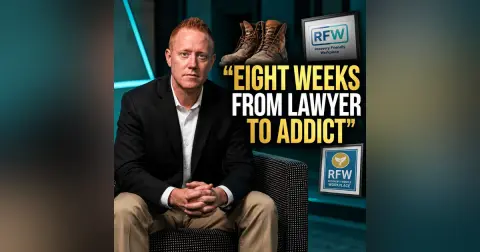
Send us Fan Mail Business Community https://www.skool.com/thebusinessnetwork Newsletter https://doing-business-with-a-servants-heart.kit.com/steveramona 📖 Quote: “70% of people who have substance use disorder are employed. They know they have problems.” (Kevin Hyer) 📝Description: Kevin Hyer was an employment attorney at a large Philadelphia law firm who had never used drugs. At 39 he tried methamphetamine once, and within eight weeks he had lost his job and was injecting ...

 Spotify

 Apple Podcasts

 YouTube

 iHeartRadio

 RSS Feed

 TuneIn

 Castbox

 Castro

 Goodpods
Business Community https://www.skool.com/thebusinessnetwork
Newsletter https://doing-business-with-a-servants-heart.kit.com/steveramona
📖 Quote:
“70% of people who have substance use disorder are employed. They know they have problems.” (Kevin Hyer)
📝Description:
Kevin Hyer was an employment attorney at a large Philadelphia law firm who had never used drugs. At 39 he tried methamphetamine once, and within eight weeks he had lost his job and was injecting in crack houses. Two years later, after an overdose and 10 days on dialysis, he got the second chance that now drives his life’s work.
In this episode, Kevin and Steve talk about:
- What a recovery-friendly workplace (RFW) is, and how it protects productivity, cuts turnover, and helps the bottom line
- Why 70% of people with substance use disorder are employed, and why early intervention matters
- The soft skills people in recovery bring to work: gratitude, perseverance, self-awareness, and collaboration
- How Kevin now works alongside the same law firm that once let him go
- Simple, no-cost ways any employer can reduce stigma, from employee resource groups to inclusive job postings
- Why recovery is possible no matter how severe the addiction
PS: Kevin said something that stuck with me: in recovery, you can only keep what you have by giving it away. That’s servant leadership in its purest form. Kevin isn’t just telling his story. He’s handing others the same second chance he was given.
CTA: Learn more or support Kevin’s foundation at hyercalling.org, or email kevin.hyer@hyercalling.org. Even if you can’t give, share this episode or your own story on LinkedIn to help break the stigma. Subscribe to Doing Business with a Servant’s Heart, and catch Together We Serve every Friday at 2 PM Pacific / 5 PM Eastern.
🎯 What You’ll Learn:
✅ Recovery Is a Workplace Asset
✅ Stigma Keeps People From Help
✅ Address Addiction Early
⏱️Timestamps:
[00:02] The Recovery-Friendly Workplace
[00:06] From Law Firm to Crack House
[00:09] Paying the Gift Forward
[00:12] How Employers Can Step Up
[00:15] Families Suffering in Silence
[00:17] Recovery Is Possible
🤝Connect with Kevin Hyer:
💥Web: HyerCalling.org
💥LinkedIn: https://www.linkedin.com/in/kevinhyeresq
🤝Connect with Steve Ramona:
💥Web: https://steveramona.com/
💥LinkedIn: https://www.linkedin.com/in/steveramona/
💥IG: https://www.instagram.com/bizopportunitynow/
💥Podcast: https://www.servinginbusinesspodcast.com/
💥YouTube: https://www.youtube.com/@doingbusinesswithaservantheart?sub_confirmation=1
🔖Tags:
#BusinessWithPurpose #ServantsHeart #EntrepreneurMindset
Free Business Community: https://www.skool.com/thebusinessnetwork
https://app.nucalm.com/purchase/free-trial?coupon_code=NUCALM15&ref=steve57
Subscribe to our Podcast Newsletter
https://doing-business-with-a-servants-heart.kit.com/628f9d5962
Join Me on Substack: https://podcasthost.substack.com/
Doing Business with a Servant's Heart Named Top 20 Small Business Marketing Podcast
https://podcast.feedspot.com/small_business_marketing_podcasts/
Welcome everyone to Doing Business with a Servant's Heart Podcast. I'm your host, Steve Ramona. I'm thrilled to have you join us today. This podcast is dedicated to exploring the idea of doing business and living life with a purpose, serving others and yes, achieving success while you're serving. We believe that when you approach our work and our lives with a servant's heart, you can truly make a difference. We created this show for you because we want everyone to be motivated, inspired, and educated to make an impact in your world. Whether you're an entrepreneur, a community leader, or simply someone looking to bring more purpose into your daily life. This podcast is here to support and uplift you. And as you listen to my incredible guest today, and you're gonna be blown away. His story is just amazing. Think about how you're gonna serve today and what impact you'll create today. Today's episode is brought to you by our amazing sponsor, Pantheon Alliance. Picture yourself joining an elite community of thriving business owners from a variety of industries, all working together to create a powerful referral marketplace. It's an incredible opportunity to expand your network and elevate your business to new heights. Reach out to me and I'll get you more information about Pantheon Alliance. With that being said, impact uh with addiction, we can make a huge impact. One of the things I'm learning from some of my guests is patients. But my guest here has got a lot more than that. He's got so much to offer. Kevin, welcome to the show. Thank you, Steve. RFW, you talk about the benefits of it. What is RFW? What is the benefits?
SPEAKER_01RFW is a recovery-friendly workplace. And there are many benefits to a recovery-friendly workplace. Bottom line is on the front end of addiction, you help people who have a problem with substances get into recovery sooner, which minimizes the lost productivity that happens as an employee spirals. And you have less turnover when you're able to save that employee before you have to manage them out. They have health problems. God forbid there are legal problems. Addiction's progressive, it's only going to get worse. That's what a recovery-friendly workplace is on the front end. Let's get ahead of these issues. On the back end of it, when they're in recovery, for people who are highly motivated to get a second chance, they've had issues with addiction, they've owned it, they've gone to treatment, they are trying so hard to get a second chance. Recovery-friendly workplaces will hire them if they're otherwise qualified, and you get a tremendously powerful employee. It's a the recovery experience is a transform transformational experience, like unlike anything else. And you bring unique, and I say we because I'm part of this, unique soft skills to the workplace like gratitude and perseverance, self-awareness. It helps the bottom line.
SPEAKER_02So I would think businesses have a problem, you know, right away. I'm an owner, you're an addict, you've had drug problems. I'm shying away. Are you the coach or the cheerleader to go, hey, XYZ company, talk to Steve Ramona or whoever it may be, because we've done some recovery. So you're saying is the question would be, is that what I'm talking about? I mean, is that what you guys kind of do? Because I can see a company go, I don't want a drug addict in my company.
SPEAKER_01Sure. We we educate businesses through our foundation, the Higher Calling Foundation, on the many benefits of hiring people in recovery. And we do that somewhat just through public education, but most specifically through trainings. Um, and actually, I do this with my old law firm, who had at one point let me go over my own addiction issues and our rehab partner, recovery centers of America, to get out there and help employers see that you know that the pandemic led to such a surge in substance use, the stress and isolation of it, took what was already crisis and pushed it over the top. So right now, as we come out of it, there's a whole wave of people coming into recovery or who will be coming into recovery, hopefully, that have really solid gifts to bring the workplace. You know, I mean, if you're working a solid program of recovery, you're gonna own up if you make a mistake. You're gonna want to help other people succeed too. You're gonna naturally be drawn to collaboration. It's leadership skills, you know. Um, and that's what we're trying to say to employers is look, let's talk about this uncomfortable taboo topic. We have to because it's a crisis in America. People are dying of overdoses every day. Let's talk about this and reshape it in a way that empowers the workplace, helps the bottom line, and also helps families.
unknownYeah.
SPEAKER_01Because when you give people a second chance in recovery, it breaks the generational cycle of addiction.
SPEAKER_02That's huge. You break that. That you're you're breaking some big chains there, which is why when I first met you, I loved it. Recovery mindset is what I call, I don't know if it's a word you use, but it is a mindset. I mean, you gotta want to go in recovery, you can only take me so far. Talk about that. I think it's important.
SPEAKER_01Well, sure. I mean, you everyone is addiction is impacted by individual circumstances. Our life stories, the trauma in our life is what brings us into it. And our individual circumstances bring us out. But when you've gone through the storm of addiction, you know, you've lost a lot. Some people lose everything. I certainly lost a lot with my not everything, but I lost a lot. You know, you are it changes your perspective on life. And when you have a shot at getting back what you had before, or having a chance to, you know, raise your children, get your children back in some instances, it creates a power, a fire in you that's unlike any other experience you're gonna have. And I'm not saying that only people in recovery make great employees, or that you need to blow up your life with substances to discover this, but the recovery experience is unlike anything else. And for those who are highly motivated, it gives you a um an energy and a perspective that absolutely will help the bottom line, but you need an employer to give you that second chance.
SPEAKER_02The reason I love supporting you is because you lived it. And I always say your experiences are some are probably the best teachers, but I want the audience to hear your story because it's going to put everything together, I think.
SPEAKER_01Sure. No, um, so I'm a management side employment attorney, and I was practicing law in a large Philadelphia law firm when at the age of 39, despite never even having used drugs in my life, I made the mistake of trying methamphetamine and I became addicted the first time. Within eight weeks of trying it, I was very much out of a job and shooting up in crack houses and very addicted to meth. Um, I spiraled for about two years and then I overdosed, spent 10 days on dialysis, and it was at that point I finally got into treatment. And when I got this second chance that I got, I wanted to give other people that same gift I got because I saw horror of addiction. And I know that these people are not choosing to be stuck in it. It's there's a lot of despair around addiction, but they don't have help to get out of it. I had more privileges than some, probably to do it. And that's why I'm trying to give back. You know, if no one will give you a second chance, you have nothing left to live for except, you know, chasing a high or getting drunk. I mean, you can wreck your life with alcohol just as much as you can any drug. You know, so after I had that experience, I formed the Higher Calling Foundation. And in three years, we've helped 80 people. And I'm now again actually working with as an outside collaborator, my old firm, uh, Ober Mayer, who's an amazing law firm, and you know, they understand this. And our recovery centers of America rehab partner understands this. And we're just out there raking stereotypes because they reinforce stigma. And the stigma around this is deadly because people don't ask for help. And if they don't ask for help, it just gets worse. And they either die or they end up in jail. They have long-term health issues, um, professional licensure issues. Now, fortunately, that's not part of my story, nor is justice involvement. But sometimes that's what it takes, is just to come to the attention of law enforcement for you to address your addiction. But then it's even harder to come back from that. So that even gets back to the first part of what we're doing on the front end of this with people who are still employed, is saying, look, it's only going to get worse. Anyone knows that who knows anything about addiction? Okay, let's address this now before a huge crisis forces the issue. And the stat we use is that 70% of people who have substance use disorder are employed. So basically a functional alcoholic, and there are functional drug addicts. You know, they are employed and they know they have problems. I knew I had a problem with crystal mouth. I was quite aware, but I didn't know what to do about it for a while. And I was trying to manage this new reality. Um, and it nearly killed me. And it was during those 10 days on dialysis, I bargained with my higher power that if I could get a second chance, I would go tell this story. And um, hence the higher calling foundation was was formed.
SPEAKER_02What you don't know, you don't know. And that's the what you just said. And I'm a functioning alcoholic or drug addict, but you're okay. You're going to work, and but it leads to, like you said, what's happened to a lot of people, and it's so sad. You used an incredible word. I love this word gift. You received a gift. Are you gifting it forward now?
SPEAKER_01Am I gifted moving forward from this experience?
SPEAKER_02Are you gifting? No, you're giving your gift that you learned, you're now giving your gift to your foundation, correct?
SPEAKER_01Absolutely. You know, they say in recovery we can only keep what we have by giving it away. And there are many ways to recover from it, recover from addiction. The 12-step model is not the only way, but it's one that many people do know. And the 12th-step refers to having had a spiritual awakening, going and helping other people get the same gift we did. So I absolutely feel like I'm giving a gift to other people. And all of us in recovery have ways to give gifts. You know, through our foundation specifically, it's the hope that a career offers, you know, and reducing that stigma in the workplace. So the two sides of our foundation are services that insurance doesn't cover to help you get back to work. And the other side being trying to educate businesses through this training with our collaborators on the benefits of a recovery-friendly workplace, you know, because employers need to buy into this and and they're starting to, the world's changing, which is really neat.
SPEAKER_02Well, and it's also too employers are looking for good employees.
unknownYeah.
SPEAKER_02Okay, addiction, nothing. Yeah, you're you're I mean, let's just go to the to the bare minimum. You're educating people to be better employees. Yeah, and we need a lot of that now. Quiet quitting and all the different things that are happening because all the stuff happens in life. We're not going to talk about that. That's one of the rings I love, and I love the fact why I support you 1 million percent is you're paying it forward. But you're not just paying it forward.
SPEAKER_01I can't be more sincere when I say, Yeah, you know, after the experience I had, I mean, here I'm this upper middle class professional who's had no exposure to the world of hard drugs. And within eight weeks, that's really all it took from trying it to being, as I put, in in in crack houses, injecting drugs, so quickly life can change. Okay. And I got that second chance. And I saw people along the way, who I'm not defending what was happening, they weren't all bad people. When you hear the stories of how some people get addicted to hard drugs, sexual assault, you know, twisted family rituals where the family was dynamic, was dysfunctional from the day they were born, and the parents were even using drugs with the kids in high school, or in my case, they just they made a mistake. Okay. Um, you know, people in recovery have unique gifts. And if you get into recovery and you work hard, I believe we deserve a second chance. And that's why they'll always hear me say highly motivated people in recovery. Because not everyone in recovery does deserve a second chance at this time, maybe down the road. We always try to offer hope. But at this moment in time, some people may not, but some people do. And let's help those folks get back to work and help your bottom line at the same time.
SPEAKER_02I think everybody understands second chances. I think all of us in the world, it might be small. This is huge second chance. We understand that. Just giving somebody an opportunity, which is what you're doing. And you're looking for support. I don't usually talk about it on a podcast, but I love what you're doing. What kind of support are you looking for?
SPEAKER_01Sure. Absolutely. So we've been in existence for three years now. We're a 501c3. We are looking to take this to the next step. Um, we've gotten one corporate sponsor, Petroleum Marketing Group, but we're looking for more to really elevate this because our challenge is this can only be funded pretty much through philanthropy or, you know, the fees we get from selling training. None of these services are reimbursed by insurance. That's our challenge. Okay. I can't bill insurance for helping you get your license reinstated. Our networking events can't be billed to insurance. I can't bill insurance for helping you expunge a simple possession charge or prostitution like we did for someone. You know, the things we do ultimately have to be funded primarily by the goodwill of other people. And that's why I'm out there telling my story and with such sincerity, saying we do need help. So if your business would be willing to even just endorse the message, even if you're not in a position to financially support us, endorse the message and say, hey, you know, I've got someone in leadership who's in recovery, they're a great employee. Or they're not in recovery, but you know what, their spouses, they've hired people. You know, there's so many ways employers can demonstrate their commitment to this. I mean, just one for example. Imagine if you had an employee resource group for people in recovery from addiction and their allies. That way you'd have people at work that you knew, oh, they're open-minded around this. And if someone doesn't want to be part of one of those groups, they just don't join it. And it doesn't mean they hate you, have a problem with you, they just don't join it. Now, imagine if you took your open positions to the alumni programs of rehabs and said, Hey, we have these open positions. We'd love if some of your alumni would consider applying. You're not agreeing to hire any particular person, you know. But what you're saying to those people is, hey, we think you have value. I mean, imagine if in your job descriptions you wrote, you know, women, people of color, LGBT, veterans, and people in recovery, especially encouraged to apply. But that would do for people's self-esteem. And Compass Group, who was one of my employers when I was an in-house attorney for seven years, actually now sources positions from our website. So the world's changing, but those are things you guys could do to demonstrate it, even if you're not in a position to sponsor or donate any money.
SPEAKER_02Yeah, that's great. We'll we'll get your contact here in a minute. But you said something very interesting that I want to highlight. An employee with a drug-addicted spouse, family member, friend, it affects your work life because you've got to deal with that at home. You talk about how you'd educate that employee who has somebody that's addicted.
SPEAKER_01Well, sure, absolutely. I mean, we haven't really had anyone pursue it, but we have offered to help people who are the family members of someone who had an addiction, if they could demonstrate that their career was hurt by it, because they're the ones suffering in silence. You know, they're ashamed. The stigma prevents, my mother has done some speaking on this, people from reaching out for support. So, you know, you never know if someone's in the office what's going on at home, you know, and when people use words like junkie, drunk, bleaker, you don't know if the person sitting beside you is thinking, that's my kid, you know. So a little bit what we also try to do is soften some of the language in the workplace, stigma reduction there, because addiction's a disability, actually. Now, certainly you do not have to acclimate it by letting someone come to work drunk or high. The diagnosis of addiction is a disability. So for someone like me who had a stimulant use disorder, that's a disability. And then recovery from it, you know, trying to help the workplace see that, you know, this affects everyone in America to most extent, you know. Most people know someone who had a problem with drugs or alcohol. It's hurt, it's touched our families. So the families at work, you know, absolutely, you know, they're suffering too. And when you endorse recovery at work, what does that do for your family members? It gives them a sense of wholeness.
SPEAKER_02That's huge. I think that's so big because again, it's the silent uh message. And a friend of ours, honesty, who we were talking about before the show, uh, she was on my show yesterday and she had a great tagline. Instead of dope dealer, you're a hope dealer. Oh, I love that. I I do too. I'm glad you do. And audience, that's what Honesty, who was on my show yesterday, and what Kevin's doing, they're hope dealers. They're giving you faith and belief that to move forward in recovery. You're always in recovery, but you can be functioning in the world. That's again why I love what you're doing. We're getting to the end here, but I want to ask a question. Somebody listening who's either got a friend that's addicted or a family member or is addicted themselves, what's a piece of advice you'd give them?
SPEAKER_01Address it as soon as possible because addiction tends to be progressive. And there's an expression used in the 12-step programs that says that addiction ends in jealous institutions and death. And just as we offer hope, we also offer reality. You've got to get ahead of addiction. Okay. The sooner you address it, the sooner you can get into recovery and the less damage there is to come back from. And that's, of course, part of our business case to employers is you know, those employees that are struggling may well be because of substance use disorder. How do you talk about that? And that's all the stuff we get into in our trainings. But to answer that specific question, know that hope is a that recovery is possible. That might be the first starting point. No matter how severe your substance use disorder, and I had a very severe one, you can recover. You know, one of my right-hand women in our foundation has 30 years of recovery from methamphetamine addiction. And after getting sober, she went on to Berkeley Law and became a federal judge. The same woman who spent 15 years shooting crystal meth then goes on to Berkeley Law and becomes a federal judge. Now, I'm not going to say there are thousands of stories like that, but recovery is possible. And you can get a second chance, but you do need to address it because addiction is a it tends to be progressive and fatal. It's an incredible story. Hope is out there. You absolutely can recover. And there are people like me and many others that are happy to cheer you on. And I'm hoping my my best hope for the Higher Calling Foundation is that we can be um a beacon of hope for people who desperately would like a second chance to help them get that. And as I said, this breaks the generational cycle of addiction.
SPEAKER_02This is an important message, it's it's kind of a downer message, but I it needs to be spoken. I'm glad you are. Let's have a little fun. Let's have a little fun today. I got a great question for you. It's personal. So you're going out to dinner with three people. So you sit in one chair, and the other three chairs, who would sit in it in those three chairs, dead or alive? Why, and what food would you order?
SPEAKER_01Do you want to have at the table with me? Oh lord. Um geez, you put me on the spot here, my friend. Take your time. I love this question. No, I know. I'm going to give you an honest, uh, a great um. I gotta tell you, Martin Luther King may sound cliche ish, but I mean it. I mean, he had a vision of social justice, and I think this is a form of social justice, you know. I don't think I know I mean a lot of people see recovery as a movement. You know, I didn't make that up. But yeah, I would say someone like Martin Luther King, someone who had the vision around equality, you know, and to help people just with in his case it was race, but he also did it with labor and other things, you know, to focus on the quality of someone on the inside, not to make judgments, you know, and that's the same with addiction. When you think of someone with an addiction, you know, you're thinking of the stereotypes we have. And in my case, I don't exactly fit the stereotype of methamphetamine addiction. That's part of why I'm doing this because those stereotypes reinforce stigma and they're also quite deadly because when you fit them, you internalize them. Okay, and obviously some people do fit those stereotypes. And when you don't fit them, you don't necessarily think you have a problem when you do. That was, you know, but no, Martin Luther King would be one. Um, oh, Jimmy Carter, he's a good man. He shares my faith values. Yeah, Jimmy Carter, he in my I am Christian, to me, he personifies Christianity, helping other people, and he did it in a way that telling them what was good about them rather than wrong. Um, as for food, geez, I don't know. Anything I don't have to make, I like.
SPEAKER_02Um good pizza.
SPEAKER_01I like good pizza. You know, good pizza, that's like an art, you know, getting really good pizza, you know.
SPEAKER_02A lot of different pizza out there, and you're making me hungry. So good choice because I love pizza as well. How can people get a hold of you? You've given us so much great information. People listening going, I gotta talk to Kevin. How can they find you?
SPEAKER_01Sure. Um, our website is hirecalling.org, h-y-er-calling.org. Plan words, my last name. Um, they can go contact me directly, kevin.hire at hirecalling.org. a e-v-in.hyer at h-y-er calling.org. And I will certainly respond to anyone who reaches out. And you know, even if they're not in a position necessarily to endorse or finance what we're doing, just putting even on LinkedIn, you know, just sharing your own story if you're in recovery, or if you have a spouse or loved one, just anything to help reduce this stigma because addiction has touched most American families. You know, we all know the heartbreak of this. It's so unnecessary. That's how to, as we wrap this up, what I like to say is this is so unnecessary. This stigma around addiction isn't necessary because we all relate with it. It's not this foreign, unrelatable phenomenon. Like people know what addiction is, they've felt the pain of it, at least indirectly. You know, so by reducing the stigma is one of the first steps.
SPEAKER_02I love it. Thank you again. God bless you, Kevin. Keep doing what you're doing. Yeoman's work. I know you're going to be successful. And if audience, reach out to him. Comment on the YouTube channel. I'll get the message to him. If you want to reach out, this this information will be in the show notes. You can find it. If not, you can find me. Reach out to me and I'll get you connected with Kevin. Because again, people like him need to be supported because he's doing incredible work. And don't forget my TV show, Together We Serve, every Friday at 2 p.m. Pacific, 5 p.m. Eastern. It's on uh uh Apple TV, Roku, all those streaming TV services, and you can catch me live or you can go back and see my previous recordings. And as always, me and Kevin, thank you so, so much for listening or watching this podcast. And I look forward to seeing you on the next episode of Doing Business with a Service. Thank you all.