The Free Talk That Made Millions: Corey Poirier
Send us Fan Mail Business Community https://www.skool.com/thebusinessnetwork Newsletter https://doing-business-with-a-servants-heart.kit.com/steveramona 📝Description: What if the lowest-paid talk you ever give becomes the most profitable? Five-time TEDx speaker Corey Poirier joins Steve Ramona to unpack why the free stage is often the richest one — and how the right approach to a single speaking gig can pay you for years. In this episode, Corey opens up about building Blue Talks ...

 Spotify
 Apple Podcasts
 YouTube
 iHeartRadio
 RSS Feed
 TuneIn
 Castbox
 Castro
 Goodpods
 Business Community https://www.skool.com/thebusinessnetwork
Newsletter https://doing-business-with-a-servants-heart.kit.com/steveramona
📝Description:
What if the lowest-paid talk you ever give becomes the most profitable? Five-time TEDx speaker Corey Poirier joins Steve Ramona to unpack why the free stage is often the richest one — and how the right approach to a single speaking gig can pay you for years.
In this episode, Corey opens up about building Blue Talks (Business, Life, Universe), interviewing over 7,500 people, and the simple, humble mindset shifts that separate speakers who get booked from speakers who get forgotten.
Here's what you'll learn:
- Why a TEDx talk can outperform a $10,000 sizzle reel — with the real numbers to prove it
- The one printed form that generated 30% of Corey's paid bookings
- Why "content is king, but emotional connection is queen" — and how to build that connection
- The proven talk structure: up story, down story, problem, solution, call to action, vision
- Why you should stop trying to be the next Tony Robbins and become the first you
- The truth about the "21-day habit" myth (the real number will surprise you)
PS: Steve shares that stepping onto the speaking stage for the first time in the last six months has been a complete game changer for his life, brand, and business. This conversation is proof that serving an audience from the stage — before you ever sell — is where real impact begins.
CTA: Listen to the full episode now, then share the message. Grab a "Doing Business with a Servant's Heart" hat or t-shirt and let's change the world little by little. Catch Steve's TV show Together We Serve — Fridays at 2 PM Pacific / 5 PM Eastern on Apple TV, Roku, and more.
🎯 What You’ll Learn:
✅ Emotional Connection Beats Information
✅ Become The First You
✅ Squeeze Every Speaking Opportunity
⏱️Timestamps:
[00:02] Blue Talks Origin
[00:05] Why TEDx Pays Off
[00:09] Squeeze Every Gig
[00:13] Content vs. Emotion
[00:20] Be The First You
[00:26] The Flight Parable
🤝Connect with: Corey Poirier
💥Web: www.thisisthebook.com
💥LinkedIn: https://www.linkedin.com/in/speakercoreypoirier/
🤝Connect with Steve Ramona:
💥Web: https://steveramona.com/
💥LinkedIn: https://www.linkedin.com/in/steveramona/
💥IG: https://www.instagram.com/bizopportunitynow/
💥Podcast: https://www.servinginbusinesspodcast.com/
💥YouTube: https://www.youtube.com/@doingbusinesswithaservantheart?sub_confirmation=1
🔖Tags:
#BlueTalks #LiveEvents
Free Business Community: https://www.skool.com/thebusinessnetwork
Subscribe to our Podcast Newsletter
https://doing-business-with-a-servants-heart.kit.com/628f9d5962
Join Me on Substack: https://podcasthost.substack.com/
Doing Business with a Servant's Heart Named Top 20 Small Business Marketing Podcast
https://podcast.feedspot.com/small_business_marketing_podcasts/
Welcome everyone to doing business with a surface heart podcast. Doing business in life with a purpose, serving others, and yes, achieving success. I'm your host, Steve Ramona. We created the show for you because we want everyone to be motivated, inspired, and educated to make an impact in your world. I want to make a point in your world. Don't change, you can't change the whole world. Me and then my guest today were talking about that, and there's not a lot of things we can do, but we could take care of our little world. This guest is unbelievable. He's going to share some incredible knowledge and motivation. But while you're listening to them, I want you to think back who you serve today and how, and what impact will you create today? Don't wait for tomorrow. Let's do it today and move the world forward little by little, person by person. And pitchdb.com is my sponsor. Be a guest in over three million podcasts, speak at over 18,000 different conferences, and build your thought leader platform to incredible opportunity to show who you are. And interesting enough, my sponsor is tied to my guest in a way, this is what he does. He makes an impact in speaking. And I've done some speaking my first time in the last six months. A complete game changer in my life, in my brand, and in my business. Corey, welcome to the show.
SPEAKER_01Thank you so much. I'm so super stoked to be here, Steve.
SPEAKER_00I love the name Bluetox. Where'd that come from?
SPEAKER_01So it uh essentially we well, I'll circle back and say properly that I was helping people land speaking gigs and engagements years ago. That's how I kind of started as a speaker myself for 20 some years, a paid speaker. And people about 10 years ago started saying to me, How do you're getting so many bookings? How are you getting so many clients? How are you getting paid so much? So we put together a program to help people basically learn the speaking business. And this is again going back quite a few years. And then people started asking me how I'd landed so many TED Talks and said, I want to do one of them. So we started helping people do that. And then the next stage is uh I started listening again, and people were saying, I wish there was like a done for you service, you know, where you could essentially um basically do everything for us, set the stage, build the stage, promote us, all that stuff. And then there was a totally separate group of people saying, I wish there was um a spiritual type TEDx stage. And so with those two groups of people asking me for that and realizing it didn't exist, we did a little bit of brainstorming and came up with this idea of this thing called Bluetox. And blue uh stands for business life universe. And the idea was we wanted to create something that would be kind of like a mix of TED Talks, Chicken Soup for the Soul, and Mind Valley, all in one. And so we launched with live events similar to TED Talks, and we started recording videos of speakers, and then COVID happened. You know, so we just started a live event brand or company, and then COVID happens, and we're told no more live events. And so um we ended up adding in a book series, like an anthology book, a podcast, and a virtual stage. And that's how we I'm gonna say officially launched with all of those platforms in June, well, actually September of 2020. And you know, fast forward to today, and we've had about 525 people on our stage live. Uh, we've had 400 people become best-selling authors. Uh, we put, I don't know how many podcast episodes, but hundreds of podcast episodes. And then we've done, I think, 14 or 15 of the virtual events. So that's and and the design behind it, Steve, is to help experts get more credibility and exposure. So it's how do you build this up so that they can say they were seen on Apple TV and Roku and Amazon, and they've spoken at places like Cambridge and Harvard and Columbia, and uh they've shared the bill with Les Brown, Lisa Nichols, and they've um also shared the uh co-wrote books with you know Dr. Joe Vitaly from The Secret and Marie Diamond and so on. So that's kind of what we created. It was meant to be a platform to help experts become next level experts while also serving an audience of listeners and viewers as well. So that's Bluetooth in a mini nutshell.
SPEAKER_00You're right in my neighborhood. That's why I love having you on the show because that's what I'm doing and told you about my just learning to speak and how powerful it is. Two two-part question: how important is speaking gigs and how important is to be on a TED talk?
SPEAKER_01Uh I mean, it's a great question because there's kind of two answers for that. Um as far as um TED Talks, I'm gonna say that it's still to this day, which shocks me, probably the most most prestigious stage to be on if you want to build a speaking career. And when I say that, what I mean is that I've done five and I never planned to do that many. I planned to kind of quote it. I I'd retired at three, and then I had a happy accident invited to do a fourth. And then I never want, I don't like the number four, like I like three or five. So I said, well, I gotta do five now. Uh and then somebody just asked me to submit one. I don't know if I'm going to yet by May 31st. And I it's the organizer I know. And if I do, obviously my chances are quite high because I know the person personally, and so I don't know yet because I don't want to go to six.
SPEAKER_00Yeah.
SPEAKER_01But I said that, um, why would I invest time to do those? Because you don't get paid. That's one thing a lot of people don't understand, but you don't get paid to speak at a TEDx. But I've often said it was the lowest I've ever been paid, and yet probably the highest amount of revenue I've ever brought in from one talk in my life was my TED talks. And so why that is, I think, is A, because it's so hard to land one, despite the fact that there are thousands of TED stages now, it's still not easy to land one. So there's a lot of prestige there. And secondly, I think the reason it helps you in your speaking career, Steve, is that when people can watch an 18-minute talk of you, they can watch a short talk, but still see the entire talk and know what you deliver like. So, as a speaker, when I first started, the only way you could get booked is if you had a sizzle reel, which could be like a three-minute reel of you speaking highlight reel and stuff. And what I found fascinating is that closed higher than anything else because it was short and people could just watch it and move on. But when TEDx came around and started doing these 18 minutes or less talks, and I have one that's five and one that's seven minutes, so really short, almost as short as a sizzle reel. What I found is people were hiring me. Uh, we actually tracked the numbers 15% more often, they were hiring me when they watched my TED talk than when they watch my sizzle reel. My sizzle reel was almost $10,000. So I started investigating that. And what I found is they would say, Well, it's like a testimonial. If you give me a test, three testimonials, you're gonna give me your best. If you give me a three-minute sizzle reel, you've made it the best that you possibly can deliver. But I want to see your whole talk to see how you deliver at the good and bad and high and lows. And so if I can watch an eight-minute talk and see your whole talk versus a three-minute talk and just see highlights that you presented to me, it adds more credibility to see the seven or eight-minute talk. And then on top of that, they're seeing this TEDx logo behind you that kind of tells them this person's been vetted, if you want to call it that. Now, what a lot of people don't know, and it still hasn't seemed to impact it, is not all TEDx events are printed equal. You know, there's some you go to where it's, you know, it's like they made this, they made the letters themselves, and the the video guy is not or girl is not the greatest. But my point is for the most part, people have um let's say um high level of respect for that logo. So they see you delivering a talk where they can see start to finish your entire talk and it's in front of a prestigious logo. I think that's the reason why it's so helpful to somebody's speaking career. And as far as how helpful, I'll give you an actual number. I uh we were able to track 300 paid speaking engagements to one of my TED talks, and I charge thousands per talk. So if you have a calculator, you can do the math, that's a pretty lucrative return uh on a talk where I didn't pay anything to deliver. So that's you know, again, I think that's the long answer of why I think it's still so powerful to add a TEDx into everything else you're doing.
SPEAKER_00No, and it's a great tip. It's like anything, you know, sometimes the free stuff is the best stuff because you can't look at it short term, you gotta look at the long-term journey, and that's what's happened to you. Speaking, we and and sound TEDx are like top podcasts, they're short to get your information, you run. So somebody wants to do a speaking gig, they've been asked, okay, I want you to speak in my chamber. What's the first couple of steps they need to do?
SPEAKER_01Um, so I mean, I on the speaking side, there's I mean, there's so many different aspects of it, but one of the things that I think is super crucial is so I'll I'll actually add this into if I were starting a speaking career today and you drop me in the middle of the city where I live, or any city, sorry, I'll even correct that and say a city I've never been before. I think I could land paid bookings doing what I'm about to share, that I would do if somebody said to me, We want you to come in and speak at our event. I mean, first thing I would do is I would want to personalize it to them. So the first thing I would do is I'd want to get on a call, make sure that what I'm covering is going to be applicable to them. The second thing, though, that I would do is I would if I didn't hopefully I'd already have it, but I would have an evaluation form and I would ask them, can I come in and bring in my evaluation form as well with me? And I believe in the printed evaluation forms because the digital ones, like people now are doing them with on apps, like you go to a large event and they'll say, We're gonna get people to fill out the form on the app. My experience is you get about 5% of those back. I can go into that same room with a printed form and I'll tell you the incentive I give, and I can give 80, I can get 85 to 95 back every single time. So just from a pure mathematical point of view, it makes sense to bring your own. But now there's a thing called talk it out now, which you can use and apparently you can craft it identical to the way I do mine and get people to fill it out in real time while you're sitting there, like while you're talking to them. So that would still work the same. But what I typically would do is I would bring in this form, it's very crafted, like it took me years to create it, and it's seven questions and they're very intentional. And the result of me bringing that form. So the reason I say this is I would ask that I can bring my form. That's the one first thing I would do is I need to bring that because um my experience has been about 30% of my paid bookings over the years has come from that one form alone. So, how is that possible? It's because it says, Hey, do you know of others who could benefit from a similar talk to the one I uh delivered today? And if so, can we follow up? And I would get if I had a hundred people in a room, I would get 30 people would say, Yeah, you need to come and speak at our band. And so, um, so for me, what I would do to prepare is I would want to personalize it if I could. So I want to find out who's in the room. Second thing is I'd want to get permission to bring that form because I never think you should just bring it and surprise them and you know, say, here you go. I'm thinking I'm bringing this in. And next thing I would do is I would line somebody up to film my talk because one of the things that people struggle with is having footage of them speaking. And I would try to early on, especially, I would try to capture every video I could of me talking. The great part today, I don't even know if I have mine here, but you we have these 4K phones that film at the same quality of what I when I did my $8,000 sizzle reel, it's a high the the phones now are higher quality than the cameras used because $8,000 sizzle reel. So I would have filming my talk. Um, when I go do talks on the forum, it also says, Can we edge your newsletter? So I might leave an event where I spoke to 100 people with 70 people on my newsletter. Another question is, can we use your uh what do you think of today's talk? And then can we use your comments on our marketing? So on our website and what have you. So my point is uh I would position myself so that I this is the best way I can say this, squeeze every last bit of juice out of being at that one event. Uh, but I really at the end of the day, it's like this new book that I wrote. I don't think anything works unless you write a good book. I don't think anything works unless you deliver a good talk. Now, notice I didn't say exceptional, I also didn't say terrible. I'm just saying good, meaning like good, like people go, you know, that was pretty good. It's got to be at least that. Now, I think that's just the price of admission to be there. But then obviously, that the higher up you go from that, like if you then make it a killer book or a killer talk, everything else exponentially grows. But I think at the bare minimum, you also have to make sure you have a great talk to deliver to an audience, and it has to be the right audience for that talk. And in other words, it has to be the right talk for that audience. So I would do some prep on the front end, um, you know, in terms of getting ready. I hope that answered the question.
SPEAKER_00No, it did. No, exactly what I wanted to hear, because what I'm hearing from you, content is king. And when you do that, make sure you grab as much juice or content from that speaking gig that you could put out to the world.
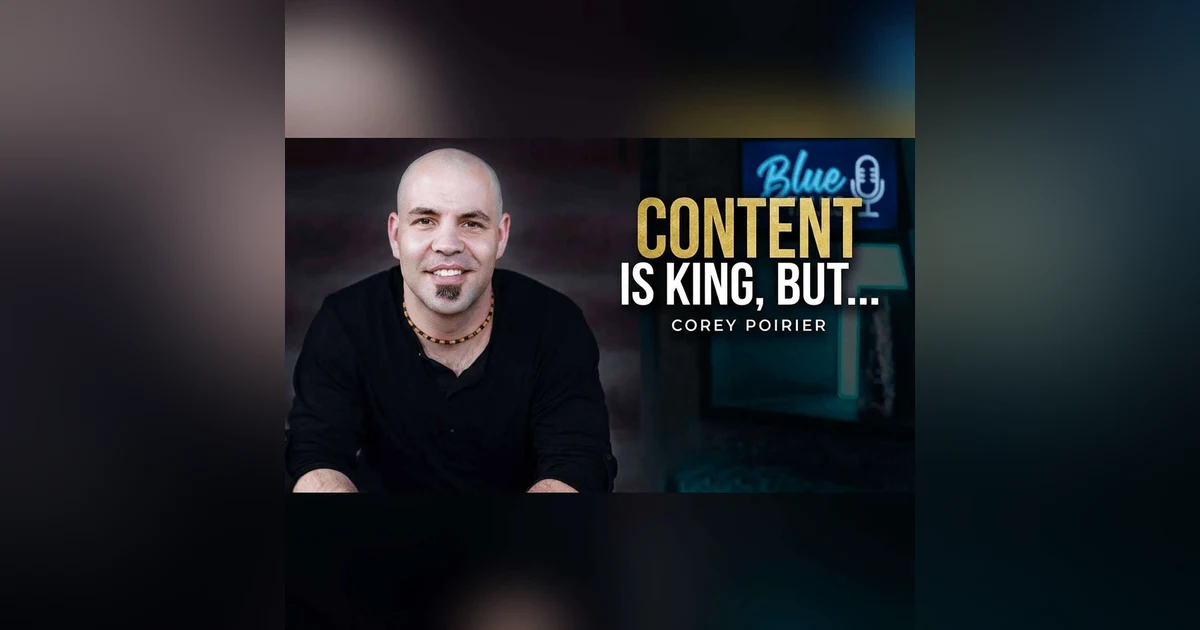
SPEAKER_01It is, but I will add this from a now, this is from a delivery point of view, the opposite scenario. But when you're on the stage, this is what I've said over the years. So you gave me a good lead up to this. Uh, is I say content is king, exactly what you said. However, emotional connection is queen, and in my experience, the queen rules most castes.
SPEAKER_00Yeah, that's amen. I love that. Yeah, it's if you don't affect people, if they just sit and listen and go and then walk out and go, I don't even remember the guy's name or the girl's name, there's no queen there. You didn't have an emotional, right? And it doesn't take the whole 18-minute tell you shoot a TED talk. You're not talking about all 18, but it could be a two-minute words that you said, it could be two sentences, and they go, Wow, Corey, holy map, that's what you're talking about, right?
SPEAKER_01Yeah, I mean, there's I'll give you a couple scenarios, but like uh one scenario is I did my my the fourth TED talk. Uh, I opened up with an up story. Uh, I will say one of the things I've learned over the years, I don't know if I I feel like I heard this from somebody, but I don't know if I heard it. I was already doing some most of it, but I think somebody put it into the exact words for me. But a really well done talk. Now I'm gonna say TED talk, but any talk you can use the same format follows a somewhat of a flow of uh basically a downstory, or sorry, I'll start the rubber. It could be either direct either or first, but an upstory, a down story, a problem, a solution, a call to action, and a vision. So, what does that look like in the real world? Well, the upstory gets the person to fall in love with you so much that when you get shot in the downstory, they actually care that you're bleeding. So, what I mean by that is so how I did that in the real world, this is the emotional connection. My first uh opening of that talk, which is called How Schools Can Inspire Purpose, was the story about my mother and I driving through a drive-thru on Mother's Day. Guy behind us is yelling at us in the line at a coffee shop. My mom doesn't hear it. I drive off and I decided to reframe it for my mother. And I said, Mom, did you hear what that guy was saying to us? And I told her, and she goes, What? Turn this car around. I want to go back and have a talk to that guy. In the talk, I said she said she wanted to go back and punch him in the throat, but I don't think she really said that. But the point is that I reframed it for my mom and I said, Mom, you know, it's Mother's Day. The guy probably uh is dealing with stuff at home. He doesn't know his mother. He was adopted, his mother might have been in jail, he might have been in jail, his mother might be in the hospital today. And I just tried to reframe it to say, maybe, mom, it's not about us at all. And my mom said, Oh my God, I never thought of it that way. We should go back and buy that sweetheart a coffee. Now, this is another thing I teach, which is event plus response equals outcome. But I'm not gonna deviate to go there. I'm just gonna say um, that's when I tell that story, whether it's me or my mom, it endears the audience somewhat to us. And that allows me to um, to your point, connect with the audience. But then I could take another scenario, which is uh I could actually share a thing that people never heard before and show them, I'll correct that, hear a thing that people think to be true and show them it's not true. And so I'll give you a great example is the 21-day habit. So I'll say in front of an audience, how many people here have uh ever or sorry, everybody in the audience here knows that that takes 21 days to create a habit, right? Everybody knows that show of hands, and of course the hands all go up and I'll say, What if I'm about to blow your mind and tell you it's not true? And so where that comes from, Steve, is that if you read the book, The One Thing, they actually cite an interview with the guy who created the 21-day test, and he said that's what people grabbed onto, but he said that wasn't the number he said. He said, 21 days is when it starts to have it, 66 days is when it's cemented. So now if I share that in front of an audience and I show proof of that, like a source and everything else, what I've done now is I've made them go, Wow, he just taught me something new about something I've always believed to be true and changed my perspective. So then the question is, what else could he teach me? So now I've connected emotionally with the audience because again, it's the what else could they teach me? Last quick story is I I open up some talks, I don't do it as much anymore about how I got tricked into performing stand-up comedy one night. And the finish of the story is I did two jokes, and this is a true story, uh, and then no laughs, only to find out that I didn't even turn the mic on yet to start the show. And so I share that story sometimes to open a show. And and but I started out by saying, How many people will get on a stand-up stage tonight if I could, you know, if I could get you a gig at the local club? And you know, honestly, like at a room of a thousand people, sometimes it could be three hands. And then I'll say, Okay, what if I'm what if I told you you're not allowed to drink alcohol? And then two of the hands go down. So it's more of a joke, it gets the audience pulled in. But the end of the story with me having the mic not turned on is the pie in my face. It it kind of it's um, you know, basically it's self-deprecation, but it gets the audience to say, I've been there, I know what he's going through. So there's three examples of let's connect emotionally. So then whenever I tell you what I'm gonna tell you, you actually care that I know what I know.
SPEAKER_00I love that. Be an expert, but being humble about it. That's exactly what you're doing. I can relate to Corey instead of going, I can never be Tony Robbins, which is not true. Tony started like we did, we talked about before the show. The other thing I'm really I'm hearing in audience, this is big, huge inspiration, motivation, education. That's what I say for my podcast, but that sounds like the same thing for your speaking gigs. Hit three of those your goal, hit some of those you're pretty good. Like you said, you still have a good talk because you grab at the audience, right?
SPEAKER_01Yeah, in fact, uh, my mission statement. So I share this in the uh in the new book. I talk about why we all should have our own personal mission statement. And my personal mission statement that I wrote years ago is to be the guy that donates, motivates, educates, entertains, and inspires. So three of the five is actually in my mission statement to be that guy. And so, yeah, I try to uh ultimately, you know, you've heard the term, it's cliche, but I really like it. Is I try to be an edutainer. So, in other words, I go do a talk. Here's one of the things that I think is a struggle is the difference between an educational talk and an entertaining talk. And I think there's no reason we can't combine the two. Now, not everybody's entertaining and not everybody's meant to be. Some people are very dry and the entertainment wouldn't work and it wouldn't fit them. I think you have to know who you are first and foremost. And I also think to your point, that here's the interesting part. I think we can all be what Tony Robbins is, but I also at the same time don't think we should try to be what Tony Robbins is. So, what do I mean by that, Steve? Is one of the things when I started working with speakers years ago early on, I noticed is my first question, which was good that I asked it once I realized I started asking it all the time once I realized that it was a good question to ask. But I would say, What's your goal? Like, what do you want to do as a speaker? And over and over again, people say, I want to be the next Steve Jobs, I want to be the next Tony Robbins, I want to be the next Lisa Nichols. And then I had to kind of start backwards and peel off that layer because I'm like, you need to become the first John Smith. We already have Tony Robbins, the spot's already taken, and whether you like Tony or not, he's doing a pretty good job at what Tony Robbins is. So I don't, and here's the thing: I think you can become what Tony Robbins is, but I don't think you can become Tony Robbins. He's the best at doing what Tony Robbins is because he's the first Tony Robbins. And you know, and people might say, well, there's no room now for the new whatever. But I would argue if you look at Gary Vaynerchuk, for those that know who Gary Vaynerchuk is. I mean, Gary could go out on a stage right now somewhere in the world, charge $150,000 for a 45-minute keynote and walk it with mustard on his shirt and drop F-bombs and get paid and have the audience say, Oh my God, he was awesome. What I'm getting at is Gary V now, Gary's been out, what, like in the real scene for like eight years, probably now. But what I'm saying is when Gary started, it was still as competitive as it is now, and Gary carved his own niche, and Gary's his own person right now. So I do believe that you can still do that, uh, starting from scratch. I was talking to a guy yesterday named uh James Dixon, and I think he's gonna be a guy to watch. His brand is Superman Is for Real. He's an amputee. And um, he literally was just he sent a post yesterday on Instagram, he was number four on a top list of the top 10 speakers in the world. And John C. Maxwell is like number five, and he was number four, and he told me yesterday that he's just celebrated one year, his first year, not working a part time or full time job on the side. So that's starting again from scratch, a new speaker, and he's already on that, those lists. So I think if you own who you are and become the best version of you, I'm not saying it's going to be easy and I'm not saying it's going to work for everybody, but I do believe there is room for somebody to come in and become their own craft and crush it at the same level as those other speakers we're talking about.
SPEAKER_00Well, it's small world because I met James Dixon two years ago at an event. I did podcasting event where I recorded, I couldn't get to record him, but that's you may I'm gonna make a note. I want to get him on my podcast. Incredible guy, absolutely. So uh and in person, he's even more powerful. I don't know if you met him in person. Um, so and that's true. I I love that. Don't be Tony Robbins, but be you know, be Steve Ramona, be Cory Koyer, be James Dixon, and have the same accolades. Let's talk about the book. I know you're super excited. I think it's coming out, it's not out yet, or is it out yet?
SPEAKER_01Uh, it's in between both those answers. So it's that's on pre-order right now, and and people can order it this minute, uh, get extra bonuses that might not exist if you're listening to this six months from now, meaning like we have some pre-order bonuses. I I like to think I'm always gonna leave at least one bonus no matter when you order it. Like, I don't want to just strip it forever away. But yes, right now, if a person orders it, there's five cool bonuses that come with it instantly, and there's a bunch of other bonuses we're still kind of layering in. I think we're overdoing it with how many bonuses. But um, yeah, so it's pub date, you know, the industry term of when if you order it, it starts shipping is June 25th. Like that's the date the retailer starts shipping it. But right now, anytime between now and and I'm saying 2024, if you're listening Evergreen, but anytime between now and June 25th, uh, if you order it, you get the bonuses and you get the book on like we're still we're a month away today, so you're not waiting long to get a book in your hands. Um, having said that, just I might as well say it since I mentioned the bonuses, and we're talking speaking. One of the bonuses alone that I decided to add in is you get access to um our TEDx training. It's based on the uh I'm just gonna say high ticket, you know, high-priced program we normally have for how to land a TEDx. It's the condensed version of that, a 90-minute training we did for an inside group. Uh, you get access to that full training. Now, this is for a $16.95 book. Uh, you also get uh a video uh that I did, it was a talk I did at Stanford on why I think Apple and Barnes and Noble and not Apple, let's say Disney, Harley, uh Starbucks, why they can all charge more for a similar product to somebody else. I tried to analyze and figure out what are the five things they're doing that nobody else is. Uh so that video comes with it. Uh my get paid to speak book, you get a digital version of that. You get 10 insights, the top 10 insights I've learned in all my interviews, thousands of interviews, and then a video training with um Natalie Ledwell and Patrick Ledwell of My Movies where how they built their business and how to set goals and all that. So those are five instant bonuses. Then the other thing where I said we kind of overdone it, you also get in a draw for some really cool bonuses, like potentially to get a feature on a New York Times billboard that I'm paying for for whoever wins. Uh, also on top of that, we're doing numerous live events. So depending when this airs, um, we're doing June, let's see, June, uh, what is it? Yeah, June. Get that date's wrong. Yeah, June 7th, I guess it is. We're doing two live events. So we're doing one with JJ Virgin. Uh, so JJ Virgin's a New York Times bestselling author. We're doing another event the same day with Mark Victor Hanson of Chicken Soup with a soul, and Richard Paul Evans, uh, who's a 46-time New York Times bestselling author. He wrote the foreword for the book. I'm gonna be at his writer's retreat in in Utah. So we're gonna do a live where Richard and I'll be in Utah, and Mark Victor Hansen and his wife Crystal will be in Arizona. So we're doing that. Then on the, I think it's the 14th, we're doing one with believe this or not, Randy Spelling from 902 and oh, Ryan Austin Green from 902 and oh in anger management, and Sharna Berg is from Dancing with the Stars, who's Brian's wife. Uh, then we're doing a live boot camp, which is a three-day boot camp about how to get paid to speak, how to write, how to best sell best-selling books, a bunch of cool speakers, contests, live coaching, three-day virtual event you get access to. Uh, then an event with Janet Atwood and Ken Honda from Mind Valley. And then finally, to round it all out, we're doing two separate uh book clubs where basically we're gonna you can break out into rooms, talk about the book, but we're bringing on four really big name influencers, secret right now. I'm not saying who they are. Uh, but all of those events I just told you about, you get in for buying one book.
SPEAKER_00That's fantastic. Real quick, we'll get to it in time here, but what's your mission with the book and what's you know, what's the story behind the book?
SPEAKER_01So this it's a fictional parable. So for those listening that may have heard of The Alchemist or Celestine Prophecy or um The Monk Who Sold Us Ferrari by Robin Sharma, or if they've heard of Augmendino, most of his books were parables, uh, or The Richest Man in Babylon. It's that style of book, and it's two strangers on a plane, uh, young guy, old guy. Old guy is described as like a Wayne Dyer-esque type guru, if you want to call it that, or a wise man. Uh, and then there's a younger, cocky, arrogant business guy. He's the main character, sort of. He buys, uh, pays for the flight, the sorry, the seats in first class, and he doesn't want anybody sitting next to him. So he actually pays for the seat next to him, falls asleep, wakes up next to this old man, and he's like, How'd you get up here? And the old man says, Well, it was it was booked, uh, all the flight was booked, so they had to bump me, even though the seat was taken. And so now he's sitting next to this old man, he doesn't want to talk to him. He's gonna tell him he got he has to fall asleep, like he's gonna say, I'm tired, I gotta sleep. But he finds that the old man has made some money and he wants to know how to make the money. So the young guy's successful, he makes a lot of money, but he spends a lot of money. So he's like, How do I get past this and actually make some real money? And so he thinks that's what he's gonna learn, but the old older man basically teaches him about life. Like he teaches him life lessons. It's almost like thinking grow rich. You think you're gonna buy a book about how to get rich, but you find out as you read it, you become a richer person as a whole. And so that's kind of what happens. It's done over 10 lessons. It's called the flight that changes everything because it really does for both characters. And uh basically there's 10 life lessons that were told or learned from my 7500 interviews, but I really drilled down to make sure these are the lessons. If I was in a room alone with my kids, uh young kids for 24 hours and could only teach them 10 things, these are the things I would teach them. So that's kind of what the book is. It's a short book, like a hundred pages. It's meant to be a short read. And essentially, you mentioned what's the goal of the book. I mean, the goal of the book in a lot of ways is a as the reader, it's kind of to teach them anything they may not know that the younger passenger is learning during the read of the book, but also it's to show people that we can continue to grow. Early in the book, I talk about this Japanese term and I'm probably pronouncing it a little off, but Shoshin, which means the beginner's mindset. And the idea is that there's a Japanese idea to come into everything new with a beginner's mindset. Because I think as North Americans, we always uh wear, not always, but we often wear the I already knew this hat. You know, so you hear somebody talking like I've heard that before. I already teach that and I do a better job or whatever. Well, the idea with the book is to hopefully break that down and get you to go into this and saying these 10 lessons, maybe there's only two I haven't heard before, but how can I take some of the other ones and work them into my life in a different way? And so that's the kind of that's the book in a nutshell. It's uh with Morgan James publishing, so it's with a traditional publisher. Uh, it's been endorsed by uh some really wild heavy hitters, kind of still humbling, but Lisa Nichols from The Secret, Mark Victor Hanson, who I just mentioned, um James Redfield wrote Celestine Prophecy, um, JJ Virgin, who I mentioned in passing as well, John Gray from Mena for Mars, Neil Donald Walsh, Conversation with God. So we've had a lot of people endorse it. And yeah, and the book now it's you know, now the goal is to get it to change lives. And by the way, that book club I mentioned we're doing afterward, the goal goal with that is to get people to actually read the book. Because as you probably know, Steve, I I mean, I know myself, I have bookshelves of books, and I do read a lot of books and I do finish a lot, but there's also a lot of books that have sat there for three years that I've never even opened the cover. So I want to make sure people read this book and see the power behind it. Um, and I tried to write it to be a book that changed lives, and we'll see if that's what ends up happening. So hopefully I'll answer the question. But that's the goal of the book, and that's kind of a little bit of the synopsis of the book.
SPEAKER_00No, it's fantastic. We're running at the end of time here. How can people get a hold of you?
SPEAKER_01Well, I think right now the best bet is uh if they want to know about the book in terms of is this something for me, I would say go to the books website. And on that site, what's really cool is it actually directs you to the retailer link. So the great part is you're not paying anymore, you're not even buying it from anybody different. But if you go there and grab the order number and come back and put it in the website, we can send you all those bonuses I mentioned. Otherwise, we won't know that you got the book. Um, so I would say that's the best place to go because if you go there, you also end up getting into my quote unquote community that way. And then that way you're gonna see enough messages and emails to know how to reach out anyway. And then the other option, of course, is to go to literally go to social media and type in Corey Poirier or Google and type in Corey Poirier. I think I'm pretty much the only one, or at least the only one that's pursued the path I have. Um, and yeah, the book's website is thisisthebook.com.
SPEAKER_00Perfect. This has been this has been an incredible show. I want to go out and speak tomorrow. I'm so fired up. This is great. Thank you for all the input. Uh, an audience. There's a lot of lessons here. Go through the podcast, use the four and reverse buttons to grab some of those lessons and listen to them over and over again. I'm not a fan of people going, I understand, hey, they're 24, 25, 20 minutes, I don't have time. Then take part of it. Listen to 10 minutes here, five minutes there. Because, like Corey said about his book, there might be five of those life lessons that you love, but practicing learning over again, practice not listening to it once, listen to it multiple times. So take advantage of that. Don't forget my TV show, Together We Serve. It's Fridays at 2 p.m. uh Pacific, 5 p.m. Eastern. It's on uh Apple TV, Roku, all the different channels Corey talked about, as well as let's wear doing business with a servant's heart. You just listen to a servant to teach you how to speak and not only make more money, but make an impact in the world. Well, let's share that message. Wear a t shirt or a hat. I've got a bunch of those that say doing business with a servant's heart. Let's share that message and change the world little by little. And always, me and Corey, thank you so much for listening or watching this podcast. We'll see you on the next episode of Doing Business with a Servant's Heart.