Great Leaders Are Made, Not Born: Vanessa Judelman
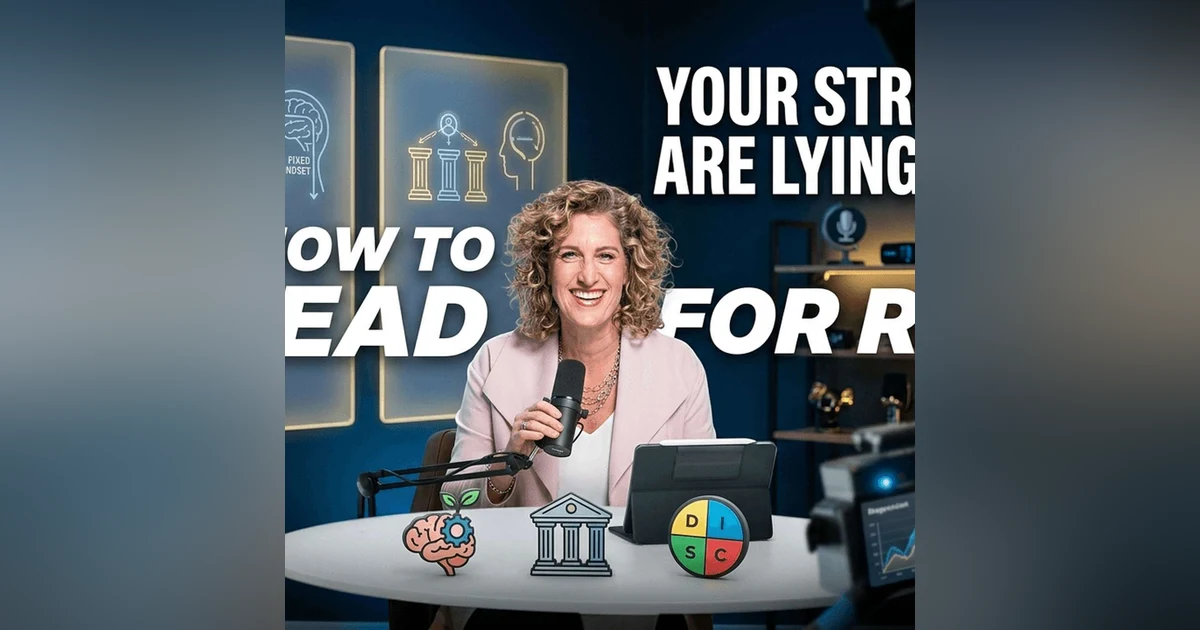
Send us Fan Mail Business Community https://www.skool.com/thebusinessnetwork Newsletter https://doing-business-with-a-servants-heart.kit.com/steveramona 📝Description: Most people are handed a leadership title but never actually taught how to lead. In this episode, leadership coach Vanessa strips 20+ years of experience down to something simple: leadership is learnable — like a sport — and the leaders who grow are the ones who choose a growth mindset over a fixed one. Here's what ...

 Spotify
 Apple Podcasts
 YouTube
 iHeartRadio
 RSS Feed
 TuneIn
 Castbox
 Castro
 Goodpods
 Business Community https://www.skool.com/thebusinessnetwork
Newsletter https://doing-business-with-a-servants-heart.kit.com/steveramona
📝Description:
Most people are handed a leadership title but never actually taught how to lead. In this episode, leadership coach Vanessa strips 20+ years of experience down to something simple: leadership is learnable — like a sport — and the leaders who grow are the ones who choose a growth mindset over a fixed one.
Here's what Steve and Vanessa unpack:
- The three pillars that make leadership less overwhelming: know yourself, manage your team, lead your business
- Why 95% of leaders avoid giving constructive feedback — and the simple shift that makes it about facts, not feelings
- The six passages of leadership, and why every promotion is really a brand-new job
- How your greatest strengths become weaknesses when you overuse them
- Why "you don't need the answers, you need the questions" is the most freeing thing a leader can hear
PS: One line from Vanessa stuck with me — a CEO she coached kept reading a stack of books right up to the day he retired. That learning mindset never turns off. If you've ever felt "behind" as a leader, you're not behind. You just haven't been taught yet. That's a fixable problem.
CTA: Listen to the full episode, then head to yourleadershipresources.com to take Vanessa's leadership assessment. And if this served you, share it with one leader who needs to hear it — that's how we serve before we sell.
🎯 What You’ll Learn:
✅ Mindset Is a Choice
✅ Every Promotion Is a New Job
✅ Let Go to Lead
⏱️Timestamps:
[00:02] Mindset Beats Everything
[00:04] The Three Pillars
[00:06] Why Feedback Feels Scary
[00:12] When Strengths Become Weaknesses
[00:15] The Six Leadership Passages
[00:17] Questions Over Answers
🤝Connect with Vanessa Judelman:
💥Web: https://www.mosaicpd.com/
🤝Connect with Steve Ramona:
💥Web: https://steveramona.com/
💥LinkedIn: https://www.linkedin.com/in/steveramona/
💥IG: https://www.instagram.com/bizopportunitynow/
💥Podcast: https://www.servinginbusinesspodcast.com/
💥YouTube: https://www.youtube.com/@doingbusinesswithaservantheart?sub_confirmation=1
🔖Tags:
#Leadership #GrowthMindset #HighTrustTeams
Free Business Community: https://www.skool.com/thebusinessnetwork
Subscribe to our Podcast Newsletter
https://doing-business-with-a-servants-heart.kit.com/628f9d5962
Join Me on Substack: https://podcasthost.substack.com/
Doing Business with a Servant's Heart Named Top 20 Small Business Marketing Podcast
https://podcast.feedspot.com/small_business_marketing_podcasts/
Welcome everyone to Doing Business with a Servants Heart Podcast. Doing business and life with a purpose, serving others, and yes, achieving success. I'm your host, Steve Ramona. We created this show for you because we want everyone to be motivated, inspired, and educated to make an impact in your world. And I accentuate your because we can't change the whole world. We're not these professional, powerful leaders. But if you change your own little world with an impact, with motivation, education, you'll make a difference. And while you're listening to my incredible guest today, I want you to think how you're going to serve today and what impact you're going to create today. I want to thank my sponsor, pitchdb.com. Be a guest in over three million podcasts, speak at over 18,000 different conferences and much, much more. Build your thought leader platform with an incredible opportunity to show who you are. And as I said, I talk about impact. Well, leadership is powerful. It changes everything for everybody if you do it right. And this guest is a huge impact looking at her bio and hearing some things that she's doing. You're going to be blown away. Get your pencil and paper ready because you're going to be taking notes. Vanessa, welcome to the show. Thank you. Great to be here. Love talking about leadership. Uh it's something that is talked about in so many different ways. Some write, some, you know, and it's different ways you can do it, but we always need to find the right way for us. So what's one word uh that's your key to successful leadership and why? One word. One word. And explain that one word.
SPEAKER_02Oh wow. I would have to say mindset. Mindset is going to be the one word. I mean, that's a tough question to start with because leadership is so complex and it's so multifaceted. And what I have noticed over the years is that if leaders do have a certain mindset, it helps them to be more effective in their job. So if you know, if anyone listening knows the work of Carol Dweck, she wrote a book called Mindset, the New Psychology of Success, where she talks about she assesses successful people and looks at them and interviews them for 20 years. And she realizes, you know, what is it that makes some people really flourish and other people stay stuck? And she realizes their mindset, which is their which really is your beliefs. And so she coined the terms fixed and growth mindset.
SPEAKER_01Yeah. Right.
SPEAKER_02So if you have a fixed mindset, you believe everything's set in stone. Nothing can improve or change. If you have a growth mindset, you know that you can change. Now it's going to be hard work, but you can change. And so that's why I think mindset is so important for leaders because I've seen leaders with a fixed mindset really get stuck and they give up. Like I and they think they're a bad leader, versus leaders with a growth mindset know that, for example, let's take one um one piece of leadership that's important is strategy. You need to be strategic as a leader, but strategy is complex. There's three parts of strategy. You have to understand what they are and how to implement them. So someone with a fixed mindset is going to give up and just say, it's just not my strength. Whereas someone else with a growth mindset will say, Well, let me learn about it. What does it mean to be strategic? How can I apply it to my team?
SPEAKER_00Yeah, I like that. And you picked a good word. And there I knew there's a lot of words, but that leads to a couple of things you said. One, it's complex. And two, is you're going to make a mistake as a leader. We're not perfect. And that's okay. But with the complexity, that's where you come in, Vanessa, as this coach consultant, to help people understand leadership in their business. Because I know it's different in every business. Talk about how you do that.
SPEAKER_02Absolutely. So when I started my business about 12 years ago, I really thought about, you know, what is it that makes leadership so complex and can be very overwhelming for people? And I looked at, I'd been a consultant at a consulting firm for many years before that. I did a ton of a needs analysis for global organizations. So I took all of my needs analysis data, and as an executive coach, I had sort of goals set for clients and I put them all together and realized I noticed some themes that came up, regardless of a leader's industry, regardless of where they lived in their world. And I realized there were sort of three things that make a successful leader. So number one, you have to know yourself. Number two, you have to manage your team. And number three, you have to be able to lead your business. And it's through those three pillars that I stripped down the complexity of leadership into those three parts. So leaders can say, okay, I have to know myself. Well, that's that's the self-awareness piece. Uh, I have to be able to manage my team. Well, what's that? Is it coaching and developing my people and delegating and then leading my business? What's that? Well, that's around change management and extra executing strategically and prioritizing. So within those three pillars, I then break them down again.
SPEAKER_00I like how you're breaking this down. You're making it simpler than it really is, but the actions where it's hard. You said that you've got to take the action, right?
SPEAKER_02Yeah, that is so true. And the the problem why a lot of leaders struggle is they don't know what action to take, Steve. Right. So they struggle. Let's say giving, I think giving feedback is a great example. Or even coaching, right? Leaders know they need to give constructive feedback, but 95% of leaders, based on the data, avoid giving constructive feedback, you know, because they're nervous and they don't hurt someone's feelings. But if you actually know, look, there's a process to do it. If you know what the process is, it's actually not about feelings, it's really about facts, it's about behavior and it's about development.
SPEAKER_00Yeah, that's very cool. What I love about you too is you have over 20 years of experience in this, which I always say that's yeah, I know people starting out coaching, you've got to start somewhere, and then that's good. But what have you seen in these 20 years that has changed in leadership?
SPEAKER_02Oh, a tremendous amount, a tremendous amount. I mean, you know, when I started at a training and consulting company 25 years ago, we it was very hierarchical. The CEO had a corner office, people wore suits to work, you know, now it's very different. Um people work from home with the vibr, you know, hybrid workforce. Um people don't stay in jobs for a long time, they move pretty quickly. So the world of work has changed dramatically. And also the amount of change that I see leaders suffer from. I call it change fatigue, Steve, where I just see leaders have or organizations have a change. And then on top of that, another change, and on top of that, another change, and on top of that, another change, right? And so leaders are trying to navigate all these complex changes at the same time. And most leaders I work with have change fatigue, they're just exhausted from all the changes.
SPEAKER_00It's a great word because fatigue is comes in personal life could be fatigue too. If you're going through a divorce, and we'll get into that. Maybe we have time. Two words that I've I think they were in your bio, but I've heard people talk is talent management. What does that really mean?
SPEAKER_02So managing your talent, managing your people. And I'm glad you didn't mention the word human capital because that really bothers me. Because I always think about people, capital. So I'm good at talent management. So this is sort of the cycle, right, that you have to go through to develop your staff. So uh to develop your people. So talent management starts with planning. You have to plan and you have to set goals, and then you have to monitor people's performance, and then you have to give them feedback, and then you have to coach them, and then you have to go back to your plans. So there's this whole cycle of managing people's performance that begins with the plan, and throughout the year, people have to give feedback. And so, with talent management, there's a couple of different components. One is formal talent management, which is, you know, formal performance reviews, performance appraisals. And the other piece is what I would call like informal coaching. And so that's what I teach a lot of leaders. So one of my clients last week, we did a workshop on how do you integrate informal coaching into the day-to-day conversations you're already having, right? So, for example, one thing we talked about is listening. A lot of leaders don't listen, right? They're working at such a fast pace, people will bombard them with questions all the time and they'll just fire off answers. And I say to them, you know what? If you really want to start coaching, I mean, it's fine if someone's new to your organization and you really need to get them up to speed quickly. But when you have more see seasoned people on your team or people who've been with you for a while, take some time to really listen, understand what their issues are, and then ask them some powerful open-ended questions to get them to start thinking for themselves and solving their own issues.
SPEAKER_00I like that. It's kind of mentorship. And it's interesting. Elk McCullough, who's one of my guests, he was in the military. He he always asks the people a question when they say they're a leader. Who are you mentoring today? If you're not mentoring, but you're really not a leader at that, and nothing wrong with that, but that should be one of the goals of the leader is mentoring people. What's your thoughts on that?
SPEAKER_02Yeah, a hundred percent. The the problem again is that a lot of leaders are told to do things like coach people and mentor people, but they don't know how. So I'm a very practical person. And so when I've learned anything in my career, like how to how to how to be an entrepreneur when I started my own business, right? I find someone who's the best in that area to teach me how to do it. And uh the the, I don't know if you know the business, the strategic coach. Um, I'm forgetting the name of the person he wrote the book who runs strategic coach, but he wrote a book called Who, not how. So that's a different perspective, too. It's part of it like you've got to know how to do stuff, like how to coach, how to get feedback. But the other part of it is you've got to know who's the right person that's gonna help you to move forward. So if you need to use AI in your in your leadership practice now, who is the person in your firm who's an expert in AI? If your boss has said to you, I need to lead strategically, and you don't know what that means, go find that person in your business that you think is the most strategic person and say to them, what does strategy mean to you? How do you approach your job? So so it's so you're you're strategic. What do you put in place annually, quarterly? So say to people like be the CEO of your own career. If you're a leader who feels like you have a gap, find a coach, take a training program. Um, you know, it's a combination of that who and that how, or find that person in your business that does it really well and get them to help coach you and develop you.
SPEAKER_00I love that because my dad used to tell me as a young kid, don't recreate the wheel. You know, that was back in the 60s when I was born and you know, late 60s. And it's still today, it's that's what you're saying. Is if you got a great SEO person, go get them. If you're not good at that, your company needs marketing or whatever you want to call that. It takes a village, it takes a community. It doesn't take one. A leader doesn't have to stay on top of a mountain and say, I'm leading you all. You always need help. So I love that. What is growth is important, the that's ROI bottom line. You need to make money, pay bills, pay your employees, all that. What's one of the things that you teach for growth for leadership?
SPEAKER_02So the first place is to really understand yourself, is that first pillar, which is know yourself, right? That's a first place every leader has to start. If you want to grow, you have to have self-awareness. And the reality is we all have strengths and weaknesses, right? So I'll use a tool uh like the disc profile, for example. Do you know the disc?
SPEAKER_00Oh, yeah.
SPEAKER_02Yeah, yeah. So for those who don't know the disc, it's a self-assessment tool and it measures your work style. So the different work styles that just measures is if you're dominant, if you're an influencer, if you're steady, or if you're conscientious. And in fact, we're all a combination of all four of those areas, but it shows you do you tend more towards one or the other? So the reality is with all those four work styles, everyone has different strengths and weaknesses. And in fact, what's really interesting about that is when you overuse your strengths, they actually become weaknesses. So I have a client who's a CEO, most brilliant CEOs I've ever worked with, and he's an actuary scientist. So his strength was he's he's a conscientious in the disk profile. He's very analytical and logical and thoughtful, and he's not a risk taker. And in his business, you don't want him to be a risk taker. So we had a conversation one day. He said, you know, I am high on the introversion scale, and I feel like it's holding me back as a CEO, but it feels inauthentic for me to walk around the hallways and high-five people. It's just, it's not who I am. And I said to him, What gave me the impression? I'm curious, what gave you the impression that that's what it looks like to be a CEO? I said, let's talk about what it means to connect with people as someone who's high on the introversion scale in a way that's authentic for you. So that's what we talked about. It's really leveraging his strengths and not the weak. So his strength of sort of being analytical and um thoughtful and making slower decisions can sometimes slow him down, right? But because sometimes he overanalyzes and he gets into analysis paralysis. But that was the learning for him is that you sometimes need to dial down your analysis paralysis and dial up your quicker decision making to be more effective.
SPEAKER_00That's so powerful. I I like that. You know, what a piece of advice would you give somebody that's in a business that wants to be more of a leader? Maybe it's a manager that wants to become vice president, CEO, so you know, whatever that move up is. What piece of advice would you want to go? I want to be a better leader as they're listening to this.
SPEAKER_02Yeah, for sure. Well, what a lot of people don't know is there's actually six different passages of leadership. So the first passage is just uh you leading yourself in a business. You can demonstrate a lot of leadership without having direct reports. Then the second passage of leadership is I am now leading other people for the first time in my career. And that's that's a really hard transition for people because not only are they still doing their job, but now they have to learn how to get results through others. Then people become managers of managers. And again, that's a completely different job. And then you manage a function or two functions, and then you manage an enterprise. So at each level of leadership, actually, you have to learn new skills. And that's why it becomes really tricky and complex for leaders. So, for example, when you move into leadership, you have to learn how to get results through others for the first time. When you move up into that position where now you're managing managers, you have to learn how to get results through people who need to get results through others. So you may not have the opportunity to go directly to people who are on the front line. You have to coach and train your managers to do that. And so it really does depend on the level that you're at. But I mean, I think things like um relationship development, building trust, learning how to coach, those become very key the higher you get. And I would also say delegation is something that's really important, Steve, because I have a lot of clients who get promoted. And guess what they do? They keep their jobs from five years ago, and they keep tasks from you know three years ago. And I say to them, man, I get curious with you. What's the reason you're still doing that? They're like, because I like it. That's not a good enough reason, right? You can't do tasks from three jobs ago because you like it. You have to learn to let go.
SPEAKER_00Yeah, being uncomfortable is comfortable, an entrepreneur and leadership. That's just you're gonna be uncomfortable at times. With regards to leadership, I think one of the big components, and it's complex, like you said, is communication. And you mentioned asking questions. Talk about communication.
SPEAKER_02Yeah, communication is an interesting one because in most employee opinion surveys, communication comes up as the lowest score again and again and again. I've seen this over the years. It's hard to communicate, and it's especially hard to communicate when people are working in a virtual or hybrid fashion. Um, and so what I ask my clients to do is as a leader, I always say to them, as a leader, you don't need to have the answers, but you do need to have the questions. So I always say to my lead the leaders that I that I train or coach, I always say to them, ask your team, just have a conversation and say to them, hey, let's check in on our communication. What's working, what's not working, and what do we need to do to overcome what's not working on our team? They'll tell you. And by the way, you probably hire some really smart people in your company. So they'll probably have some really good ideas on what you as a team can do to improve your communication. You don't need to own that, the process that you put in place, but you do need to bring up the question.
SPEAKER_00I like that because that's so well, Vanessa. I love because you're hiring this person, Joe Smith, because you love them. They fit all the boxes, you're excited, and then you don't go to them for help. See, that's a brilliant thought there, audience. To think about that if you're a founder, CEO, high-level executive, or no high-level executives. You hire that person for a reason. So always keep that mindset. Personal growth is another big thing with leadership. What daily do you have a daily practice or habit that you have that helps you to personal growth that helps that can help others?
SPEAKER_02My focus around personal growth is always around building high trust relationships. High trust relationships are key in every role, whether you're CEO, whether you're frontline with customers, it doesn't matter. You have to have high trust relationships. If you don't have high trust relationships on your team or in your business, you won't get results. And that's just the bottom line. If you don't have high trust relationships, you're gonna have a lot of conflict on your team. So I have a client that I'm coaching right now who's the CEO, and I'm coaching his CFO as well. And they have not seen eye to eye for about three to four years. So there's a lot of conflict within their relationship, there's a which means there's a lot of conflict amongst their teams. And so the goal of this uh this uh uh client um project, I guess we could call it, yeah, is to get these two most senior people in the firm to build trust. And one of the ways, Steve, that you often see lack of trust or conflict happen is lack of clarity around roles and responsibilities. Yeah, especially in executive roles where they can sometimes be overlap, you have to have those crucial conversations around roles and responsibilities. I see that at every level. And so that's when I do training with managers, that's one of the things that I always teach them is how do you gain clarity around roles and responsibilities and then communicate that to your team because it's gonna mitigate a lot of potential conflict.
SPEAKER_00Sports is a big vision that I see with this. If you have your role, whether you're a sports person or not, you're the quarterback or you have your role and all these different positions. It works the same. I that's what I look at business. You have all these positions, you have your janitor up to your CFO, COs, you know, whatever that system or hierarchy looks like. I I love that because people lose sight of that. But if you don't mind, I like to get a little personal with you. I want to learn a little bit more about Vanessa than what we just heard because you're doing some great things. You ready? I'm ready. Let's do it. Okay, if you had one person you could interview, who would it be? It could be historical or today, celebrity, whoever, and why would you want to interview them?
SPEAKER_02I would interview Brene Brown. I love her work. I love that it's founded in research. I love that she's always working on new research projects. I love her work on vulnerability because I think vulnerability is a term that we're more comfortable using in the world of work now, thanks to Brene Brown, but still a lot of leaders don't know what it means to be vulnerable at work. It doesn't mean share your deepest, darkest secrets. It means when you're wrong, for example, say, I'm sorry, I made a mistake and here's I'm gonna fix it. Um, and plus, I think she's hilarious. I have listened to her podcast for years, and uh, I think we'd have a really good time if we went out for lunch. So, Brene Brown, if you're listening, give me a call.
SPEAKER_00Let's set that up. Anyone knows Brene Brown? Excuse me, reach out to me. Let's get because this lady's awesome. She's definitely a servant's heart in leadership and in so many other ways. So, what does Vanessa do on a Friday night?
SPEAKER_02Well, this Friday night. I flew from Toronto to New York City. My son, my 15-year-old son, plays competitive basketball, and I spent the weekend on a basketball court. So that was this weekend when I'm not uh, you know, uh driving my kids around town. Luckily, my older son, who's uh almost 18, has his driver's license now. So I'm doing less driving than I used to. When I'm not participating in my kids' sports, I love to read. I love to walk, I love to be in nature, and um I'm quite a fan of sushi. I really do like to eat sushi. I got it, I gotta admit.
SPEAKER_00My wife's a big douche fan too. She loves it. She loves it again. I'm okay with it, but yeah, I if she loves it, then we go do that. I love that. And I love your mother sports. Uh oh, what do they call mother and sports, not what they call it, but my wife was that way too with it. She had four three kids that did sports, and such a great way to spend a weekend or a night. Um, and how they do, by the way.
SPEAKER_02Uh so so so so the same.
SPEAKER_00Okay, that's all right.
SPEAKER_02So, so not their best weekend. They were a little bit tired, so it took them a while to warm up.
SPEAKER_00Yeah, that's that happens for sure. Well, I want to thank you. I know you have some resources that my audience can take advantage of.
SPEAKER_02Sure, I have great resources. So if you go to your leadershipresources.com, I have amazing, actually, a really interesting art. I think people find interesting a leadership assessment you can take to assess your leadership style. I have some uh great articles, I have some links to some podcasts. And so I would definitely recommend people head over to your leadershipresources.com.
SPEAKER_00That's fantastic. Anything you want to leave the audience? We have a few minutes left.
SPEAKER_02Sure. I would say that if you're a leader and you're not feeling confident, it's okay. Because leadership, Steve, we've talked about sort of the sub-theme of sports. Leadership is like a sport. You can learn how to be a great leader. So I would really recommend that you take a minute and think about what is it that I'm not feeling confident about? It's probably just that you've never learned how to lead properly. So find yourself that person, that course, that resource, that mentor internally that can help you build your confidence and develop your skills as a leader.
SPEAKER_00It's so well said. Because sports is like that. And you're always learning. That's the thing in sports. You're always practicing the learning. Learn this, but you teach a leader this, they need to practice that. It just doesn't happen overnight, which is why it's so powerful. Well, yeah, thank you. Go ahead.
SPEAKER_02I was just gonna say, Steve, you just reminded me of something that I had a uh an executive, a CEO that I worked with many years ago, worked for many years ago, and he had that learning mindset. And even the year he was retiring, he had a stack of books, right? That he was reading all the time. And we'd always talk about different books. He was reading to the day he retired. So I think you're so right, Steve. Having that learning mindset, that growth mindset is so important, regardless of what point you're at in your career.
SPEAKER_00ABL, always be learning. I don't know why it reminds me of a basketball league. But thank you again, Vanessa. This has been fantastic. Such a powerful message. And audience, as I say, use the reverse and forward buttons on your podcast platform or on YouTube because this is about a 25, 26 minute podcast. And some people go, I don't want to listen. But Vanessa gave you some million-dollar tips here that if you miss it, may change your life, or share it with somebody else to change their life or help them grow. Me and Vanessa love for you to watch or listen to this whole show, but five or eight minutes of it change your life. We're super happy. So don't make that an excuse not to listen to a podcast. Enjoy it, enjoy pieces of it, or enjoy all of it. Don't forget my TV show, Together We Serve, Fridays at 2 p.m. Pacific, 5 p.m. Eastern. It's on Roku, Apple TV, all these different streaming platforms. And as always, don't forget doing business with a servant's heart. You listen to a servant heart today. Leadership is such a way to serve, and she's shown you great ways to do that. But wear that message proudly on your chest or your head, hats, t-shirts, hoodies. I want to get the message out to the world because if we all learn to be servants' heart, I think and I know the world will be a better place. And as always, me and Vanessa, thank you so much for listening or watching this podcast. We see you in the next episode of Doing Business with a Servant's Heart. See y'all.