Why the Best Leaders Run Toward the Fear | David Kitchen
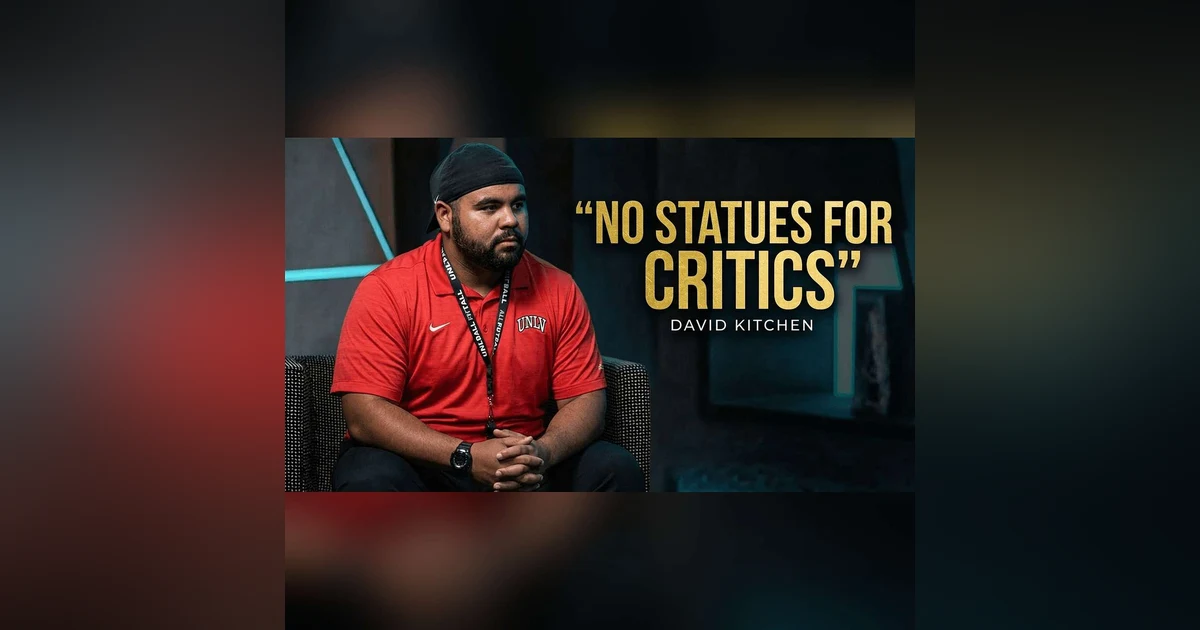
Send us Fan Mail Business Community https://www.skool.com/thebusinessnetwork Newsletter https://doing-business-with-a-servants-heart.kit.com/steveramona 📝Description: What separates the people who chase something worthwhile from the ones who sit back and criticize? For David Kitchen — former Division 1 coach turned founder of Edge Leadership Academy — the whole game comes down to one decision: get out of the stands and step into the arena. In this episode, David and host Steve Ra...

 Spotify
 Apple Podcasts
 YouTube
 iHeartRadio
 RSS Feed
 TuneIn
 Castbox
 Castro
 Goodpods
 Business Community https://www.skool.com/thebusinessnetwork
Newsletter https://doing-business-with-a-servants-heart.kit.com/steveramona
📝Description:
What separates the people who chase something worthwhile from the ones who sit back and criticize? For David Kitchen — former Division 1 coach turned founder of Edge Leadership Academy — the whole game comes down to one decision: get out of the stands and step into the arena. In this episode, David and host Steve Ramona unpack why real service is impossible from the sidelines, and why holding yourself back isn't humble — it's selfish.
Here's what you'll take away:
- Why "selfish and impact don't live together" — and how staying small keeps you from lighting someone else's candle
- The one-vote leadership lesson from a high school coach that David still carries into boardrooms today
- Why the higher you climb the org chart, the less it's about you
- How to lean into fear, take messy action, and let pressure "do its work"
- The truth about participation trophies — and the question that separates unable from unwilling
PS: Watch for the parking-lot story — David pulling his used truck up next to a row of Ferraris at his first networking dinner, saying the wrong thing, and shrinking into his chair. Two years later, the entrepreneur at that same table became one of his biggest clients. Proof that the door doesn't open on your timeline — it opens because you walked through it.
CTA: If five to eight minutes of this changes how you lead, share it with someone who needs it. Then catch Together We Serve — 2PM Pacific / 5PM Eastern on Apple TV, Roku, Samsung, and LG. Comment on the YouTube channel and we'll get your question straight to David. Reach David directly at @coachdkitch on every platform.
🎯 What You’ll Learn:
✅ Get Out of the Stands
✅ Take Messy Action Anyway
✅ Not Yet Isn't Never
⏱️Timestamps:
[00:02] Living in the Arena
[00:06] The One-Vote Lesson
[00:09] Humility at the Top
[00:13] Fighting Imposter Syndrome
[00:19] The Truth About Trophies
[00:23] How He Prepares to Speak
🤝Connect with David Kitchen:
💥Web: https://www.edgeleadershipacademy.com/newsletter-sign-up
💥LinkedIn: https://www.linkedin.com/in/coachdkitch/
💥IG: https://www.instagram.com/CoachDKitch/?hl=en
💥Podcast: https://podcasts.apple.com/us/podcast/built-not-born-podcast/id1538583934
🤝Connect with Steve Ramona:
💥Web: https://steveramona.com/
💥LinkedIn: https://www.linkedin.com/in/steveramona/
💥IG: https://www.instagram.com/bizopportunitynow/
💥Podcast: https://www.servinginbusinesspodcast.com/
💥YouTube: https://www.youtube.com/@doingbusinesswithaservantheart?sub_confirmation=1
🔖Tags:
#[tag]
Free Business Community: https://www.skool.com/thebusinessnetwork
Subscribe to our Podcast Newsletter
https://doing-business-with-a-servants-heart.kit.com/628f9d5962
Join Me on Substack: https://podcasthost.substack.com/
Doing Business with a Servant's Heart Named Top 20 Small Business Marketing Podcast
https://podcast.feedspot.com/small_business_marketing_podcasts/
Welcome everyone to Doing Business with a Service Heart Podcast. Doing business in life with a purpose, serving others, and yes, achieving success. And boy, you're going to learn all about success today with my incredible guest. I'm your host, Steve Ramon, and we create this show for you because we want everyone to be motivated, inspired, and educated from the message that my uh guest is going to say today to make an impact in your world. I'd love for you what you learn today. You go to your network and go, man, I just listened to my Steve's podcast and his guest to this, this, and this. A lot of good quotes will be coming out of that. So while you're listening today, I want you to think about how will you serve today and how what impact will you create with that service? Don't wait for tomorrow. Let's start serving today and make that something you do every day as a uh skill set. With that being said, I I mentioned impact. The background in this next guest is gonna blow you away. I'm a big sports guy. People that know me know my sports background, my uncle, and all that. But he's taken sports to the next level to really help everybody. David, I want to welcome to the show.
SPEAKER_01Man, thank you so much for having me. I'm I'm excited to do this and really fortunate to be able to share the platform with you today. This is let's start with what does it mean to live in the arena? And it's it's so funny because that phrase has really shaped my life and it's really um changed the way I think about a lot of things. So as as I got out of um college coaching and as I started to launch my business, I really looked back on my own life and I was like, okay, what are some of the things that really contributed to me being able to step into this and be able to launch a business and reach division one level of coaching and do all the things that I had done? And what I realized was that at some point I made a decision to get out of the stands, right? And so when you think of life in the terms of sitting in the stands versus being in the arena, it takes no skill set, it takes no talent to sit in the stands and criticize and throw rocks at the people that are down on the arena floor. But to live in the arena and chase something really worthwhile, it doesn't have to be business, it can be being the best father that you can be possibly. It could be being the best community member, whatever your arena is. But being in the arena means putting your flaws, your shortcomings, your mistakes, your failures on display for the world to see. It means accepting that you may give everything you have and you still might come up short. It means being willing to bet everything on faith and follow through on that. It means accepting responsibility for what you did right and what you did wrong. And it means answering the question. And this is the key, Steve. It means answering the question. And that question is what are you truly capable of? It means living a life that few are willing to live so that you can have a future that most people will never experience. That's what it means to live in the arena. So when I say that, I always urge people you have the opportunity to live in the arena of life, or you can sit in the stands with everyone else and throw peanuts and throw rocks. But just remember, there's no statues of critics.
SPEAKER_02Oh man, I'm glad I asked that question. You went in a completely different direction, I thought, and I didn't think about that. So using the title of this show, you can't be a servant when you're sitting in the stands. And you're being very much a non-servant, right?
SPEAKER_01Yes, it's impossible.
SPEAKER_02And what I'm hearing, the arena could be fatherhood, it could be community service, it could be running a multi-hundred million dollar company, but be in your arena.
SPEAKER_01Yeah, because we have a responsibility to be in the arena, and that's the servant piece, right? We all have these unique gifts, whatever they may be. For me personally, it's my ability to connect with people, it's the some of the lessons and things that I can share through coaching, speaking, etc. If I didn't live in the arena, if I didn't go put myself out there and go after this thing and try and build the impact that I'm trying to build, that's selfish. That's not servant leadership, that's selfish. That's me protecting me. And so when we when we hold ourselves back, that's what that is. We're we're keeping our ourselves from lighting another candle, and that's selfish, right? So if you really want to be a service, it means that you have to go be the best version of you that you possibly can for whatever that arena is, right? So if you're not growing as a person, you're not gonna be the best husband or father that you can be. If you're not growing as a businessman, you're not gonna be the best leader that you can be. Like you have to it requires us to live in the arena to be the best versions of ourselves.
SPEAKER_02Selfish and impact do not live together. You've said that multiple times. And and audience, remember that selfish and impact, you can't make an impact on yourself. You make impact on yourself, but that's not what me and you want to do. We're gonna impact to the world, how big that impact is. I I love asking these questions to people that have been so in-depth in sports and your coaching. What have you learned in sports all these years that lead you to where we are today?
SPEAKER_01And there's so much sports, sports were my were my training grounds, you know, for for a lot of things and and starting with leadership. I mean, I was born in a single-parent household, never met my biological father. So a lot of the examples of leadership that I saw, you know, came from my coaches and came from um what it means to be part of something bigger than myself and to be able to sacrifice. And, you know, believe it or not, Steve, my first experience in true leadership in sports came in a way that most people wouldn't believe, which was I was a three-year starter on a very good team. I was very fortunate to be a good player on a great team. Um, and my senior year, I was I was expecting to be named captain. And so I got called down to my coach's office and I'm like, here it is, I'm getting the C on my jersey. This is gonna be a big deal. You know, I came from a high school that produced Gatorade National Players of the Year, Division I pipeline. I mean, I was fortunate to be part of kind of this Friday night lights at you know environment. And so being a captain was a big deal. It was basically your stamp of approval. And so I got to the coach's office and he looked at me and he said, Kitsch, I need to ask you a question. I said, Okay. And he said, Did you vote for yourself? And I said, No. And he said, Okay, I'm gonna give you an opportunity right now. Do you want to change your vote? I said, No. And he said, Okay, he said, you missed it by one vote. And I said, Really? And he grabbed me and he put my hand on his shoulder. Now he knew my home situation, he knew how much this meant to me. He knew I wasn't going to college if it wasn't for football. And he put his hand on my shoulder and he said, That C does not define whether you are a leader or not. This moment does not define whether you are a leader or not. What you do over the next six months in preparation for this season and what you do as a teammate will define whether you're a leader or not. And that was my first experience in leadership and co in athletics. And that's when I realized, oh, it's not about me. It's not about the C is irrelevant. It's about everybody else. Right. And so I went on to learn more throughout the opportunities that I had. And I started to see, especially when I got into coaching, when I got to the division one, I mean the top of the top of college athletics, I got to see leadership and culture and high performance in all these different arenas and see the impact that they could have on people. And I started to compile this list and I, you know, I got my master's in sports psych, and ultimately it all culminated into this conversation with a young man who came to me and he said, Coach, I've been the best player on every team I've ever been on. And everybody's always telling me to lead, but nobody ever taught me how. And this young man was, in my opinion, the best leader I had ever coached. And so I thought to myself, if he feels this way, how many other people feel this way? And so I went back to all those experiences, and I'm an avid note taker. So I had years of notebooks and things, and I went back to all of this and I put together this curriculum of all the lessons that I learned from players and from coaches and from administrators in my own life, and I built this leadership curriculum, and that was the foundation of what became Edge Leadership Academy.
SPEAKER_02So you never played sports, you never would have done this.
SPEAKER_01Probably not.
SPEAKER_02It's not 100%, but yeah, probably led you to this path. 100%, David. You are so humble because you have super success. How much and you're a leader, how important is humbleness to be leadership?
SPEAKER_01Oh, it's everything. It's everything. The best leaders I've ever been around are the ones that when everything goes wrong, they're the first ones to step up to the microphone. But when everything's going right, they're nowhere to be found. And their team believes that they could have done it without them, right? That's that's what it's all about. And then I preach this to, you know, when we come into businesses and work with CEOs and, you know, nine, 10-figure companies. I'm telling them, the higher you go in the organizational chart, the less it's about you. And so it's it's a balance of humility and confidence, right? I'm very confident in my skill set and very confident in what we can do. But I also realize that there's always a bigger dog. And I always realized, also realized that this is not about me. None of this has ever been about me. The coaching was never about me. The the what I'm doing now is not about me. It's a it's about the future. It's about the impact that I can have. It's about my funeral and my family and my children and my nieces and nephews and people and people coming up and saying things about me that make them go, oh, we're proud that that guy was part of our family. That's what it's about to me. That's where the humility comes in, is zooming out and seeing the big picture. Because at the end of the day, Steve, in three generations, we're all going to be forgotten unless you build an impact that allows it to carry on.
SPEAKER_02And it does, it has nothing to do with ego. Audience, remember this. This legacy he's talking about. I have a good friend of mine, my business partner, Max Lambright, shout out. He talks about a movie. Everybody's been to a movie at the end, you get the credits. He says, What are your credits after you pass? And I love that audience. Keep that if that's your just your only purpose to have a great legacy of credits, you'll be very successful. Of course, you're gonna add impact and servant, and I want to make a hundred more leader, whatever those goals are. It's very powerful. And real quick, shout out to that coach that gave you that advice because I I he needs a shout out.
SPEAKER_01He was my first podcast guest when I launched the when I launched the company. He was my first podcast guest. I called him and I said, There's no way I can start this, there's no way I can launch this business, there's no way I can launch this podcast if you're not my first guest. Wow, what's his name? Gary Campbell. Gary Campbell. Multiple state championships in in Massachusetts, one of the winningest coaches um in Massachusetts school history. He's he's a phenomenal guy. And you know, he came all the way down to Berwick, Pennsylvania to coach me at our high school. And um, you know, he and this is the thing about him. We talk about humility. He was following up the winningest coach in high school football history who had just stepped down. That was the role that he stepped into. And he came from Massachusetts and knew nobody and stepped into that. And at his press conference, he said, I'm not gonna try and do anything, I'm just gonna be me, and I'm gonna guide these kids the best I can. And we went on, and you know, we're very fortunate to to win multiple championships, and he sent a lot of us to college, man. I mean, there was 14 seniors on my college on my on my high school team, and I believe 11 of us played college football. So, you know, that's that's what it was about.
SPEAKER_02Accolades are great, but it sounds like Coach Gary developed many leaders to change the world. 100, 100. And that's probably bigger than any award he got, right? Absolutely. Oh, geez. I don't get goosebumps much, and I don't talk about much, but I really am because that's this is the whole power of sports. And hey, if you're not into sports, it doesn't matter because we have people from sports like Coach David here that can teach you this leadership stuff. But the thing about leadership is we're still moving forward and there's still obstacles and setbacks. What still holds you back?
SPEAKER_01An imposter syndrome, just like everybody else. You know, I'm human, just like everybody else. I mean, I I stepped out of a world that I knew, right, which was college coaching. I understood that, I knew how to be successful in that, and I stepped into this world that I knew nothing about, which was the entrepreneurship world. And all of a sudden I found myself in rooms that I was like, man, I have no business being here, right? I shouldn't, this is this is not me. I what am I doing at lunch with entrepreneurs? Um, and and all these things. I just wrote a newsletter about it, you know. One of the first networking meals I went to, I pulled a parked my used truck next to all these, you know, Ferraris and and and Porsches and everything. And I went in and I was nervous and I tried to make a joke about you know the venue being nice. And the guy looked at me and said, it better be nice. I own the place. And I and I was like, oh, and for the rest of the meal, I didn't speak because I was, I was, I shrunk, right? And so it's something that holds everybody back. And so you have to find things to be able to lean on, right? So for me, I I look at things like I have an undoubtable, undeniable stack of evidence behind me that that I do hard things and that I'm able to build something from nothing, and that I'm able to rely on my core values of you know, being kind and being generous and being driven, and those things will all play out. So, you know, I have things that hold me back just like just like everybody else. There's there's no secret sauce here. Um, I just work really hard and I try and genuinely be good to people, and and good things have happened.
SPEAKER_02Human side, we can never forget that because we will make mistakes. God made us fallible for a reason. I don't know because I can't talk to God, but I know that that's the case.
SPEAKER_01Yep.
SPEAKER_02A lesson learning from that story you talked about going to that dinner is I know a lot of people listening on, I would never even go to that networking meal, but take an action. You went, even though it probably was not as successful as you wanted.
SPEAKER_01Talk about taking action as a leader, and it's it's everything, it's everything at the end of the day. Your ability leaders are are created in those figure-it-out moments, right? We don't we can't manage ourselves to success. We have to lead and we have to take action. Action is messy, you know. When I first got into coaching, um, a lot of people don't know this, but the reason I got in was because I sat at my table and I wrote letters to every division one coach on the East, uh everyone division one coach on the East Coast. And I said, I'll quit my job and come work for you for free if you give me an opportunity. That's how I got into college coaching. And so every good thing that has come in my life has come as a result of messy action, right? And so for me, I always look at it and I know that if there's a feeling of fear, there's a 90% chance that I should run face first into it. And so that's just what I try and remind myself. And and for leaders, that decisiveness breeds confidence and it breeds confidence in your people because they look at you and they say, Oh no, he's gonna run into the building. And he might not have all the answers, but he's gonna figure it out and he's gonna stay in there while the building crumbles until he figures it out and until it's safe for everybody else. That's who he is, right? And those are the things that set leaders apart. And so it's your ability to just make decisions. And as young leaders and early on in our leadership journey, we often get caught up with trying to make the right decision and the perfect decision, right? And so much of leadership is being able to make the best decision possible with the information that you have at hand. And you always reserve the right, if you lead with humility, to make a U-turn and say, Hey, I was wrong. I have new information now. We're gonna course correct. But as long as you're making those early decisions with your vision, your mission, and your values in mind, people are gonna respect it and people are gonna understand. You know, and so you just have to, it's not about making the perfect decision, it's about making a decision.
SPEAKER_02You're you're talking my language because I talk about up. You just said I use opportunity door. You walked into that networking event, you reached out to those coaches, you all try to open doors and eventually one open. Does it take you a month, a year, or 10 years? We don't know the how wire wear. And you just and have you noticed like successful entrepreneurs, successful athletes are like that. They keep pushing for and they keep asking.
SPEAKER_01Yeah, absolutely. It's it's uh it's the old phrase, right? Um, close mouths don't get fed, and you don't know until you know. And so it's it's the ability for you to continue to look for new opportunities to put yourself in a room that might turn out well or it might turn out poorly, but you don't know. And you know, to bring that full circle, the time horizon thing that you were talking about, right? One of the entrepreneurs that was at that meal that I went to when I first started my business, two years later, he was one of our biggest clients. His company was one of our biggest clients. It took two years, right? But we but it started over a meal. And as we grew and we built a relationship, and two years later, he he said, Hey, we're in you know 45 states and we do you know regional meetings with our managers, and we need somebody to come in and train our managers on leadership and work with our senior staff and our senior executives and our C suite. You know, do you want to travel the country with me for the next nine weeks? I said, Absolutely, let's do it. Right. So for the past two and a half, three years now, we've done that every year where we travel all over the country with this guy. And that never would have happened if I didn't go to that meal. And if I didn't just suck it up, I could have walked out after I made that first stupid remark about the restaurant being nice, right? I could have turned around in the parking lot, but it's about just being able to sit in the discomfort long enough. And I had a mentor that always said, Don't get out of pressure, sit in it and let it do its work.
SPEAKER_02I I'll I won't be looking at the camera. I keep writing all these incredible quotes. You know, and that is that story is is what audience, you need to hear. He didn't know two years later be client. You never knew he'd be a client, and you were uncomfortable and you thought you screwed up. And when you left there, sorry, I'm getting excited because you left there thinking, okay, that was a failure. That's okay. I'm gonna take and you were decisive, not indecisiveness, because that is an entrepreneur catastrophe, tragic when you're indecisive. You know, if you made a decision not to go, but you went to something else, that's a decision. And you'll never know because you'll never know if you had that client. But take I'm sorry, just this is so powerful. We had a great conversation before the show about participation trophies. You said a phrase, I think sports builds leadership, and you've done that. Look what you've done from sports to leadership. Talk about that quote and what you mean by that.
SPEAKER_01Yeah, it's it's um participation trophies to me, and kind of this culture that we're in where everything is kumbaya, and it extends to the business world, it extends to leadership and culture in the business world. There's so much pseudo-science out there and and you know, pop culture facts that we're talking about, like, oh, everything has to be hunky dory, and we have to do kumbaya and sewing circles, and everybody needs to get along. And listen, at the end of the day, leadership is a messy game, and business is a competition. Okay, there's there's stats and there's wins and losses. And so when I think of the participation trophy culture, right, it scares me because we can try and do away with winners and losers in schools and in youth programs, and even into the high school and college level, we can try and tell you everybody is great, but the fact remains that the world has not gotten rid of winners and losers. There's still a scoreboard, and so we have to teach people to be able to learn from their losses and reflect on that and be able to sit in the discomfort of saying, Hey, I tried as hard as I possibly could, and I wasn't good enough this time. Because then you start to frame it and you'd be able to say, Oh, no, doesn't mean no, it just means not yet. It means that I have to go back and learn some new skills. And I realized this at the college level. I mean, we had young men and young women that were coming to us at the division one level, and they felt like they had never done anything wrong in their life. And so all of a sudden you come in and now you're not playing. And you went from playing every minute of every game your entire life, and now all of a sudden you're on the bench and you don't understand why. And that's such a valuable lesson. And the you're the earlier in life you can learn that, the more valuable it is because now you can look at the people to your left and your right and say, okay, what skills do they have that I need to build? Why am I lacking? Why are these things happening? And you learn that introspection, and that that's the key to it. And one of the reminders that we always gave our players when they came in um when I was at UNLV in particular, we always ask them, how many of you guys want to go to the NFL? Everybody's hand goes up, right? Everybody wants to be a pro athlete. And then we'd remind them listen, the majority of people that hold NCAA records are selling insurance somewhere. That's the reality. So if you want to be one of that 0.1%, here's a list of the things that you need to do. And we're very clear about it, right? And then you can make a decision. And this is a decision that I tell people all the time it doesn't have to be going to the NFL. It could be being an entrepreneur, it could be being a great father. Again, all the examples we gave earlier. You have to ask yourself, okay, when I look at this price tag of what this thing really costs, before I make an excuse as to why I can't get it and I try and blame it on somebody else, which is the participation trophy thing, you need to ask yourself, was I unable to do it or was I unwilling to do the work that it took to become that person? Because those are two very different things. And when you at least admit to yourself that you were just unwilling to do the work, then you can start to fix that and you can start to work on that. But if you say I was unable, well, based on what? Because other people have done it. You know, I just don't believe that. And so I just think participation trophies and and that whole concept of removing the competition from things, I just think it's so dangerous for us because the world has not removed competition and it never will.
SPEAKER_02I I I like that because I and I'm an athlete, you're a much higher level, and it doesn't matter. But the stigma of pro athletes, pro college, high school, that they're not very smart. Stupid is the word sometimes. Yeah, you know, Steve and David, they're great at their sports, they're jocks, they're stupid. But you've blown that label way out of the water. Masters and all this, and working now. You're in leadership, which I know you didn't think of when you started this. And I love it. I want to put that out there is how powerful you could do whatever you want. You're proving that every day. So God bless you so much.
SPEAKER_01Thank you.
SPEAKER_02You like to speak around the country, you like to get this message out. But one thing you have, you know, you talked about is how do you prepare for these presentations?
SPEAKER_01And so much of it is having habits, so much of it is having um a system in place, right? To win once, you can get lucky. To win consistently, you have to have a system in place. And so there's a lot of things that go into it for me. The first thing is just figuring out what is what is the message that I can leave these people with that is going to have the most value, right? Whatever that is. And and again, it's removing your ego from it. Because sure, there's things I'd love to get up on stage and and toot my own horn and this, that, and here's what I did and listen to my story, right? But if that's not gonna help you, then why should I do that? And so for me, I always look at it from from three lenses. I look at it and say, what? So what now what? So what am I gonna tell these people? Why should they care? And most importantly, what are they gonna do with that information? And so every time that I look to build a presentation, I always want people to walk out with at least three things that they can implement in their lives today. And I don't want them to walk out with a bunch of just little quotes that I said. I want them to walk out with, no, here's a step-by-step, here's how I do this today, and here's how I make this work. So when I'm having those conversations with the organizers of the event, I ask, what's the number one thing that your audience is facing? What's the number one thing? If I could make wave a magic wand and help your company or your organization or whatever it is, what would be the thing that you would want me to fix? And I'm not saying that I can, but what's the thing that I can do that can orient them in that direction? Right. And so that's the number one thing that I do when I prepare for for events. The number two thing is just remember again, people are giving me their most valuable resource, which is their time, which means I have to deliver value. I have to deliver value to them. And so I'm kind of sometimes can be a nightmare for organizers because I urge people to stop me in the middle of my keynote and ask questions. Like, hey, I want to make sure that you're getting the most out of this you can. It's not about me or the words on this screen, it's about you getting the value. And so there was one particular event where I literally sat down on stage and I had a conversation with somebody in the front row and I had the microphone and everybody could hear it because I knew other people probably had that same question. Right. And so to me, it's it's again connection over content. It's being prepared and knowing what kind of value they're gonna get. And then after that, man, it's just being authentic. I'm myself. I am myself. I've turned down speaking opportunities because they want me in a shirt and tie. That's not who I am. It's not who I am. I I show up in my Jordans or my cowboy boots and and and my tattoos are out and my earrings are in, and I'm me, and I'm gonna be me. Right. And so I will never lose that human aspect to me. So when we're preparing for events, man, I just try and give them, I say I show up scars and all. Like I am who I am. I am not a guru, I'm not preaching from a Lamborghini or a yacht. I'm the same person as you. I'm just a few steps ahead in the valley with a flashlight, and I'm asking you to follow me. That's it, you know. And so those are kind of my keys to getting ready, and then obviously just the preparation piece, right? Like for every hour that I'm on stage, I've rehearsed that talk eight, 10, 12 times. Um, and no two are the same. I don't do canned speeches. So you see some of these motivational speakers, I'm not throwing shade, that's their thing, that's what they do. They've crafted a message that's phenomenal. It's just not my style. So I won't give the same talk, even if so, for instance, we did a nine city tour uh earlier this spring, and even though it was the same topic, each talk was different because I just don't believe in rehearsing something to the point where I have it memorized and I'm just spitting that out. Like it's just not who I am. So each one's gonna be a little bit different.
SPEAKER_02Plus, take in mind you talk to the organizer, each group's different. Correct, exactly. You know, it could be, you know, just state farm, you know, five different state farm agent offices. One's in Idaho where they don't make a lot of money, one's in New York where they're all the wealthy.
unknownRight.
SPEAKER_02There's two different groups, you're gonna speak to them completely. They're two the wealthy one's not gonna talk about, yeah, exactly. That guy's an audience, girls too. That's a game changer if you're doing presentations. And you know, I'm so fired up. I gotta, I'm just gonna build an event to have you speak at. That's how good what you just said is, because it it's so good. Well, we're at the end of time. I'm gonna have Coach David back because there's much more we could talk about, but let's get a little personal. Julie interviewed Coach Gary. I know there's probably one of your top interviews, but anybody alive or not, who would you like to interview and why?
SPEAKER_01That's that's a great question. I'd I'd love to sit down with with Jordan Peterson, honestly. I I think he's a really interesting human being, and his thought process to me is is really intriguing. Um, my number one question for people is always like, what are your personal growth habits? What are your personal development habits? And so with him, I'd love to know, you know, how do you digest the information that you bring in? Because he reads and and writes at such a volume that's that's really impressive. And so if it wasn't him, I'd say Robert Green would probably be next, um, would probably be next on those lists. But yeah, anybody who anybody who brings in a high high volume of information and puts out a high volume of information, I want to know what what filtering systems are you using? How are you building that and and uh you know how are you taking that in? And at the end of the day, I I mean, I know this is a long-winded answer, but I think it's important to say anybody that has mastered something, I would love to sit down with because they have figured something out that allowed them to achieve mastery in an arena. And to me, that's interesting because the the success and the and the secret sauce is in their habits and in their mindset. So anybody that's at that level, I want to sit down with and and ask all the questions.
SPEAKER_02My dad always used to say, never recreate the wheel. And I learned last year, ABL, always be learning, and it's really cool because I'm the same way. I've asked that question a lot, and about 30, 40 percent do what you do. I want a guest that I can learn from. And then I can share that abundance with other people. That's what a servant heart does. Real quick question this is real personal. What does David do on a Friday night?
SPEAKER_01And honestly, I haven't outgrown a bonfire and a cold beer. I I'm still I'm still a country boy, man. I I grew up in the woods, and and so Friday night to me is about family and football, and you know, having a little bonfire and having a cold beer with my buddies and and and my best friends and my family and my dog, um, and then waking up Saturday morning going fishing, brother.
SPEAKER_02Love it, love it. And and that's the thing. I love asking that question because here's a super successful coach and ex-coach for sports. He still takes time for family, he's not working on a Friday. That's why I picked that day. I mean, everybody's different, but most days Fridays were not working. I'm the same way. I put a documentary on, it's mind brain out. I worked all week and I I love that. David, thank you so much. I've learned so much. The audience has learned so much, and like I said, I'll reach out to you, have you come back. We got to do a part two and talk about the helmets, and there's so much that we can talk about. And you know, with this audience, this is one of those shows that I hear, oh, it's 26 minutes, I don't have time, I gotta work. Use the four reverse buttons on the podcast. If five to eight minutes change your life, or you share that with somebody and it changes their life, me and Dave are gonna be super pumped. Yeah, we want you to watch and listen to the whole show. That's the ultimate goal, but our major goal is making a difference in your life. So keep that in mind. Use those buttons there, they're there for a reason. That's what I think they're there for. Also, my TV show, Together We Serve, it's 2 p.m. Pacific, 5 p.m. Eastern. It's on uh Apple TV, Roku, uh Samsung TV, LG, all these different streaming services. Check it out. Uh, I got a surprise for you. I think Coach Kitch, I'm gonna ask to be a guest because he's gonna we got to talk more about this. And last but not least, doing business with a servant's heart. Uh you listen to David for 26 minutes, how a servant's heart's changed his life. Why not spread that message out? Wear a hat, t-shirt, hoodie, get the message out. Yeah, I'm selling something. Somebody goes, Well, you're selling something. You know what I'm selling? I'm selling a message, and for me, a legacy that when I leave this earth, I have this legacy of a servant's heart. So help me with that. Love for love for you to do that. Don't forget to comment. If you comment on the YouTube channel, I'll get it to David if you have any questions. By the way, David, how can people reach out to you?
SPEAKER_01Man, super simple.
SPEAKER_02I'm at Coach D Kitch on every single social media. Beautiful. Reach out to him if you have questions. I know he's going to answer and have his team. Hire him for events. If you do events, I'm going to put it out there. Hire him. Reach out to me if you can't get him, and I'll get you connected with him because this is the guy you want talking to your team. Um, and last but not least, me and David, thank you so much for watching and listening to this episode of Doing Business with his servants heart. We'll see you on the next episode. Thank you all.