You Don't Need Money to Change the World | Cathryn from Growing Good
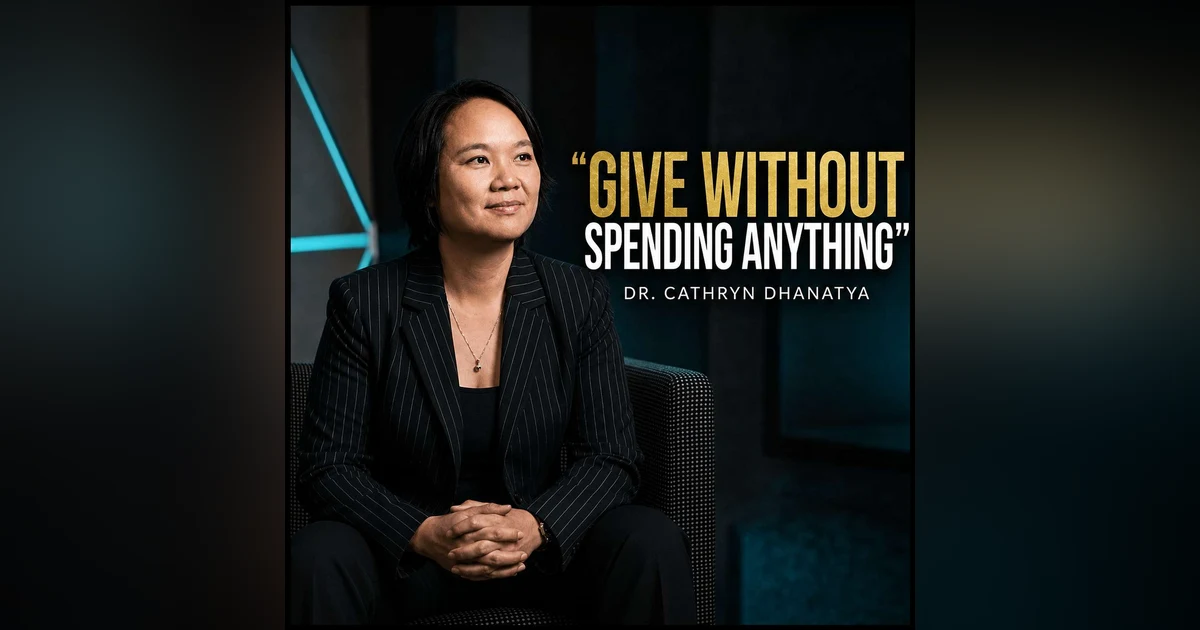
Send us Fan Mail Business Community https://www.skool.com/thebusinessnetwork Newsletter https://doing-business-with-a-servants-heart.kit.com/steveramona 📝Description: What if the biggest obstacle to doing good in the world isn't a lack of heart — it's a lack of a plan? This week, Steve sits down with Cathryn, founder of Growing Good, who has spent her entire career helping nonprofits and mission-driven companies turn good intentions into lasting impact. Cathryn calls herself a "r...

 Spotify
 Apple Podcasts
 YouTube
 iHeartRadio
 RSS Feed
 TuneIn
 Castbox
 Castro
 Goodpods
 Business Community https://www.skool.com/thebusinessnetwork
Newsletter https://doing-business-with-a-servants-heart.kit.com/steveramona
📝Description:
What if the biggest obstacle to doing good in the world isn't a lack of heart — it's a lack of a plan? This week, Steve sits down with Cathryn, founder of Growing Good, who has spent her entire career helping nonprofits and mission-driven companies turn good intentions into lasting impact.
Cathryn calls herself a "recovering academic and accidental consultant" — and the story of how a single pandemic-era phone call launched a company (and a $500 million cancer research initiative) is worth the listen alone.
In this episode, you'll learn:
- Why "social good" is bigger than writing a check — and four ways you can make an impact starting today, without spending a dollar
- The uncomfortable truth about why so many nonprofits collapse within a year
- How to tell if a company's mission is real or just performative — and what it takes to build one that survives controversy
- What Nobel laureates, A-list celebrities, and billionaire entrepreneurs all have in common
- The one misconception about nonprofit work Cathryn is on a mission to change
PS: Steve's own church has quietly funded thousands of wells in Africa just by collecting plastic water bottles for over a decade — proof that "planting seeds of good" doesn't require a big budget, just consistency and heart. This episode will have you rethinking what your own contribution could look like.
CTA: Ready to grow more good? Visit Cathryn at growinggoodinc.com — and yes, that's her real personal email on the site, no AI auto-responders. Then subscribe to Doing Business with a Servant's Heart so you never miss an episode, and grab your "Servant's Heart" gear to spread the message.
🎯 What You’ll Learn:
✅ Give Without Spending a Dime
✅ A Nonprofit Is Still a Business
✅ Mission Falls Apart When It's Performative
⏱️Timestamps:
[00:01] Welcome & Growing Good
[00:03] What Social Good Means
[00:05] Give Without Money
[00:10] Lessons From The Top
[00:16] Run It Like A Business
[00:20] Real vs. Performative
🤝Connect with Dr. Cathryn Dhanatya:
💥Web: https://www.growinggoodinc.com/
💥LinkedIn: https://www.linkedin.com/in/cathryn-dhanatya/
🤝Connect with Steve Ramona:
💥Web: https://steveramona.com/
💥LinkedIn: https://www.linkedin.com/in/steveramona/
💥IG: https://www.instagram.com/bizopportunitynow/
💥Podcast: https://www.servinginbusinesspodcast.com/
💥YouTube: https://www.youtube.com/@doingbusinesswithaservantheart?sub_confirmation=1
🔖Tags:
#SocialGood #PurposeDriven #Empowerment
Free Business Community: https://www.skool.com/thebusinessnetwork
Subscribe to our Podcast Newsletter
https://doing-business-with-a-servants-heart.kit.com/628f9d5962
Join Me on Substack: https://podcasthost.substack.com/
Doing Business with a Servant's Heart Named Top 20 Small Business Marketing Podcast
https://podcast.feedspot.com/small_business_marketing_podcasts/
Welcome everyone to Doing Business with a Service Heart Podcast. Doing business and life with a purpose, serving others, and yes, achieving success. I'm your host, Steve Ramona. We created this show for you because we want everyone to be motivated, inspired, and educated to make an impact in your world. How will you serve today and what impact will you create today as you listen to my most incredible guest? You're going to be blown away, blown away by what she's going to talk about. It's going to fit this podcast very well. I want to thank my sponsor, pitchdb.com. You could be a guest over 3 million podcasts, speak at over 18,000 conferences, and much, much more. What a great way to build your thought leader platform and expertise with an incredible opportunity to show who you are. With that being said, this guest is her company name is Growing Good. Well, that's definitely a servant's heart. That's why she's on here. Catherine, welcome to the show.
SPEAKER_01Thank you so much for having me, Steve. I'm really excited to be on.
SPEAKER_02That phrase, growing good, is a perfect timing as of today in the world. I think we need to grow more good. Why that title? What's the mission of your business?
SPEAKER_01So the mission of my business is we work with uh nonprofits and for-profit companies, but the for-profit companies have to provide a service or a product that benefits the social good. So we only work with organizations that are trying to do good in the world. Creating green technology, doing research, providing social services, helping different populations, you name it. We we work with all of them, arts organizations to research organizations. My entire career has been about trying to make the world a better place. And so when I started my company, it was really about planting seeds of good wherever we go and working with organizations that are really going to impact society in positive ways. And even if we don't get to see the results, it's the idea that we need to plant so that future generations can be better off than where we are today.
SPEAKER_02That's fantastic. I'll delve into planting seeds in a minute, but we hear social good out there in the media and people talk about it. Explain in your pre in your uh expertise what social good means so the audience understood, understands.
SPEAKER_01So social good for me means having positive impact on society in various ways, whether that's direct services, where we provide food to different populations that are food insecure, or they provide psychological support or housing support, right? Direct services, you have that, but also in terms of social good when you look at products that potentially are trying to help with pollution or the environment or address climate change, or getting people in terms of social movements to do things that are positive, whether it's we're apolitical, but you know, things like going and having people more civically engaged and voting and making sure that information that's being provided is accurate and factual, um, or helping to broaden rights for different um marginalized groups. So it can be a lot of different things, but it's really about hoping to create the most positive and equitable society we can for the future.
SPEAKER_02Yeah, that's great. Now, business owners hearing this going, yeah, I want to do that, they're gonna reach out to you. But an individual listening to this says, I love what you're saying, I love the mission, Catherine. How what can I do as an individual with social good?
SPEAKER_01Well, I think there's different ways. I think getting involved is really important in causes that you care about. Um, there has been this ongoing trend downward of people volunteering or donating has completely been down. And a lot of that has to do with just changing demographics, economics, etc. But I think you can give in a lot of ways, and it's not just money. Obviously, money is great. No one's gonna say don't donate money to a cause you believe in, but you can also give your voice by amplifying messages, whether that's through telling people, social media, you can provide your expertise. A lot of nonprofits and causes need people's expertise. Like you say, well, I know how to create websites. Well, a lot of organizations would love to have somebody help them create their website. Or you're really good at doing events. Well, you know, organizations are always looking at doing events, or just volunteering in general. And I think the other piece of it is also providing material support, which you would need to work with various organizations, but they may need books or they may need clothes or they may need office supplies, whatever it is, right? So there's different ways that you can become involved, whether it's using your voice and your platform, and then also introducing organizations to people you care about, because we're always looking for increased donors, better awareness in out in the world. And so I think there's multiple ways that the individual can make a huge difference or comment. Thank you for everything.
SPEAKER_02Yeah, I thank you for sharing that because as a servant's heart or service to people, people are always asking me ways, and the message idea is fantastic. Didn't cost you anything. You're in social media already, or you're out talking to people because that's what people say. I don't have money to don't donate. You just gave them three or four ways to be social good without a penny. So there's no obstacle there and no reason. So take me through the journey. I'm a founder of a company, I want to do social good. I don't have that in place in my business. How does it work working with you?
SPEAKER_01So I think when you work with me, we pride ourselves, whether you work with me or one of our strategists, that we meet you where you're at, right? Because every organization needs something a little bit different and they're all in different places in their journey, right? We've worked with organizations that have budgets of $10,000 a year, right? And we've done a lot of pro bono work to support them to organizations that have multi-billion dollar budgets, right? And so we kind of the way that our model works is we utilize the big guys who can afford to pay, pay, and then the little guys, we either have a low bono or pro bono approach to them if we have the space to be able to take on those clients. And I think what we do is part of it is learning who you are as an organization and what your true needs are. And I will be the first to tell you if I'm not the right person for you, because I don't think that that's what we do is trying to help organizations become sustainable and scalable. And if what you need is very specific to your organization that we can't provide it, then I will help direct you in the right way to go and explore those options. But we do a lot around strategy, around operations, and how do you tie that to fundraising and revenue, right? To be able to raise money to become sustainable and scalable. So it's a very holistic approach, and sometimes it's dealing with people's brand awareness or their communications. Do they have a strong board? Do they have um the right internal infrastructures to receive money? All of those questions. So we kind of look at an initial assessment. I think that's where the researcher comes in. And then from there, we develop a plan with the organization to get them where they want to go.
SPEAKER_02A video case story of what you're talking about, which is why I love is our church, West Cape Church in San Jose, Saratoga, is we collect water bottles and we build, we've built thousands of wells in Africa using the money from the what from the plastics. And you end up doing it, I think 12, 12, 15 years. I forget the total number, but that's a perfect social good. I bring my bottles in, me and my family, we know we're giving. Didn't cost us anything, except going to church and dropping them off. And that could be any. So I love what you're doing. It really gets my heart pumping because this is what we need to do more of. Like you said, there's less donations. One of the questions you gave me, I thought was really interesting, is throughout your career, you've been able to work with very prominent people, where they would be the world's most brilliant researchers, nobel laureates, A-list celebrities, the billionaire entrepreneurs. What do you learn from these experiences and what has it taught you about achieving success?
SPEAKER_01Well, I think first, what it's taught me is people are people. It doesn't really matter their title. Um, and people all have their eccentricities, their quirks. Um, but what working with kind of people who've um reached the pinnacle of success, right? Whether it's as a celebrity, whether it's as a researcher, whether it's as a business person, what they all have in common is a drive and passion for what they do. And I think that that's really important when we talk about where is it that you want to be? You have to have a point of view and you have to have a plan. And so I always tell organizations look, you can build in several different ways. You can build your organization to expand in several ways. There's not necessarily a right or wrong answer, but understanding where you want to get to and the mechanisms of how you want to get there are really important. And also understanding who you who do you want to be in the world, right? Who do you want to affiliate yourself with? Um, but all of these different people who've been extremely successful have a very strong understanding of where they want to get to, passion for what they're doing, and willingness to put in the work to get there.
SPEAKER_02Powerful. And of course, they're influence. And everybody, I don't have to get into that because that's the the resources and influence they have because they've built these high income or these celebrities or celebrity status.
SPEAKER_01So yeah, for sure. And I think the other thing too is money can get you so far, but ultimately to be sustained, if you're really going to be at that level, like there has to be more than just that. There has to be something internally motivating you to move forward.
SPEAKER_02That's a powerful and that you help with that. And I I think some of the superpowers you have with your business is you find that mission, that purpose to move forward. So they wake up every day and doing the right things to move to that next goal, correct?
SPEAKER_01Yes. I mean, I think that having a value proposition that makes that is resonant and that actually is the ethos of your organization helps to drive your organization forward. It also helps to differentiate you in the market, right? Like if you're saying, okay, I'm gonna raise money for cancer, there's like a million organizations that raise money for cancer. Why should I give to you versus the American Cancer Society or Stand Up to Cancer or the Um Leukemia Lymphoma Society, which is they're all more well known, right? So what is it that is your secret sauce? What is it that makes you and your organization unique and gives you a leg up, right? I think that that's really important to be able to build something that's sustainable or able to compete. Because you have such in all sectors, there's always like the big guys already, right? And you got to be able to understand where you fit in and what makes you unique and special. And I think that's what you build from.
SPEAKER_02That's I like that because and goals sound like they're really important. You know, I'm a small business making a million a year, which is good. My goal for this is gonna be different than Google, Apple, Amazon, which is okay, correct?
SPEAKER_01Absolutely. Because I mean, let's be honest, your goal for a successful business is gonna be a rounding error for those companies, right?
SPEAKER_02Yeah, yeah.
SPEAKER_01And so I think it's really important that you set goals that you are able to authentically manifest and that you're able to be able to articulate in a meaningful way that actually resonates with people.
SPEAKER_02And that's where you help, and that's why I'm hearing I love that I'm a company, I just don't know, I make a million. Hey, Catherine, help us. How can we do? How much should we do? Where should we go? Because that could be very, I mean, your business just running your business is complex. You add this component, which I think is super important and should be part of it. You kind of coach, I don't know if that's the right word for you, but or advise how to move forward with this, right?
SPEAKER_01Yes. So I guess I'm part advisor, part taskmaster, and part a little bit sometimes um not therapist, but you know, listening to kind of this organizational issues and complexities and helping to just be a listening ear too, I think. Um, and and an honest broker, right? Because the the nice thing about having a third party, whether it's a coach or a therapist or whatever it is that you're looking for when you're talking about an advisor, is they're not in it every day. And so they can see the bigger picture. But as long as that person is an honest broker and is going to tell you the truth, that's what you need to hear. But you also have to be receptive, right? Because sometimes the truth isn't as pretty as we hope it would be, right? And so I think it's all about um having a really good relationship. And fundamentally, all of this is about relationships. It's about building trust, it's about building strong bonds with whether it's your donors or with the people that you work with. If you work in integrity, I think it in the end, it tends to be okay.
SPEAKER_02Great word to use. I love that. And the sustainability, I'll bring that back up again. You don't want to start a nonprofit and go a year and dump off, you know, drop off because you just don't have any money, which happens a lot, as you're saying.
SPEAKER_01Yeah, I mean, I think the problem is, you know, it's kind of funny. I tell this story of if your friend were to come to you and say, I'm gonna start a business, right? And I have a product, but the product's not very clear on what it is. I have no idea how I'm going to sell it. I have no idea how who my customers are and where I'm going to get money. And I'm going to start it tomorrow and I'm going to put in my life savings. You'd probably look at your friend and be like, okay, let's let's have a conversation here if you're a good friend, right? Or you might just like roll your eyes. But it's interesting that when people say, I want to start a nonprofit, we don't have that same expectation because they want to do something good in the world. And so we don't ask those tough questions, like, well, who are your donors going to be? Where, because you need money to be able to operate. Let's just be real, right? You can't create something from nothing. Um, how's it going to be sustainable? There are costs. It's not like just because you're a nonprofit doesn't mean that there aren't expenses that you have to pay. So, what is your business plan? And I think that that's something that I have a lot of conversations with, with people who are nascent, um, wanting to do good in the world, but then not understanding all of the complexities that it is a business on some level, or really truly a business. When you talk about revenue, it's basically fundraising. But also the other piece of it is people don't understand the regulatory requirements that nonprofits are heavily, heavily regulated. And so there's also this other component of like state and federal regulations that you have to follow. And so it's not just about doing good, it's also how do you run a business? Because if if you can't do both, then you're not going to be sustainable over time.
SPEAKER_02You can have some problems. That's a great point. Because nonprofit is a business, so it's got to be run like a business, not like a okay, we'll just take money when we can. And I love that, and that's what you help with. Can you share a success story with an organization that your leadership and your business has helped?
SPEAKER_01Um, sure. I mean, I think one of the organizations, uh I can talk about the first organization. We set up a, so I call myself the recovering academic slash accidental consultant. So I was leaving my full-time job, um, my executive position, C-suite job, and I was going to literally take a sabbatical or be just a stay-at-home mom for a while. It was during the pandemic and just I had young children, I was having some health issues. And so I was like, okay. And a colleague from our partner organization I worked with at my previous position called me and he said, Oh, we're starting a $500 million initiative between the United Kingdom and the US to fund cancer research. Can you set up our nonprofit in the US? And I was like, Well, I'm supposed to be on sabbatical. I'm supposed to, but it's think about all the good you can do. And I was like, okay. So I ended up taking that consulting job, and that was the seed and beginning of Growing Good. But um, we were able to set it up. We just had um it's under Cancer Grand Challenges. The US fundraising arm that I set up was American Friends for Cancer Research. The Cancer Grand Challenges just had its second round, and we just I think awarded $120 million in funding. So that's pretty exciting. And now I'm not the consultant anymore. I'm actually the board president for the snow moment. So kind of full circle. I left for like I set it up and then left for like two years, and now they've asked me to come back as a board president.
SPEAKER_02So that's congratulations. That's awesome. Yeah, sometimes when you're least expected, this stuff comes at comes at you, and you just almost have to say yes, you don't want to, but it it sounds like it turned out well. Somebody's listening as a founder, CEO, C-suite, has a business. Where should they start? What's a piece of advice you'd give them?
SPEAKER_01To start a business or to start this growing good. To start growing good. Well, I think we have to be in a place where equity and the belief that we should be doing good is in the design of everything we do. Right. If you want to start growing good in your company or trying to be work in the social good, people know if it's performative now. Like if you're just slapping on, like, okay, yes, we're on this bandwagon, like we're gonna do this for a CSR. Um, when controversy happens, when things are difficult, then you bail. Then people understand that this was not actually really the ethos of the company. And so if you truly are talking about wanting to do this, then it has to be included in everything you're doing, whether it's how you present your brand or what products you're creating, what your supply chain looks like, right? If you're saying I want to be a corporate, corporate, socially responsible company, and your supply chain is hurting the environment and hurting people, that's probably not truly what you want to be doing, right? And I'm not saying that there's like a value judgment in terms of how people build their companies, but if you're gonna do it, then it has to be at every step of the way for it to truly be successful because otherwise then it becomes performative and it basically falls apart at some point when there's a controversy.
SPEAKER_02So you're bringing it in with the marketing, the HR, the sales, it's another. component of that department is probably the wrong word of that business and treat it that way.
SPEAKER_01Yeah it it should be a pillar within your company right like who you hire who how you treat your employees i mean all of those things build your company but they also build your ethos and your organization and so if you want to be an organization that's focusing on servant leadership then it requires everybody to be a servant leader right if you want to be inclusive then you have to be inclusive and it it doesn't work if you say it and then you don't do it because then the people in your company don't believe it and then it's harder to have other outside people to not believe it believe in anything like that. So it really requires a dedication to actually doing that work.
SPEAKER_02And it's not easy but you have to have that dedication or it just doesn't work and then you'll probably better off not stating all of these things falls apart is a great phrase I like that it's simple it just everything falls apart and that's understandable we can imagine that run to the end here I can't believe that this went so fast but I know why because we talk about good it's always runs fast there's a lot to talk about but what's the misconceptions in the nonprofit doing good industry I think the misconceptions are that only people who couldn't succeed in business go into nonprofit um I think that that's I'm trying to change that narrative.
SPEAKER_01I think that we should all be looking at how we can make the world a better place. There are so many huge social and political and environmental complex problems that we have to address and we can't do it by having it be just about me right and and I think that that's we're not going to get there. Like we're not going to solve the issues of climate or diseases or complex social issues by being divisive. We have to work together whether we like it or not. And I think that that requires the best people and so I think um understanding that there are amazing people who are doing really good work and it wasn't because they couldn't do something else.
SPEAKER_02Yeah you're right we we got to focus on that in the media but we won't go there. I want to thank you this is a great movement. This is uh doing growing good is so powerful and and it fits the servant's heart.
SPEAKER_01People are listening they're probably going I need to know more about this how can they get a hold of you your company so I think the easiest way um is to just go on our website um and it's growinggoodinc.com. So it's just basically no spaces anything like that just growinggoodink.com there's ways to contact me you can actually you have my personal email on the website so you can and it I answered it's not some AI generated response. We still believe in people and relationships and so um I think that would be the best place to start you can also find me on LinkedIn and I'm always willing to um have a conversation it's always good to meet new people so I mean always fantastic yeah reach out if you want to do good reach out uh I've got to introduce so I get more people to introduce that want to do this doing good.
SPEAKER_02Let's do it together. And with this podcast Catherine gave you so many great tips so much great advice use the forward reverse buttons on the podcast to grab some of this information and listen to it over and over again like gratitude like a server talk you need to practice it. Well to learn sometimes people need to hear it three or four times I'm not a big fan of people go oh it's 26 minutes your show with Catherine I want to listen to it. Well then just skim through it and find the parts you want to uh listen to that change your life me and Catherine would love for you to watch the whole show or listen to the whole show but if a five, eight minute segment of the show makes a difference for you or somebody you know, we'd be extremely happy. Don't forget about my TV show Together We Serve it's Fridays at 2 p.m Pacific, 5 p.m Eastern and doing business with a servant's heart. It's a message I want to get out even more pass the podcast so I've got t shirts, hoodies, hats you can wear with that message and spread the word of doing good or growing good like Catherine's doing today. And as always me and Catherine thank you so much for watching or listening to this podcast and we'll see you on the next episode of doing business with a servant's heart. Thank you all